Disclosure: As an Amazon Associate, we earn from qualifying purchases. If you click a link on this page and make a purchase, we may receive a small commission at no extra cost to you.
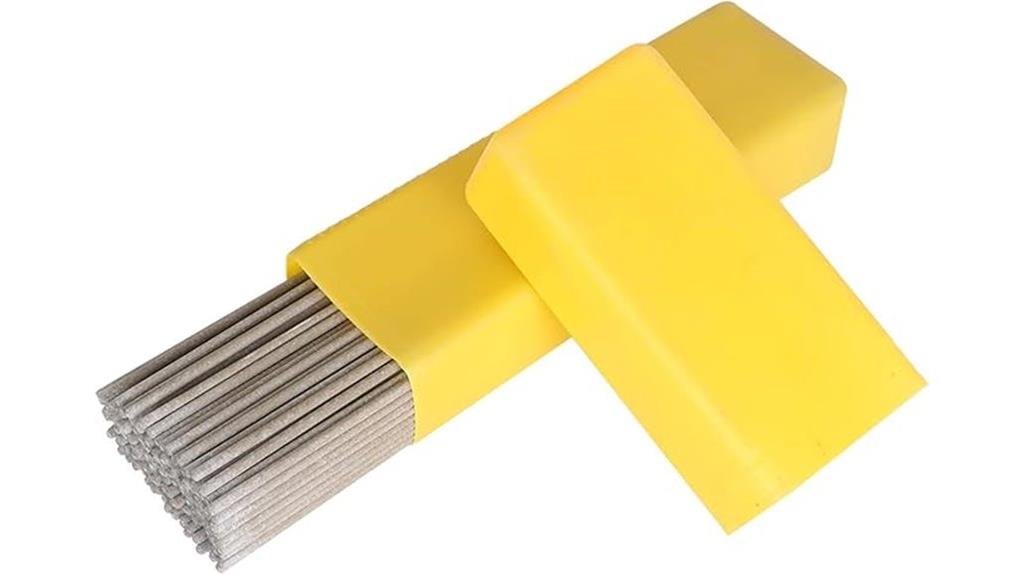
Choosing a stick electrode is not only about getting the arc started. You also need the right rod diameter, current capability, welding position, and base-metal match. The findmall E6011 1/8-inch welding rods come in a 10 lb pack of 14-inch carbon-steel electrodes designed for general E6011 stick-welding work. Their main appeal is a stable, fast-freezing E6011 arc that can be used in multiple welding positions, but the 1/8-inch size is better suited to substantial steel work than delicate sheet metal.
Quick Verdict
Rating: Recommended with caveats
Best For: General carbon-steel repairs, fabrication, maintenance, farm work, and welders who need a 1/8-inch E6011 electrode in a larger 10 lb pack.
Bottom Line: The findmall E6011 gives you a practical all-position carbon-steel electrode with a stable arc and a substantial 10 lb supply. Its main limitation is the 1/8-inch diameter, which can be harder to control on thin sheet and requires a welder with enough output for this rod size.
Product Specifications and Key Features
| Specification | Detail |
|---|---|
| Brand | findmall |
| Electrode classification | E6011 |
| Product type | Stick / arc welding electrode |
| Electrode diameter | 1/8 inch (3.2 mm) |
| Electrode length | 14 inches |
| Package weight | 10 lb |
| Material listed | Carbon steel |
| Welding positions | E6011 full-position use, including flat, horizontal, vertical, and overhead applications when technique and joint design permit |
| Typical applications | General fabrication, construction, machine parts, shaft work, automotive repair, maintenance, and similar carbon-steel jobs |
| Current guidance | E6011 can be used with compatible AC or DC equipment. Exact amperage should follow the electrode packaging and welder manual. |
| Storage | Keep dry and protected at room temperature. Avoid treating E6011 like a low-hydrogen E7018 electrode in a high-temperature rod oven. |
What Is the findmall E6011 Welding Rod?
The findmall product is a box of 1/8-inch by 14-inch E6011 stick electrodes with a total package weight of 10 lb. The listing identifies the rods as carbon-steel electrodes intended for general welding of ordinary carbon-steel structures.
E6011 is a common stick-electrode classification known for a penetrating, fast-freezing arc and the ability to weld in multiple positions. That makes this type useful when you are repairing equipment, fabricating steel parts, or working on joints that cannot always be positioned flat.
The 10 lb package is also more practical for repeated shop or repair work than a small practice pack. The tradeoff is that a 1/8-inch electrode demands more current and more heat control than a smaller-diameter rod.
Key Takeaways
- You get a 10 lb package of 1/8-inch by 14-inch E6011 carbon-steel stick electrodes.
- E6011 is suitable for multiple welding positions, including vertical and overhead work with proper technique.
- The product listing emphasizes a stable arc, smooth solidification, and relatively low splash.
- The 1/8-inch diameter makes the rods more appropriate for substantial carbon-steel work than very thin sheet.
- Your exact amperage should be matched to your welder, welding position, joint, and instructions on the electrode packaging.
- E6011 is a cellulosic electrode class, so storage requirements differ from low-hydrogen E7018 rods.
Who Should Buy It?
Best For
- DIY welders and maintenance users working mainly with ordinary carbon steel.
- Farm, garage, fabrication, and repair work where an E6011 electrode fits the procedure.
- Buyers who expect to use enough 1/8-inch rod to justify a 10 lb package.
Skip If
- You mainly weld very thin automotive body panels or other light sheet metal.
- You need an electrode specifically designed for stainless steel, aluminum, cast iron, or another specialized alloy.
- Your welder cannot comfortably run 1/8-inch stick electrodes at the required current.
Before You Buy: Confirm that your machine supports E6011 electrodes and has enough output for a 1/8-inch rod. Do not choose this size only because the 10 lb package looks economical if most of your work is thin sheet metal.
Arc Characteristics and Penetration
The seller describes these rods as producing a stable arc with small splash and smooth solidification. Those traits matter when you are trying to keep control of the puddle during ordinary repair and fabrication work.
E6011 electrodes are also associated with relatively deep penetration compared with mild, low-penetration electrodes such as E6013. That can be useful for repair joints and less-than-perfect fit-up, but it also means heat and travel speed need attention. Too much current or a long arc can make the puddle harder to control and increase spatter.
Current, Polarity, and Welder Compatibility
E6011 is commonly used on compatible AC and DC stick-welding power sources. That versatility is one reason this electrode class is popular with general-purpose welders and older transformer-style machines.
The original article suggested about 80 to 120 amps for this 1/8-inch size. That is a reasonable general neighborhood, but it should not be treated as a fixed Findmall specification. Published operating ranges for comparable 1/8-inch E6011 electrodes vary by manufacturer and can extend roughly from the mid-60s to around 130 amps.
Your best setting depends on the machine, polarity, joint type, plate thickness, welding position, arc length, and your travel speed. Start with the information printed on the electrode package and your welder’s electrode chart, then fine-tune within the recommended range.
Pro Tip: When you are dialing in a new box of 1/8-inch E6011, make a short test weld on scrap of similar thickness before touching the actual workpiece. Watch arc stability, puddle control, undercut, penetration, and slag behavior rather than choosing amperage from a single universal number.
How It Performs in Real Use
General Repair and Maintenance
For brackets, frames, machinery repairs, farm equipment, and other ordinary carbon-steel work, the combination of E6011 characteristics and a 1/8-inch diameter gives you useful penetration and a reasonably substantial deposition rate. This is the type of job where a 10 lb package makes practical sense.
Vertical and Overhead Welding
E6011 is an all-position classification, and its fast-freezing puddle is useful when gravity is working against you. Vertical and overhead welding still require more skill than flat welding, so you may need to lower current within the approved range and use tighter arc control.
Outdoor and Field Repair
Stick welding does not rely on a separate shielding-gas bottle, which makes E6011 convenient for many outdoor repairs. Wind that would interfere with externally supplied shielding gas is less of a setup issue with a flux-coated stick electrode, although normal welding safety and work-area precautions still apply.
Thin Sheet Metal
The 1/8-inch size is the weak point when your job involves very thin material. It carries more current than a smaller rod, so burn-through and distortion can become harder to control. For light sheet, a smaller electrode or a different welding process may give you more control.
Setup Tips Before First Use
- Check the base metal. Use the product for compatible carbon-steel work rather than assuming one E6011 electrode is suitable for every alloy.
- Confirm machine capability. Make sure your welder supports the appropriate stick-welding current and can handle a 1/8-inch electrode.
- Start from published settings. Use the electrode packaging and your machine chart rather than relying only on a remembered amperage number.
- Prepare the joint. Remove heavy contamination, grease, and anything that creates unnecessary fume or weld-quality problems.
- Keep a tight, controlled arc. Excessive arc length can make E6011 noisier and increase spatter.
- Practice out-of-position work. Vertical and overhead welding benefit from short test runs before you weld a critical joint.
Storage and Electrode Care
E6011 is a cellulosic electrode, so you should not automatically use the same storage routine recommended for low-hydrogen E7018 rods. Keep the electrodes protected from rain, direct water exposure, and damaging storage conditions at normal room temperature.
Do not put E6011 rods into a high-temperature holding or rebaking oven simply because that is common practice for some low-hydrogen electrodes. Excessive drying can change the moisture balance of the cellulosic coating and alter how the electrode performs.
If the rods become seriously wet or damaged, follow the manufacturer’s instructions rather than attempting an improvised high-temperature drying procedure.
Compatibility and Welding Safety
These rods are intended for carbon-steel stick welding. They should not be treated as universal electrodes for aluminum, stainless steel, cast iron, or every high-strength alloy. Use a filler metal and procedure that match the actual base material and structural requirements of your project.
Wear an appropriate welding helmet, protective clothing, gloves, and other PPE required for the job. Keep combustible materials away from the welding area and provide suitable ventilation for welding fumes.
Take extra care with galvanized or coated steel. Heating zinc coatings can create hazardous zinc-oxide fumes. Proper ventilation and applicable workplace controls are essential, and you should follow current safety requirements for the material and work environment.
Pros and Cons
Pros
- 10 lb package suits repeated repair and fabrication jobs.
- 1/8-inch by 14-inch format is a common practical size for general steel work.
- E6011 classification supports multiple welding positions.
- Seller describes a stable arc, smooth solidification, and small splash.
- Compatible E6011 setups can work with AC or DC stick-welding power sources.
Cons
- The 1/8-inch diameter is not the easiest choice for very thin sheet.
- A 10 lb box is unnecessary if you only need a few electrodes for occasional small repairs.
- You must match amperage and technique to your machine and application rather than relying on one universal setting.
Is It Worth the Price?
The findmall E6011 is best viewed as a value-focused bulk option for people who regularly use 1/8-inch E6011 electrodes. A 10 lb package can be convenient for a garage, farm, maintenance shop, or fabrication workspace because you are less likely to run out halfway through a series of repairs.
You get the most value when this exact electrode size and classification match work you perform repeatedly. If you only weld a few times per year or usually work on light-gauge sheet, buying a smaller package or smaller-diameter electrode may make more sense.
How It Compares to Alternatives
If you want another E6011 option with extensive published manufacturer documentation, Lincoln Electric Fleetweld 180 and Hobart 335A are worth comparing. Both are established E6011 electrodes with published operating information for professional and general-purpose use.
The findmall option makes the most sense when you specifically want the verified 1/8-inch × 14-inch, 10 lb package. A major-brand alternative may appeal more if detailed procedure charts, approvals, or manufacturer technical documentation are a priority for your work.
Frequently Asked Questions
Can I use these findmall E6011 rods with an AC welder?
E6011 is commonly compatible with AC stick-welding equipment as well as appropriate DC setups. Confirm the current and polarity guidance on the electrode packaging and your welder before starting.
What amperage should I use for the 1/8-inch E6011 rods?
The original article suggested about 80 to 120 amps, while published manufacturer ranges for comparable 1/8-inch E6011 rods can be somewhat wider. Use the Findmall packaging and your machine’s electrode chart as the primary guide, then adjust for position, joint design, and arc behavior.
Are these rods suitable for a generator-powered welder?
They can be used when the generator-powered welder provides a suitable stick-welding output for 1/8-inch E6011 electrodes. Check the machine’s rated output, duty cycle, electrode chart, and current capability before use.
Should E6011 rods be stored in a rod oven?
Do not treat E6011 like a low-hydrogen E7018 electrode. E6011 is cellulosic and is generally kept dry and protected at room temperature. Excessive oven drying can damage the intended coating characteristics.
Can I weld galvanized steel with E6011?
E6011 electrodes can be used in some coated-steel applications, but galvanized steel creates an additional fume hazard because heating zinc can produce zinc-oxide fumes. Use appropriate material preparation, ventilation, PPE, and workplace safety controls.
Are 1/8-inch E6011 rods good for thin sheet metal?
They are not the easiest choice for very thin sheet because a 1/8-inch rod requires significant current and can make burn-through harder to control. A smaller electrode or another welding process may provide better heat control for light-gauge material.
Who should skip this 10 lb pack?
Skip it if you rarely stick weld, mainly work with very thin material, or need electrodes for specialized metals rather than ordinary carbon steel. A smaller package can also make more sense if you are only practicing or completing one small repair.
The Bottom Line
The findmall E6011 1/8-inch welding rods are worth considering when you regularly weld ordinary carbon steel and want a 10 lb supply of full-position E6011 electrodes. Their stable E6011 arc characteristics and useful package size suit general repair and fabrication, while the main limitation is that the 1/8-inch diameter can be too aggressive for very thin material.
If your welder supports the required current and your projects match this electrode class, the product earns a Recommended with caveats verdict. If you mostly work on thin sheet or specialty alloys, choose an electrode size, classification, or welding process better matched to those jobs.