Ford Genuine Fluid TA-31 RTV Sealant Review
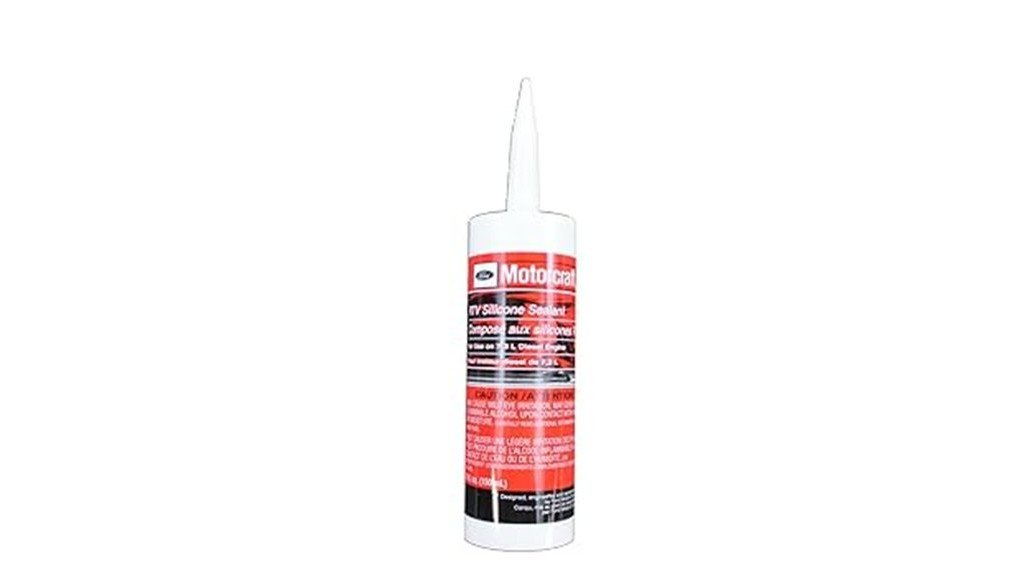
Oil leaks can return after an engine repair if you use the wrong sealant or apply it to a poorly prepared surface. Ford Genuine Fluid TA-31 RTV Silicone Sealant is a high-temperature gasket maker designed for automotive powertrain sealing, with specific recommendations for several Ford Power Stroke diesel engines. Its thick, non-corrosive formula offers useful sealing properties, but it is not suitable for every gasket or engine joint. This review explains its verified specifications, compatibility, application requirements, and limitations so you can decide whether TA-31 is right for your repair.
Quick Verdict
Rating: Recommended with caveats
Best For: Ford diesel engine sealing jobs that specifically call for Motorcraft TA-31 or an approved equivalent.
Bottom Line: TA-31 combines non-corrosive alkoxy-cure silicone chemistry with high viscosity and strong adhesion to properly prepared surfaces. Its main limitation is application-specific compatibility. You must follow the correct bead pattern, assembly timing, and service instructions rather than treating it as a universal gasket replacement.
Ford TA-31 Key Specifications
| Specification | Details |
|---|---|
| Brand | Ford / Motorcraft |
| Part Number | TA-31 |
| ASIN | B000NUD02W |
| Product Type | Automotive RTV silicone gasket maker and sealant |
| Container Size | 5 fluid ounces |
| Packaging | Cartridge; Amazon listing identifies a single 5 fl oz item |
| Material | One-part RTV silicone rubber |
| Curing Chemistry | Alkoxy-cure |
| Corrosion Characteristics | Non-corrosive formula |
| Consistency | High viscosity |
| Surface Adhesion | Designed to adhere without primer to properly prepared metals and many plastics |
| Manufacturer-Recommended Engines | 7.3L Power Stroke, 6.0L, and 6.4L Ford diesel engines, subject to the repair procedure |
| Fluid-Related Property | Low oil-foaming characteristics when exposed to engine oils and automatic transmission fluids |
| Temperature Use | Designed for high-temperature powertrain sealing. Confirm numerical temperature limits before critical applications. |
| Cure Behavior | Begins curing in minutes. Assembly and return-to-service timing must follow the applicable instructions. |
| Odor | Low-odor formulation |
| Best Use | Service-approved automotive powertrain sealing and formed-in-place gasket applications |
Verification note: Product details were checked against the official Motorcraft TA-31 product information, Ford chemical product details, and the linked Amazon listing. Exact full-cure time, continuous temperature rating, and unopened shelf life were not independently established.
What Is Ford Genuine Fluid TA-31 RTV Sealant?
Ford Genuine Fluid TA-31 is a one-part silicone rubber sealant sold under the Ford and Motorcraft product lines. It uses alkoxy-cure chemistry, meaning the applied material reacts with moisture and gradually develops into a flexible rubber seal. Ford describes it as a high-viscosity, non-corrosive sealant designed for high-temperature automotive powertrain applications.
Its key purpose is to create a seal between compatible mating surfaces when a repair calls for RTV. It can help seal small surface imperfections, but it cannot repair warped flanges, damaged components, loose fasteners, or incorrect assembly.
Ford specifically recommends TA-31 for use with its 7.3L Power Stroke, 6.0L, and 6.4L diesel engines. That recommendation does not mean every joint on those engines requires TA-31. Some repairs use formed gaskets, different silicone products, or other sealing compounds.
Review method: This is a specification-based editorial assessment using product documentation and listing information. It does not represent a hands-on leak test or long-term engine durability test.
Who Should Buy Ford TA-31?
Best For
- Ford diesel engine repairs that specifically require Motorcraft TA-31.
- Technicians who need a high-viscosity, non-corrosive RTV for an approved powertrain sealing job.
- Experienced DIY mechanics who can follow Ford’s cleaning, application, torque, and assembly instructions.
Skip If
- Your repair specifies a different gasket material or sealant part number.
- You need a product for a fuel-system joint or another application without confirmed compatibility.
- You cannot prepare the sealing surfaces or meet the required assembly and curing instructions.
When You Should Skip It
Do not choose TA-31 simply because the container carries the Ford name. Different engines and joints can require different sealant chemistry, gasket thickness, compression, or fluid resistance. A suitable RTV for one oil-related repair may be unsuitable for a fuel-system component or another pressurized joint.
You should also avoid using extra silicone to compensate for a damaged gasket surface. If your repair needs a replacement seal, flange repair, or new part, applying more RTV will not correct the root problem. For example, a damaged sealing surface or oil drain plug may need a separate repair instead.
Before You Buy: Confirm that the exact Ford service procedure calls for TA-31 or explicitly approves an equivalent. Do not assume that all Ford engines, cylinder head joints, oil pans, or valve covers use the same RTV. Check the required sealant part number, bead location, assembly timing, and return-to-service instructions before ordering.
Ford TA-31 Key Features Explained
1. High-Viscosity Silicone Formula
TA-31 has a thick consistency designed for controlled gasket application. A high-viscosity sealant can help you lay down a consistent bead without the material flowing as freely as a thinner product.
That feature is useful when the service manual requires silicone to follow a specific sealing path. However, a thick formula does not make an oversized bead safer. Excess sealant can squeeze beyond the joint and may create problems if it reaches internal engine areas.
2. Non-Corrosive Alkoxy-Cure Chemistry
Ford identifies TA-31 as a non-corrosive alkoxy-cure RTV silicone. This is useful for powertrain joints that include compatible metal surfaces.
The formula is also described as self-priming, with adhesion to properly prepared metals and many plastics. This can reduce the need for an additional primer in approved applications.
However, non-corrosive does not mean compatible with every coating, plastic, paint, or fluid. You still need to check the material and application requirements.
3. Low Oil-Foaming Characteristics
One of TA-31’s more specific manufacturer-listed properties is low oil foaming when it contacts engine oils and automatic transmission fluids.
This matters because some powertrain assemblies need sealing materials that behave properly around lubricating fluids. It is a useful difference from choosing an RTV based only on its advertised temperature tolerance.
Still, low oil foaming is not a blanket approval for every oil pan, transmission, or fluid-exposed joint. The applicable repair procedure determines whether TA-31 is suitable.
4. High-Temperature Sealing Design
TA-31 is marketed for high-temperature automotive powertrain sealing. Engine components experience repeated heating and cooling cycles, so selecting the correct sealant matters.
The supplied article previously listed 390°F continuous temperature resistance, but that number was not confirmed in the manufacturer product information reviewed for this update.
For an application where temperature limits are critical, confirm the appropriate rating using the current product data, packaging, or Ford technical guidance. Do not assume the sealant is suitable for exhaust manifolds, direct flame exposure, or every extreme-heat location.
5. Five-Fluid-Ounce Cartridge
The linked Amazon listing identifies a 5-fluid-ounce, single-item package. The product is also described by automotive retailers as a cartridge-type sealant.
This format makes sense for engine sealing work where you need to apply a continuous bead over a defined flange. Before starting, check that you have an appropriate dispensing tool and nozzle arrangement for the supplied package.
The amount needed depends on the joint length, bead diameter, and repair instructions. Do not assume that one cartridge will cover every engine resealing project.
Engine Compatibility and Application Fit
The official Motorcraft product description specifically identifies three Ford diesel engine families as recommended applications:
- 7.3L Power Stroke: TA-31 is included in the manufacturer’s diesel engine recommendations. Confirm the exact repair location and applicable model-year procedure.
- 6.0L Ford diesel: The product is recommended at the engine-family level, but you must check which joints require it.
- 6.4L Ford diesel: Ford also identifies this engine family. The repair manual still determines the correct gasket material and installation method.
For gasoline engines, other Ford diesel engines, and non-Ford vehicles, do not assume compatibility simply because the product is silicone-based. Some service procedures specify Motorcraft TA-30, a different RTV, or a pre-formed gasket.
A component can also combine several sealing methods. One joint may use a rubber gasket while another nearby joint uses a small amount of RTV. Follow the exact instructions rather than coating every mating surface with silicone.
How to Apply Ford TA-31 Correctly
RTV application is sensitive to surface condition, bead placement, assembly timing, and fastener torque. You should use the Ford workshop procedure for your exact repair as the main authority.
Step 1: Confirm the Correct Sealant
Check the vehicle’s engine, model year, and repair procedure. Match the required Motorcraft part number or approved specification before opening the cartridge.
Step 2: Prepare the Mating Surfaces
Remove old sealing material using methods approved for the component. Clean away oil, grease, coolant, and loose residue. Let the surfaces dry as instructed.
Avoid scratching machined flanges or leaving debris that could enter the engine. Surface damage can reduce sealing reliability even when you use the correct RTV.
Step 3: Apply the Specified Bead
Use the bead size and path shown in the repair procedure. Keep the application consistent, and pay attention to any specified bolt-hole or joint-transition locations.
Do not rely on a generic bead measurement. Different Ford repairs can require different application patterns and quantities.
Step 4: Assemble Within the Required Time
Motorcraft states that TA-31 begins curing in minutes. That makes timing important, especially when the joint has a narrow assembly window.
Have your fasteners, tools, replacement components, and torque information ready before applying the silicone. Follow the repair procedure for how quickly the parts must be joined and tightened.
Step 5: Follow the Return-to-Service Instructions
Assembly timing and full cure are not the same thing. Some repair procedures require parts to be assembled quickly after RTV application, while the time before fluid exposure or engine operation may follow separate instructions.
Do not apply a universal 24-hour or 48-hour waiting rule without checking the instructions for TA-31 and the specific joint.
Pro Tip: Perform a dry fit before applying TA-31. Set out the fasteners in order, confirm your torque sequence, and make sure the part can be positioned without delay. This helps you avoid wasting the sealant’s working time while searching for tools or aligning a difficult component.
Material Compatibility and Safety
Metal and Plastic Surfaces
Ford reports good unprimed adhesion to properly prepared metals and many plastics. This is useful when a compatible powertrain assembly combines different surface materials.
However, painted surfaces, specialty coatings, and certain plastics may need separate compatibility checks. Do not assume that adhesion to bare metal guarantees adhesion to a painted or coated version of the same part.
Oil, Coolant, and Fuel Exposure
TA-31 has manufacturer-described properties related to engine oil and automatic transmission fluid contact. That does not establish universal resistance to gasoline, diesel fuel, coolant, brake fluid, or other chemicals.
If the repaired joint will contact a specific fluid, confirm that the service information approves TA-31 for that location.
Safe Handling
Work in a ventilated area and follow the product label and current safety data sheet. Avoid unnecessary skin and eye contact. Use suitable protective equipment when required by the product instructions or your workshop procedures.
Keep uncured sealant away from children and pets. Do not use this automotive product for food-contact sealing or household applications without an explicit manufacturer approval.
For chemical handling details, consult the Motorcraft TA-31 safety data sheet and check whether a newer version is available.
How It Performs in Real Use
The following scenarios explain where TA-31’s documented properties matter. They are practical application assessments, not claims from a hands-on product test.
Scenario 1: A 7.3L Power Stroke Sealing Repair
For an approved 7.3L Power Stroke repair, TA-31 has the advantage of being a product specifically recommended by Motorcraft for that engine family.
This gives you a stronger basis for product selection than choosing a general-purpose silicone. The main concern remains identifying the correct joint and following its service procedure.
Scenario 2: Repairs on 6.0L and 6.4L Diesel Engines
The 6.0L and 6.4L diesel engines are also included in Ford’s TA-31 recommendations. In an approved sealing job, the formula’s viscosity and non-corrosive chemistry are relevant features.
These engines still require careful attention to component condition, gasket type, sealant location, and bolt tightening. TA-31 cannot make up for damaged parts or incorrect installation.
Scenario 3: Oil-Exposed Powertrain Joints
Where the service procedure specifies TA-31 for an oil-exposed joint, the low oil-foaming property is a useful material characteristic.
Correct bead quantity matters because excess silicone can squeeze into areas where it does not belong. You should never fill a large gap or cover an entire joint simply to compensate for a suspected leak.
Scenario 4: Time-Sensitive Engine Reassembly
TA-31 begins curing shortly after application. If you are working on a flange that must be assembled quickly, preparation becomes a major part of the job.
Clean components, organized fasteners, and ready-to-use tools can help you meet the specified assembly window. If you miss that window, follow Ford’s procedure for removing and reapplying the sealant rather than assuming the existing bead is still usable.
Common Mistakes to Avoid
- Using TA-31 on every gasket: The correct sealant depends on the engine and joint.
- Applying too much material: Excess RTV can squeeze into unwanted locations and interfere with proper assembly.
- Leaving oil on the flange: Surface contamination can reduce adhesion.
- Guessing the bead size: Follow the specified diameter and pattern.
- Missing the assembly window: Prepare the components before applying the bead.
- Ignoring damaged parts: RTV cannot correct badly warped or broken mating surfaces.
- Assuming all silicone has the same cure schedule: Follow the instructions for the exact product and repair.
Storage and Maintenance
Before using a stored cartridge, inspect its packaging and check any date or storage instructions on the label. Sealant condition can change with age, temperature, moisture exposure, and improper storage.
Keep unopened material in the conditions specified by the manufacturer. If you have already opened a cartridge, follow the package instructions for storage and reuse. Do not assume that partially cured or contaminated material will provide a reliable engine seal.
After completing the repair, inspect the joint according to the applicable service procedure. If a leak returns, check the component condition and installation method before applying more silicone.
Ford TA-31 Pros and Cons
Pros
- Specifically recommended by Motorcraft for 7.3L Power Stroke, 6.0L, and 6.4L diesel engines.
- Non-corrosive alkoxy-cure silicone chemistry.
- High-viscosity formula suited to controlled bead application.
- Designed to adhere to properly prepared metals and many plastics without primer.
- Low oil-foaming properties relevant to approved powertrain sealing work.
Cons
- Not a universal substitute for all automotive gaskets or RTV formulations.
- Fast initial curing makes preparation and assembly timing important.
- Exact temperature limits and full-cure timing need confirmation for critical applications.
Is Ford TA-31 Worth the Price?
Ford TA-31 is better viewed as a service-specific automotive sealant than a general-purpose budget purchase. Its main value comes from the documented formula and Ford’s recommendation for certain diesel engine applications. If your repair calls for TA-31, choosing the specified product can simplify the decision about which RTV to use.
If you are repairing a joint that requires another sealant, TA-31 may offer little value regardless of its price. Buying the wrong product can lead to wasted labor, extra cleaning, and another repair. You also need to account for any required dispensing tool, cleaning materials, and replacement gaskets.
For related gasket repair work, compare the complete repair requirements rather than the sealant price alone. Check the current Amazon listing for package details, seller information, and price before ordering.
How Ford TA-31 Compares to Alternatives
Motorcraft TA-30 is another Ford silicone gasket and sealant product, but it has different application requirements. You should not treat TA-30 and TA-31 as interchangeable simply because both are Motorcraft RTV products. Use whichever part number the relevant service procedure specifies.
Permatex Ultra Grey RTV is designed for high-torque and high-vibration applications, including certain automotive flanges and gasket joints. Permatex The Right Stuff 90 Minute is another option when a faster return-to-service product is appropriate. Their application instructions and approvals differ from TA-31. Neither should replace a specified Ford sealant without compatibility confirmation.
Frequently Asked Questions
Is Ford TA-31 recommended for the 7.3L, 6.0L, and 6.4L diesel engines?
Yes. Motorcraft specifically recommends TA-31 for these Ford diesel engine families. However, the engine recommendation does not apply to every gasket or joint. Check the service procedure for the exact repair location.
Is TA-31 suitable for aluminum and painted surfaces?
Ford describes TA-31 as non-corrosive and suitable for adhesion to properly prepared metals and many plastics. This supports its use on compatible aluminum engine parts when the procedure specifies it. Painted or specially coated surfaces require a separate adhesion and compatibility check.
Can TA-31 replace gaskets on gasoline engines?
Only when the service procedure approves TA-31 or a compatible RTV for that specific joint. Ford’s published TA-31 recommendations focus on certain diesel engines. Do not replace a pre-formed gasket or a different required sealant without confirming compatibility.
How long should TA-31 cure before starting the engine?
Motorcraft confirms that TA-31 begins curing in minutes, but the public product information reviewed here does not establish one universal full-cure or engine-start time. The correct waiting period depends on the repair instructions. Follow the specified assembly and return-to-service schedule.
What is the shelf life of an unopened TA-31 cartridge?
A verified shelf-life figure was not available from the product information reviewed for this article. Check the cartridge label, any printed date, and current Ford storage guidance. Avoid using expired, hardened, separated, or improperly stored material for a critical engine repair.
Does TA-31 need an RTV primer or adhesion promoter?
Ford describes TA-31 as self-priming and capable of adhering to properly prepared metals and many plastics without primer. Do not add another chemical unless the service instructions permit it. An unapproved primer may change the behavior of the seal.
Is TA-31 an OEM product, and does it carry a certification?
TA-31 is listed in official Motorcraft and Ford chemical product information. That confirms its manufacturer part number and intended product category. However, no separate industry certification was established during this review, so you should not assume one applies.
What are the main trade-offs of using TA-31 in heavy-duty service?
TA-31 is designed for demanding automotive powertrain sealing applications, but its performance depends on correct use. Poor surface preparation, incorrect bead size, contaminated flanges, and missed assembly deadlines can reduce sealing reliability. Use the product only where the service information approves it.
The Bottom Line
Ford Genuine Fluid TA-31 RTV Silicone Sealant is recommended with caveats for compatible automotive powertrain repairs, especially Ford diesel engine applications that specifically require it. Its non-corrosive alkoxy-cure formula, high viscosity, and documented material properties make it a sensible choice when the service procedure calls for TA-31. Skip it when compatibility is uncertain or the repair requires a different gasket or sealant.
Ready to Buy?
Confirm your repair requirements, then check the current Amazon price and package details.