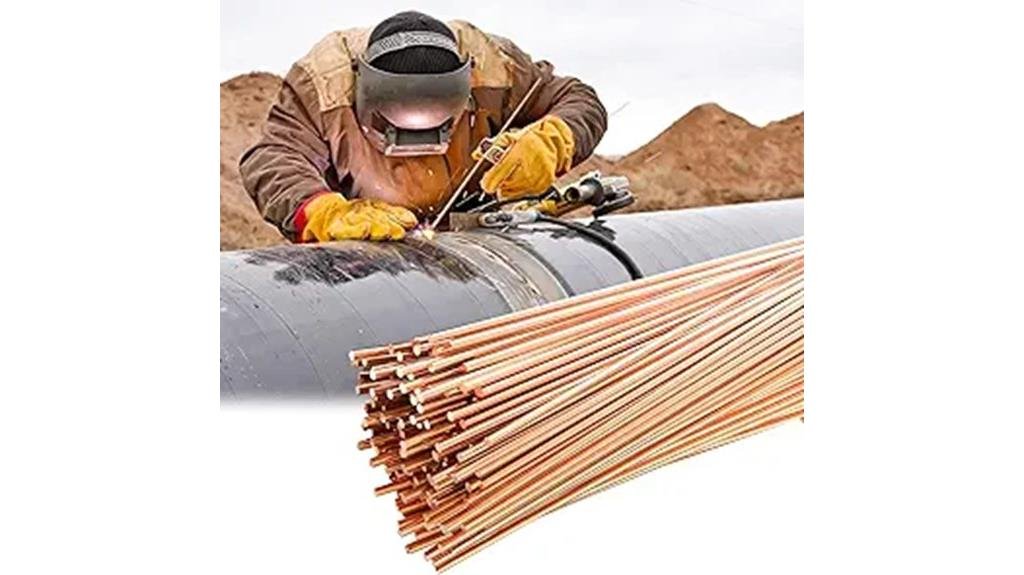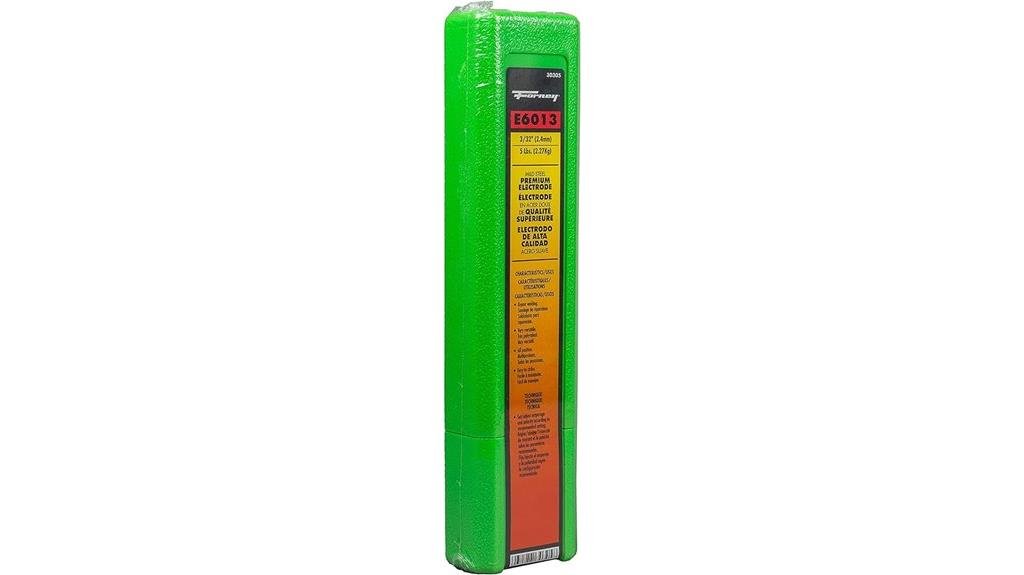
The Forney 30301 E6013 welding rod is presented as a versatile mild-steel electrode, 3/32 in (2.4 mm) diameter, recommended at 40–70 A, for all-position work and thin materials; it offers low spatter, smooth bead appearance, and reliable slag removal. What are its strengths—easy arc start, steady deposition rate, tidy cleanup—and its limits—lower penetration than E7018, not ideal for structural critical welds? More specifics follow.
Key Takeaways
- Forney 30301 E6013 rods are 3/32″ diameter, 1-lb spools suited for thin mild steel and general-purpose repair.
- They offer steady arc stability, smooth flat beads, low spatter, and easy slag removal for clean appearance.
- Compatible with AC or DC, they provide shallow penetration ideal for surface work and vertical-down fillets.
- Typical amperage range is 40–70 A, with recommended root gaps of 1/8–3/16″ for best results.
- Store rods dry at 50–100°F in sealed packaging to prevent moisture and contamination.
Specifications and Key Features
Specifications for the Forney 30301 E6013 welding rod are concise and practical, giving the user the key data needed for shop decisions.
It lists clear rod dimensions: 3/32 inch diameter, 1-pound spool, suitable for all-position work.
What welding applications suit it? Mild steel fabrication, vertical down, and general-purpose repair.
Features include easy striking, smooth beads, low spatter, and reliable slag removal, practical for varied fit-up.
Consider current type: AC or DC acceptable; penetration is shallow, aiding surface appearance.
Practical considerations: stock quantity, amperage range for 3/32″, and compatibility with desired joint types.
Performance and Welding Characteristics
Having outlined the rod’s specs and shop applications, attention now shifts to how the Forney 30301 E6013 performs at the arc and on the workpiece. It offers steady arc stability, shallow penetration, smooth wetting action, and low spatter; the reader gains control, speed, and cleaner finishes.
| Feature | Measurement/Effect |
|---|---|
| Penetration | Shallow — suited to thin mild steel |
| Bead Appearance | Smooth, flat — excellent wetting |
| Spatter & Slag | Low spatter, easy removal |
Which welding techniques fit? Short arc, vertical-down fillets, AC or DC work at 3/32″ (1 lb) deliver predictable results.
Best Uses and Practical Tips
Forney’s 30301 E6013, in the 3/32″ (2.4 mm), 1‑pound size, is best suited for shop tasks that demand quick setup, clean appearance, and controllable heat input; it excels on thin mild steel, tack welds, and vertical‑down fillets, and works well on AC or DC at typical machine settings for this diameter (approximately 40–70 A).
Readers seeking freedom in craft will appreciate practical tips, clear welding techniques, and rod maintenance advice.
Tips: set amperage 40–70 A, use 1/8–3/16″ root gaps, skim slag between passes.
Q: How to store rods?
A: Dry, 50–100°F, sealed packaging.
Frequently Asked Questions
Is This Rod Suitable for Food-Contact Metal Repairs?
No; it is not recommended for food-contact metal repairs. The responder notes food safety and metal compatibility concerns: coatings, flux residues, and allowable alloys may contaminate surfaces, so certified stainless or approved procedures are liberatingly necessary.
Can It Be Used With Flux-Core Welding Machines?
No — it cannot. Picture a romantic duel between a stick and a tube; flux core compatibility fails. The rod demands SMAW, not FCAW, so welding machine performance for flux‑core setups won’t suit its coating and arc chemistry.
What Is the Shelf Life Once the Package Is Opened?
Opened rods remain usable indefinitely if kept dry; typical recommendation is storing in a sealed container or rod oven to prevent rod moisture exposure. Proper welding rod storage preserves performance and empowers welders seeking freedom from rework.
Are Replacement Rods Available in Bulk Sizes?
Yes; liberation-seeking welders find empowerment in bulk purchasing juxtaposed with single-stick limitations. They discover welding supplies sold in larger packs from suppliers and distributors, enabling freedom, cost savings, and uninterrupted fabrication workflow.
Is It Rohs or REACH Compliant?
No definitive statement exists; the product’s RoHS or REACH compliance is not specified. The responder urges seeking manufacturer certification or safety data sheets, invoking compliance standards and safety regulations to empower liberated buyers pursuing transparent sourcing.
Conclusion
The Forney 30301 E6013 proves a practical, predictable pick for mild steel. It balances easy arc starting, low spatter, and smooth bead appearance, with a 3/32 in (2.4 mm) diameter and 40–70 A range, suitable for all-position, thin-material work and vertical-down fillets. Who should use it? Hobbyists and repairers seeking general-purpose reliability. Practical considerations: match amperage to thickness, maintain clean joint, and control travel speed for ideal slag removal and bead shape.