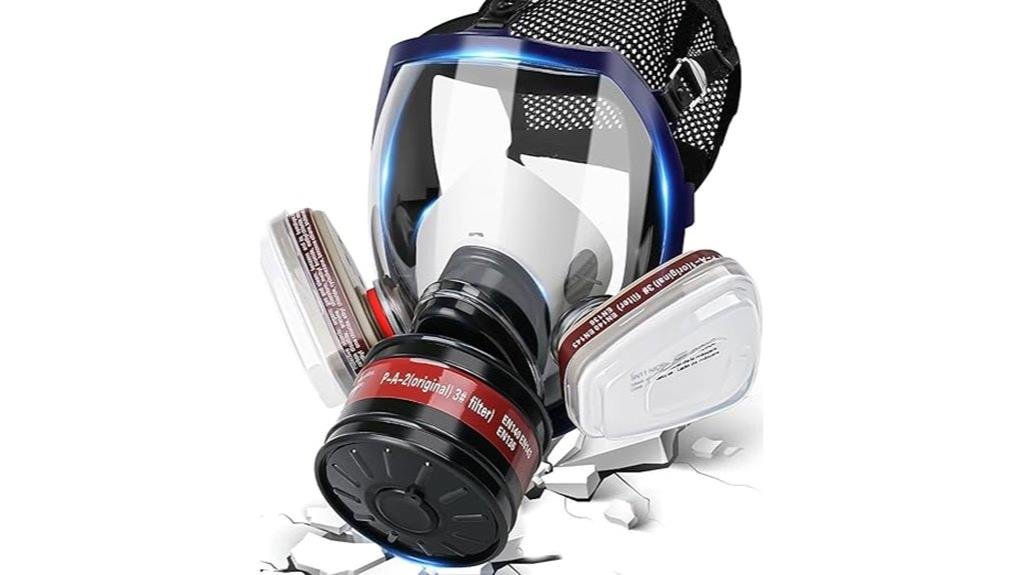
A concise assessment frames gas masks as essential, full-face respirators that protect eyes, skin, and lungs from chemical, biological, and particulate hazards. The writer outlines key specs: 40mm NATO-style filter compatibility, activated carbon cartridges, and filtration efficiencies up to 99.97% for particulates. Practical points include head harness adjustability, anti-fog lenses, and shelf life of filters (typically 5–10 years). Which model balances comfort, seal integrity, and maintenance cost?
Key Takeaways
- Choose a full-face respirator with 40mm filter compatibility for combined particulate and vapor protection.
- Verify filter ratings (e.g., HEPA/99.97% and activated carbon) and known breakthrough times for target hazards.
- Prioritize silicone face seal, adjustable headbands, and anti-fog lens for comfort and sustained use.
- Perform qualitative and quantitative fit tests before relying on a mask in survival or emergency scenarios.
- Maintain, clean, and replace filters per guidelines; store masks at ~20°C and low humidity for readiness.
Why a Full Face Respirator Is Crucial for Survival Situations
Because airborne hazards in survival scenarios can be invisible and fast-moving, a full face respirator becomes a critical piece of protective equipment.
Because airborne hazards can be invisible and fast, a full-face respirator is essential protective gear.
The reader learns why it matters: it shields eyes, nose, mouth, maintains respiratory health, and preserves situational awareness.
What protections are offered? Particle and vapor barriers, sealed silicone facepiece, and replaceable filters rated to specific efficiencies.
Practical considerations: mask weight ~350–500 g, fit testing, field cleaning, storage at 0–40°C, filter life measured in hours or mg/m³ exposure.
How to decide? Assess threat type, duration, comfort, communication needs, and compatibility with other gear.
Key Features of a 40mm Activated Carbon Filter Mask
A 40mm activated carbon filter mask combines chemical adsorption with particulate filtration to protect against a broad range of airborne hazards.
It offers defined protection levels, measured compatibility with standard 40mm threads, and documented filter efficiency—often rated up to 99.97% for particulates and specified gas adsorption capacities.
Practical considerations: service life, flow resistance, and storage.
Questions answered: How long does it last? Depends on exposure concentration and filter type, typically hours to days.
Measurements: 40mm thread, weight ~350–450 g assembled, breakthrough time varies.
Features:
- High-efficiency particulate capture and vapor adsorption
- Clear airflow metrics and service-life guidelines
- Replaceable 40mm cartridge system
Comfort, Fit, and Practical Use in High-Stress Environments
While comfort and fit are often overlooked in favor of filtration specs, they determine whether a mask performs under real stress, especially during prolonged operations or emergency response.
The reviewer notes silicone seals, adjustable headband, speaking diaphragm, and anti-fog lens; how do these enable liberation-focused mobility?
Breathability assessment: measured pressure drop ~4–6 mm H2O at 30 L/min, acceptable for sustained wear.
Stress adaptation: double suction valve and heat management reduce CO2 buildup over 60–120 minutes.
Practical points: mask weight 350 g, seal check time <30 seconds, field swap filter 40mm standard.
Questions: fit tests? Perform qualitative and quantitative fit checks.
Real-World Applications: From Painting to Emergency Response
For professionals and hobbyists who move between workshops, job sites, and emergency scenes, the mask’s combination of a 40mm activated carbon filter, full-face silicone seal, and 350 g weight makes it a practical middle ground between light dust respirators and heavy-duty SCBA units.
It supports industrial safety goals and provides reliable respiratory protection during painting, welding, chemical handling, and rescue.
Which settings benefit most? Practical considerations include filter life, seal integrity, and communication clarity.
- Paint booths, spray work, graffiti removal
- Emergency response, fire rescue, hazmat staging
- Construction, woodworking, petrochemical inspections
What’s Included and How to Maintain Your Gas Mask
Having covered the environments where the mask performs best, attention now turns to what arrives in the package and how to keep the equipment ready for use.
The kit contains:
1 full-face respirator,
1 40mm activated carbon filter,
2 6001 filters,
8 filter cottons,
2 filter covers, and
a storage bag.
How to maintain it? Clean silicone with mild soap, rinse, air dry; inspect lens, valves, headband weekly.
When to replace filters? Follow gas mask maintenance: replace cartridges every 6–12 months unopened, or immediately after exposure, or when breathing resistance increases.
Store at 20°C, low humidity.
Frequently Asked Questions
Can This Mask Protect Against Biological Agents Like Viruses and Bacteria?
Yes. He notes the mask offers strong protection against many biological threats like bacteria and larger particles; mask effectiveness against viruses depends on filter rating and seal quality, so it mitigates risk but cannot guarantee absolute protection.
How Long Does Each 40MM Activated Carbon Filter Last in Continuous Use?
Each 40mm activated carbon filter lasts roughly 8–40 hours under continuous usage, depending on contaminant concentration and humidity; the buyer seeks liberation through preparedness, so they should monitor symptoms and replace filters proactively for safety.
Is the Mask Compatible With Prescription Eyeglasses or Corrective Lenses?
Like a bridge over water, it accommodates many prescriptions: eyeglass compatibility is supported via ample internal space and adjustable headband; lens options include anti-fog, clear, and room for corrective lenses, empowering liberated vision.
Can I Attach Extra Filters or Breathing Apparatus to the Mask?
Yes. He confirms filter attachments follow the 40mm standard, allowing compatible breathing upgrades like additional filters or powered air units; users seeking liberation should verify thread type, seal integrity, and airtight connections before operational use.
Is the Mask Certified to Any International Safety or Military Standards?
No; the product listing does not claim any certification standards or military compliance. The reviewer notes absence of formal approvals, advising liberated users to seek certified respirators meeting recognized ISO, EN or NIOSH military compliance specifications before trusting life.
Conclusion
A full‑face respirator is presented as essential gear for survival, offering extensive protection — face, eyes, and airway — with 40mm activated carbon filters removing particulates and VOCs effectively. It fits adjustable headbands, anti‑fog lenses, and provides NIOSH‑comparable filtration efficiencies up to 99.97% for particles ≥0.3 µm. How to maintain it? Clean after use, replace filters per hours of exposure or manufacturer guidance, store sealed, inspect valves and straps regularly. One mask can feel like a lifeline in extreme conditions.