Disclosure: As an Amazon Associate, we earn from qualifying purchases. If you click a link on this page and make a purchase, we may receive a small commission at no extra cost to you.
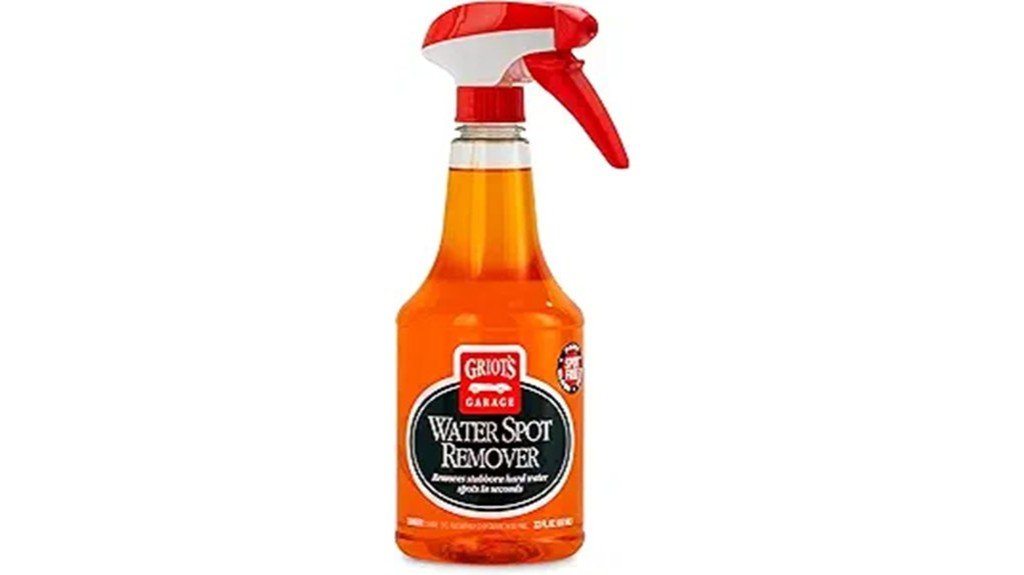
White water spots can make clean car paint look dull, especially after sprinkler overspray or a hard-water wash. Griot’s Garage Water Spot Remover is a 22 oz spray designed to dissolve mineral deposits on paint, glass, chrome, and plastic trim without abrasive polishing. It offers a practical way to treat surface buildup, but it cannot repair marks that have etched into the finish. This review covers its verified features, coating compatibility, safety precautions, and correct application so you can decide if it suits your detailing needs.
Quick Verdict
Rating: Recommended with caveats
Best For: Drivers dealing with above-surface mineral deposits on automotive paint, glass, chrome, and exterior plastic trim.
Bottom Line: Griot’s Garage Water Spot Remover offers convenient, targeted mineral removal without starting with abrasive paint correction. However, it requires careful chemical handling, can affect waxes and sealants, and cannot repair etched surfaces.
Griot’s Garage Water Spot Remover Specifications
| Specification | Detail |
|---|---|
| Brand | Griot’s Garage |
| Model / Part Number | 10880 |
| Amazon ASIN | B0BQCYFVLJ |
| Product Type | Automotive mineral water spot remover |
| Container Size | 22 US fl oz (approximately 650 ml) |
| Linked Package | One 22 fl oz spray bottle |
| Formula | Liquid mineral-descaling cleaner with patented chemistry |
| Documented Ingredients | Water, urea hydrochloride, acid salt, non-ionic surfactant, and other disclosed ingredients |
| Application Method | Spray, allow brief contact, wipe with damp microfiber, then dry and wash |
| Approximate Contact Time | About one minute, following the product instructions |
| Recommended Surfaces | Automotive paint, exterior glass, chrome, and plastic trim |
| Ceramic Coatings | Compatible with chemically resistant ceramic coatings, subject to coating-maker guidance |
| Wax and Sealants | May reduce existing protection |
| Main Limitation | Removes surface minerals, not physical paint or glass etching |
| Safety Requirements | Protective gloves, eye protection, ventilation, and careful handling |
What Is Griot’s Garage Water Spot Remover?
Griot’s Garage Water Spot Remover, part number 10880, is a ready-to-use spray for cleaning mineral water spots from vehicle exteriors. These spots form when water evaporates and leaves calcium, magnesium, and other dissolved minerals behind.
The cleaner uses a chemical descaling approach rather than abrasive polishing. Griot’s Garage describes its formula as patented and designed to remove above-surface deposits from several common automotive materials. The 22 oz trigger-spray bottle also makes it practical to target small areas, such as door jambs and grille trim.
This product is best used as a dedicated spot treatment after regular washing. It is not a substitute for car shampoo, paint correction, or a protective wax or ceramic coating.
Who Should Buy It?
Best For
- Drivers with visible mineral residue from sprinklers or hard-water washing
- Vehicle owners cleaning water spots from exterior glass, chrome, and plastic trim
- Detailing enthusiasts who want to try chemical removal before abrasive polishing
Skip If
- Your water marks are etched into clear coat or glass
- You need a cleaner that leaves existing wax and sealant protection untouched
- You cannot follow the required protective-equipment and handling precautions
Key Features and Performance Analysis
1. Chemical Mineral Removal
The main advantage of this cleaner is its ability to address mineral buildup chemically. It uses ingredients that help break down the deposits left after hard water dries on vehicle surfaces.
The manufacturer’s ingredient disclosure identifies urea hydrochloride as one of its descaling ingredients. The formula also includes an acid salt and a non-ionic surfactant. These ingredients help the liquid contact deposits and support mineral removal.
Griot’s Garage states that the formula avoids several aggressive acids commonly associated with some industrial cleaning products, including hydrofluoric acid and phosphoric acid.
That does not make the spray harmless. Its published safety data sheet lists important chemical hazards, so protective equipment and correct use remain essential.
2. Compatibility With Multiple Exterior Surfaces
Instead of buying separate products for every exterior material, you can use this cleaner on several surfaces recommended by Griot’s Garage.
These include automotive paint, exterior windows, chrome, and plastic trim. The manufacturer also highlights the spray bottle for treating small areas such as grille details and door jambs.
However, material compatibility does not guarantee that every finish or coating will tolerate the product equally. Test a hidden area first, especially on older trim, damaged finishes, coated glass, or aftermarket protection.
3. Short Application Time
The product instructions call for roughly one minute of contact time before wiping. That makes it useful for localized spot treatment after a normal car wash.
You still need to apply it carefully. Work on a small section, use a damp microfiber towel to remove the cleaner, and follow with a dry towel. The manufacturer also recommends completing the process with a car wash.
The exact amount of cleaning required depends on the thickness of the deposits and the condition of the surface. A one-minute application is not a guarantee that every stain will disappear.
4. Effect on Ceramic Coatings, Wax, and Sealants
Griot’s Garage states that its Water Spot Remover can be used on chemically resistant ceramic coatings. This can be helpful when surface minerals make an otherwise well-maintained coating look cloudy or reduce its visible water-beading performance.
Traditional waxes and synthetic sealants are different. The product may reduce these protective layers, so you may need to restore protection after cleaning.
For recently applied ceramic coatings, paint protection film, or specialty glass coatings, follow the coating manufacturer’s maintenance instructions before using a chemical spot remover.
Surface Compatibility at a Glance
| Surface | Suitable Use | Important Note |
|---|---|---|
| Automotive Paint | Above-surface mineral deposits | Cannot remove physical etching |
| Exterior Glass | Hard-water residue and spots | Check aftermarket glass coatings |
| Chrome | Mineral stains on intact chrome finishes | Avoid prolonged contact with damaged plating or exposed metal |
| Plastic Trim | Deposits around exterior trim | Spot-test delicate or aged surfaces |
| Ceramic Coatings | Mineral buildup on chemically resistant coatings | Confirm coating compatibility first |
How It Performs in Real Use
Griot’s Garage Water Spot Remover is designed for common exterior detailing situations. The following examples explain where its documented features are useful and where results may be limited. They are not claims of independent hands-on testing.
Scenario 1: Sprinkler Spots on Automotive Paint
Sprinkler overspray can leave white mineral rings on a hood, door, or roof. Washing removes dirt, but mineral deposits may remain after the paint dries.
For these surface deposits, Griot’s Garage Water Spot Remover gives you a chemical cleaning option before using a polishing compound. You can treat one small area and inspect it before working across the rest of the panel.
If the rings remain visible after the minerals are removed, they may be etched into the clear coat. More chemical cleaner will not repair that damage.
Scenario 2: Hard-Water Marks on Exterior Glass
Windshields and side windows often collect water spots near their edges, around mirrors, and along the lower glass.
The cleaner is listed for exterior glass, making it suitable for addressing above-surface mineral residue. Using a clean microfiber towel also helps avoid dragging dirt across the glass.
Glass can develop etched marks that chemical cleaning cannot remove. For windshields with persistent marks, inspect the glass and seek appropriate professional guidance rather than repeatedly applying chemicals.
Scenario 3: Chrome, Grilles, and Door Jambs
Mineral deposits can collect around chrome trim, grille openings, and narrow door jambs. These areas may be awkward to clean with a large polishing pad.
The spray format helps you target small sections and reach detailed areas. Apply a controlled amount, wipe carefully, and remove any residue from seams and crevices.
Take extra care around damaged chrome plating or exposed metal. The manufacturer’s safety data sheet warns that the mixture may be corrosive to metals, even though the product is recommended for use on intact chrome finishes.
Scenario 4: Maintaining a Ceramic-Coated Vehicle
Minerals can collect on top of a ceramic coating and interfere with its appearance or water-beading behavior.
For chemically resistant ceramic coatings, a compatible mineral remover may help clear this surface contamination without resorting to paint polishing.
Check the specific coating’s care instructions first. If water-beading performance stays weak after cleaning, the coating may need separate maintenance or professional inspection.
How to Use Griot’s Garage Water Spot Remover Correctly
Correct application matters because this is an active chemical cleaner, not a regular quick detailer. Follow the bottle instructions and use suitable protective equipment.
- Wash the vehicle: Remove loose dirt and road grit with a suitable automotive shampoo. Rinse and dry the surface so the remaining mineral spots are easy to identify.
- Choose a shaded area: Work on a cool panel away from direct sunlight. Avoid hot surfaces where the liquid may dry too quickly.
- Protect yourself: Wear suitable chemical-resistant gloves and eye protection. Make sure the work area has adequate ventilation.
- Test a small section: Choose an inconspicuous spot to check for unwanted changes to the finish or existing protection.
- Apply the product: Spray a controlled amount onto the affected area. Work on one small section instead of covering the entire vehicle.
- Allow brief contact: Follow the manufacturer’s approximate one-minute application guidance. Do not allow the cleaner to dry on the surface.
- Wipe with damp microfiber: Gently wipe away the cleaner and loosened deposits using a clean, damp microfiber towel. Avoid aggressive scrubbing.
- Follow with a dry towel: Use a second clean microfiber towel to remove remaining moisture and visible residue.
- Complete the wash: Follow the manufacturer’s recommendation to finish with a car wash. Rinse thoroughly and dry the vehicle.
- Inspect the finish: Check whether the mineral spots are gone. If needed, restore wax or sealant protection after the surface is clean and dry.
Pro Tip: Treat one small section first and compare it with the surrounding paint after the final wash. This helps you tell whether the cleaner is removing mineral deposits or whether deeper etching remains. Use separate clean microfiber towels for application and drying to reduce the risk of scratches.
Common Application Mistakes to Avoid
- Using it on dirty paint: Loose grit can scratch the finish when you wipe.
- Letting the cleaner dry: Work in small sections and remove the solution within the recommended contact time.
- Skipping the final wash: Follow the manufacturer’s wash instructions instead of assuming a quick wipe has removed all chemical residue.
- Using excessive pressure: Hard scrubbing will not fix etched clear coat and may create new marks.
- Ignoring the coating: Check compatibility with aftermarket coatings, film, and protective sealants.
Formula Safety and Handling Notes
Griot’s Garage describes this product as a specialized alternative to certain aggressive acid cleaners. However, its published safety data sheet identifies hazards that require careful handling.
The manufacturer’s safety data sheet dated August 12, 2022, includes warnings for serious eye damage, possible allergic skin reactions, possible respiratory sensitization, and potential corrosion of metals.
For safe handling:
- Wear protective gloves, suitable eye protection, and protective clothing.
- Avoid breathing the spray mist or vapors.
- Use the cleaner in a well-ventilated area.
- Avoid skin and eye contact.
- Keep the bottle in its original container and store it in a cool, well-ventilated location.
- Keep it away from children and pets.
- Do not mix the cleaner with household chemicals or other detailing products.
- Follow the product label and current safety documentation for first aid and disposal.
If the cleaner contacts your eyes, immediately follow the safety data sheet’s first-aid directions, including flushing with water and obtaining urgent medical assistance. Do not delay seeking help for eye exposure.
You can review the official Griot’s Garage product information and its published safety data sheet for additional guidance. Always follow the current product label if instructions change.
Before You Buy: This cleaner removes mineral deposits sitting on a surface, not physical etching in paint or glass. It may also reduce wax and sealant protection. Although Griot’s Garage recommends it for intact chrome and chemically resistant ceramic coatings, check compatibility with damaged finishes, specialty coatings, and exposed metals before use. Protective gloves and eye protection are important because the manufacturer’s safety data sheet identifies serious chemical hazards.
Pros and Cons
Pros
- Uses chemical descaling to target above-surface mineral deposits without starting with abrasive polishing
- Recommended for automotive paint, exterior glass, chrome, and plastic trim
- Short, approximately one-minute contact time makes localized cleaning practical
- 22 oz spray bottle helps target narrow areas and detailed exterior trim
- Compatible with chemically resistant ceramic coatings when manufacturer guidance permits
Cons
- Cannot correct etched paint or glass, even when the remaining marks resemble mineral spots
- May reduce traditional waxes and sealants, adding a protection step after treatment
- Requires protective equipment, careful handling, microfiber wiping, and a follow-up wash
Is It Worth the Price?
Griot’s Garage Water Spot Remover is worth considering if you regularly encounter mineral spots after sprinkler exposure or hard-water washing. The 22 oz bottle gives you a dedicated cleaner for several exterior materials, so you do not need separate mineral-removal products for every supported surface.
Its value is strongest when the spots are above the surface and you want to avoid unnecessary polishing. The targeted spray format is also useful for detailing door jambs, trim, and other smaller areas.
However, it offers limited value for vehicles with extensive paint etching. You may still need polishing, professional correction, or renewed paint protection. Compare the current bottle price with other dedicated spot removers rather than assuming chemical cleaning will solve every water mark.
How It Compares to Alternatives
CARPRO Spotless 2.0 is another chemical mineral remover. CARPRO describes it as using a stronger acid blend to break down mineral deposits, with detailed instructions for painted surfaces, glass, trim, and certain ceramic coatings. It is worth comparing if you want a product with specific application guidance for several exterior materials.
GYEON Q²M WaterSpot also targets mineral deposits without requiring abrasive polishing. It is positioned for automotive paint and coating maintenance, although GYEON advises that compatibility depends on the particular coating. Griot’s Garage is worth considering if you prefer a 22 oz trigger spray with manufacturer-listed compatibility across paint, chrome, glass, and plastic trim.
For marks that have physically etched the clear coat, neither chemical option replaces proper paint correction. A suitable polishing process may be needed once loose minerals have been removed.
Frequently Asked Questions
Does Griot’s Garage Water Spot Remover remove etched water spots?
No. It is designed to dissolve mineral deposits sitting above the surface. If minerals have already caused physical etching in clear coat or glass, the remaining damage may require suitable polishing or professional correction.
Is it safe for ceramic-coated cars?
Griot’s Garage states that the formula is compatible with chemically resistant ceramic coatings. However, not all coatings have the same chemical resistance. Check the coating manufacturer’s maintenance instructions and test a small area before treatment.
Will it strip car wax or paint sealant?
The manufacturer advises that the cleaner may diminish waxes and sealants. If your paint relies on either type of protection, inspect its condition after cleaning. You may need to reapply protection once the surface is properly washed and dried.
Can I use it on windshields, side windows, and chrome?
Yes, exterior automotive glass and chrome are among the manufacturer’s recommended surfaces. Avoid prolonged contact, remove residue thoroughly, and verify compatibility with coated glass or damaged chrome. It will not repair scratched or etched surfaces.
How long should I leave the cleaner on the surface?
The product instructions describe a contact time of approximately one minute. Work on a cool surface in the shade and do not let the liquid dry. Wipe with a damp microfiber towel, then a dry towel, and follow the recommended final wash.
Do I need to wash the car after using it?
Yes. The manufacturer’s application guidance includes a final car wash after the damp and dry microfiber steps. This helps remove remaining cleaner and dissolved deposits. Do not assume that a quick detailer alone provides the same finishing step.
Can I use it on paint protection film or bare metal?
The manufacturer’s standard compatibility list does not establish universal safety for paint protection film or bare metal. Its safety data sheet also warns of possible metal corrosion. Consult the surface manufacturer before use and avoid applying it to unverified or damaged materials.
How many bottles are included in the linked Amazon listing?
The linked ASIN B0BQCYFVLJ identifies the 22 fl oz single-bottle configuration. Amazon also lists a separate two-bottle option. Check the selected pack size and seller details before ordering because variants and purchasing options can change.
The Bottom Line
Griot’s Garage Water Spot Remover is worth considering if you want to remove above-surface mineral deposits from supported automotive paint, glass, chrome, and plastic trim without starting with abrasive polishing. Its targeted spray application and short contact time are useful, but it requires careful chemical handling and may reduce wax or sealant protection. Skip it as a standalone solution if your finish is already etched or you cannot confirm compatibility with a specialty coating.
Ready to Tackle Mineral Water Spots?
Check the current price, 22 oz bottle configuration, and seller information for Griot’s Garage Water Spot Remover on Amazon.