Disclosure: As an Amazon Associate, we earn from qualifying purchases. If you click a link on this page and make a purchase, we may receive a small commission at no extra cost to you.
Lighting a welding or soldering torch can become frustrating when a basic striker produces weak sparks or needs frequent flint replacements. The GUTIMORE Lightnin’ Bug Torch Striker takes a different approach with a reusable, battery-free mechanism that produces multiple sparks per discharge. Its main strengths are simple operation, low weight, and the absence of replaceable flints. However, fuel-gas compatibility and warranty details should be confirmed with the current seller before you buy.
Quick Verdict
Rating: 7.5/10, Recommended with caveats
Best For: Welders, metalworkers, and repair technicians who want a reusable multi-spark torch igniter without batteries or replacement flints.
Bottom Line: The Lightnin’ Bug offers a convenient multi-spark design in a lightweight, chrome-plated body. Its limited independently documented specifications mean you should confirm gas compatibility, package contents, and warranty coverage before ordering.
Key Specifications
| Specification | Detail |
|---|---|
| Brand | GUTIMORE |
| Product name | Lightnin’ Bug Torch Striker |
| Product type | Handheld multi-spark torch igniter |
| Spark output | Five or more sparks per discharge, according to the product claim |
| Power source | Mechanical operation with no batteries |
| Replaceable flint | Not required |
| Claimed service life | Up to 30,000 strikes under the manufacturer-stated claim |
| Exterior finish | Chrome-plated for added corrosion resistance |
| Weight | Described as weighing only a few ounces |
| Listed gas applications | Oxy-acetylene and methane applications are stated in the product information |
| Best use | Lighting compatible welding, soldering, brazing, and heating torches |
What Is the GUTIMORE Lightnin’ Bug Torch Striker?
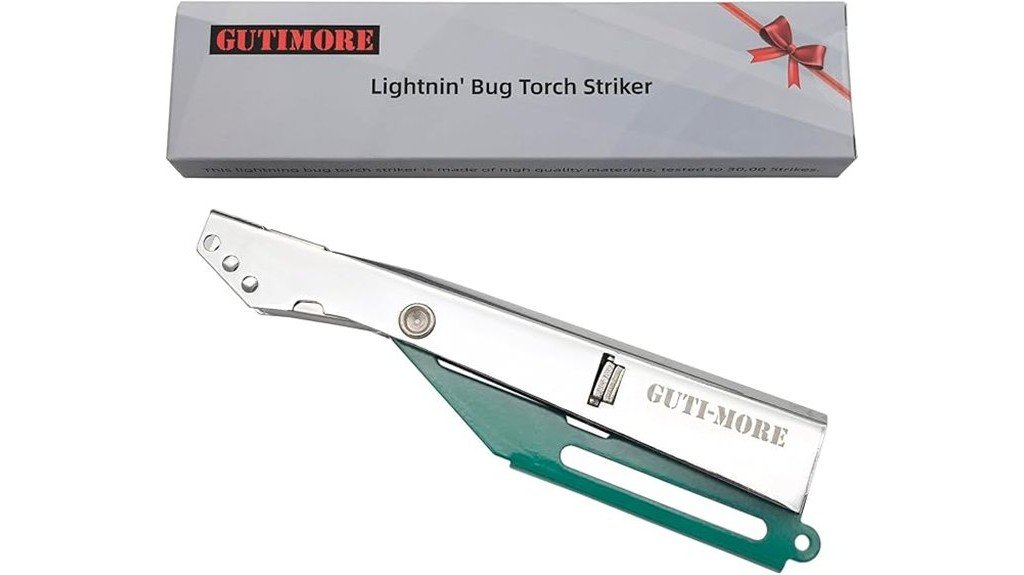
The GUTIMORE Lightnin’ Bug is a handheld tool that creates sparks for igniting a compatible gas torch. It does not produce or regulate fuel, and it is not part of the torch’s valve, hose, regulator, or flame-control system.
Unlike a conventional cup-style striker that relies on replaceable flints, this model uses an internal reusable spark-generating mechanism. GUTIMORE states that one discharge can produce five or more sparks and that the mechanism can provide up to 30,000 strikes.
The design is aimed at people who regularly light welding, soldering, brazing, or heating torches and want fewer consumable parts in their tool kit. Its chrome-plated exterior also gives the body some protection from rust and corrosion during normal shop use.
Key Takeaways
- The multi-spark mechanism is stated to create five or more sparks each time you actuate it.
- You do not need batteries, charging cables, or replaceable flints.
- The manufacturer-stated service life is up to 30,000 strikes, but actual life will depend on use, storage, and handling.
- The lightweight body should be easy to carry in a welding cart, toolbox, or mobile repair kit.
- The chrome-plated exterior can help limit surface corrosion, but the striker should still be stored dry.
- Oxy-acetylene and methane use are mentioned in the product information. Other fuel gases should be confirmed before purchase.
Who Should Buy It?
Best For
- Welders who are tired of replacing worn striker flints.
- Repair technicians who need a lightweight igniter for a mobile tool kit.
- Shop users who prefer a mechanical tool without batteries or charging.
Skip If
- You need confirmed compatibility with propane, butane, or another gas not clearly listed.
- You prefer a torch with a built-in, one-handed ignition system.
- You need detailed manufacturer documentation or a clearly stated warranty before buying.
Before You Buy: A torch striker only supplies the ignition spark. Confirm that the striker is suitable for your torch and fuel-gas setup, and continue following every lighting, pressure, ventilation, and shutdown instruction supplied with your torch equipment.
Multi-Spark Ignition Performance
The Lightnin’ Bug’s main feature is its ability to create several sparks from one discharge. The stated output of five or more sparks gives the fuel stream more than one opportunity to ignite during each actuation.
This can be more convenient than a worn single-flint striker that produces one weak or poorly positioned spark. You may need fewer repeated hand movements when the striker is clean, dry, and correctly positioned near the torch tip.
The multiple-spark claim does not guarantee instant ignition in every situation. Torch condition, fuel flow, tip cleanliness, positioning, air movement, and moisture can all affect the result.
Flint-Free and Battery-Free Design
You do not need to stock replacement flints for this striker. You also avoid batteries, charging ports, or electronic controls that could complicate storage and maintenance.
The simple mechanical format makes sense for a workshop tool that may sit unused between jobs. You can keep it in a toolbox without checking a charge level before each project.
The internal mechanism will still wear over time. The stated 30,000-strike life should be treated as a manufacturer claim rather than a guaranteed number for every user or working environment.
Build Quality and Handling
The striker is described as weighing only a few ounces, so it should not add much weight to your welding cart or field-service bag. A lightweight tool is also easier to position near the torch tip without placing excessive strain on your wrist.
Its chrome-plated exterior is intended to resist surface rust and corrosion. That finish can be useful in garages and work areas where humidity changes, but it does not make the striker waterproof.
Long-term durability will depend on how you handle and store the mechanism. Drops, metal dust, grinding debris, moisture, and chemical residue may reduce spark consistency or shorten its service life.
Gas Compatibility
The supplied product information lists use with various fuel gases and specifically mentions oxy-acetylene and methane. This makes it relevant to several welding, heating, and repair applications.
Compatibility with propane, butane, MAP-Pro, or other fuel gases is not clearly established in the available information. Check the current Amazon listing, packaging, or manufacturer instructions before using the striker with a gas that is not specifically identified.
The striker’s compatibility does not determine whether the torch itself is suitable for a particular gas. Your torch tip, regulator, hose, flashback protection, and operating procedure must also match the fuel system.
How It Performs in Real Use
For Workshop Welding
In a fixed workshop, the multi-spark mechanism can reduce the inconvenience of searching for flints or discovering that a conventional striker has become weak. Its small size also lets you keep it close to the torch station.
Grinding dust and metal particles are common in this environment. Keeping the striker away from direct debris and wiping its exterior after use may help maintain smoother operation.
For Soldering and Brazing
The Lightnin’ Bug may be useful for compatible gas torches used in plumbing, HVAC, jewelry work, or general metal repair. Its multiple sparks can make positioning less demanding than a weak single-spark igniter.
You still need to confirm that the exact torch and fuel gas are supported. A striker that creates sparks does not make an incompatible torch setup safe.
For Mobile Repair Work
The battery-free design suits service vehicles and field toolboxes because you do not need a charger or spare cells. Its stated weight of only a few ounces also makes it easy to carry with other torch accessories.
Field storage can expose tools to rain, condensation, dirt, and temperature changes. Keep the striker in a dry compartment rather than leaving it loose in an open truck bed or damp toolbox.
For Repeated Long-Term Use
The claimed lifespan of up to 30,000 strikes could reduce consumable replacement compared with a basic flint striker. The actual service life will depend on actuation force, frequency, cleanliness, and storage conditions.
Once the internal mechanism becomes inconsistent or stops generating an adequate spark, the unit should be replaced. It is not described as having a user-refillable or replaceable internal spark component.
How to Use It Correctly
- Read your torch instructions first. Follow the torch manufacturer’s exact setup, pressure, ignition, adjustment, and shutdown procedure.
- Inspect the striker. Do not use it if the body or moving mechanism appears bent, jammed, contaminated, or damaged.
- Keep the working area clear. Remove combustible materials and use the ventilation and protective equipment required for your torch operation.
- Position it carefully. Place the spark area near the torch tip only as directed by your torch instructions. Keep the tip pointed away from people, cylinders, hoses, and unintended surfaces.
- Actuate the mechanism firmly. One complete movement should create the stated cluster of sparks.
- Stop after a failed attempt. Follow the torch manufacturer’s procedure for closing the gas and allowing unburned fuel to disperse before trying again.
- Store it dry. Wipe the exterior after use and keep it away from standing water, corrosive chemicals, and loose grinding debris.
Pro Tip: Test the striker’s spark action before opening the torch valve. This lets you confirm that the mechanism moves freely without releasing fuel during the check.
Compatibility and Safety
The Lightnin’ Bug is an ignition accessory, not a safety device. It does not inspect your hoses, regulate gas pressure, prevent flashback, detect leaks, or shut down the torch.
Use it only with properly maintained equipment and in a work area suitable for the torch process. Wear the eye, hand, body, and respiratory protection required for your application and materials.
Do not attempt to repair, lubricate, or open the internal striker mechanism unless the manufacturer provides instructions for doing so. Adding oil or another substance near oxygen and fuel-gas equipment can create an unnecessary hazard.
Cleaning and Storage
Wipe the exterior with a clean, dry cloth after use. A slightly damp cloth may be used on the outer surface when needed, but dry the striker completely before returning it to storage.
Do not soak the tool or spray cleaning liquid into its mechanism. Avoid aggressive chemicals that could damage the finish or leave flammable residue.
Store the striker in a dry toolbox compartment where heavier tools cannot crush or bend it. Separating it from grinding dust, metal chips, and loose hardware can also help protect the moving parts.
Pros and Cons
Pros
- Produces five or more sparks per discharge under the stated product claim.
- Does not require disposable flints.
- Works without batteries or charging.
- Lightweight design is suitable for shop and mobile tool kits.
- Chrome-plated exterior offers added protection against surface corrosion.
Cons
- Compatibility with propane, butane, and some other gases is not clearly confirmed.
- The 30,000-strike lifespan is a stated claim, not a guaranteed result for every user.
- Warranty terms and detailed manufacturer documentation are not clearly established.
Is It Worth the Price?
The Lightnin’ Bug offers the most value to frequent torch users who regularly replace striker flints or want to remove batteries from their setup. Its reusable multi-spark mechanism may reduce small maintenance tasks and keep your ignition tool ready between jobs.
It is also worth considering for a mobile repair kit because it is light and does not require extra consumables. Buyers who use a torch only occasionally may find that a less complex conventional striker already meets their needs.
The main value limitation is the lack of independently confirmed specifications and clear warranty information. Compare the current seller details with the product claims before deciding whether the added convenience justifies the purchase.
How It Compares to Alternatives
A conventional flint striker is simple, widely available, and usually easy to service, but its flint eventually needs replacement. The GUTIMORE removes that consumable and produces multiple sparks rather than relying on one flint contact.
A piezoelectric igniter or a torch with built-in ignition may offer easier one-handed operation. However, those options can depend on electronic components or require replacing the entire ignition assembly when it fails. The Lightnin’ Bug makes the most sense when you want a separate mechanical igniter with no battery or loose flint to manage.
Frequently Asked Questions
Does the GUTIMORE Lightnin’ Bug use replaceable flints?
No replaceable flint is described for this model. It uses a reusable internal mechanism that creates multiple sparks when you actuate it.
Does the torch striker require batteries?
No. The Lightnin’ Bug is described as a mechanical igniter, so you do not need batteries, a charger, or an electrical connection.
How many sparks does it create?
The product information states that it produces five or more sparks per discharge. Actual spark consistency may be affected by wear, dirt, moisture, damage, or incomplete actuation.
Does it work with propane or butane?
Propane and butane compatibility is not clearly confirmed in the available product information. Check the current listing or manufacturer instructions before using it with either gas.
Can you use the striker in wet conditions?
You should keep the striker dry. Moisture may interfere with spark production and can shorten the life of the internal mechanism despite the corrosion-resistant exterior finish.
Is the stated 30,000-strike lifespan guaranteed?
No universal service life can be guaranteed from the available information. Treat 30,000 strikes as a manufacturer-stated estimate that may vary with frequency, storage, contamination, and handling.
How should you clean and store it?
Wipe the exterior clean and dry after use, then store it in a protected toolbox compartment. Do not soak it, spray cleaner into the mechanism, or add lubricant unless the manufacturer specifically instructs you to do so.
What warranty comes with the GUTIMORE striker?
A specific manufacturer warranty is not established in the available product details. Review the current Amazon listing and seller policy for the applicable return or warranty terms before ordering.
The Bottom Line
The GUTIMORE Lightnin’ Bug is worth considering when you want a compact, reusable torch striker without batteries or replacement flints. Its multi-spark design is the main advantage, while uncertain gas compatibility and limited warranty information are the main reasons to check the current listing carefully.
Buy it for frequent workshop or mobile torch use when its listed applications match your setup. Skip it when you need confirmed compatibility with an unlisted fuel gas or prefer ignition built directly into your torch.
Ready to Buy?
Check the latest seller details, compatibility information, and return terms before you decide.