
Disclosure: As an Amazon Associate, we earn from qualifying purchases. If you click a link on this page and make a purchase, we may receive a small commission at no extra cost to you.
HANUU Reusable PAPR Respirator Review
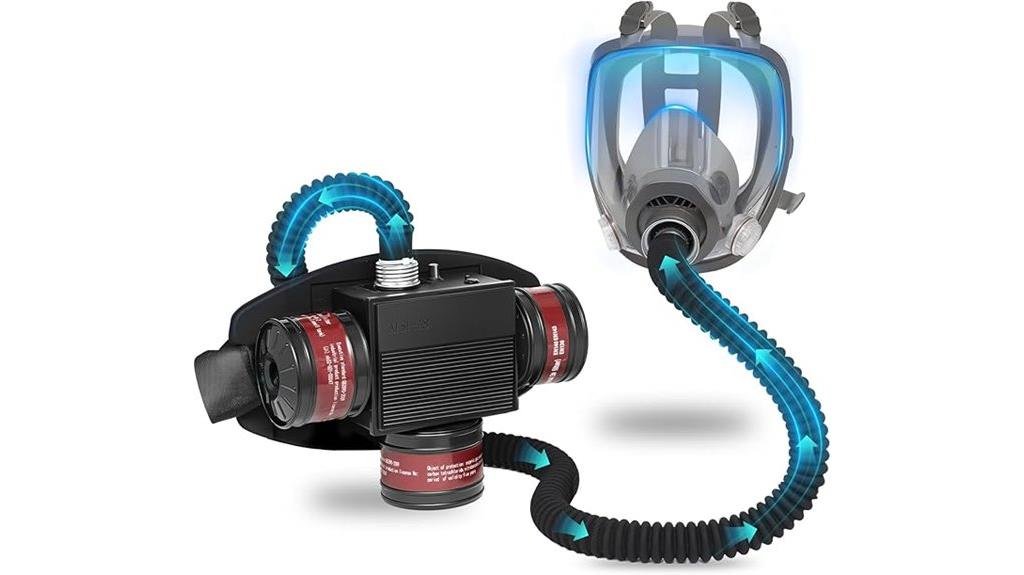
A powered respirator can feel more comfortable than a passive full-face mask, but comfort means little if the filter, seal, or certification does not match your hazard. The HANUU Reusable PAPR Respirator combines a full-face mask, belt-mounted blower, one 40mm activated carbon filter, and two air hoses in one kit. Its seller-listed hardware is practical for buyers who want blower-assisted airflow, yet the Amazon page does not display a NIOSH approval or a verified battery runtime. This review explains what is included, how the system is designed, and when a certified professional respirator is the safer choice.
Quick Verdict
Rating: 7/10, Recommended with major safety caveats
Best For: Informed DIY buyers who want blower-assisted airflow and can confirm that the filter, fit, and complete system suit a known, non-IDLH task.
Bottom Line: The kit includes a silicone-seal full-face mask, compact blower, 40mm filter, adjustable belt, and two hoses. Its main tradeoff is the lack of clearly displayed NIOSH approval, airflow certification, and battery-runtime data on the linked listing, so it should not be treated as verified occupational respiratory protection.
| Specification | Detail |
|---|---|
| Brand | HANUU |
| Listing Name | HANUU Reusable PAPR Respirator, Portable PAPR Respirator System |
| Product Type | Powered air-purifying respirator-style full-face kit |
| Listing Variation | Blue-papr, one size |
| Face Seal Material | Silicone, described by the seller as food-grade |
| Face Shield | Large-view polycarbonate shield, described by the seller as anti-fog and impact resistant |
| Filter | One 40mm activated carbon filter with electrostatic filter cotton |
| Seller Filtration Claim | Effective filtration of 99.99% or higher, with no test standard shown on the listing |
| Blower Weight | 12.88 ounces |
| Blower Dimensions | 5.04 x 4.17 x 4.17 inches |
| Airflow Control | Two-gear switch |
| Air Hoses | Two hoses, each 19.68 inches long |
| Headgear | Elastic, adjustable 5-point headband |
| Other Features | Speaking diaphragm and adjustable blower belt |
| Package Contents | 1 full-face mask, 1 activated carbon filter, 1 blower, and 2 air supply hoses |
| Battery Runtime | Not clearly stated for this exact listing |
| Certification | No NIOSH approval or TC approval number is displayed on the linked Amazon page |
| Critical Safety Limit | Do not use in unknown, oxygen-deficient, or immediately dangerous to life or health atmospheres |
How This Review Was Checked
We checked the linked Amazon listing for the product title, variation, package contents, materials, blower measurements, hose length, controls, and seller claims. We also compared the safety wording with current OSHA respiratory-protection requirements and NIOSH guidance. Unsupported claims about a 10-hour runtime, 170 L/min airflow, total system weight, and formal workplace certification were not used.
Key Takeaways
- The linked listing shows one full-face mask, one 40mm activated carbon filter, one blower, and two 19.68-inch hoses.
- The blower weighs 12.88 ounces, measures 5.04 x 4.17 x 4.17 inches, and has two airflow settings.
- The mask uses a silicone face seal, polycarbonate shield, speaking diaphragm, and adjustable 5-point headband.
- The seller claims filtration of at least 99.99%, but the listing does not identify a test standard or display a NIOSH approval number.
- A 40mm thread describes physical connection size, not automatic protection against every dust, gas, vapor, paint, or chemical.
Before You Buy: The linked listing does not display a NIOSH approval or TC number. Do not use this kit as required workplace protection, for unknown contaminants, in oxygen-deficient spaces, or in an IDLH atmosphere unless a qualified safety professional verifies the exact respirator, filter, fit, and complete configuration.
What Is the HANUU Reusable PAPR Respirator?
The HANUU system is a powered full-face respirator-style kit. Its belt-mounted blower pulls ambient air through a 40mm filter and sends that air to the facepiece through a hose. This design may reduce the breathing resistance and stuffy feeling that some users notice with a passive full-face respirator.
The package includes one mask, one activated carbon filter, one blower, and two hoses. The second hose extends the routing length rather than creating a second air channel. Each hose uses a 40mm interface, and each measures 19.68 inches.
The main appeal is convenience. You get the basic components in one box, plus a speaking diaphragm, adjustable belt, and two blower settings. The main concern is documentation: the listing does not show certified airflow, a battery-runtime figure, a cartridge approval label, or NIOSH certification for the complete system.
Who Should Buy It?
Best For
- Informed DIY buyers who want a belt-mounted blower and full-face coverage for a known task.
- Users who can verify filter suitability instead of relying on the 40mm thread size alone.
- Buyers willing to inspect the mask, hose, filter, connections, and blower before every use.
Skip If
- Your employer requires a NIOSH-certified respirator, medical evaluation, fit testing, or a written respiratory-protection program.
- You cannot identify the contaminant, concentration, oxygen level, or correct cartridge for the job.
- Facial hair, eyewear, or face shape prevents a reliable seal with a tight-fitting full-face mask.
Feature-by-Feature Review
Mask Design, Materials, and Fit
The seller lists a silicone face seal and a large-view polycarbonate shield. Silicone can flex around the face better than a rigid edge, while the 5-point headband lets you adjust pressure across the forehead, cheeks, and chin. The listing labels the size as “One Size,” but that does not guarantee a safe seal on every face.
The speaking diaphragm is useful when you need short conversations without removing the mask. Regular eyeglass arms may pass through the sealing area and create a leak, so prescription-glasses users should confirm a compatible spectacle solution before relying on a tight-fitting facepiece.
The polycarbonate shield gives broad visual coverage, but the listing does not show an ANSI Z87.1 impact rating. Keep task-specific eye, face, heat, or welding protection in place when the job requires it.
Filter Claims and Safety Limits
The included filter combines activated carbon with electrostatic filter cotton and uses a 40mm threaded connection. The seller claims effective filtration of 99.99% or higher and markets the filter for dust, vapors, paint spray, and other contaminants. The page does not identify the test method, challenge aerosol, gas capacity, service-life data, or a NIOSH approval number behind that claim.
A filter that physically screws onto a 40mm port is not automatically suitable for your hazard. Particulate filters, organic-vapor cartridges, acid-gas cartridges, and combination canisters have different uses and limits. You need the correct approved component for the contaminant, concentration, work duration, and complete respirator configuration.
This system filters surrounding air. It does not supply oxygen, so it is not appropriate for oxygen-deficient areas, unknown atmospheres, firefighting, confined-space entry without a proper program, or IDLH conditions.
Blower, Controls, and Hose Setup
The blower weighs 12.88 ounces and measures 5.04 x 4.17 x 4.17 inches. Its adjustable belt keeps the motor and filter off the facepiece, which can reduce front-heavy pull. A two-gear switch gives you two airflow choices rather than a continuously variable control.
The listing does not state a verified airflow rate or low-flow alarm. It also does not provide a battery-runtime figure for this exact kit. Those omissions matter because a powered respirator depends on adequate flow throughout the task, not only when you first switch it on.
Two 19.68-inch hoses are included to increase routing length. Every extra connection becomes another point to inspect for loose threads, cracks, kinks, blockage, and accidental separation.
Comfort and Wearability
The belt-mounted layout may feel less front-heavy than a mask carrying a large canister directly on the facepiece. Powered airflow may also reduce heat and breathing resistance during longer sessions. Actual comfort still depends on headband tension, face shape, hose routing, belt placement, temperature, and filter resistance.
Do not loosen the straps simply to reduce pressure. A tight-fitting respirator needs even contact around the sealing surface. If you cannot achieve a stable fit without painful pressure or repeated leakage, choose another model or size.
Battery, Filter, and Maintenance Needs
Because the listing does not give a verified runtime, charge the blower fully and test both settings before starting. Do not plan a long or critical job around an assumed 8-hour or 10-hour battery life. A backup plan is essential when stopping airflow would require you to leave the work area.
Filter life cannot be judged by appearance alone. For workplace gases and vapors, cartridge changes should follow an approved change schedule or an appropriate end-of-service-life indicator, not odor alone. Replace any component that is damaged, contaminated, difficult to breathe through, or unable to maintain the required airflow.
Store the clean, dry system away from dust, sunlight, extreme heat, moisture, and damaging chemicals. Follow the product instructions for cleaning, and keep the electrical blower and filter dry unless the manufacturer specifically permits another method.
Before You Use It: Fit and Safety Checks
- Identify the hazard first. Confirm the contaminant, concentration, oxygen level, and required protection before selecting any filter.
- Check the approval markings. For required U.S. workplace use, confirm the complete respirator configuration in the NIOSH Certified Equipment List.
- Inspect every component. Check the face seal, lens, straps, valves, filter, blower, belt, hose, and threaded connections before use.
- Test the blower. Charge it, switch through both settings, and confirm stable airflow before entering the work area.
- Fit the facepiece evenly. Tighten the 5-point straps in small steps and perform the manufacturer’s user seal check every time you put it on.
- Route the hose safely. Keep it away from blades, sparks, hot surfaces, moving equipment, and snag points.
- Leave immediately if protection changes. Exit the area if you notice leakage, reduced flow, unusual odor, taste, irritation, dizziness, or a damaged connection.
Pro Tip: Assemble and wear the complete system in clean air before the first project. Practice adjusting the belt, routing the hose, using both blower settings, and removing the mask without touching a contaminated filter.
How It Performs in Real Use
For Woodworking and Sanding
The full-face layout can keep dust away from your eyes and face while the belt-mounted blower reduces weight on the mask. The included filter’s seller claim is not a substitute for a NIOSH particulate rating, so confirm the approved filter class required for the dust you generate and use local dust extraction whenever possible.
For Spray Painting and Finishing
The shield and powered airflow may make spraying feel more comfortable, but paint systems can release particulates and hazardous vapors. Follow the coating safety data sheet and a qualified respiratory-protection assessment. Some coatings, including certain isocyanate-containing products, may require supplied-air protection, so do not assume that a general activated carbon filter covers every paint or finish.
For Welding and Metalwork
This mask does not replace a welding helmet, rated welding lens, spark protection, ventilation, or a fume-control plan. Welding fumes vary by metal and process, so filter selection should come from the safety data sheet and a qualified respiratory-protection assessment.
For Longer Work Sessions
The compact blower and belt may improve comfort compared with a passive full-face setup. The unclear runtime and lack of a listed low-flow alarm remain practical limits. Schedule checks, watch for airflow changes, and leave the contaminated area before adjusting or troubleshooting the system.
Pros and Cons
Pros
- Includes the mask, blower, one 40mm filter, adjustable belt, and two hoses in one package.
- 12.88-ounce belt-mounted blower keeps powered hardware off the facepiece.
- Two airflow settings offer simple control during different work periods.
- Silicone seal, 5-point headband, and speaking diaphragm support practical wearability.
- Two 19.68-inch hoses give you more routing length around your body.
Cons
- No NIOSH approval or TC number is displayed on the linked listing.
- Battery runtime, certified airflow, low-flow warning, and filter service-life data are not clearly stated.
- One-size labeling and 40mm compatibility do not guarantee a safe face seal or correct hazard protection.
Is It Worth the Price?
The HANUU kit sits in a budget-to-mid-range position compared with established professional PAPR platforms. You receive the major physical components in one package, which may appeal to a careful DIY buyer who values powered airflow and full-face coverage.
The value is harder to defend when respiratory protection is required for work. Missing approval details, unclear battery runtime, and limited service documentation can outweigh the lower entry cost. A certified system with published configurations, alarms, replacement parts, and employer support is the better investment for occupational exposure.
This kit is worth considering only when you understand its documentation limits and can verify the exact filter and use case. It is not a smart shortcut for unknown chemicals, confined spaces, regulated workplaces, medical use, emergency response, or IDLH conditions.
How It Compares to Alternatives
The 3M Versaflo TR-300+ and TR-600 platforms are better comparisons for buyers who need documented, professional PAPR systems with system-specific components and established workplace support. They cost more and require careful configuration, but their approval documentation and replacement ecosystem are stronger.
A non-powered full-face respirator can be lighter, simpler, and easier to maintain when you do not need blower assistance. The HANUU makes more sense only when powered airflow is your main priority and a qualified person has confirmed that the complete setup is suitable for the task.
Frequently Asked Questions
Does the HANUU PAPR Respirator have NIOSH approval?
The linked Amazon page does not display a NIOSH approval, TC number, or certified configuration. Do not treat it as approved occupational PPE unless the exact complete system can be confirmed in the official NIOSH Certified Equipment List.
What comes in the HANUU respirator package?
The listing shows one full-face respirator mask, one 40mm activated carbon filter, one blower, and two air supply hoses. Confirm the current variation before ordering because Amazon bundle contents can change.
Will the one-size mask fit every face?
No. The adjustable 5-point headband changes strap tension, but it cannot make one facepiece shape seal every face. Tight-fitting workplace respirators require fit testing with the same make, model, style, and size you will use.
Can you use any third-party 40mm filter?
A third-party filter may screw onto the 40mm interface, but physical fit does not prove approved performance. Confirm the thread, seal, airflow resistance, contaminant rating, service life, and approval of the complete respirator configuration.
Is this respirator suitable for spray painting?
Only after you identify the coating and follow its safety data sheet and a qualified respiratory-protection plan. Some coatings may require supplied-air protection, and the broad “activated carbon” description does not prove protection against every paint or solvent.
Can the HANUU mask replace a welding helmet?
No. It does not replace a rated welding lens, welding helmet, heat protection, spark protection, or local fume extraction. Respiratory filter selection must also match the metal and welding process.
How long does the blower battery last?
The linked listing does not clearly state a verified runtime for this exact kit. Charge and test the blower before use, and do not plan a critical or full-shift task around an unsupported hour estimate.
How should you clean and store the system?
Follow the manufacturer’s instructions and inspect the system during cleaning. Store it clean and dry, protected from dust, sunlight, extreme temperatures, moisture, and chemicals, and do not wet the blower or filter unless the instructions specifically allow it.
The Bottom Line
The HANUU Reusable PAPR Respirator earns a cautious 7/10 for its complete package, compact belt-mounted blower, two airflow settings, full-face design, and two-hose setup. It may suit an informed DIY buyer working with a known hazard and a verified compatible filter. Skip it when you need certified workplace protection, documented airflow and runtime, a guaranteed fit, or protection in an unknown, oxygen-deficient, or IDLH atmosphere.
Ready to Buy?
Check the latest package details, approval markings, and seller information before you decide.
[…] brass body and T-shaped handle suit field use, field use checks, and steady manual […]