

Last updated: May 28, 2026
Safety note: This guide explains general stroller harness fit. Always follow your stroller manual because strap design, buckle style, weight limits, and approved accessories vary by model.
Your stroller harness should fit snugly, flat, and untwisted. The straps should hold your child in place without digging into the skin, pressing on the neck, or forcing an awkward position. A quick comfort check is to leave about one finger of space between the strap and your child, but your stroller manual should always be the final rule.
The safest fit keeps your child from sliding down, standing up, leaning far forward, or slipping their shoulders out of the harness. The American Academy of Pediatrics recommends using a stroller’s harness whenever your child rides, and the U.S. Consumer Product Safety Commission regulates strollers under federal safety rules. For official safety context, review the AAP stroller safety guidance and the CPSC carriage and stroller guidance.
Quick Answer: Stroller straps should be tight enough that your child cannot slide, stand, or slip out, but loose enough that the straps do not pinch or dig into the body. Check that the shoulder, waist, and crotch straps lie flat, connect securely, and fit according to the stroller manual.
Why Proper Stroller Strap Tightness Matters
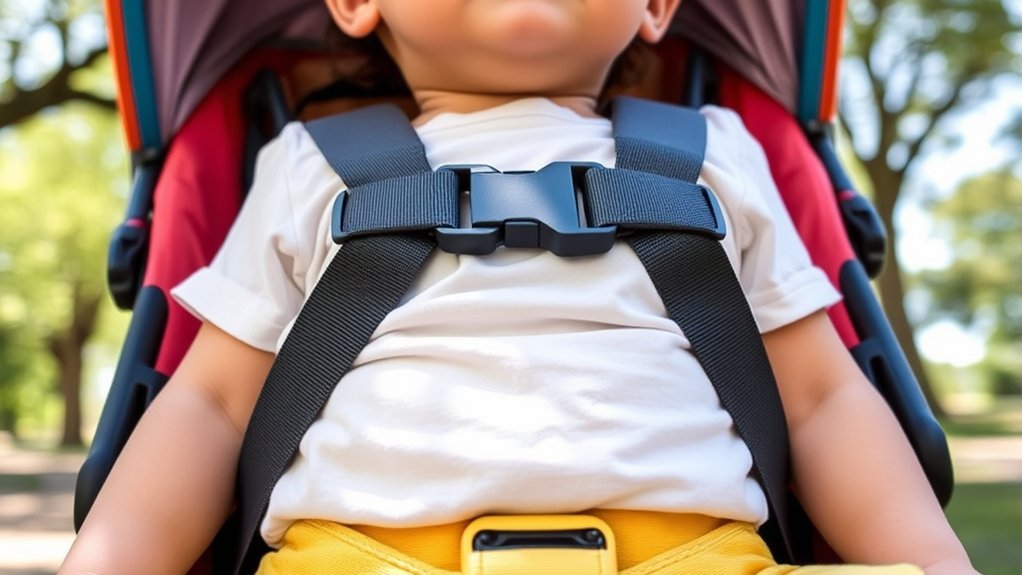
When your child rides in a stroller, proper strap tightness helps prevent slipping, standing, leaning out, and sudden movement during stops or turns. Loose straps can let a baby slump forward or slide down in the seat. Straps that are too tight can cause pressure marks, fussiness, and poor posture.
A secure harness also helps each strap do its job. Shoulder straps limit upper-body movement. Waist straps help hold the hips in place. The crotch strap helps stop your child from sliding downward. When all parts work together, the stroller seat supports your child more safely.
Good harness fit also changes as your child grows. A setting that worked last month may feel loose today. Check the fit often, especially after a growth spurt, a change in clothing, or a seat recline adjustment.
How to Tighten Stroller Straps Safely
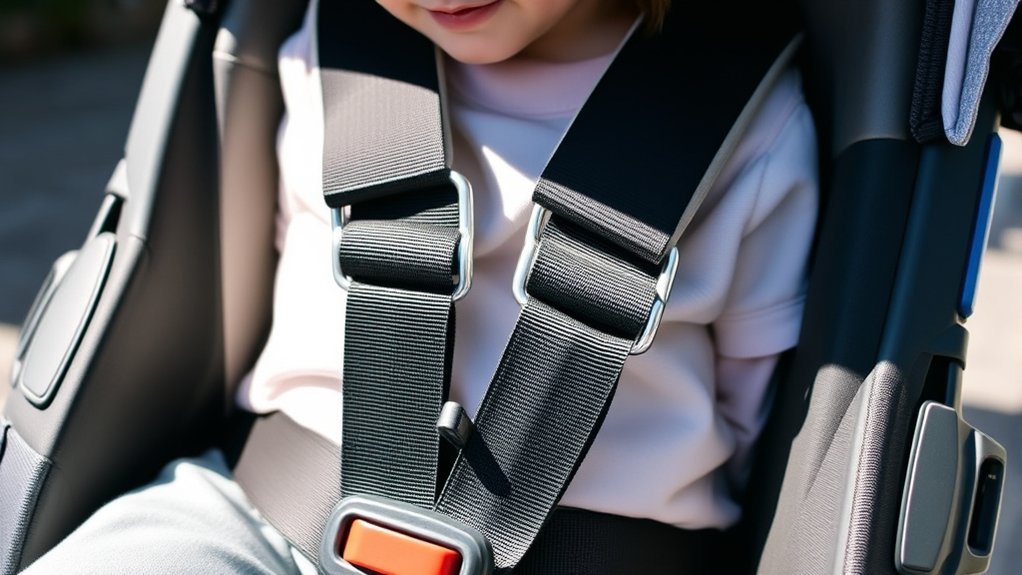
To tighten stroller straps safely, start with your stroller manual. Different models use different adjusters, buckle paths, and shoulder-height settings. Do not force a strap through a slot or use a harness position that the manual does not allow.
- Place your child fully back in the seat: Their back and hips should rest against the stroller seat before you buckle the harness.
- Buckle every harness point: Secure the shoulder, waist, and crotch straps if your stroller uses a five-point harness.
- Remove twists: Run your fingers along each strap. A twisted strap can pinch and may not hold evenly.
- Tighten the waist straps: Pull the adjusters until the straps sit snugly across the hips without digging into the belly.
- Tighten the shoulder straps: The straps should rest flat on the shoulders and chest area without sliding off the shoulders.
- Check movement: Your child should not be able to stand, slide down, or pull their arms out of the straps.
- Check comfort: You should not see deep red marks, pinching, neck pressure, or restricted breathing.
Use the one-finger check as a comfort guide, not as the only safety rule. The harness must still prevent slipping, standing, and shoulder escape.
After tightening, lightly tug on the straps and buckle. The harness should stay locked and should not loosen on its own. If an adjuster slips or a buckle does not click firmly, stop using the stroller until you inspect the harness or contact the manufacturer.
How Often to Check Stroller Strap Fit

Check your stroller straps before every outing. This quick check helps catch twisted straps, loose buckles, trapped fabric, and sudden fit changes.
Do a deeper harness check every few weeks. Babies and toddlers grow fast, and small changes in height, weight, clothing, or seat position can affect how the harness fits.
Stroller Strap Check Schedule
Use this simple schedule to keep the harness safe and comfortable:
| When to Check | Action | What to Look For |
|---|---|---|
| Before every ride | Quick fit check | Flat straps, firm buckle, no twists |
| Every few weeks | Full adjustment check | Growth, slouching, shoulder strap position |
| After washing | Harness reset | Correct threading and smooth tightening |
| After storage or travel | Damage inspection | Fraying, trapped straps, buckle problems |
| After a growth spurt | Reposition straps | Shoulder height, waist fit, comfort |
These checks take less than a minute, but they help prevent common stroller harness problems before they become safety risks.
Signs of Wear or Damage
Inspect stroller straps for signs of wear before use and during deeper maintenance checks. Look for fraying, cuts, torn stitching, stretched webbing, mold, stiffness, discoloration, or strap edges that feel rough.
Check the buckle and adjusters too. A damaged buckle may not click, may release too easily, or may feel sticky. An adjuster may slip if the webbing is worn or dirty.
If you find damage, do not tie knots, tape the strap, or use a generic replacement strap unless the manufacturer approves it. Contact the stroller maker for the correct part.
Growth Adjustments
As your baby grows, the stroller harness needs regular adjustment. A child who has grown taller may need a different shoulder strap height. A child who has gained weight may need looser waist straps with the same secure fit.
Watch your child’s posture during the ride. Slouching, shoulder straps slipping off, repeated fussiness, or the ability to stand in the stroller all signal that the harness needs adjustment.
Clothing can also change harness fit. Bulky coats and thick layers can create extra space under the straps. Use thinner layers under the harness, then place a blanket or stroller cover over your child if needed.
Signs Your Stroller Harness Does Not Fit Correctly
When checking the fit of your stroller harness, look for clear signs of improper adjustment. If the straps are too loose, your child may slide down, lean far forward, stand up, or pull their shoulders out of the harness.
If the straps are too tight, your child may cry, fuss, arch their back, or show pressure marks after the ride. Straps that press into the neck, belly, or inner thighs need adjustment.
Twisted straps are another warning sign. They can create pressure points and reduce how evenly the harness holds your child. Before each ride, check that each strap lies flat from the anchor point to the buckle.
| Problem | What It Means | Fix |
|---|---|---|
| Child slides down | Harness is too loose or crotch strap is misplaced | Re-seat child and tighten waist and shoulder straps |
| Shoulder straps slip off | Shoulder height or tightness is wrong | Adjust shoulder slots or tighten straps per manual |
| Deep marks on skin | Harness may be too tight | Loosen slightly and check comfort |
| Straps twist or bunch | Straps are not lying flat | Untwist before buckling |
| Buckle slips or pops open | Possible buckle or adjuster damage | Stop use and contact the manufacturer |
Best Practices for Stroller Strap Safety
Stroller strap safety depends on three habits: buckle every time, check the fit often, and keep the harness clean and undamaged.
Do not rely on the stroller tray, bumper bar, or snack bar as a restraint. These parts do not replace a harness. A child can slip under or climb over them if the straps are loose or unused.
Regular Strap Inspections
Inspect stroller straps every few weeks and before long outings. Confirm that the webbing looks strong, the buckle locks securely, and the adjusters tighten smoothly.
Make sure all caregivers understand the same harness routine. A stroller may be used by parents, grandparents, babysitters, siblings, or daycare staff. Everyone should know how to buckle, tighten, and check the straps before moving the stroller.
Key Takeaway: A safe stroller harness is not just “buckled.” It must be buckled, snug, flat, untwisted, and adjusted for your child’s current size.
Proper Storage Techniques
Proper storage helps protect your stroller’s harness system. Keep your stroller in a clean, dry place to reduce mold, rust, mildew, and strap damage.
Avoid folding or packing the stroller in a way that traps, twists, or pinches the straps. If you store the stroller outdoors or in a garage, use a protective cover and check the straps before the next ride.
| Storage Tip | Description |
|---|---|
| Clean and Dry | Store in a dry, mold-free space |
| Avoid Compression | Do not fold in a way that twists or pinches straps |
| Use Protective Covers | Shield straps from rain, dust, and direct sun when stored |
| Inspect After Storage | Check straps, buckles, and adjusters before use |
| Train Caregivers | Make sure every caregiver knows the harness routine |
How to Teach Caregivers the Correct Harness Fit
Educating caregivers about stroller harnesses helps keep your child safe when someone else pushes the stroller. Do not assume every caregiver knows how your stroller model works.
Show each caregiver how to place your child in the seat, buckle every strap, remove twists, tighten the harness, and check for comfort. Ask them to repeat the process once while you watch.
Use simple rules they can remember:
- Buckle the harness every time, even for short walks.
- Keep straps flat and untwisted.
- Tighten until the child cannot slide, stand, or slip out.
- Stop if the buckle does not lock or the strap will not tighten.
- Follow the stroller manual for shoulder height and weight limits.
Keep the stroller manual saved on your phone or stored with the stroller. This helps caregivers check the correct settings without guessing.
Maintaining Stroller Straps Over Time
Maintaining stroller straps over time protects both safety and comfort. Dirt, food crumbs, sunscreen, rain, and regular wear can affect how straps tighten and how buckles close.
Follow these steps:
- Check for Growth: Adjust straps every few weeks to match your child’s current size.
- Inspect for Damage: Look for fraying, cuts, torn stitching, stiffness, mold, or damaged buckles.
- Clean Carefully: Use the stroller manual’s cleaning instructions. Mild soap and water work for many straps, but some models have specific rules.
- Dry Fully: Let straps air dry before folding or storing the stroller.
- Use Approved Parts: Replace damaged straps only with manufacturer-approved parts.
Do not use bleach, harsh chemicals, or high heat unless your stroller manual allows it. These can weaken webbing or damage plastic buckles.
Stroller Harness Fit by Age and Stage
Harness fit changes as children grow. Use your stroller’s age, weight, and height limits first. Then adjust the harness based on your child’s posture and movement.
| Stage | Main Fit Concern | What to Check |
|---|---|---|
| Newborn or young infant | Slouching and head support | Use only approved infant settings and accessories |
| Older baby | Sliding down or leaning forward | Check crotch strap, waist strap, and shoulder fit |
| Toddler | Standing or climbing out | Use the full harness and keep it snug every ride |
| Older child within stroller limit | Harness position and weight limit | Confirm the stroller still fits the child safely |
Common Stroller Harness Mistakes to Avoid
Many stroller harness problems come from small habits that feel harmless. Avoid these common mistakes:
- Leaving shoulder straps unused: Waist-only restraint may not stop a child from leaning or climbing out.
- Using bulky coats under straps: Thick clothing can create hidden slack.
- Letting straps stay twisted: Twists can cause pressure and uneven restraint.
- Using the tray instead of the harness: A tray is not a safety restraint.
- Ignoring the manual: Harness height, recline rules, and weight limits vary by stroller.
- Using damaged straps: Worn webbing, broken buckles, or slipping adjusters need manufacturer-approved repair.
A good routine solves most of these issues. Seat your child fully back, buckle every point, remove twists, tighten the straps, and check comfort before moving.
Frequently Asked Questions
How Tight Should Stroller Straps Be?
Stroller straps should be snug enough that your child cannot slide down, stand up, or slip their shoulders out. The straps should lie flat and feel secure without digging into the skin, pressing the neck, or causing clear discomfort.
Should I Use the One-Finger Rule for Stroller Straps?
You can use the one-finger rule as a quick comfort check, but do not treat it as the only rule. The harness must still fit according to the stroller manual and keep your child securely positioned in the seat.
Can Stroller Straps Be Too Tight?
Yes. Straps are too tight if they leave deep marks, restrict movement too much, press into the neck, or make your child visibly uncomfortable. Loosen slightly, recheck the fit, and confirm the harness still prevents slipping or standing.
Can I Use a Stroller Harness for an Older Child?
Yes, if your child is still within the stroller’s height, weight, and age limits. The harness must fit properly and stay secure without restricting normal seated comfort. If your child exceeds the stroller limit, stop using that stroller.
What Materials Are Stroller Harnesses Typically Made Of?
Many stroller harness straps use durable synthetic webbing, often nylon or polyester. Buckles and adjusters usually use plastic or metal parts. Always check your stroller manual for the exact material, cleaning rules, and replacement guidance.
Are There Stroller Harnesses Specifically Designed for Infants?
Some strollers include infant-approved harness settings, recline positions, or manufacturer-approved inserts. Use only accessories approved for your stroller model. Unapproved padding can change the harness fit and create unsafe slack.
How Do I Clean Stroller Harness Straps?
Check your stroller manual first. Many straps can be wiped with mild soap and water, rinsed with a clean damp cloth, and air dried. Avoid bleach, harsh chemicals, or high heat unless the manufacturer allows them.
What Should I Do if a Strap Gets Stuck?
If a strap gets stuck, stop and inspect the adjuster, buckle path, and folded webbing. Gently work the strap free without yanking. If the adjuster still sticks or slips, contact the manufacturer before using the stroller again.
Should My Child Wear a Bulky Coat Under Stroller Straps?
Bulky coats can create extra space under the harness. Use thinner layers under the straps, buckle the harness snugly, then add a blanket or stroller cover over your child for warmth when needed.
When Should I Replace Stroller Straps?
Replace straps if you see fraying, cuts, torn stitching, mold, stiffness, damaged buckles, or slipping adjusters. Use only manufacturer-approved replacement parts because generic straps may not fit or perform correctly.
Conclusion
The right stroller harness fit is snug, flat, untwisted, and secure. Your child should not be able to slide down, stand up, lean far out, or pull free from the straps. At the same time, the harness should not pinch, dig into the skin, or press on the neck.
Before each ride, seat your child fully back, buckle every harness point, remove twists, tighten the straps, and check comfort. Reassess the fit every few weeks, after growth spurts, after cleaning, and after storage. When in doubt, follow your stroller manual or contact the manufacturer before using the stroller again.
Next step: Save this checklist and use it before your next walk. A 30-second strap check can make every stroller ride safer and more comfortable.


