Navigating tight entryways with two children in tow does not have to feel like an impossible task. To fit a double stroller through doors easily, choose a model under 30 inches wide, approach the doorway at a 30- to 45-degree angle, and swivel or lock the front wheels depending on threshold height. Utilizing a proper push-handle grip and practicing one-hand folding techniques ensures seamless passage through both residential and commercial doors.
Quick Answer
To fit a double stroller through standard doorways, select a stroller with an exterior width under 30 inches (or a tandem inline model). Approach narrow doors at a 30-degree angle with the slimmer side leading, unlock front swivel wheels for tight pivots, and keep children’s hands inside the frame to prevent pinch injuries.
Key Takeaways
- Doorway Standards: Standard interior home doors range from 28 to 32 inches wide, while public ADA-compliant doors require a minimum clear width of 32 inches.
- Optimal Stroller Width: Aim for side-by-side strollers under 30 inches wide (such as 26- to 29-inch compact models) or tandem inline strollers.
- Angled Entry: Entering door frames at a 30- to 45-degree angle provides extra clearance and prevents side wheels from catching on door jambs.
- Threshold Navigation: Lock front swivel wheels straight when pushing across high door sills or uneven thresholds to prevent sudden stopping.
At a Glance
| Time Required | 1–2 minutes per door clearance |
| Difficulty Level | Beginner to Intermediate |
| Tools Needed | Tape measure, double stroller (<30″ wide) |
| Target Width | Under 30 inches (76 cm) for side-by-side models |
Understanding Doorway Dimensions
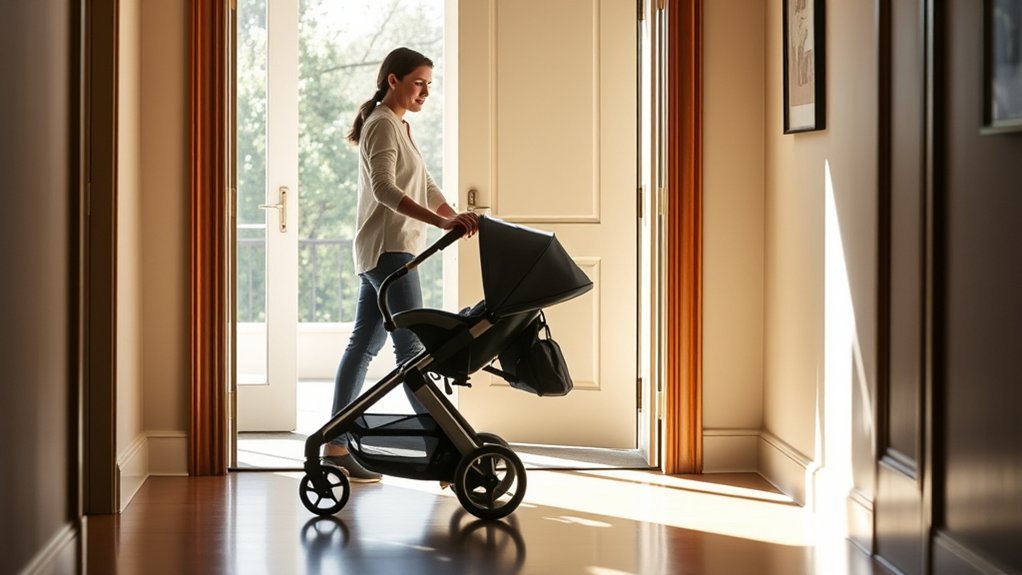
When traveling with multiple children in a double stroller, understanding entry dimensions prevents unexpected jams. Standard residential interior doorways typically range from 28 to 32 inches in width, whereas older historical homes may feature narrow doorways measuring under 28 inches.
In contrast, commercial and public buildings are subject to accessibility regulations. According to the U.S. Access Board ADA Standards for Accessible Design, public entrance doors must provide a minimum clear opening width of 32 inches when opened to 90 degrees. Measuring your home’s narrowest entryways prior to shopping ensures your stroller glides through without forcing the frame.
Comparing Double Stroller Styles: Side-by-Side vs. Tandem
Selecting the right double stroller architecture directly impacts doorway navigation:
- Tandem (Inline) Strollers: Feature one seat positioned behind the other. Because their width equals that of a single stroller (typically 20 to 26 inches), tandems fit through virtually any doorway effortlessly, though they possess a wider turning radius.
- Side-by-Side Strollers: Position both children adjacent to one another. While offering equal views and easier steering, side-by-side models require careful width verification to ensure they remain under 30 inches wide.
Choosing the Right Double Stroller Width
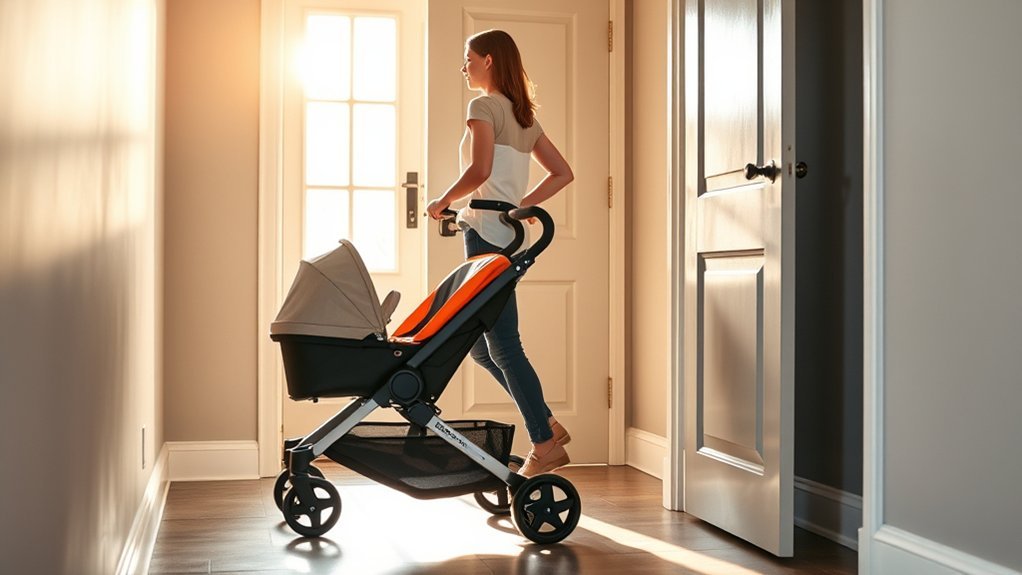
To guarantee effortless access through standard doors, choose a side-by-side double stroller with an exterior width under 30 inches. Compact models optimize space by utilizing seat widths between 12 and 13 inches alongside streamlined aluminum frames.
Ultra-compact models like the Valco Baby Slim Twin measure under 26 inches wide, easily clearing narrow passages. Similarly, popular options such as the UPPAbaby G-Link 2 (28.5 inches wide) and the Baby Jogger City Mini GT2 Double (29.25 inches wide) are engineered specifically to comply with standard door clearances.
Pro Tip: Always measure the overall width from the widest points—typically the outer rear wheel caps or side frame hinges—rather than measuring seat dimensions alone.
Collapsing Your Stroller for Easy Passage
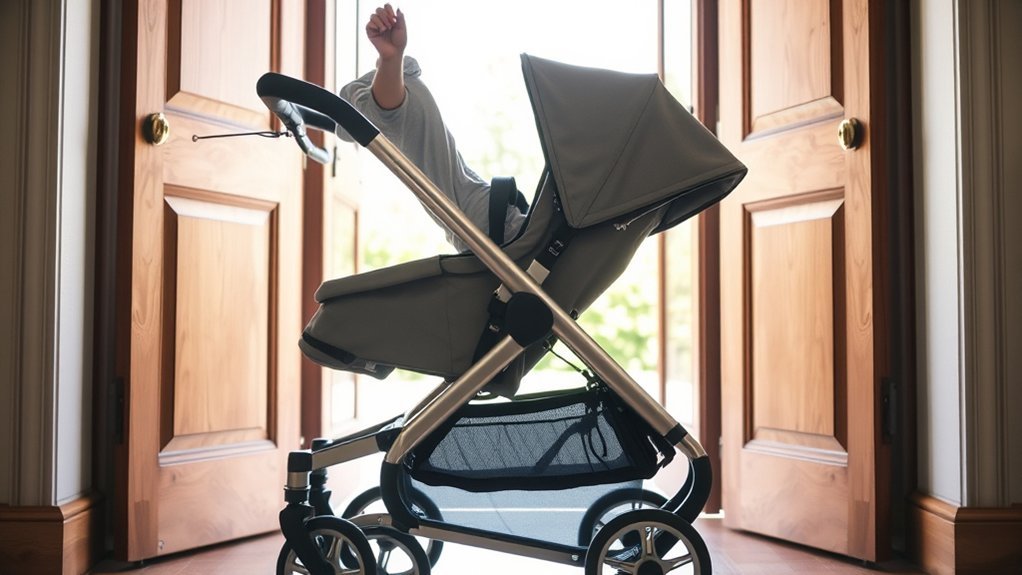
When encountering exceptionally narrow openings—such as historic doorway frames, crowded restaurant aisles, or tight public transit doors—collapsing your double stroller provides immediate clearance.
- Remove Detachable Accessories: Take off bulky cup holders, organizer bags, or snack trays that extend beyond the outer frame.
- Engage the Fold Mechanism: Utilize your model’s quick-fold or one-hand collapse feature.
- Secure the Frame Latch: Ensure the automatic side lock engages so the collapsed frame does not spring open while passing through the entry.
Approaching Doors at the Right Angle
Direct straight-on entry often causes outer wheels to clip against door trim. Approaching at an angle creates necessary clearance.
Optimal Entry Angle
Approach narrow door openings at approximately a 30- to 45-degree angle. Lead with the slimmer side of the stroller frame or angle the front wheel forward first. This staggered entry technique allows the widest points of the frame to pass through sequentially rather than striking both sides of the door jamb simultaneously.
Steering Techniques Explained
Effective wheel management ensures smooth control during entry. Refer to the operational strategies below:
| Steering Strategy | Operational Technique |
|---|---|
| Angled Approach | Align stroller at 30 degrees to stagger wide frame points through the opening. |
| Swivel Wheel Pivoting | Unlock front casters to make quick directional adjustments in tight entryways. |
| Handle Leverage Push | Apply gentle downward pressure on the handlebar to lift front casters over raised sills. |
Handling Heavy Doors, High Thresholds, and Door Sills
Public doors with heavy spring closures or raised floor sills require specific handling techniques:
- Spring-Loaded Commercial Doors: Back through the door rear-wheels-first while using your body or hip to hold the door open, guiding the stroller safely behind you.
- Raised Thresholds & Sills: Lock the front swivel wheels into a fixed straight position before crossing raised door sills to prevent casters from turning sideways and jamming.
Utilizing the Push Handle Effectively
Proper handlebar height and hand placement increase steering leverage when negotiating tight spaces.
Adjusting the Height
Set adjustable push handles so your elbows rest at a natural 90-degree angle. This ergonomic position offers maximum control when guiding a heavy double stroller around door frames without straining your back or arms.
Proper Grip Technique
Position your hands slightly wider than shoulder-width on the push handlebar. Leaning forward slightly while pushing aligns your center of gravity with the stroller frame, allowing precise micro-adjustments as you steer through narrow gaps.
Child Safety: Preventing Pinch Hazards in Doorways
Warning: Never force a tight stroller fit while children are inside. Ensure kids keep their arms and fingers tucked inside the seating area and bumper bars. According to U.S. Consumer Product Safety Commission (CPSC) stroller guidelines, frame impacts against door jambs pose pinch hazards and frame tipping risks.
Enlisting Help for Difficult Doorways
When encountering non-ADA compliant doorways or heavy manual doors, enlisting assistance prevents strain:
- Clear Communication: Direct your helper to either hold the door completely open or pull the front frame while you push from the rear.
- Balance Cargo Weight: Ensure heavy diaper bags hanging from the handlebar do not tip the stroller backward when negotiating steps or high thresholds.
Regularly Testing Your Stroller Fit
Before traveling to new destinations, test your stroller’s maneuverability in controlled environments. Practicing doorways at local stores or community centers builds familiarity with your stroller’s turning radius and clearance limits, ensuring smooth outings wherever you go.
Tips for Maneuvering in Tight Spaces
Keep these fundamental guidelines in mind for tight indoor spaces:
- Select 360-degree front swivel wheels for quick turning in tight corridors.
- Verify total exterior stroller width is under 30 inches before purchasing.
- Utilize one-hand folding mechanisms for rapid collapsing in emergency or high-traffic situations.
- Maintain correct tire inflation on air-filled tires to ensure optimal frame height and steering responsiveness.
Frequently Asked Questions
What types of double strollers are easiest to fit through doors?
Tandem (inline) double strollers are the easiest to fit through doors because their width matches a single stroller. For side-by-side models, compact strollers measuring under 30 inches wide pass through standard doorways effortlessly.
Can I modify my stroller to fit through narrower doors?
Modifying stroller frames by cutting tubes or altering wheels is unsafe and voids manufacturer warranties. Instead, remove optional outer accessories like cup holders or collapse the stroller when passing narrow openings.
How do I choose a stroller based on my home’s door sizes?
Measure the narrowest doorway in your home between the inner door jambs. Choose a double stroller that is at least 1 to 2 inches narrower than your smallest doorway measurement.
Are there specific door types that are more challenging for strollers?
Narrow residential French doors, spring-loaded heavy commercial doors, and doors with high raised floor sills present the biggest challenges. Entering at an angle and locking front swivel wheels overcomes most obstacles.
What should I do if my stroller gets stuck in a doorway?
Do not force or shove the frame. Pause, verify that your children’s hands and feet are safely tucked inside, carefully back the stroller out, and re-approach at a 30-degree angle or collapse the frame.
Conclusion
Fitting a double stroller through doorways smoothly comes down to selecting the correct frame width and employing effective steering techniques. By choosing a model under 30 inches wide, approaching entries at an angle, and utilizing wheel controls effectively, you can navigate any doorway with confidence. Master these simple adjustments to enjoy hassle-free outings with your children.
Sources
- U.S. Access Board ADA Standards for Accessible Design — Official door width and accessibility clearance requirements
- U.S. Consumer Product Safety Commission (CPSC) — Stroller safety guidelines and pinch hazard prevention
- Valco Baby Official Site — Compact double stroller dimensions and frame specifications
- Baby Jogger Official Site — City Mini GT2 Double specification and width metrics