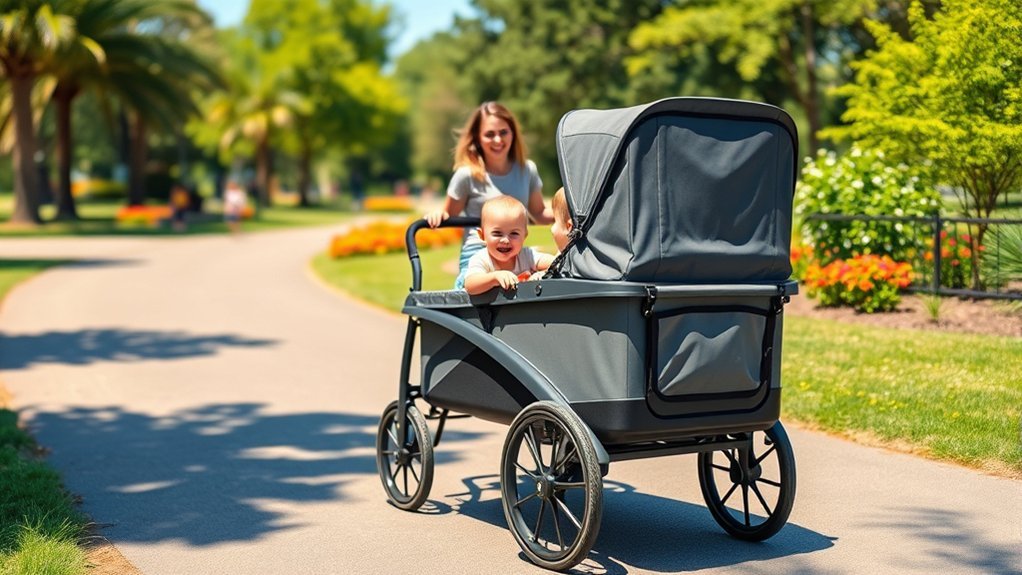

Taking a stroller on a bus is usually manageable, but the most important rule is to check the transit operator’s stroller policy before you travel. Some systems allow children to remain secured in an open stroller, while others may require folding when the bus is crowded or when priority space is needed. Prepare your fare, secure loose items, know how your stroller folds, and follow the driver’s instructions when boarding, riding, and exiting.
Quick Answer
Yes, you can take a stroller on many public buses, and some transit systems allow a child to remain in an open stroller. Rules vary by operator, crowding, stroller size, and priority-space needs. Check the local policy first, keep aisles clear, secure the stroller, and follow the bus driver’s instructions.
Key Takeaways
- Do not assume every bus requires a folded stroller. Current policies differ by transit agency.
- Check the operator’s rules for open strollers, stroller size, ramps, and priority areas before leaving home.
- Keep the stroller out of aisles and doorways at all times.
- If your child remains in an open stroller, use the harness, apply the brakes when required, and keep control of the stroller throughout the ride.
- Be prepared to fold or move the stroller if the bus becomes crowded or a priority passenger needs the designated space.
- A lightweight, compact stroller is usually easier to manage even when folding is not mandatory.
At a Glance
| Time Required | A few minutes of preparation before the bus arrives; actual boarding time varies |
| Difficulty | Easy to moderate, depending on stroller size, crowding, and the number of children |
| Tools Needed | Stroller, fare/payment method, and secure bag; an optional baby carrier can make folding easier |
| Cost | Normal transit fares apply; fare rules for children vary by agency |
Check Your Bus Operator’s Stroller Policy First
There is no single stroller rule that applies to every public bus system. Before traveling, check the official website or rider guide for the agency you plan to use.
For example, the Chicago Transit Authority welcomes children in open strollers, although riders may be asked to fold a stroller when a vehicle is crowded or priority space is needed. Washington Metropolitan Area Transit Authority also allows open strollers on Metrobus, with requirements to keep aisles and doorways clear and give priority to riders who need designated seating.
Policies can also include size limits. TransLink in Metro Vancouver, for example, publishes stroller-size guidance and allows riders to ask the bus driver for the ramp.
Warning: Never rely on a generic rule such as “strollers must always be folded” or “children can always remain in the stroller.” The bus operator’s current policy, available space, stroller size, and the driver’s safety instructions determine what you should do.
Preparing for Your Bus Ride

When you’re getting ready for a bus ride with a stroller, preparation is key. Start by checking the route, schedule or real-time arrival information so you can reduce unnecessary waiting with your child.
Next, check the agency’s stroller policy. Find out whether open strollers are permitted, whether there is a maximum stroller size, whether you may request a ramp, and when you might be asked to fold the stroller.
Prepare your payment before the bus arrives. Secure bottles, toys, blankets, shopping bags, and other loose items so they do not fall when you tilt or fold the stroller. Avoid hanging heavy bags from the stroller handle because they can make the stroller unstable.
If the operator requires folding, or you decide that folding will be easier, remove your child safely before folding the stroller. A baby carrier can be useful when you need both hands for the stroller and luggage.
The safest universal approach is not “always fold.” Check the local policy, prepare before the bus arrives, keep the aisle clear, and follow the operator’s instructions.
If your transit agency permits an open stroller, make sure your child is properly secured with the stroller’s harness before boarding. Keep control of the stroller at all times.
Folding Your Stroller

Even when your transit system allows open strollers, understanding how to fold your stroller quickly is valuable. You may need to fold it because the bus is crowded, a priority passenger needs the designated area, or the stroller is too large to move safely through the bus.
Folding techniques vary by stroller, so practice yours at home rather than learning while passengers are waiting behind you.
Stroller Types Consideration
You do not necessarily need a folding stroller on every bus system, but compact models are usually easier to manage. Consider these factors:
- Lightweight design: A lighter stroller is easier to carry if you encounter stairs, a bus without convenient level boarding, or a situation where you need to fold it.
- Compact folded size: A stroller that folds into a small package is easier to keep clear of aisles and doorways.
- Reliable brakes and harness: If the child is permitted to remain in the stroller, working brakes and a properly used harness become especially important.
- Easy folding mechanism: A one-hand or fast two-hand fold can help when you are also supervising a child.
- Appropriate width: Double, jogging, and extra-wide strollers may be harder to accommodate, and some agencies publish maximum dimensions.
For example, TransLink publishes a maximum stroller footprint of 61 cm by 122 cm. Other agencies use different limits or make decisions based on available space, so always check the system you will actually ride.
Folding Techniques Overview
First, familiarize yourself with your stroller’s folding mechanism. Check the manufacturer’s instructions if you are unsure whether the canopy, seat, handle, or wheels must be positioned a certain way before folding.
Before you fold, remove anything that could fall from the basket or cup holder. Make sure your child is in a safe position and cannot move toward traffic or the curb while your attention is on the stroller.
Once folded, engage any frame lock that keeps the stroller closed. Carry or place it only where it will not block seats that must remain available, doors, emergency exits, or the aisle.
Pro Tip: Practice folding and reopening the stroller while holding your diaper bag before your first bus trip. Knowing the sequence in advance is far easier than trying to figure it out while supervising a child at a busy stop.
Using the Bus Ramp

If you need help getting a stroller onto a low-floor bus, ask the driver whether the ramp or kneeling function can be used. Policies vary, but several major systems specifically permit stroller users to request accessibility equipment.
CTA states that stroller users may request its bus access ramp or lift. TransLink likewise tells stroller users to let the driver know when they need the ramp. Follow the driver’s directions because deployment procedures differ by vehicle.
Proper Ramp Usage
For safer ramp boarding:
- Wait until the bus has stopped completely and the driver has fully deployed the ramp before approaching it.
- Follow the operator’s instructions about whether your child may remain secured in the stroller while boarding.
- Keep both hands available whenever possible and maintain control of the stroller as you move up or down the ramp.
- Move promptly to the location the operator indicates so the doorway remains clear.
Do not assume that using a ramp automatically means the stroller may remain open for the entire journey. The rules for boarding and the rules for where an open stroller can remain may be different.
Safety During Boarding
Let passengers exit before you begin boarding. Keep your child away from the curb and moving traffic while you wait.
If the stroller will be folded, make sure your child is safely out of it before you collapse the frame. If the transit system allows the child to remain in an open stroller, secure the harness before boarding and keep the stroller under your control.
Do not rush because the doors have opened. If boarding does not look safe because the vehicle is extremely crowded, ask the driver what to do or consider the next bus.
Boarding the Bus
Boarding with a stroller becomes easier when you have already decided what you will do before the doors open.
- Check the policy: Know whether an open stroller is allowed on that service.
- Prepare your child and stroller: Use the harness if the child will remain seated, or safely remove the child before folding.
- Have your fare ready: Avoid searching through bags while blocking the doorway.
- Ask for the ramp if needed: Wait until the driver says it is ready.
- Keep the entrance clear: Move to the approved stroller or priority area as soon as you board.
Open-stroller policies show why there is no universal requirement to hold a child in your lap. WMATA allows open strollers on Metrobus and instructs riders to use the priority seating area, lock the stroller brakes, hold the stroller, and keep aisles and doors clear. WMATA’s current stroller guidance also makes clear that people with disabilities and seniors retain priority in that area.
Storing Your Stroller
Once you’re on the bus, how you position the stroller depends on whether it is open or folded.
If the stroller is folded, place or hold it where it cannot slide, fall, block the aisle, interfere with the doors, or occupy a required priority area. Under or between seats may work on some buses if the stroller fits safely, but do not force it into a space where it becomes an obstruction.
If the stroller is open, use the location permitted by the transit agency. Apply the stroller brake when required and keep a hand on the stroller. WMATA, CTA, TransLink, and other operators specifically emphasize keeping strollers away from aisles and doorways.
Remember that wheelchair users or other eligible riders may have priority over designated areas. Transport for London, for example, allows buggies in the wheelchair space when it is available but requires riders to share, move, or fold the buggy when a wheelchair user needs the space.
Note: “Priority area” does not automatically mean “stroller space.” The exact priority rules differ by transit agency, so follow posted signs and the operator’s instructions.
Ensuring Child Safety
Before the bus starts moving, make sure your child and stroller are secure.
- If your child remains in the stroller: Use the stroller’s harness correctly, engage the brakes when the transit policy calls for it, and keep control of the stroller.
- If your child is out of the stroller: Keep the child securely with you and away from the aisle and doors.
- Secure the stroller: Whether open or folded, do not allow it to roll, slide, tip, or block passenger movement.
- Keep small children close: Boarding, exiting, sudden stops, and busy aisles require your full attention.
TriMet’s guidance for traveling with children, for example, allows a baby or toddler to remain in a stroller when space is available in the priority seating area. It instructs riders to secure wheel locks, position the stroller safely, keep it under control, and avoid blocking the aisle, stairs, or doorway.
Staying Aware During Transit
While traveling, stay aware of your child, stroller, other passengers, and upcoming stops. A bus can brake or turn unexpectedly, so keep control of the stroller rather than assuming the brakes alone will prevent movement.
Listen for driver announcements and watch for riders who may need the priority area. If the bus becomes crowded, you may be asked to reposition or fold the stroller.
Prepare for your stop before the bus reaches it. Gather loose items, make sure your child is secure, and request the ramp in advance if you need it to exit.
Avoid stepping into the roadway immediately in front of the bus after getting off. Move to a safe location and check traffic before crossing.
What to Do on a Crowded Bus
Crowding is one of the most common reasons stroller arrangements change during a trip. Even agencies that normally allow open strollers may ask riders to fold them or wait for another vehicle when there is not enough safe space.
CTA states that passengers may be asked to fold a stroller or wait for another vehicle when a bus or train becomes crowded. TfL likewise allows a driver to refuse boarding when a bus is too crowded for a buggy to be carried safely.
If the bus is crowded:
- Ask the driver where you should position the stroller.
- Fold it if the operator requests it and you can do so safely.
- Keep bags off adjacent seats and out of the aisle.
- Do not block the doors while trying to create more space.
- If boarding would be unsafe, consider waiting for the next bus.
Traveling With Large Strollers or Multiple Children
Double, jogging, and extra-wide strollers can be more difficult on public buses because they take up more floor space and may not fit easily through the doors or aisle. Some agencies publish maximum stroller dimensions, while others leave the decision to available space and the operator.
If you are traveling with several children, plan how you will supervise them before you fold the stroller. Older children who can safely follow instructions should stay close to you and away from the curb while you manage the stroller. Keep your payment method and essential items somewhere you can reach without putting the stroller or another child down.
A baby carrier can be especially useful when you need to fold a stroller while caring for an infant, but it is optional rather than a transit requirement.
Accessible Strollers and Disability Needs
A stroller may sometimes serve an accessibility-related purpose for a child or caregiver with a disability. In those situations, normal stroller guidance may not tell the whole story.
If you use a specialized or accessible stroller because of a disability, check the transit agency’s accessibility information before traveling. Contact the operator when necessary to learn how the stroller is treated, whether securement is available, and what boarding assistance can be provided.
Do not assume that a general instruction to fold ordinary strollers applies in exactly the same way to a mobility-related device.
Frequently Asked Questions
What Types of Strollers Are Best for Bus Travel?
Lightweight, compact strollers are usually the easiest to manage because they take up less space and are simpler to fold or carry when necessary. However, an umbrella stroller is not universally required. Check your bus operator’s size and open-stroller rules before choosing what to bring.
Are There Any Bus Companies That Prohibit Strollers?
Policies vary by operator, vehicle, stroller size, and crowding. Rather than relying on a general percentage, check the official rider rules for your specific transit agency. Some systems welcome open strollers, while others may require folding in certain situations or restrict oversized strollers.
How Can I Manage Multiple Children While Using a Stroller?
Prepare before the bus arrives. Keep your fare and essential items easy to reach, tell older children where to stand, secure the youngest child, and avoid hanging heavy bags from the stroller. If you may need to fold the stroller, a baby carrier can free your hands while you supervise the other children.
What Should I Do if the Bus Is Crowded?
Follow the driver’s instructions. You may be asked to fold or reposition the stroller, especially if it blocks the aisle or a passenger needs the priority area. If there is not enough room to travel safely, waiting for another bus may be the safest option.
Can I Take a Stroller on a Train or Subway as Well?
Usually, yes, but rail policies and station accessibility vary. CTA allows open strollers on buses and trains under its rules, while Transport for London provides separate guidance for buggies on the Tube and rail network. Check for elevators or step-free access before traveling and follow the specific operator’s stroller rules.
Do I Always Have to Fold a Stroller Before Boarding a Bus?
No. There is no universal fold-before-boarding rule. CTA, WMATA, TriMet, TfL, and TransLink all permit open strollers in at least some circumstances. You may still need to fold the stroller because of crowding, its size, a local rule, or the needs of riders who have priority use of designated space.
Can My Baby Stay in the Stroller While the Bus Is Moving?
On some transit systems, yes. For example, WMATA and TriMet permit children to remain in open strollers when their conditions are met. Use the stroller harness, brakes, and designated area as required, maintain control of the stroller, and always follow the local transit policy and driver instructions.
Conclusion
Taking a stroller on a bus can be straightforward once you know the rules that apply to your route. The key is to check the transit agency’s policy first rather than assuming every stroller must be folded. Prepare your fare and belongings, know how to fold the stroller if necessary, keep aisles and doors clear, respect priority spaces, and follow the driver’s instructions. With a little preparation, bus travel with a child can be safer and much less stressful.
Sources
- Chicago Transit Authority — Traveling with children — open-stroller rules, crowding, priority areas, ramps, and stroller safety.
- Washington Metropolitan Area Transit Authority — Open stroller policy — Metrobus open-stroller rules, brakes, priority seating, and aisle clearance.
- Transport for London — Getting around with your buggy — bus, wheelchair-space, Tube, rail, and crowding guidance.
- TransLink — Etiquette on Transit — stroller dimensions, ramp requests, brakes, aisles, and accessibility areas.
- TriMet — Traveling with kids — open-stroller use, wheel locks, stroller positioning, and child travel safety.