To use a stroller harness correctly, make certain the straps are straight and the baby is securely positioned. For a 3-point harness, attach the straps to the crotch clip and make certain they’re snug. With a 5-point harness, secure the shoulder and waist straps into the center clip, tightening them appropriately. Always perform a tug test to make certain safety. Avoid common mistakes like ignoring twists or not checking snugness. Discover more tips to keep your baby comfortable.
Preparing for Buckling
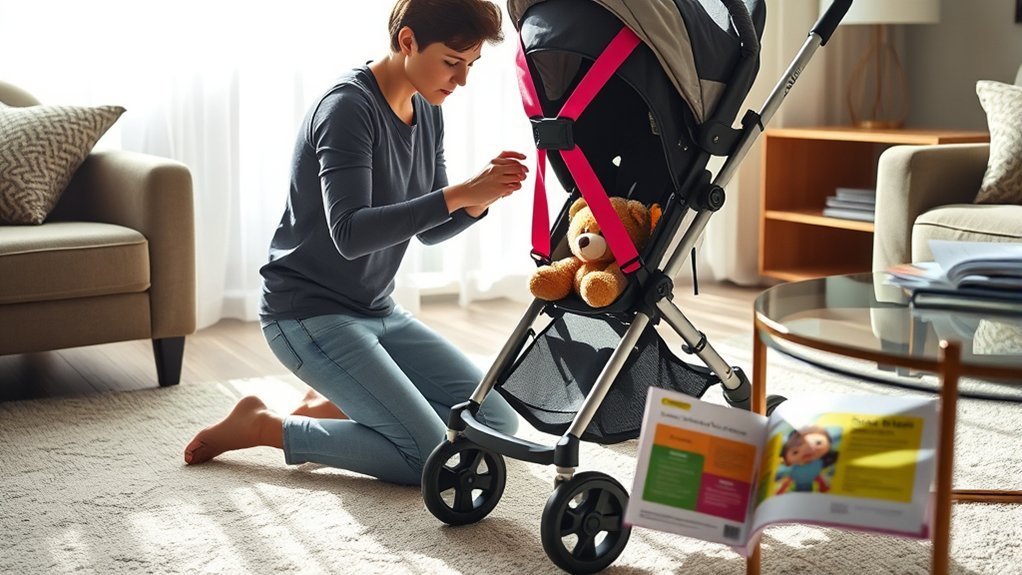
Before you start buckling your baby into the stroller, make certain that all the straps are straightened across their shoulders and hips for a secure fit.
This straps adjustment is essential for ensuring your child’s safety and comfort. Check for any twists or tangles in the harness, as these can hinder function and cause discomfort.
Position your baby securely in the stroller, ensuring they’re calm and comfortable; this makes the buckling process smoother.
Always verify that the stroller is on a flat surface to maintain stroller stability, preventing any tipping during the process.
Ensure the stroller is on a flat surface for stability, preventing any tipping during the buckling process.
A peaceful environment helps reduce fussiness, enabling you to buckle your baby confidently and efficiently, setting the stage for a pleasant outing.
Buckling a 3-Point Harness
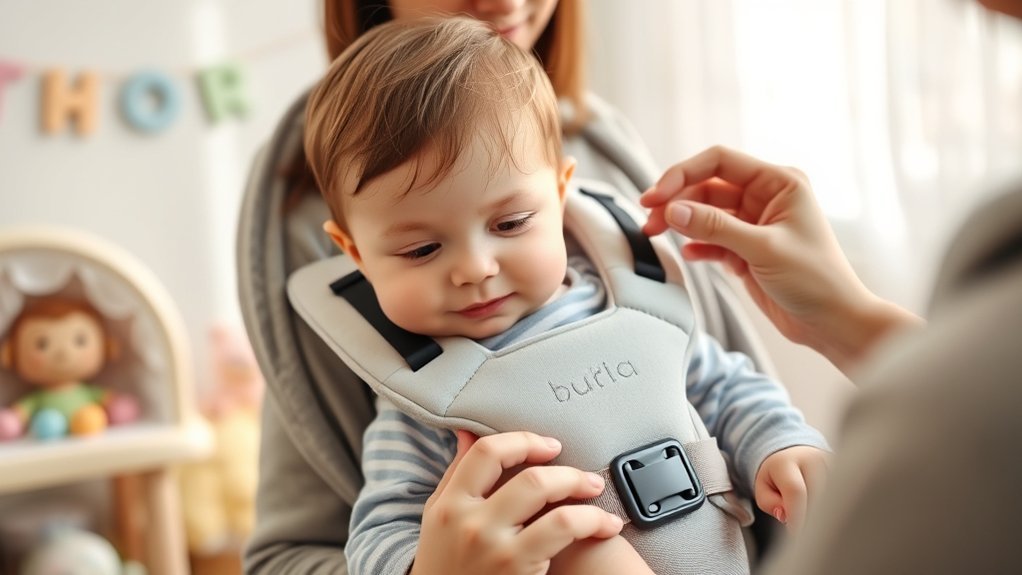
To buckle a 3-point harness effectively, start by gathering the harness straps and attaching them securely into the crotch clip, which forms the foundation of the harness system.
Next, verify the shoulder straps are placed correctly over your baby’s shoulders, free from twists or tangles. Adjust the straps to be snug against their body, eliminating any excess slack that could compromise safety.
It’s vital that the harness allows for some movement but remains tight enough to prevent slipping. After buckling, conduct a gentle tug test on the harness to confirm it’s securely fastened.
Familiarizing yourself with various harness types helps you stay compliant with safety regulations, verifying your little one’s safety and comfort during outings.
Buckling a 5-Point Harness
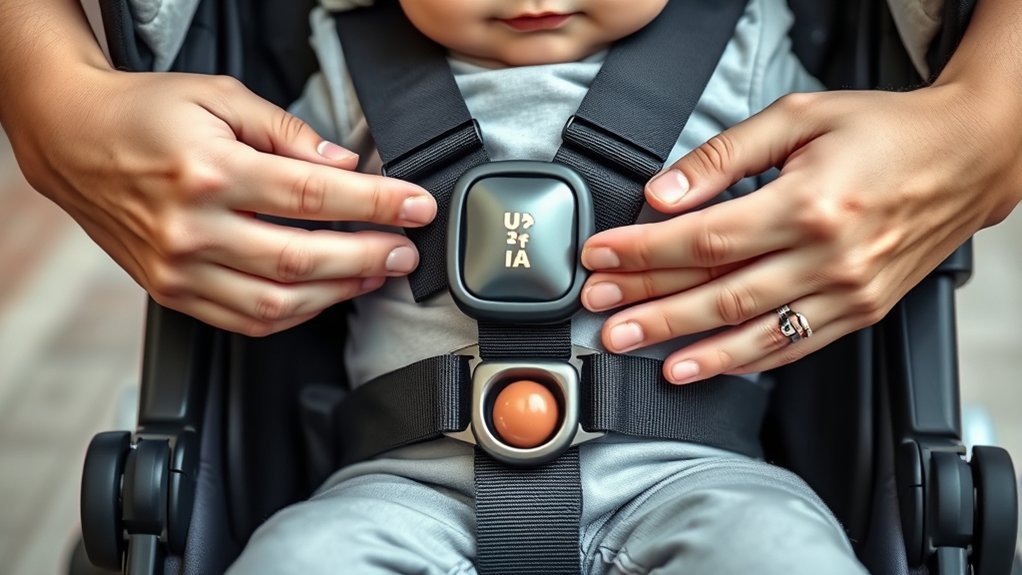
A 5-point harness provides maximum safety for your child during travel, and buckling it correctly is vital.
Start by positioning the shoulder straps down before securing them into the center clip. Once the shoulder straps are in place, attach the waist straps to the same center clip for peak safety features.
Position the shoulder straps down, secure them in the center clip, and attach the waist straps for optimal safety.
It’s essential to guarantee that all straps are tightened appropriately, giving your baby adequate support without restricting movement. To confirm that the harness is secure, perform a tug test by gently pulling on the straps.
Always double-check that the harness is snug yet comfortable, allowing your little one to explore while remaining safely buckled in.
Prioritize safety to empower both you and your child during every outing.
Using Magnetic Closure Harnesses
While traditional harnesses can be cumbersome, magnetic closure harnesses offer a practical alternative that simplifies securing your child in a stroller. With just a push of a button, you can enjoy easy access for quick fastening and unfastening. These harnesses automatically connect the straps, guaranteeing a secure fit with minimal effort.
| Feature | Benefits |
|---|---|
| Magnetic Closure | Fast, effortless fastening |
| Secure Fit | Automatically adjusts for safety |
| Regular Checks | Guarantees functionality and safety |
After securing the straps, always confirm they’re snug. Perform a gentle tug test to verify the harness is securely attached, leveraging the magnetic benefits for peace of mind. Your child’s safety and your convenience are paramount.
Traditional Buckle Mechanism
When using a stroller with a traditional buckle mechanism, start by unbuckling all straps to safely remove your child.
Next, carefully align each strap back into the buckle and guarantee they click securely into place for a proper fit.
Don’t forget to perform a final tug test to confirm the harness is secure before heading out.
Buckle Assembly Steps
To assemble the traditional buckle mechanism effectively, start by verifying all straps are untangled and laid out straight for easy access.
Next, follow these steps to secure the harness properly:
- Place each strap back into the buckle, verifying they align correctly.
- Snap all straps into the buckle’s center point until you hear a distinct click, confirming they’re locked.
- Perform a final tug test on each strap to verify they’re firmly in place and safe.
- To remove the harness, simply push the button on the buckle to unlatch all straps quickly.
Using the right buckle types and strap materials enhances safety, providing peace of mind as you navigate with your child.
This assembly process empowers you to verify a secure setup.
Ensuring Secure Fit
Guaranteeing a secure fit for your baby in a stroller equipped with a traditional buckle mechanism is essential for their safety and comfort.
Start by pushing the button to unlatch all straps, making removal easy. Once your baby is in position, carefully place each strap back into the buckle, guaranteeing correct strap positioning.
Snap all straps into the center point of the buckle securely, listening for that distinct click sound, which indicates proper harness adjustments. Make sure each strap is fully inserted to avoid any accidental releases.
Finally, perform a tug test on the harness to confirm it’s snug and secure against your baby’s body. This will guarantee they remain safe during your ride together.
Final Safety Check
After buckling your baby into the stroller, it’s crucial to conduct a final safety check to confirm that everything is secure. This step guarantees their safety and your peace of mind.
Here are some essential safety reminders to follow:
- Gently tug on each strap to check for tightness.
- Verify that the straps are properly positioned over the shoulders and hips, free of twists.
- Confirm the buckle is fully engaged by listening for that distinct click.
- Always recheck the harness after any adjustments or movements.
With these harness adjustments in mind, your baby will be snug and secure, allowing you to enjoy your outing with confidence.
Prioritize these checks to guarantee a safe adventure!
Importance of a Secure Fit
A secure fit in your stroller harness is essential for your baby’s safety, preventing them from slipping out during sudden stops or accidents.
Ensuring the harness is snug yet comfortable not only protects your child but also helps distribute force evenly in case of a collision.
Regularly checking and adjusting the harness as your baby grows is vital to maintain this safety standard.
Safety First Always
When it comes to stroller safety, nothing is more important than a secure fit for your child’s harness. A correctly fitted harness not only prevents your baby from slipping out but also minimizes injury during sudden stops or movements.
To guarantee safety, follow these guidelines:
- Confirm harness straps are snug against your baby’s body, allowing only a finger’s width of space.
- Regularly inspect the harness for wear or damage to meet safety regulations.
- Familiarize yourself with different harness types to find the best option for your stroller.
- Remember, properly buckled children are less likely to sustain injuries in accidents.
Comfort for Baby
Guaranteeing your baby’s comfort in the stroller is just as essential as their safety, as a secure fit in the harness allows for natural movement without causing discomfort.
A properly buckled harness should be snug but not constricting, promoting healthy baby posture. The 5-point harness system is designed to distribute pressure evenly across your baby’s body, which minimizes the risk of injury during sudden stops.
Additionally, using high-quality harness materials can enhance overall comfort, reducing fussiness during stroller rides. When the harness fits well, it prevents your little one from attempting to unbuckle themselves, giving you peace of mind.
Prioritizing a secure fit not only guarantees safety but also supports a more enjoyable outing for both you and your baby.
Preventing Accidents
Because a secure fit in the stroller harness is essential, it can greatly reduce the risk of falls and injuries.
Accident statistics show that improperly secured harnesses are a leading cause of stroller accidents. To guarantee safety, follow these tips:
- Make harness adjustments as your child grows, maintaining a snug fit.
- Regularly check straps for twists or tangles to prevent harness failure.
- Perform a tug test after buckling to verify the harness is secure.
- Allow for some movement while guaranteeing the harness is snug against your baby’s body.
Common Mistakes to Avoid
While using a stroller harness may seem straightforward, several common mistakes can jeopardize your baby’s safety. To guarantee proper harness adjustment and secure your little one, avoid these pitfalls:
| Mistake | Consequence | Safety Reminder |
|---|---|---|
| Neglecting to check for twists | Improper buckling, risking safety | Always inspect straps before use |
| Failing to secure on flat surface | Harness misalignment, baby slipping out | Verify stroller is stable |
| Not verifying strap snugness | Insufficient security during movement | Adjust for a snug fit |
| Overlooking final tug test | False sense of security | Always perform a tug test |
| Incorrect shoulder strap position | Poor fit, ineffective restraint | Position straps correctly before buckling |
Tips for Keeping Baby Comfortable
To keep your baby comfortable in the stroller, dress them in breathable fabrics that help regulate their temperature. This guarantees they don’t overheat while safely secured in the harness.
Additionally, consider using lightweight blankets or sunshades to protect your little one from harsh weather without sacrificing comfort.
- Check the harness: make sure it’s snug but not too tight.
- Regularly inspect for signs of irritation or redness on the skin.
- Keep the stroller’s seating area clean and free from crumbs or debris.
- Adjust layers as needed based on the weather conditions.
Frequently Asked Questions
What Age Is Appropriate for Using a Stroller Harness?
You should use a stroller harness for toddlers, typically from six months until about four years old. It offers essential toddler safety, preventing falls and ensuring they stay securely seated while you’re on the go.
How Do I Clean the Stroller Harness?
To clean the stroller harness, detach it from the stroller, then wash it with mild soap and warm water. Rinse thoroughly and air dry. Regular harness maintenance keeps it safe and comfortable for your little one.
Can a Stroller Harness Be Used With a Car Seat?
You shouldn’t use a stroller harness with a car seat due to safety concerns and compatibility issues. Each device has specific harness systems designed for maximum protection, so make certain you follow manufacturer guidelines for safety.
Are All Stroller Harnesses Adjustable?
Not all stroller harnesses are adjustable. Different harness types offer varying levels of fit and security. For stroller safety, it’s vital to check the specific model to guarantee it accommodates your child’s size and needs effectively.
What Should I Do if My Baby Resists the Harness?
When your baby resists the harness, remember: “Patience is a virtue.” Try harness resistance strategies like distraction or calming techniques such as gentle soothing. Consistency will help them feel secure and more accepting over time.
Conclusion
Using a stroller harness correctly is like wearing a seatbelt in a car; it’s essential for safety. Just as you wouldn’t drive without securing yourself, you shouldn’t buckle your baby in without ensuring a snug fit. Remember, the harness isn’t just a formality—it’s your child’s protective barrier during outings. By avoiding common mistakes and focusing on comfort, you’ll transform every stroll into a secure adventure. Prioritize safety, and you’ll both enjoy peace of mind on the go.