Disclosure: As an Amazon Associate, we earn from qualifying purchases. If you click a link on this page and make a purchase, we may receive a small commission at no extra cost to you.
Ironman GEN2 I-19A 225/70R19.5 Tire Review
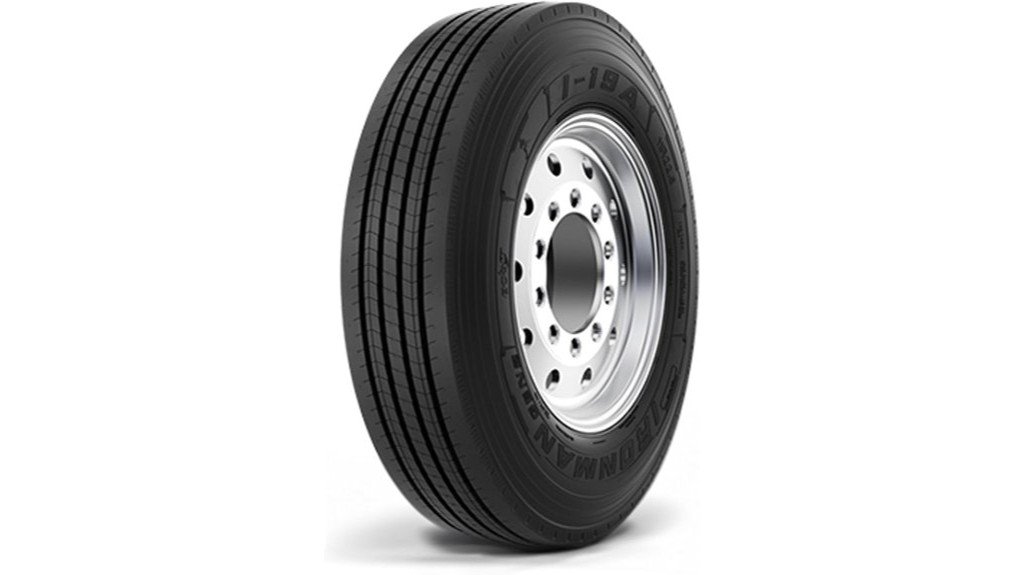
A commercial tire must carry its rated load, track steadily, resist route-related damage, and maintain useful grip when pavement gets wet. The Ironman GEN2 I-19A 225/70R19.5 is aimed at trucks and vans that work on highways, city streets, loading areas, and other high-scrub paved routes. This review explains its verified dimensions, load capacity, tread design, warranty coverage, fitment requirements, and practical limitations. It is a sensible value-focused choice for commercial road service, but it is not built for deep mud or severe winter conditions.
Quick Verdict
Rating: 7.5/10
Best For: Commercial trucks, vans, box trucks, and route vehicles that need a value-focused 225/70R19.5 all-position highway tire.
Bottom Line: The GEN2 I-19A combines Load Range G construction, a 16.5/32-inch tread depth, wet-road siping, curb guards, and stone ejectors. Its main tradeoffs are a firm commercial-tire ride and limited suitability for severe snow, deep mud, or soft worksites.
| Specification | Detail |
|---|---|
| Brand | Ironman |
| Model | GEN2 I-19A |
| Product Type | Commercial all-position highway tire |
| Amazon ASIN | B0CQBFFQ46 |
| Amazon Model Number | 98640 |
| Manufacturer Item Number | 98640.1 |
| Tire Size | 225/70R19.5 |
| Load / Speed Rating | 128/126N |
| Load Range | G, 14-ply rated |
| Tread Depth | 16.5/32 inch |
| Maximum Pressure | 110 PSI |
| Maximum Single Load | 3,970 lb at 110 PSI |
| Maximum Dual Load | 3,750 lb at 110 PSI |
| Overall Diameter | 32.0 inches |
| Section Width | 8.86 inches / 225 mm |
| Approved Rim Width | 6.75 to 7.50 inches |
| Manufacturer-Listed Weight | 63.3 lb per tire |
| Revolutions Per Mile | 655 RPM |
| Package Contents | One tire only, rim not included |
| Warranty | 72-month limited protection policy and casing allowance for two qualifying retreads, subject to terms and exclusions |
| Best Use | Highway, regional, urban delivery, and high-scrub paved routes |
Key Takeaways
- The GEN2 I-19A is an all-position commercial tire designed for trucks and vans operating on highways and high-scrub paved routes.
- The reviewed size carries a 128/126N service description, Load Range G construction, a 14-ply rating, and a 110 PSI maximum pressure.
- Its durability features include solid shoulder ribs, wavy outer grooves, stone ejector platforms, and a protective curb guard.
- Enhanced siping supports wet-road handling, braking, and resistance to irregular groove wear.
- Fitment requires a compatible 19.5-inch wheel, an approved 6.75 to 7.50-inch rim width, and enough clearance for the 32-inch diameter.
- It is better suited to paved commercial service than deep mud, soft jobsites, or dedicated severe-winter use.
What Is the Ironman GEN2 I-19A?
The Ironman GEN2 I-19A is a medium-truck commercial tire built for all-position highway and regional service. Ironman developed it as the successor to the older I-109, with an updated pattern and compound intended to manage heat, resist scrub, and extend tread life during commercial use.
The 225/70R19.5 version reviewed here uses Load Range G construction and a 14-ply rating. Its 128/126 load index supports up to 3,970 pounds in a single-tire application or 3,750 pounds per tire in a dual application at the listed 110 PSI maximum.
The Amazon package includes one tire without a rim. You still need a compatible wheel, professional mounting, balancing, and confirmation that the tire’s load capacity and dimensions match your vehicle.
Who Should Buy It?
Best For
- Fleet operators who need a value-focused 225/70R19.5 tire for paved highway and regional routes.
- Delivery trucks and commercial vans exposed to frequent turns, curbs, loading zones, and stop-and-go service.
- Buyers who value a deep starting tread, retread-capable casing coverage, stone protection, and wet-road siping.
Skip If
- Your normal routes include deep mud, loose soil, soft construction sites, or demanding off-road terrain.
- You need a tire specifically marketed and certified for severe-snow service.
- Your vehicle requires a different size, load range, wheel width, speed rating, or axle-specific tread design.
Before You Buy: A matching 225/70R19.5 size does not guarantee correct fitment. Confirm the vehicle placard, axle loads, wheel width, dual spacing, clearance, and approved tire application before ordering.
Feature-by-Feature Review
Fit and Compatibility
The reviewed tire measures 32 inches in overall diameter and 8.86 inches across the section width. Ironman approves it for rims from 6.75 to 7.50 inches wide, so you should not mount it on a wheel outside that range.
Clearance deserves extra attention on dual-wheel vehicles. The tire must fit without contacting suspension parts, bodywork, the neighboring tire, or other components while the vehicle is loaded and moving.
You should also compare its 655 revolutions-per-mile specification with the original tire. A meaningful diameter change can affect speedometer readings, gearing, clearance, and compatibility with other tires on the vehicle.
Load Support and Speed Rating
The 128/126 load index applies separate capacities to single and dual applications. At the listed 110 PSI maximum, Ironman rates the tire for 3,970 pounds in single service and 3,750 pounds per tire in dual service.
Those figures are maximum ratings, not automatic pressure recommendations for every truck. Your working pressure must follow the vehicle placard, measured axle load, tire load table, wheel rating, and guidance from a qualified commercial-tire professional.
The N speed rating corresponds to a maximum rated speed of 87 mph under specified test conditions. It does not override vehicle limits, load restrictions, road conditions, company policy, or safe commercial driving practices.
Tread Pattern and Wet-Road Control
The GEN2 I-19A uses a rib-based, all-position pattern with solid shoulder ribs. This layout supports stable contact on paved roads and spreads vehicle weight across the footprint during straight-line travel and frequent route turns.
Enhanced siping adds more water-cutting edges across the tread. Ironman states that these sipes improve wet handling and braking while helping protect the grooves from the early stages of irregular wear.
The design can support useful rain performance, but it cannot overcome poor maintenance. Low tread depth, incorrect pressure, misalignment, excessive speed, and overloaded axles can all reduce wet-road control.
Scrub Resistance and Shoulder Durability
Commercial delivery routes place heavy stress on the shoulders because vehicles make repeated tight turns, enter loading areas, and stop near curbs. Ironman uses upgraded compounds and solid shoulder ribs to improve scrub resistance and distribute load across the tread.
Wavy outer grooves are intended to resist tearing when the tire twists against rough pavement. This feature is especially relevant for local routes where shoulder wear may become a larger cost than steady highway treadwear.
Stone Ejectors and Curb Protection
Stone ejector platforms sit within the grooves to reduce the chance of trapped stones drilling toward the belt package. They are useful when a truck moves between highways, gravel-strewn yards, rough loading zones, and paved industrial areas.
A raised curb guard adds protection near the sidewall. It cannot prevent every impact or abrasion, but it gives delivery vehicles an extra defensive feature during close curbside maneuvers.
Tread Life and Heat Management
Ironman says the updated tread compound and calculated pattern reduce heat buildup and improve fuel efficiency. The manufacturer also claims 15% longer treadwear than the discontinued I-109 that this model replaces.
That comparison is a manufacturer claim rather than a guaranteed mileage result. Actual life depends on axle position, loading, inflation, alignment, route surface, driving habits, rotation practices, and maintenance quality.
How It Performs in Real Use
On Highway Routes
On steady paved routes, the rib-style pattern should provide predictable tracking and continuous road contact. The design places more emphasis on load stability, controlled wear, and commercial durability than on soft ride quality or sporty steering response.
The heavy casing may feel firmer than a light-truck or passenger tire. That is a normal tradeoff when you move to a Load Range G commercial tire designed to support substantially higher operating loads.
For Stop-and-Go Delivery Work
Local delivery work is where the curb guard, solid shoulders, and scrub-resistant compound become most relevant. Frequent starts, tight turns, curb approaches, and loading-zone maneuvers can wear the outer tread faster than long straight highway runs.
Regular alignment checks remain essential. A durable shoulder cannot correct toe problems, worn suspension parts, overloaded axles, or repeated underinflation.
On Rough Paved Lots and Gravel-Strewn Yards
The stone ejector platforms give the tire extra protection when surface debris enters the grooves. This makes the GEN2 I-19A better prepared for industrial yards and rough paved lots than a basic highway rib tire without stone-ejector features.
It still lacks the open tread blocks and self-cleaning voids of a true mixed-service or off-road tire. Deep gravel, mud, loose soil, and soft jobsites call for a more aggressive application-specific tread.
For Long-Term Fleet Use
The 16.5/32-inch starting tread provides a useful wear reserve, while the warranty includes a casing allowance for two qualifying retreads. That can improve lifecycle value when the casing remains suitable and the warranty conditions are met.
Fleet value will depend on record keeping and maintenance. Tracking pressure, axle loads, tread depth, repairs, rotations, alignments, and casing condition helps you judge actual cost per mile.
Fit, Installation, and Usage Tips
- Match the full service description, not only the 225/70R19.5 size printed on the sidewall.
- Confirm that the wheel width falls within Ironman’s approved 6.75 to 7.50-inch range.
- Check the wheel’s load and pressure ratings before inflating the tire toward commercial operating pressures.
- Use a qualified commercial-tire installer for mounting, balancing, valve inspection, and dual-spacing checks.
- Set pressure from actual load requirements, the vehicle placard, and a suitable load-and-inflation table.
- Avoid mixing tires with meaningfully different diameters, load capacities, construction types, or tread depths on the same axle.
- Inspect for cuts, bulges, exposed cords, irregular wear, embedded debris, and pressure loss before commercial trips.
Pro Tip: Record cold pressure and tread depth at regular intervals. A simple fleet log can reveal slow leaks, alignment problems, or axle-specific wear before they cause avoidable downtime.
Compatibility and Safety
Commercial tires operate under loads and pressures that require suitable wheels, valves, and installation equipment. Do not use the tire if its service description is below the vehicle or axle requirement, even when the physical dimensions appear to fit.
The listed 110 PSI figure is the tire’s maximum pressure for the stated load ratings. It is not a universal target for every vehicle. Overinflation and underinflation can both reduce contact quality, increase irregular wear, and raise the risk of tire damage.
Ironman’s product page identifies the GEN2 I-19A as an all-position tire, but your vehicle manufacturer, fleet policy, installer, and local rules may limit where a particular tire can be used. Obtain professional guidance before changing axle applications or mixing tire models.
Pros and Cons
Pros
- Load Range G construction supports demanding commercial truck and van applications when correctly fitted.
- 16.5/32-inch starting tread provides a substantial wear reserve.
- Enhanced siping supports wet handling, braking, and more consistent groove wear.
- Stone ejectors and wavy outer grooves protect against route-related debris and tearing.
- Curb guard and solid shoulder ribs suit urban delivery and high-scrub paved routes.
Cons
- The commercial casing may ride more firmly than a lighter-duty tire.
- It is not designed for deep mud, soft worksites, or aggressive off-road traction.
- The package contains one tire only, so the rim, installation, balancing, and related service costs are separate.
Warranty and Retread Value
Ironman backs the GEN2 I-19A with a 72-month limited protection policy covering qualifying defects in workmanship and materials. For I-Series GEN2 tires, the policy states that a qualifying tire may receive no-charge replacement during the first 50% of tread life, subject to the complete terms and exclusions.
The casing allowance covers up to two qualifying retreads when a covered defect occurs during the applicable retreaded life or time limit. Coverage applies in the United States and Canada, and actual eligibility depends on the casing condition, proof of purchase, inspection, and warranty requirements.
This is not a mileage warranty or a promise that every casing can be retreaded twice. Damage from operation, maintenance, road hazards, overloading, improper inflation, or other excluded causes may not qualify.
Is It Worth the Price?
The Ironman GEN2 I-19A sits in the value-focused part of the commercial-tire market. You receive verified commercial load capacity, a deep starting tread, wet-road siping, curb protection, stone ejectors, and casing-related warranty support without choosing a top-tier premium brand.
It offers strong value for the price when your vehicle spends most of its time on highways, regional roads, urban delivery routes, and paved industrial sites. Fleet operators who can use the casing and maintain the tire correctly may gain additional lifecycle value.
It is not the best fit when you need a dedicated drive tire, severe-service off-road tread, severe-snow capability, or premium-brand service support. In those cases, paying more for a specialized application may reduce long-term operating compromises.
How It Compares to Alternatives
The Ironman GEN2 I-37D is a better same-brand comparison when you need an open-shoulder drive tire for regional pickup, delivery, and occasional on-road or off-road traction. The GEN2 I-19A makes more sense when you want an all-position highway pattern with wet-road siping and scrub-resistant shoulders.
The Sailun S637SP is another regional all-position option worth comparing for stability, scrub resistance, sidewall protection, and last-mile delivery use. The Goodyear G647 RSS is a premium steer/all-position alternative aimed at severe urban applications, but it may sit in a higher value tier.
Compare the complete service description, tread application, casing policy, local dealer support, and expected cost per mile. Brand name alone should not replace correct fitment and route matching.
Frequently Asked Questions
Does the Ironman GEN2 I-19A come with a rim?
No. The Amazon package contains one tire only. You need a compatible 19.5-inch wheel plus professional mounting and balancing.
What pressure should you use in this tire?
The listed maximum is 110 PSI, but that is not automatically the correct working pressure. Use the vehicle placard, actual axle load, wheel rating, and an approved load-and-inflation table.
Can you use the GEN2 I-19A on steer or trailer axles?
Ironman classifies the GEN2 I-19A as an all-position tire. Confirm the permitted axle application with your vehicle manufacturer, installer, fleet policy, and local requirements before changing positions.
Is the Ironman GEN2 I-19A good for wet roads?
Its enhanced siping is designed to channel water from the tread and support wet handling and braking. Correct inflation, usable tread depth, alignment, vehicle speed, and axle load still determine real-world wet performance.
Is this tire suitable for off-road or severe winter use?
It can handle rough paved lots and gravel-strewn yards, but it is primarily a highway and high-scrub commercial tire. Choose a mixed-service, drive-position, or severe-snow tire when your routes require those capabilities.
What rim width fits the 225/70R19.5 version?
Ironman lists an approved rim width of 6.75 to 7.50 inches. The wheel must also meet the required load and pressure ratings for your application.
What warranty coverage does Ironman provide?
The GEN2 I-19A carries a 72-month limited protection policy for qualifying defects in workmanship and materials. It also has a casing allowance for up to two qualifying retreads, subject to the complete policy terms and exclusions.
The Bottom Line
The Ironman GEN2 I-19A 225/70R19.5 earns a 7.5/10 for its commercial load support, 16.5/32-inch tread depth, wet-road siping, curb protection, and stone-resistant design. It is worth considering for highway trucks, vans, box trucks, and delivery vehicles that operate mainly on paved routes.
You should skip it when you need aggressive off-road traction, dedicated drive-position performance, severe-snow capability, or a softer light-duty ride. Correct fitment, inflation, installation, and maintenance remain essential to getting value from its commercial construction.