Disclosure: As an Amazon Associate, we earn from qualifying purchases. If you click a link on this page and make a purchase, we may receive a small commission at no extra cost to you.
J-B Weld 38237 FiberWeld Automotive Repair Cast Review
A cracked hose, small exhaust leak, or emergency RV repair can stop your plans fast. The J-B Weld 38237 FiberWeld Automotive Repair Cast gives you a water-activated fiberglass wrap that hardens quickly and creates a rigid repair surface. This review explains what it does well, where it falls short, and whether it is worth buying for automotive emergency repairs.
Our Verdict
Rating: 8/10
Best For: Drivers, RV owners, and DIY users who need a fast wrap-style repair for hoses, tailpipes, mufflers, oil lines, transmission lines, vacuum lines, outside mirrors, roof racks, or boat repairs.
Bottom Line: You get a fiberglass-reinforced repair cast that activates with water, hardens in about 15 minutes, and handles up to 400°F and 100 PSI water pressure after curing. You give up reuse after activation, and it still needs careful surface prep, tight wrapping, and the right repair conditions.
How We Reviewed This Product
We checked the live Amazon listing and J-B Weld product details for the 38237 FiberWeld Automotive Repair Cast. We focused on verified specs, kit contents, application steps, repair limits, and buyer use cases instead of price claims that can change.
| Specification | Detail |
|---|---|
| Brand | J-B Weld |
| Model | 38237 FiberWeld Automotive Repair Cast |
| Material | Fiberglass wrap with water-activated resin |
| Repair Cast Size | 2 in. x 36 in. |
| Included Accessories | Gloves and 2 in. x 24 in. securing bandage |
| Activation Time | Dip in water for 5 to 7 seconds |
| Working Time | About 5 minutes |
| Set Time | About 15 minutes |
| Full Strength | About 2 hours, based on the Amazon product listing |
| Heat Resistance | Up to 400°F after curing |
| Water Pressure Rating | Up to 100 PSI water pressure after curing |
| Finish | Sandable and paintable after curing |
| Common Uses | Radiator hoses, heater hoses, tailpipes, mufflers, oil lines, transmission lines, vacuum lines, outside mirrors, roof racks, RV repairs, and boat emergency repairs |
What Is the J-B Weld 38237 FiberWeld Automotive Repair Cast?
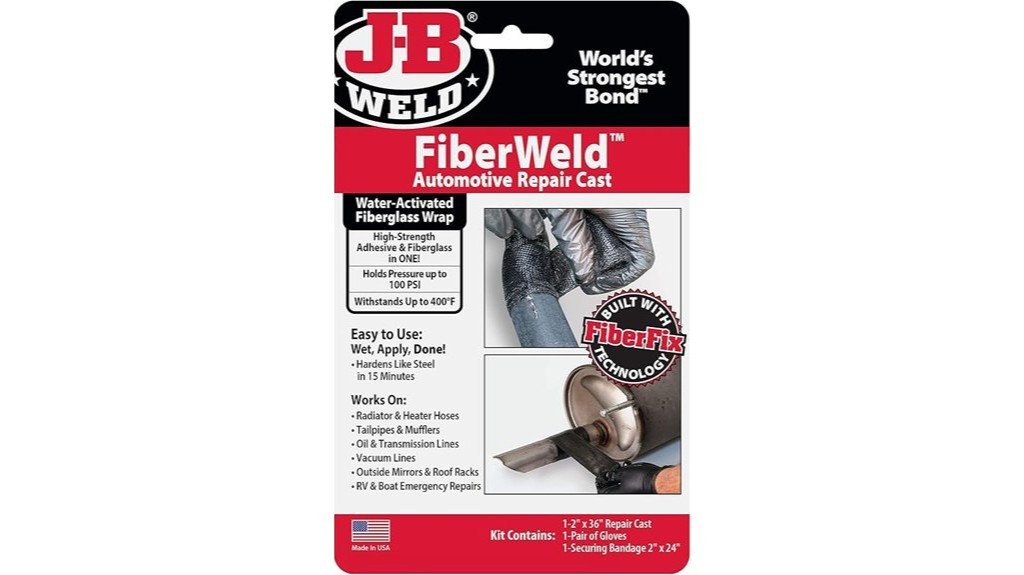
The J-B Weld 38237 FiberWeld Automotive Repair Cast is a fiberglass-reinforced repair wrap made for automotive and emergency repair jobs. It uses a water-activated resin that hardens around the damaged area after you wet the wrap and apply it tightly. The listing positions it as a repair cast for hoses, exhaust parts, lines, mirrors, roof racks, RVs, and boats.
The main repair cast measures 2 in. x 36 in., and the kit also includes gloves plus a 2 in. x 24 in. securing bandage. This matters because the repair cast forms the main hardened layer, while the securing bandage helps you compress the wrap during curing. That extra pressure helps reduce gaps and weak spots.
The headline feature is speed. You dip the wrap in water for 5 to 7 seconds, apply it within about 5 minutes, and let it harden for about 15 minutes. The Amazon listing also says the product reaches full strength in about 2 hours, so you should not rush a pressurized or high-heat repair.
Who It’s For
- Drivers who want an emergency repair wrap for radiator hoses, heater hoses, tailpipes, mufflers, oil lines, or transmission lines.
- RV and boat owners who need a compact repair kit for small leaks, cracks, or reinforcement jobs away from a shop.
- DIY users who can clean, roughen, wrap, and compress a repair area within the 5-minute working window.
Who Should Skip It
- You need a certified permanent repair for a safety-critical part, pressurized system, or electrical insulation job.
- You want a reusable repair product, since water activation makes opened material hard to preserve.
- Your repair area has heavy oil, loose paint, powder coating, rust scale, or a shape that prevents tight 50% overlap.
Feature-by-Feature Review
Design and Build
The FiberWeld 38237 kit centers on a fiberglass wrap impregnated with a water-activated resin. Fiberglass gives the repair cast its rigid structure after curing, while the resin helps it form a hard shell around the damaged area. The black finish also suits many automotive repairs better than a bright white patch.
The 2 in. x 36 in. cast size works best on small and medium repair areas. You still need enough length to wrap with about 50% overlap, so the damaged section should not be too wide. For larger pipe-style repairs, J-B Weld sells separate FiberWeld pipe repair casts with longer wraps.
Activation and Working Time
The application process starts when you dip the wrap in water for 5 to 7 seconds. After activation, you get about 5 minutes of working time, so dry fitting the wrap before wetting it helps a lot. You should measure the repair area, cut the needed length, and keep the gloves ready before water touches the resin.
This short working window is both a strength and a drawback. You get a fast repair cast that hardens in about 15 minutes, which helps during roadside or garage repairs. You also get little room for mistakes if the wrap twists, folds, or misses the damaged spot.
Heat and Pressure Resistance
Once cured, FiberWeld Automotive Repair Cast is rated for heat resistance up to 400°F. That makes it useful for some tailpipe, muffler, and under-hood repairs where ordinary tape would fail quickly. You still need to avoid direct contact with areas that exceed the product rating.
The product also holds water pressure up to 100 PSI after curing. That rating can help with radiator and heater hose repairs, but you should treat it as a repair limit, not a reason to ignore a damaged hose. A hose that bulges, splits widely, or leaks near a clamp may still need replacement.
Surface Prep and Adhesion
Surface prep decides how well this wrap works. You should clean the area, remove grease, knock down loose rust, and roughen smooth surfaces before applying the wrap. Painted or powder-coated surfaces can reduce adhesion, so bare, clean material gives you a better chance of a tight bond.
The securing bandage helps compress the repair cast during curing. That compression matters because air pockets weaken the repair and can leave leak paths. You should wrap firmly, keep each layer tight, and avoid touching the activated resin without gloves.
Finish and After-Cure Work
After the cast cures, J-B Weld lists it as sandable and paintable. That helps when you want a smoother finish on a visible repair, such as a roof rack bracket or outside mirror support. Start sanding only after the repair has hardened enough to resist lifting or tearing.
Removal takes more effort than application. Since the cured wrap becomes rigid, you may need careful cutting, sanding, or grinding to remove it later. That makes the product better for planned emergency repairs than for temporary cosmetic fixes you want to peel off cleanly.
How It Performs in Real Use
On Radiator and Heater Hoses
FiberWeld can help with small hose damage when the surface allows a tight wrap and the system stays within the 100 PSI water pressure rating. You should shut the engine off, let the area cool, clean the hose, and wrap with 50% overlap. After application, waiting for full strength gives the repair a better chance under heat and pressure.
On Tailpipes and Mufflers
The 400°F heat rating makes the 38237 repair cast useful for some exhaust-related patches. It works best on smaller cracks, holes, or reinforcement points where you can wrap around the part securely. It is not a substitute for welding or replacement when the pipe has severe rust, missing metal, or extreme heat exposure.
For RV and Boat Emergency Repairs
The small kit size makes FiberWeld easy to keep in an RV, boat, or roadside emergency box. You get gloves, the repair cast, and a securing bandage in one package. That setup helps when you need a fast patch before you can reach a proper repair shop.
For Mirrors, Roof Racks, and Brackets
The hard cast can reinforce some non-moving exterior parts, including outside mirrors and roof rack mounting areas. You still need a clean surface and enough wrap length to create a strong layered repair. On load-bearing parts, check the repair carefully because vibration and weight can stress the cured cast.
Tips for Best Results and Safety
Plan the full repair before you activate the resin. Measure the damaged section, confirm that the 2 in. x 36 in. cast gives you enough wrap length, and cut enough material for about 50% overlap. Put on the included gloves before dipping the wrap in water.
Use the 5 to 7 second water dip as your activation step, then work quickly. The wrap has about 5 minutes of working time, so you should avoid pauses after activation. Press the wrap tightly around the surface and use the securing bandage to compress the repair while it cures.
- Clean the damaged area and remove grease, dirt, loose paint, and rust scale.
- Roughen smooth metal, rubber, or plastic surfaces so the resin can grip better.
- Dip the wrap in water for 5 to 7 seconds.
- Wrap tightly with about 50% overlap across the damaged section.
- Secure the repair with the included 2 in. x 24 in. bandage.
- Let the cast harden for about 15 minutes and allow about 2 hours before full-strength use.
Pros and Cons
Pros
- Water-activated fiberglass wrap hardens in about 15 minutes.
- Handles up to 400°F after curing, which helps with many automotive repairs.
- Rated for up to 100 PSI water pressure after curing.
- Includes gloves and a 2 in. x 24 in. securing bandage.
- Sandable and paintable finish helps with visible repairs.
Cons
- About 5 minutes of working time leaves little room for mistakes.
- Not ideal for dirty, oily, painted, or powder-coated surfaces without prep.
- Not reusable after water activation, so partial use can waste material.
- Not a certified repair for live electrical insulation or safety-critical parts.
Is It Worth the Price?
The J-B Weld 38237 FiberWeld Automotive Repair Cast offers strong value for the price if you need a compact emergency repair wrap. You get a fast-setting fiberglass cast, a securing bandage, and gloves in one kit. That makes it a smart buy for everyday use in a garage, RV, boat, or roadside repair kit.
The value depends on your repair type. You get the most benefit when the damaged area is small, clean, wrap-friendly, and within the product’s 400°F and 100 PSI limits. You should look elsewhere if the job needs a full hose replacement, welding, a certified electrical repair, or a manufacturer-approved safety fix.
How It Compares to Alternatives
J-B Weld FiberWeld Permanent Repair Cast is better suited to general structural repairs on wood, metal, plastic, rubber, and fiberglass. J-B Weld FiberWeld Pipe Repair Cast is a better match when you need a pipe-focused kit for PVC, copper, steel, cast iron, or ABS pipe repairs.
The 38237 Automotive Repair Cast remains the better choice when your main needs are radiator hoses, heater hoses, mufflers, tailpipes, oil lines, transmission lines, RV repairs, or boat emergency patches. Its main advantage is automotive positioning, fast activation, and heat resistance up to 400°F.
Frequently Asked Questions
Does J-B Weld 38237 FiberWeld work on radiator hoses?
Yes, it can work on some radiator and heater hose repairs when the surface is clean and the system stays within the 100 PSI water pressure rating. You should still replace a badly cracked, swollen, or weakened hose instead of relying on a patch.
How long does FiberWeld 38237 take to harden?
The wrap hardens in about 15 minutes after activation. The Amazon listing also states that the product reaches full strength in about 2 hours, so you should allow extra cure time before pressure or heat stress.
Can FiberWeld 38237 be used on mufflers and tailpipes?
Yes, it can be used on some muffler and tailpipe repairs because the cured wrap is rated for heat resistance up to 400°F. It is not the right fix for severe rust, missing metal, or exhaust areas that exceed the product’s heat rating.
Does FiberWeld adhere to painted or powder-coated surfaces?
It may bond poorly to paint, powder coating, grease, or loose rust. For a stronger repair, strip weak coatings, clean the area, roughen the surface, and apply the wrap tightly before the working time ends.
Can FiberWeld be used for electrical insulation repairs?
No, you should not use this repair cast for live electrical insulation repairs. It may create a hard physical covering, but the product is not presented as an electrical-rated insulation material.
Is the kit reusable after opening if partially unused?
You should treat the activated material as single-use. Moisture starts the resin reaction, so unused material can become unreliable after exposure to water or humidity.
How should cured FiberWeld be removed or sanded?
After curing, the wrap becomes rigid and can be difficult to remove. You may need careful cutting, grinding, chiseling, or sanding, so avoid applying it where you need a clean peel-off repair later.
The Bottom Line
The J-B Weld 38237 FiberWeld Automotive Repair Cast earns an 8/10 because it gives you a fast, specific, and useful repair option for automotive emergencies. You should buy it if you need a compact 2 in. x 36 in. fiberglass cast for hoses, mufflers, lines, RVs, boats, or similar repairs. You should skip it if the damaged part needs replacement, certified insulation, welding, or a permanent manufacturer-approved repair.
Ready to Buy?