Learning a baitcaster can become frustrating when the spool overruns, the reel feels bulky, or the controls take too long to adjust. The KastKing Royale Legend II combines a 7.2 oz low-profile body with an externally adjustable magnetic brake and a carbon drag system rated up to 17.6 lb. It is designed mainly for freshwater anglers who want an affordable reel for bass, ponds, rivers, kayak trips, and regular weekend fishing. This review explains where the reel offers strong value and where its graphite frame and entry-level construction may limit you.
Product details, seller information, and available variants can change. Check the current Amazon selector before ordering.
Disclosure: As an Amazon Associate, we earn from qualifying purchases. If you click a link on this page and make a purchase, we may receive a small commission at no extra cost to you.
Quick Verdict
Quick Verdict
Rating: 8.3/10, recommended with caveats
Best For: budget-minded freshwater anglers, first-time baitcaster users, and weekend bass fishing.
Bottom Line: The KastKing Royale Legend II gives you a light 7.2 oz frame, ten external brake settings, useful gear-ratio choices, and up to 17.6 lb of rated drag. Its graphite frame keeps the weight and cost down, but it is less rigid than an aluminum-frame reel for constant heavy-cover work or high-resistance lures.
Before You Buy: The linked ASIN identifies a 7.2:1 right-hand reel. Confirm the handle side, gear ratio, and spool package in the Amazon selector because the Royale Legend II product family includes several configurations.
Key Specs
| Specification | Detail |
|---|---|
| Brand | KastKing |
| Product family | Royale Legend II |
| Reviewed ASIN | B07VWHDJ3T |
| Linked configuration | 7.2:1 gear ratio, right-hand retrieve |
| Product type | Compact low-profile baitcasting reel |
| Reel weight | 7.2 oz |
| Frame and side covers | Graphite |
| Main shaft | Stainless steel |
| Main gear | Hamai precision-machined brass |
| Spool | CNC-machined aluminum |
| Line guide | Diamond-shaped ceramic guide |
| Bearings | 5+1 double-shielded stainless steel bearings |
| Pinion support | Double-bearing-supported pinion gear |
| Brake system | Cross-Fire magnetic brake with 8 magnets and 10 external settings |
| Drag system | Quadruple-disc carbon-fiber drag, rated up to 17.6 lb |
| Gear-ratio options | 5.4:1 and 7.2:1 across the product family |
| Line retrieve | Approximately 22.4 to 29.8 inches per turn, depending on gear ratio |
| Mono capacity | 10 lb/130 yd, 12 lb/110 yd, or 14 lb/90 yd |
| Braid capacity | 40 lb/130 yd, 50 lb/110 yd, or 65 lb/90 yd |
| Handle knobs | Contoured EVA knobs |
| Side-cover release | Concealed rear release |
| Best use | Freshwater bass fishing, pond fishing, river fishing, kayak trips, and baitcaster practice |
The product family includes different retrieve sides, gear ratios, and spool packages. Verify the exact configuration before placing your order.
What Is the KastKing Royale Legend II?
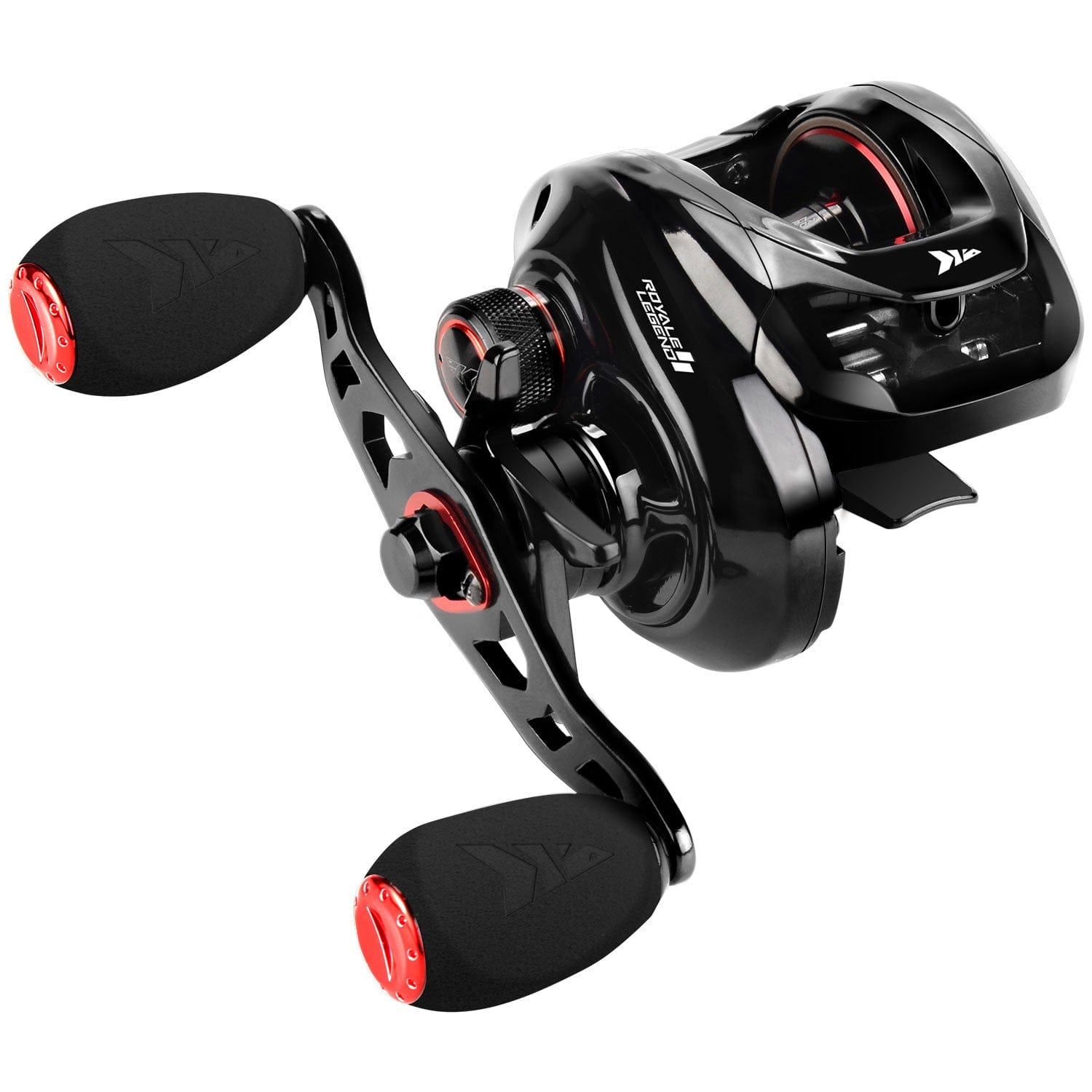
The KastKing Royale Legend II is a compact, low-profile baitcasting reel made for anglers who want more casting control than a basic reel offers without entering a premium price tier. Its reduced graphite frame, concealed side-cover release, and 7.2 oz weight are intended to make the reel easier to palm during long casting sessions.
KastKing offers the reel family in 5.4:1 and 7.2:1 gear ratios, with left-hand and right-hand retrieve options. The slower model suits crankbaits and other steady retrieves, while the faster model picks up as much as 29.8 inches of line per handle turn for jigs, Texas rigs, topwater lures, and quick follow-up casts.
The main compromise is frame rigidity. Graphite keeps the reel light and affordable, but it can flex more than aluminum when you apply high pressure, retrieve hard-pulling lures, or repeatedly pull fish from thick vegetation.
Who Should Buy It?
Best For
- New baitcaster users who want an external brake dial with a wide adjustment range.
- Freshwater bass anglers who fish ponds, rivers, banks, boats, or kayaks.
- Budget-minded buyers building a first casting combo or an affordable secondary setup.
Skip If
- You want an aluminum frame for repeated heavy-cover fishing or high-resistance lures.
- You need an 8:1 or faster retrieve for specialized high-speed techniques.
- You want a sealed or saltwater-focused reel that requires less post-trip care.
Performance and Features
Cross-Fire Magnetic Brake Control
The Cross-Fire system uses eight magnets and an external dial with ten settings. You can increase braking when casting into wind or switching to a lighter lure without removing the side cover.
More brake pressure slows the spool and makes the reel easier to control, although it may reduce distance. Lower settings free the spool for longer casts but require better thumb control and a well-adjusted tension knob.
Spool Tension and Beginner Control
The magnetic dial and spool-tension knob handle different parts of the cast. The tension knob controls side-to-side spool movement and the lure’s initial drop, while the magnetic brake controls spool speed during the cast.
Beginners should start with moderate brake pressure and enough spool tension to let the lure fall in a controlled way. Back the controls off gradually instead of starting loose and trying to stop every overrun with your thumb.
Quadruple-Disc Carbon Drag
KastKing rates the carbon-fiber drag system for up to 17.6 lb of pressure. That gives the reel enough rated capacity for common largemouth, smallmouth, pike, and similar freshwater applications when the rod, line, leader, and knots match the technique.
The maximum number does not mean you should lock the drag down. Set enough pressure for a firm hookset while still allowing line to slip during a hard surge, especially when you use lighter fluorocarbon or smaller hooks.
Graphite Frame and Compact Shape
The frame and side covers use graphite, which helps hold the reel’s weight to 7.2 oz. The smaller body and concealed rear side-cover release also reduce protruding parts around your palm.
This design works well for repeated casting, but graphite is the reel’s main structural compromise. An aluminum-frame reel generally feels more solid when you crank deep-diving baits, pull against heavy vegetation, or fish under high drag pressure.
Brass Gearing and Bearing Support
The drivetrain uses Hamai precision-machined brass gears, a stainless steel main shaft, and a double-bearing-supported pinion gear. The 5+1 double-shielded stainless steel bearing system supports the spool, gears, and retrieve.
These parts help the reel feel smoother under normal load, but maintenance still matters. Dirt, dried water, excess oil, and damaged line can make an otherwise smooth baitcaster feel rough.
CNC Aluminum Spool and Ceramic Line Guide
The machined aluminum spool keeps rotating mass lower than a heavy cast spool and helps line leave the reel cleanly. The ceramic line guide reduces direct metal contact as the levelwind moves across the spool.
Inspect both parts after a hard impact or a severe backlash. A damaged guide insert, rough spool edge, or line trapped beneath the spool can weaken line and shorten casting distance.
Gear-Ratio Choices
The 5.4:1 model retrieves about 22.4 inches per handle turn and suits crankbaits, spinnerbaits, and other presentations that benefit from a slower pace. It can also make high-resistance lures easier to control.
The 7.2:1 model retrieves up to about 29.8 inches per turn. It is the more versatile choice for jigs, Texas rigs, topwater lures, target casting, and situations where you need to collect slack quickly.
Line Capacity
The standard spool holds up to 130 yards of 10 lb mono, 110 yards of 12 lb mono, or 90 yards of 14 lb mono. Listed braid capacities range from 130 yards of 40 lb braid to 90 yards of 65 lb braid.
Those capacities suit ordinary bass fishing, but filling the spool with very heavy line reduces usable yardage. Keep the line level across the spool and avoid overfilling, which can increase friction and encourage loose loops.
How It Performs in Real Use
For Learning a Baitcaster
The ten-setting brake gives beginners room to make small adjustments as casting skill improves. Starting with a compact lure in the 3/8 oz to 1/2 oz range usually makes tuning easier than beginning with a very light bait.
The reel will not eliminate every backlash. A sudden headwind, an abrupt cast, loose line, or late thumb pressure can still overrun the spool.
For Bass Ponds and Rivers
The 7.2:1 version works well for jigs, Texas rigs, spinnerbaits, and topwater because it collects slack quickly after a pitch or strike. The drag rating provides ample stated capacity for ordinary bass fishing, although your practical drag setting should remain within the limits of the line and rod.
In moving water, the faster ratio can help you stay connected when a fish swims toward you. The slower 5.4:1 option may feel more controlled with crankbaits that create constant resistance.
For Kayak and Bank Fishing
The 7.2 oz body reduces the weight of a casting combo that you may hold for several hours. The external brake dial also lets you adjust for a wind change without handling a loose side plate near the water.
Bank and kayak anglers should still protect the reel from sand, mud, and spray. Set the reel on a dry surface rather than directly on the ground when changing lures or clearing line.
For Heavy Cover and High-Resistance Lures
The reel can handle ordinary grass edges, laydowns, docks, and moderate cover when matched with suitable line. Its graphite frame is less appealing for constant punching, oversized swimbaits, umbrella rigs, or deep-diving crankbaits that place sustained load on the drivetrain.
You may get better long-term value from an aluminum-frame reel if most of your fishing involves heavy braid, locked-down pressure, or repeated winching from thick vegetation.
Setup Tips Before Your First Cast
Choose a Manageable Line
For general bass fishing, 12 to 15 lb mono or fluorocarbon provides useful capacity on the standard spool. Thirty to 40 lb braid is another practical option because its larger diameter is easier to manage on a baitcaster than very thin braid.
Do not fill the spool to the outer edge. Leaving a small gap below the rim helps prevent loose line from rubbing against the frame.
Tune the Spool Tension
Tie on the lure you plan to cast, press the thumb bar, and adjust the tension knob until the lure drops at a controlled speed. The spool should stop or slow sharply when the lure reaches the ground.
This is a starting point rather than a permanent setting. Retune the tension after a major change in lure weight.
Set the Magnetic Brake
Begin around the middle or upper half of the brake range. Make several smooth casts, then reduce the brake one setting at a time until you reach a useful balance between control and distance.
If the spool fluffs early in the cast, add magnetic brake. If it overruns as the lure lands, apply earlier thumb pressure and check the spool-tension setting.
Match the Rod to the Technique
Use the reel with a casting rod rather than a spinning rod. A medium or medium-heavy casting rod covers many bass techniques, but the rod’s printed lure and line ratings should guide your final setup.
Pro Tip: Practice with one lure in an open area before changing weights or line types. Consistent equipment makes it easier to learn which adjustment fixed a backlash and which change reduced casting distance.
Compatibility, Care, and Safety Notes
Confirm the retrieve side before ordering. A right-hand reel places the handle on the right side, while a left-hand reel places it on the left. The best choice depends on which hand you prefer to crank with after casting.
Set the drag for the line, hook, rod, and cover rather than relying on the reel’s 17.6 lb maximum rating. Check knots and line for abrasion, especially after fishing around rocks, wood, docks, or vegetation.
After a wet trip, wipe the reel with a soft cloth. Following salt or brackish exposure, use a gentle fresh-water rinse without submerging the reel, dry it thoroughly, and follow KastKing’s lubrication and service guidance.
Avoid spraying high-pressure water into the frame. Too much oil can also slow the spool or attract grit, so apply only a small amount to the points identified in the reel instructions.
Pros and Cons
Pros
- The 7.2 oz body keeps a casting combo manageable during long sessions.
- The external ten-setting brake allows quick adjustments for wind and lure weight.
- The 17.6 lb rated carbon drag provides useful capacity for ordinary freshwater fishing.
- The 5.4:1 and 7.2:1 options cover slower moving baits and faster slack pickup.
- Brass gearing, a stainless steel shaft, an aluminum spool, and 5+1 bearings add substance to the budget design.
Cons
- The graphite frame is less rigid than aluminum under sustained heavy load.
- The brake system still requires spool-tension adjustment and practiced thumb control.
- Several similar-looking variants make it easy to order the wrong retrieve side or gear ratio.
Is It Worth the Price?
The KastKing Royale Legend II sits in the budget baitcaster category, but its verified feature list is more complete than a basic entry-level reel. You get a 7.2 oz body, ten brake settings, 5+1 bearings, brass gearing, an aluminum spool, and a carbon drag rated up to 17.6 lb.
It offers the most value to anglers learning baitcasting or building a freshwater combo for bass, ponds, rivers, and casual weekend trips. The external brake control is especially useful when you rotate between several lure weights during one outing.
The value becomes less convincing when frame rigidity is your main concern. An aluminum-frame alternative may justify its higher cost if you fish hard every week, retrieve high-resistance lures, or regularly pull fish from thick cover.
How It Compares to Alternatives
The Shimano SLX and Daiwa Fuego CT are worth comparing when you prefer the more rigid feel of an aluminum frame. They generally target anglers willing to spend more for a firmer platform under load.
The Abu Garcia Max X is a closer graphite-frame alternative with magnetic braking and a beginner-friendly design. The Royale Legend II makes the most sense when you value its 7.2 oz weight, ten-level brake, two gear-ratio choices, and higher listed drag capacity.
Frequently Asked Questions
What line works best on the KastKing Royale Legend II?
For general bass fishing, 12 to 15 lb mono or fluorocarbon is a practical starting point. Thirty to 40 lb braid also works well when you want low stretch and easier handling than very thin braid.
How much line does the standard spool hold?
Listed mono capacities are 10 lb/130 yd, 12 lb/110 yd, and 14 lb/90 yd. Listed braid capacities are 40 lb/130 yd, 50 lb/110 yd, and 65 lb/90 yd.
Is the KastKing Royale Legend II good for beginners?
Yes, its ten-level external magnetic brake gives beginners a wide control range. You still need to tune spool tension, use smooth casting motions, and stop the spool with your thumb before the lure lands.
Can you use the reel in saltwater?
The reel is best treated as a freshwater-focused model because no sealed saltwater system is listed. After salt or brackish exposure, rinse it gently without submerging it, dry it fully, and follow the manufacturer’s maintenance guidance.
How strong is the drag?
KastKing rates the quadruple-disc carbon-fiber drag for up to 17.6 lb. Your working setting should remain appropriate for the line, knots, hook size, rod power, and cover rather than being tightened to the maximum.
Which gear ratio should you choose?
Choose 5.4:1 for crankbaits and slower presentations that benefit from controlled retrieve speed. Choose 7.2:1 for jigs, Texas rigs, topwater, pitching, and faster slack pickup.
Does it come in left-hand and right-hand versions?
Yes, the wider Royale Legend II family includes both retrieve orientations. The affiliate ASIN in this article currently identifies a 7.2:1 right-hand model, so review the selected variant before checking out.
Who should skip this reel?
Skip it if you need an aluminum frame for constant heavy-cover work, oversized swimbaits, or high-resistance lures. It is also less suitable when you want an 8:1 or faster ratio or a sealed saltwater-focused design.
The Bottom Line
The KastKing Royale Legend II is recommended with caveats for freshwater anglers who want a light, adjustable, and affordable baitcaster. Its ten-level brake, 7.2 oz weight, brass gearing, and 17.6 lb rated drag make it a useful first or secondary reel.
Buy it for bass, ponds, rivers, kayak fishing, and baitcaster practice. Skip it when aluminum-frame rigidity, extreme-duty use, a very high gear ratio, or saltwater-focused protection matters more than weight and price.
- Buy if: you want a budget-friendly freshwater baitcaster with external brake adjustment and two practical gear-ratio options.
- Skip if: you need maximum frame rigidity, frequent heavy-cover performance, or a sealed saltwater design.
Ready to Buy?
Check the latest price, retrieve side, gear ratio, and spool configuration before you decide.