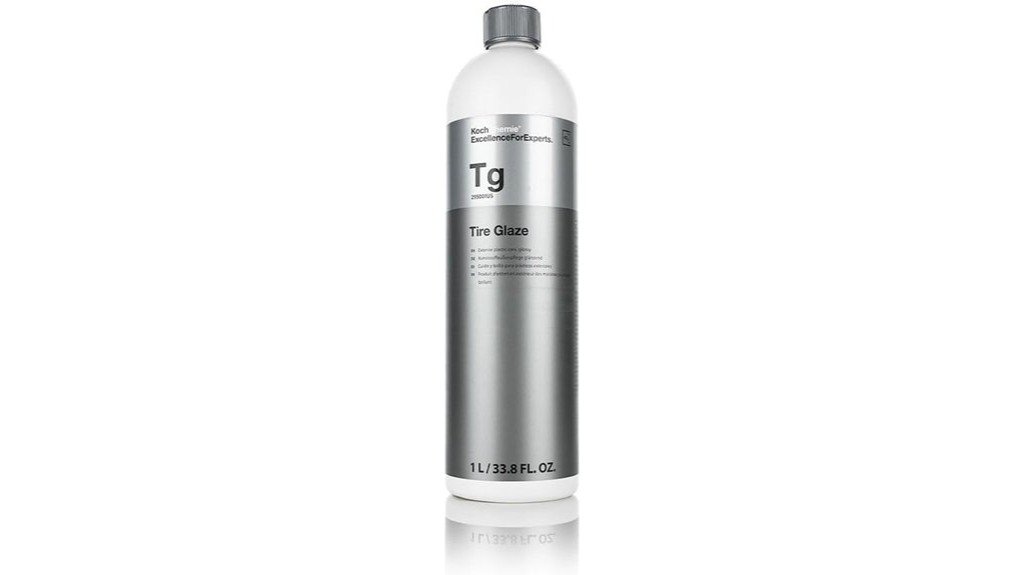
KOCHCHEMIE Tire Glaze offers a solvent-based dressing that restores gloss to tires, rubber, and vinyl with UV blockers for longer life; apply 1–2 thin coats, allow 5–10 minutes to cure, expect water resistance for several days. How glossy do you want it — matte to wet-look is achievable by wipe technique and dilution. Coverage: roughly 8–12 m² per liter depending on method and porosity. More details follow.
Key Takeaways
- Solvent-based tire glaze delivers adjustable finish: one buffed coat for matte, 2–3 thin coats for a wet gloss.
- Rapid development: matte appears in 2–3 minutes; full wet gloss cures in about 10–12 minutes.
- Durable protection with UV blockers: resists light rain 3–5 days, heavy washes reduce longevity to 48–72 hours.
- Coverage ~8–10 m² per liter per light coat; recommended 10–20 mL per tire per coat for consistent results.
- Use above 10°C in ventilated areas, test compatibility first, store above 5°C, and allow 5–10 minutes between coats.
Product Overview and Key Features
When evaluating KOCHCHEMIE Tire Glaze, the reader should expect a solvent-based dressing formulated for professional and enthusiast use; it comes in a 1‑liter bottle and is designed to restore a wet, glossy appearance while remaining dry to the touch.
This product overview outlines product benefits and observed user experiences.
What is it? A premium solvent-based tire and trim dressing with UV blockers, shine boosters, 1 L volume.
How does it perform? Restores wet shine, leaves surface dry, works on rubber, textured plastic, vinyl.
Practical considerations: store >5°C, use ventilated area, test spot for compatibility.
Summary: professional-grade, measured results.
Application Tips and Finish Variations
Having reviewed the product overview and key features, attention now shifts to how KOCHCHEMIE Tire Glaze is applied and how different techniques influence finish. Practical application techniques: use 10–20 mL per tire per coat, apply with foam applicator or microfiber, allow 5–10 minutes between coats. Finish options depend on method: one coat + buffing yields matte; 2–3 thin coats create wet shine. Want long-lasting control? Work in 10°C–25°C, avoid rain for 2 hours.
| Tool | Coats | Result |
|---|---|---|
| Foam pad | 1 | Matte |
| Microfiber | 2 | Gloss |
| Brush | 3 | Wet shine |
Performance, Durability, and Versatility
Although formulated primarily as a solvent-based dressing, KOCHCHEMIE Tire Glaze delivers a balance of immediate visual impact and measurable longevity that deserves closer inspection.
A performance evaluation notes rapid shine development: one coat buffs to matte in 2–3 minutes, three coats yield wet gloss with 10–12 minutes cure time.
Durability testing shows resistance to light rain for 3–5 days, heavy wash reduces life to 48–72 hours.
Versatility spans tires, textured plastics, rubber and vinyl; choose coats for finish.
Practical considerations: application temperature 10–25°C, coverage ~8–10 m²/L per light coat.
- Shine retention vs. washing frequency
- UV blocker effectiveness
- Finish adjustability: matte to wet
- Substrate compatibility
Frequently Asked Questions
Is This Product Safe for Use on Whitewall Tires?
An apple a day keeps surprises away. It is generally safe for whitewall tire care when applied carefully; avoid contact with whitewalls during product application techniques, test a small area first, and clean thoroughly to prevent staining.
Does It Affect Brake Dust Attraction?
It may slightly increase brake dust attraction on tires if a glossy, residue-building layer is applied; proper tire maintenance and cleaning methods like regular washing and moderate coating frequency minimize buildup and maintain brake-dust resistance.
Is It Compatible With Tire Pressure Sensors?
Yes; like a cautious gardener tending buried roots, the reviewer notes tire sensor compatibility remains unaffected when product application techniques avoid inner bead and valve areas, applying sparingly to sidewalls and wiping excess to prevent contact.
What Is the Shelf Life After Opening?
Opened containers typically retain ideal shelf life of about 12 months; product longevity may vary with storage conditions, temperature, and contamination. Properly resealed and stored away from heat and sunlight can extend usable performance beyond that period.
Are There Any Special Disposal or VOC Regulations?
Solvent warning: specialists should follow local disposal methods and VOC compliance rules. The manufacturer advises treating leftover product as hazardous waste, using approved collection, avoiding drains, and consulting safety data sheets for specific regional regulatory and recycling requirements.