🔧 Why oil filters matter more than you think
Oil filters do one job: remove contaminants from the oil so the engine runs smoothly. That sounds simple, but the design trade-offs are anything but. Add more filter media and you trap more debris, but you also make it harder for oil to flow. Too much restriction can hurt performance and efficiency. The trick is finding the balance between filtering capacity and flow restriction.
📐 How we tested: real-world, repeatable lab methods
The tests compared four extended-interval filters: FRAM Ultra Synthetic, Mobil 1 Extended Performance, K&N Select, and Walmart SuperTech Premium. These are marketed for long service intervals (often up to ~20,000 miles under stated conditions), so we focused on measurable differences:
✅ Check Price: Mobil 1 Extended Performance
✅ Check Price: K&N Select
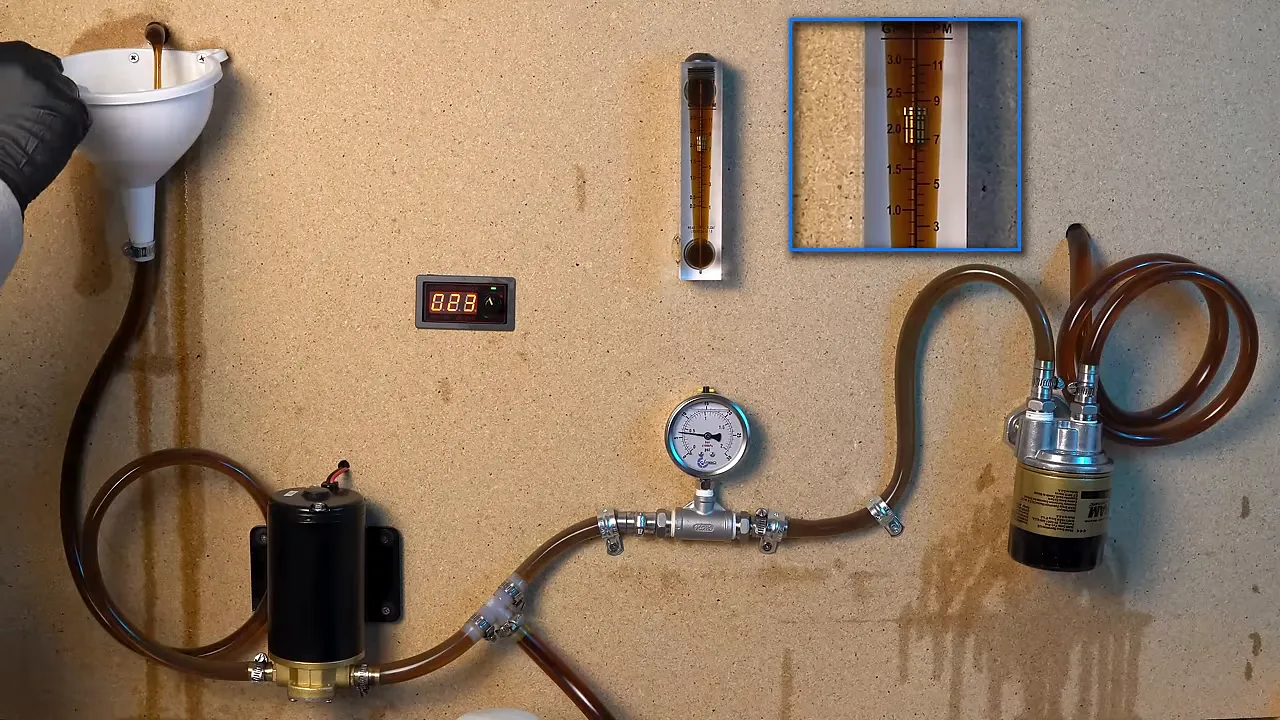
- Flow restriction at a fixed pump output (higher pressure equals more restriction).
- Used-oil recirculation comparison using identical used-oil samples run for 10 hours under constant power and then lab-analyzed for wear metals.
- Filter capacity measured by loading 30-micron aluminum powder until oil flow dropped from 9 to 8 and then to 7.5 liters per minute.
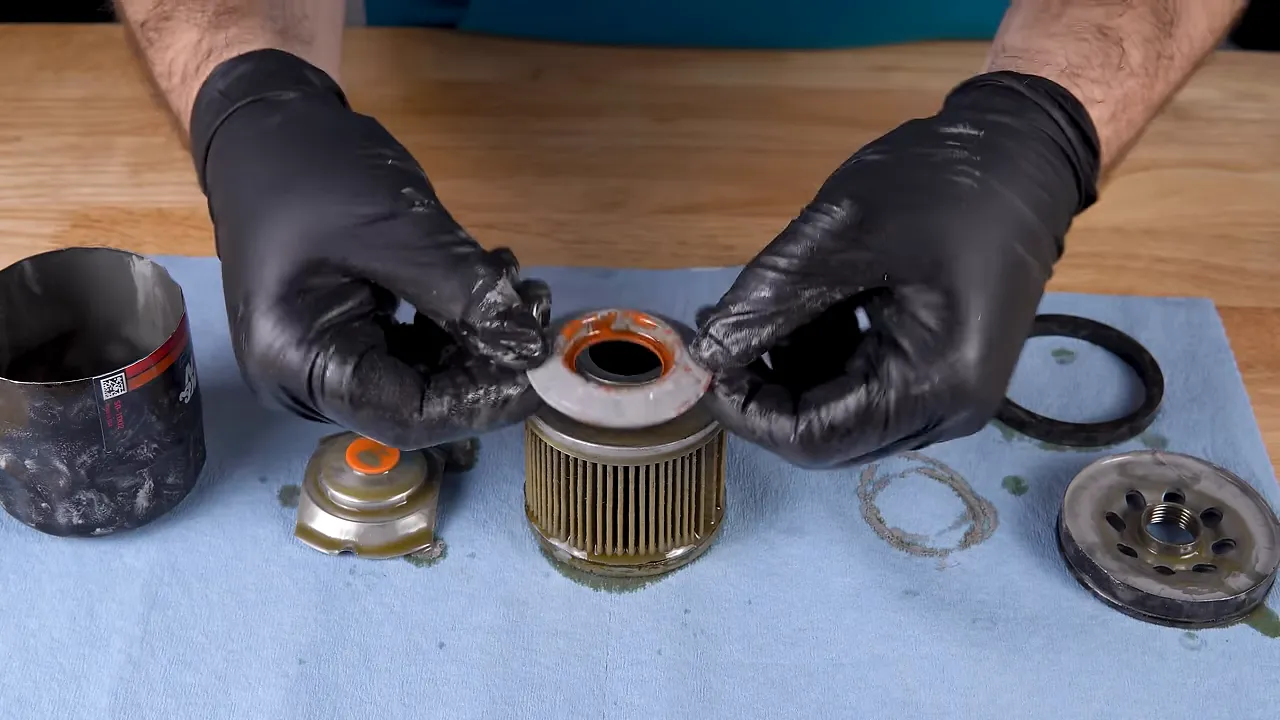
- Physical teardown to inspect build quality, pleat spacing, bypass and anti-drainback valves, and where contaminants accumulated.
🧪 Flow restriction: who choked the oil?
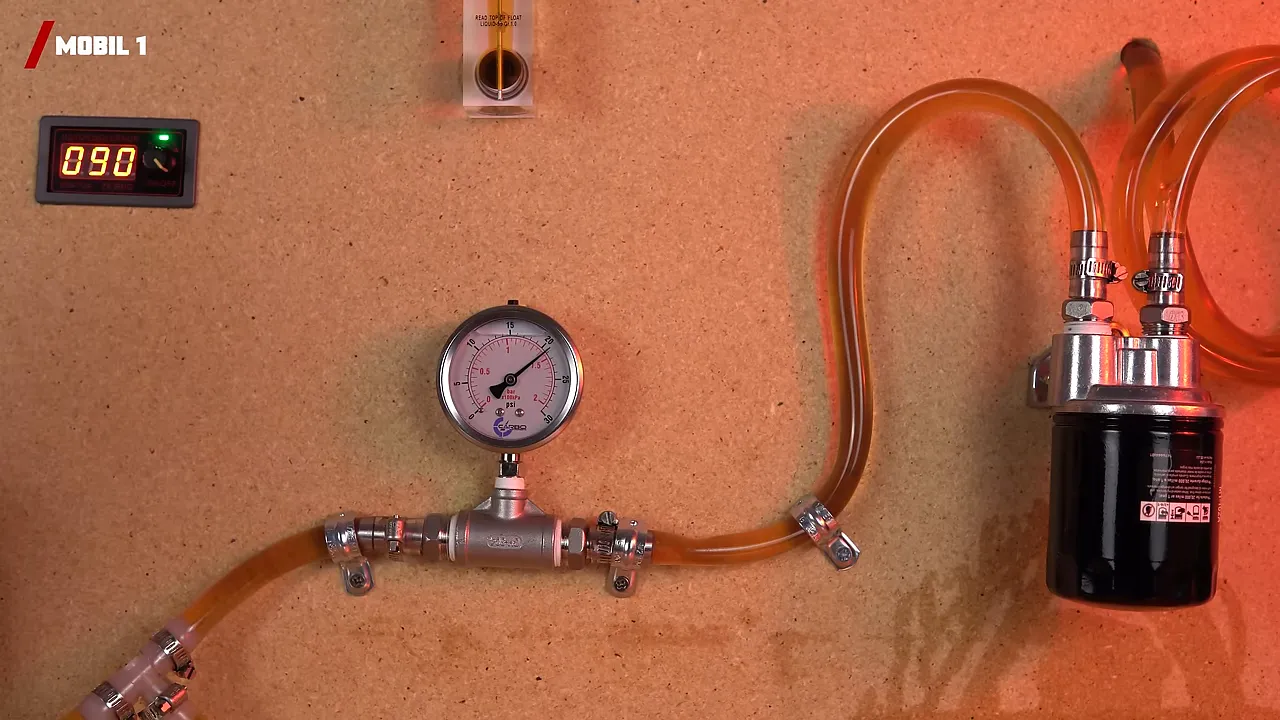
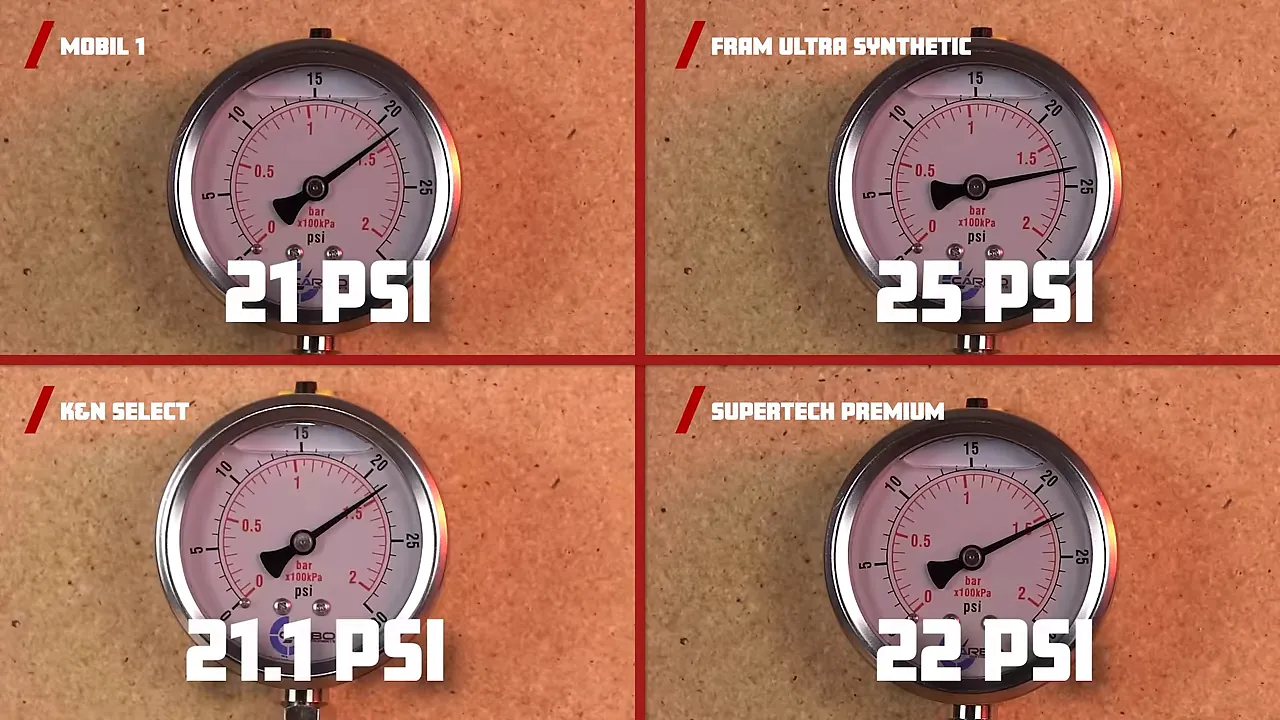
We measured static pressure across each filter while running the pump at constant power. Results (rounded):
- Mobil 1: ~21 PSI — lowest restriction among the group.
- K&N Select: ~21.1 PSI — nearly identical to Mobil 1.
- Walmart SuperTech Premium: ~22 PSI.
- FRAM Ultra Synthetic: ~24 PSI — noticeably more restrictive, likely due to double-layer media and finer mesh.
Lower restriction means less resistance on the oil pump and potentially better engine efficiency. High-capacity, fine-media filters can reduce contaminants more aggressively but at the cost of increased restriction.
🔬 Filtering efficiency: used-oil lab analysis
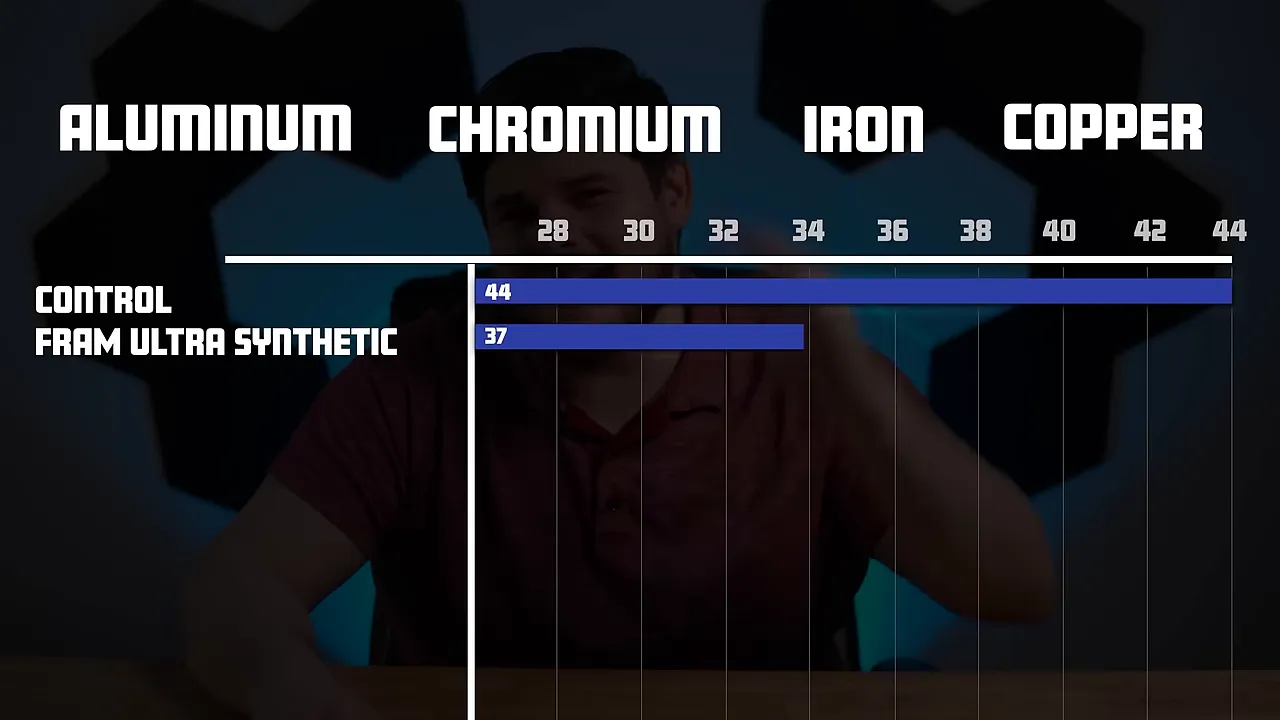
We took identical used-oil samples with about 18,000 miles of use, ran them through each filter for 10 hours, then sent ~3 ounces from each run to an oil-testing lab. The lab reported wear metals in parts per million (ppm) for common elements (aluminum, chromium, iron, copper). Note: elemental ppm results are an indirect indicator and may not represent filtration efficiency by themselves.
- Control (no filter): 44 ppm
- FRAM Ultra Synthetic: 37 ppm
- Mobil 1: 40 ppm
- Walmart SuperTech Premium: 40 ppm
- K&N Select: 34 ppm
These numbers show modest differences. K&N and FRAM reduced wear metals the most, but keep in mind parts per million differences are small and should be weighed alongside capacity and restriction.
⚖️ Capacity test: how much contamination can each hold?
We used 30-micron aluminum powder to simulate common engine debris from aluminum parts. Each filter started with clean oil and the powder was added until flow dropped from 9 L/min to 8 L/min, then to 7.5 L/min. Total contaminant added before those flow reductions:
- FRAM Ultra Synthetic: 50 grams (33 g to 8 L/min + 17 g to 7.5 L/min)
- Mobil 1: 48 grams (33 g + 15 g)
- K&N Select: 25 grams (17 g + 8 g)
- Walmart SuperTech Premium: 25 grams (19 g + 6 g)
FRAM had the highest capacity, followed closely by Mobil 1. K&N and Walmart tied but at roughly half the capacity. A higher capacity filter can hold more debris before becoming restrictive or triggering the bypass valve.
🔍 Teardown insights: build quality and where the dirt ends up
Disassembly reveals how design choices affect performance:
- FRAM Ultra Synthetic — double-layer media captured a large volume of aluminum, but a lot collected under the cap around the anti-drainback valve. That trapped debris could affect the valve seal and allow the filter to drain when parked.
- Mobil 1 — evenly spaced pleats, metal inner barrel, and an integrated bypass valve design. Aluminum collected in the pleats rather than seizing the drainback area. Excellent overall layout and build.
- K&N Select — solid metal inner barrel and good materials, but uneven pleat distribution limited capacity in this test.
- Walmart SuperTech Premium — plastic inner housing and uneven pleats. Good gasket and o-ring, but lower capacity and plastic interior are notable.
🏁 Final ranking and the trade-offs
When combining restriction, capacity, lab results, and build quality, the top pick was Mobil 1. Why?
- Very low flow restriction (low pump pressure).
- High capacity nearly matching FRAM in the aluminum test.
- Strong build quality and smart internal design that captured debris in the pleats.
FRAM Ultra Synthetic and K&N Select tied for second when weighing all factors. FRAM had the highest capacity but was more restrictive and had debris accumulation near the drainback seal. K&N performed well on restriction and lab ppm but had lower capacity in the aluminum test.
✅ Check Price: Mobil 1 Extended Performance
✅ Check Price: K&N Select
🧭 How to choose the right oil filter for your needs
Choose based on priorities:
- If you value engine performance and lower pump load, prefer low restriction filters such as Mobil 1 or K&N.
- If you want maximum contaminant-holding capacity and are willing to accept slightly higher restriction, consider FRAM Ultra Synthetic.
- For budget replacements, know that economical options can be fine for some use cases but may have lower capacity and plastic internals.
Look for solid construction: evenly spaced pleats, metal inner support, good gasket quality, an anti-drainback valve, and a reliable bypass valve. Those details control real-world performance much more than marketing mileage claims.
❓ Frequently asked questions
Does a higher micron rating mean better protection?
Are expensive filters always better?
What happens when a filter gets clogged?
How important is the anti-drainback valve?
Should I change the oil filter every oil change?