Disclosure: As an Amazon Associate, we earn from qualifying purchases. If you click a link on this page and make a purchase, we may receive a small commission at no extra cost to you.
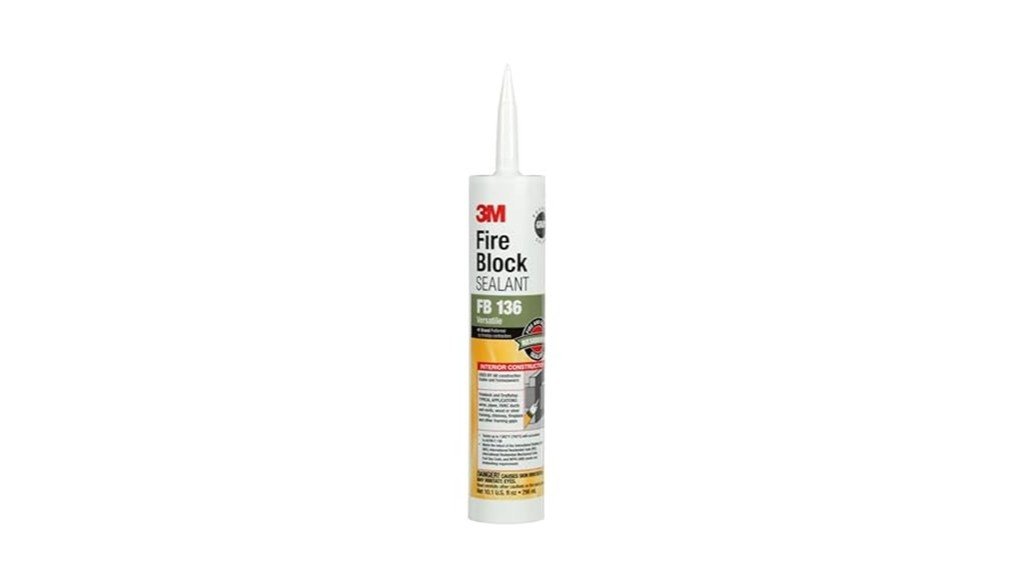
Sealing a construction gap is easy to underestimate. A bead can look complete yet still fail to match the substrate, joint detail, or fire-safety requirement. 3M Fire Block Sealant FB 136 is presented as a cartridge-applied sealant for non-rated fireblocking and draftstopping around wires, pipes, ducts, cable bundles, and framing voids. Its listed strengths include high heat resistance, sag control, broad substrate adhesion, and a short tack-free time, but you still need to confirm the current label and project documents before using it.
Quick Verdict
Rating: Recommended with caveats
Best For: Contractors, facility teams, and experienced DIY users handling small, non-rated fireblocking or draftstopping gaps.
Bottom Line: FB 136 offers a familiar 10.1 fl oz cartridge and a listed formula designed to resist sag and bond to common construction materials. Its main tradeoff is application scope: it should not be treated as a universal substitute for a tested firestop system in a rated assembly.
| Specification | Detail |
|---|---|
| Brand | 3M |
| Product name | 3M Fire Block Sealant FB 136 |
| Product type | Fire block and draftstop sealant |
| Listed use | Non-rated gaps around wires, pipes, ducts, cable bundles, and framing voids |
| Cartridge size | 10.1 fl oz |
| Application tool | Standard caulking gun |
| Listed heat resistance | Up to 2000°F (1093°C) |
| Listed tack-free time | About 15 minutes, depending on conditions |
| Listed substrates | Concrete, metal, wood, many plastics, and cable jacketing |
| Formulation notes | Described as halogen-free, sag resistant, and designed for minimal shrinkage |
| Color | Gray |
| Critical limitation | Confirm the current technical data and required system before using it in any rated wall, floor, joint, or penetration |
Key Takeaways
- 3M Fire Block Sealant FB 136 is presented for non-rated fireblocking and draftstopping, not as a catch-all firestop product.
- The 10.1 fl oz cartridge fits a standard caulking gun and supports controlled placement in small or irregular gaps.
- The supplied product details list heat resistance up to 2000°F and a tack-free time of about 15 minutes.
- The formula is described as sag resistant and compatible with concrete, metal, wood, many plastics, and cable jacketing.
- Surface preparation, bead coverage, cure conditions, and substrate compatibility still affect the finished seal.
- For inspected or rated construction, confirm the current manufacturer documentation and the exact approved system before application.
Before You Buy: Fireblocking and firestopping are not interchangeable terms. Do not select this cartridge only because it has a high listed temperature resistance. Match the product, joint dimensions, backing material, penetration type, and assembly rating to the project documents and local requirements.
What Is the 3M Fire Block Sealant FB 136?
FB 136 is described as a gray sealant for closing small construction gaps that can allow drafts or smoke movement. Typical listed locations include openings around wiring, cable bundles, pipes, ducts, and framing cavities in non-rated construction.
The cartridge format is a practical part of the design. You can load it into a standard caulking gun, direct the nozzle into a narrow opening, and control the bead without mixing separate components. That makes it better suited to targeted sealing work than loose filler or a runny general-purpose compound.
The product should still be treated as application-specific. A suitable seal depends on the surface, opening size, required depth, environmental conditions, and the construction detail you must satisfy.
Who Should Buy It?
Best For
- Contractors sealing small, non-rated gaps around common building penetrations.
- Facility teams repairing draftstopping after wires, pipes, or ducts have been added.
- Experienced users who can check substrate compatibility and follow a documented installation detail.
Skip If
- You need a listed firestop system for a rated wall, floor, joint, or penetration and have not confirmed this product.
- The seal will face ongoing exterior weather without a suitable protective system.
- You cannot verify compatibility with the plastic, coating, insulation, or cable jacket at the joint.
Performance and Application Factors
Listed Heat Resistance and Cure Behavior
The supplied specifications list resistance up to 2000°F (1093°C). That number may help distinguish the product from ordinary decorative caulk, but it does not establish suitability for every fire-rated assembly. System performance depends on more than the sealant’s listed temperature resistance.
The listed tack-free time is about 15 minutes. Tack-free means the exposed surface has formed an initial skin; it does not mean the full bead has cured. Temperature, humidity, bead size, joint depth, and surrounding materials can change the time needed before inspection, covering, painting, or service.
Cartridge Design and Sag Control
The 10.1 fl oz cartridge works with a standard caulking gun, so you can control bead placement in corners and around uneven penetrations. This format also reduces setup compared with products that require mixing or specialized dispensing equipment.
The formula is described as sag resistant. That is useful on vertical surfaces, overhead gaps, and openings where a softer compound might slump before it sets. Even with a sag-resistant formula, you need enough material to contact both sides of the opening and fill hidden voids.
Substrate Compatibility and Adhesion
The listed substrate range includes concrete, metal, wood, many plastics, and cable jacketing. That range suits mixed-material penetrations, but it should not be read as universal compatibility. Plasticizers, coatings, dust, release agents, oil, moisture, and old sealant can reduce adhesion.
Clean, dry, stable surfaces give the bead a better chance to bond. Remove loose debris and any material that prevents direct contact. When the opening includes an unfamiliar plastic or proprietary cable jacket, test a small area and check the current manufacturer guidance before completing the full run.
Pro Tip: Photograph the opening before and after sealing, and record the product label, batch information, location, and date. Clear documentation makes later inspection and maintenance easier.
Installation Tips and Safety Considerations
Start with the required construction detail, not the cartridge. Confirm the opening type, substrate, required backing material, bead dimensions, and inspection standard before you cut the nozzle. The package label and current technical data should control the installation.
- Confirm that the product is allowed for the exact opening and assembly.
- Check the cartridge date, condition, color, and label before use.
- Remove dust, oil, moisture, loose material, and failed sealant from the joint.
- Protect nearby finished surfaces and provide suitable ventilation.
- Load the cartridge into a standard caulking gun and cut the nozzle for controlled placement.
- Apply a continuous bead that contacts the intended joint surfaces and fills visible voids.
- Tool the bead only as directed, then inspect for pull-away, air pockets, thin spots, and missed corners.
- Allow the required cure time before covering, painting, disturbing, or placing the area into service.
- Record the location and installation details when the project requires documentation.
Wear the protective equipment listed on the current label and safety data sheet. Avoid relying on old application notes when a current technical document is available. For inspected work, the responsible contractor, designer, or authority having jurisdiction should confirm acceptance.
How It Performs in Real Use
For Wire and Cable Penetrations
The controlled cartridge bead is useful around individual wires and small cable bundles where the surrounding opening is irregular. The listed compatibility with cable jacketing is a benefit, but proprietary jackets and coatings still need a compatibility check. Avoid trapping loose debris inside the joint because it can interrupt adhesion.
For Pipe and Duct Gaps
Round pipes and ducts often leave uneven crescent-shaped gaps. A sag-resistant sealant can be easier to place than a loose compound, especially on vertical faces. The opening may still need backing or a different tested system, so do not assume one exposed bead completes every pipe or duct detail.
For Framing Voids and Draftstopping
FB 136 may suit small framing openings where the goal is to reduce air movement in non-rated construction. The gray finish is functional for concealed work, but visible beads may look industrial. Plan the finished appearance before application if the joint will remain exposed.
For Maintenance and Repair Work
Facility teams may use a cartridge product for localized repairs after a cable or pipe change. The difficult part is identifying the original assembly and required material. Removing or covering an existing firestop product without documentation can create a compliance problem, so verify the repair detail first.
Common Mistakes to Avoid
The biggest mistake is selecting the product by temperature claim alone. A high listed heat-resistance figure does not replace a tested assembly, approved joint design, required backing, or correct sealant depth.
Poor surface preparation is another common problem. Applying over dust, oil, moisture, loose fibers, or old failed sealant can create channels and pull-away. A bead can appear neat at the surface while leaving an unfilled void deeper in the opening.
Do not confuse an initial tack-free time with full cure. Covering or disturbing the bead too early can damage the seal. You should also avoid using the product for prolonged exterior exposure unless the current documentation and surrounding weather-protection system allow it.
Pros and Cons
Pros
- Standard 10.1 fl oz cartridge supports controlled application with a common caulking gun.
- Listed sag resistance is useful for vertical, overhead, and irregular gaps.
- Broad listed substrate range covers several materials found around building penetrations.
- Listed tack-free time of about 15 minutes can support efficient inspection and cleanup planning.
- Gray finish and cartridge packaging suit practical maintenance and construction work.
Cons
- Not a universal replacement for a listed firestop system in a rated assembly.
- Unfamiliar plastics, coatings, and cable jackets may require testing or written compatibility guidance.
- Correct joint preparation, depth, cure time, and documentation still require careful installer control.
Is It Worth the Price?
FB 136 offers the most value when you already know that a cartridge-applied fire block sealant matches the job. Its familiar dispensing format, listed sag resistance, and broad substrate claims can reduce application friction on small repair and draftstopping tasks.
Value drops quickly when the application is uncertain. Buying a cartridge before checking the assembly, penetration type, substrate, or required documentation can lead to removal and rework. Compare the current product label, package quantity, technical data, and seller details before ordering because listings and packaging can change.
How It Compares to Alternatives
Compared with ordinary acrylic or silicone caulk, FB 136 is positioned for fireblocking and draftstopping rather than decorative sealing. General-purpose caulk may close an air gap, but it should not be assumed to meet the same application or documentation needs.
Compared with a firestop sealant used in a tested rated system, FB 136 requires more caution. The correct choice is the product named in the approved system or project documents, installed at the specified depth with the required backing and annular-space limits.
Loose mineral-fiber or foam products may be faster in some openings, but they can serve different purposes and may require a sealant layer or a tested combination. Select the complete detail rather than comparing only cartridge price or advertised temperature resistance.
Frequently Asked Questions
Is 3M FB 136 the same as a firestop sealant?
It is presented as a fire block and draftstop sealant for non-rated gaps. Do not assume it can replace the specific firestop product required by a rated wall, floor, joint, or penetration system.
What size cartridge does FB 136 use?
The supplied product details list a 10.1 fl oz cartridge that fits a standard caulking gun. Check the current listing and package before ordering because seller configurations can change.
How quickly does the sealant become tack-free?
The listed tack-free time is about 15 minutes, depending on conditions. That is only an initial surface set, so follow the current instructions for full cure, painting, covering, inspection, and service.
Can FB 136 be used on plastic pipe or cable jackets?
Many plastics and cable jackets are included in the listed substrate range, but formulations vary. Test unfamiliar materials and check current compatibility guidance before sealing the full opening.
Can it be used outdoors?
Do not assume it is suitable for prolonged weather exposure. Confirm the current product documentation and provide the protective cladding, coating, or exterior-rated product required by the installation.
Does a 2000°F heat-resistance claim make it suitable for every fire-rated detail?
No. A temperature claim does not establish a complete assembly rating. Rated details can specify the exact product, penetration type, annular space, backing material, sealant depth, and installation method.
How should the surface be prepared?
The joint surfaces should be stable, clean, dry, and free from dust, oil, moisture, loose debris, and failed sealant. Follow the current label when primer, backing, or another preparation step is required.
Who should confirm code and inspection acceptance?
The responsible contractor, designer, inspector, or authority having jurisdiction should confirm that the selected product and installation match the required detail. Keep the current technical documentation with the project records.
The Bottom Line
3M Fire Block Sealant FB 136 is a practical option for small, non-rated fireblocking and draftstopping gaps when its listed substrate range and cartridge format match the job. Its strongest buying points are controlled application, described sag resistance, and a familiar 10.1 fl oz package.
The limitation matters more than the convenience. Do not use it as an automatic replacement for a listed firestop system, and do not rely on an older specification summary when the current product label or approved construction detail is available.
Check the Current Product Details
Confirm the cartridge, seller information, label, and application requirements before you buy.