Disclosure: As an Amazon Associate, we earn from qualifying purchases. If you click a link on this page and make a purchase, we may receive a small commission at no extra cost to you.
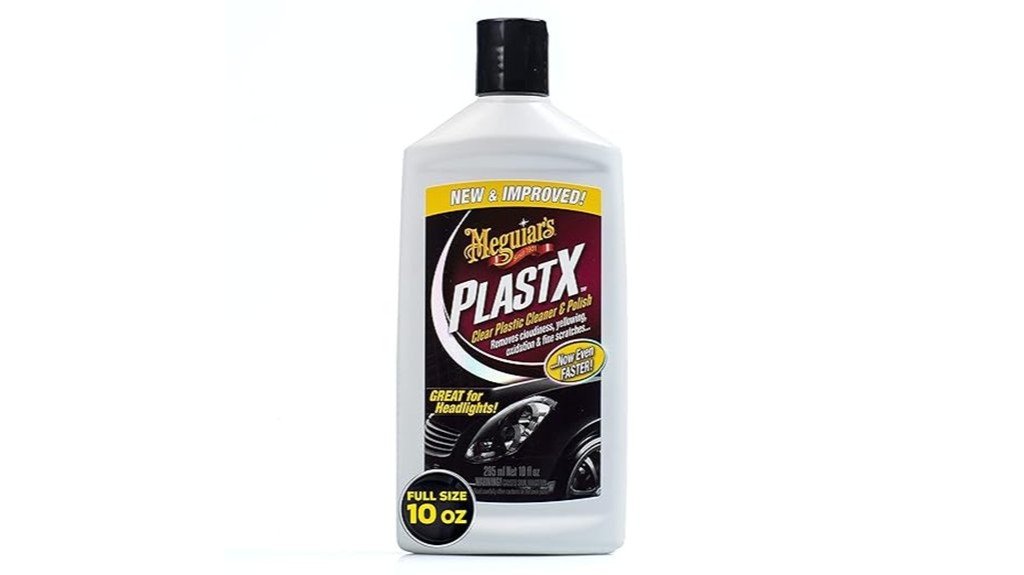
Hazy, yellowed headlights do more than ruin your vehicle’s appearance; they drastically reduce night visibility and compromise driving safety. Meguiar’s PlastX Clear Plastic Polish offers an affordable, hand-applied solution designed to restore clarity to cloudy polycarbonate lenses and rigid clear plastics. Instead of spending hundreds on replacement assemblies or complex wet-sanding kits, this 10 oz liquid polish uses diminishing abrasives to buff away surface haze in minutes. This review explores where PlastX excels, how to apply it correctly, and when severe surface pitting requires a heavier restoration method.
Quick Verdict
Rating: 8.5/10 (Recommended for light-to-moderate oxidation)
Best For: Vehicle owners seeking a quick, budget-friendly way to remove surface haze, yellowing, and light scratches from headlights and plexiglass without power tools.
Bottom Line: Meguiar’s PlastX provides immediate clarity gains on lightly oxidized clear plastics. While it will not repair deep cracks or heavy pitting, it delivers outstanding value for routine lens maintenance.
| Specification | Detail |
|---|---|
| Brand | Meguiar’s |
| Model / Part Number | PlastX Clear Plastic Cleaner & Polish (G12310) |
| Container Volume | 10 fl. oz. (296 ml) |
| Active Technology | Microscopic Diminishing Abrasive Technology (MDAT) |
| Primary Purpose | Haze removal, light scratch polishing, clarity restoration |
| Compatible Materials | Rigid uncoated clear plastics, polycarbonate, acrylic, plexiglass |
| Application Method | By hand (foam pad or microfiber) or with a polisher/drill pad |
| Protection Duration | 1 to 3 months (can be extended with dedicated UV sealant) |
What Is Meguiar’s PlastX Clear Plastic Polish?
Meguiar’s PlastX functions as a specialized chemical polish formulated specifically for uncoated clear plastics. Standard automotive waxes or paint polishes often contain solvents or abrasive grains that dull clear plastic. In contrast, PlastX combines Microscopic Diminishing Abrasive Technology (MDAT) with water-resistant polymers in a single formula.
As you work the polish into the surface, the micro-abrasives break down in size. This action levels out fine scratches and strips away oxidized surface layers without leaving coarse swirl marks behind. Simultaneously, the polymer blend leaves a thin protective coating that repels water and environmental contaminants.
Who Should Buy It?
Best For
- Drivers with lightly yellowed or hazy headlight lenses
- Owners maintaining motorcycle windshields, boat windows, or helmet visors
- DIYers looking for an easy hand-applied fix without wet sanding
Skip If
- Your headlight lenses have deep rock-pitting, cracks, or flaking factory clear coat
- You need to restore painted surfaces, glass, or coated window film
- The plastic lens has internal moisture condensation or damage on the inside casing
Key Features and Performance Breakdown
Microscopic Diminishing Abrasive Technology (MDAT)
The core strength of PlastX lies in its diminishing abrasive formula. Unlike traditional compounds that maintain a constant grit size, MDAT particles break down into smaller polishing agents as pressure is applied. This prevents micro-marring while transitioning smoothly from cutting away light oxidation to polishing the surface to an optical finish.
Protective Water-Resistant Polymers
Beyond removing defects, PlastX seals the plastic surface with water-repellent polymers. This layer helps shed rain and light debris, keeping the newly polished surface clear for weeks. However, because PlastX is primarily a polish rather than a permanent UV block, combining it with a dedicated spray sealant yields the longest-lasting results.
Before You Buy: PlastX is formulated for uncoated, rigid plastics. It will not repair internal condensation, micro-cracking inside the lens casing, or severe pitting where the factory UV clear coat has completely flaked off.
How It Performs in Real Use
Headlight Restoration (Light to Moderate Haze)
In real-world testing on lightly hazy polycarbonate headlight lenses, PlastX delivers 50% to 90% clarity improvement after one 3-minute application per side. It quickly strips away surface film and light yellowing caused by sun exposure, visibly sharpening the headlight beam pattern for safer night driving.
Motorcycle Windshields and Helmet Visors
On clear acrylic motorcycle windshields and polycarbonate helmet visors, PlastX smooths out bug marks, fine wiping scratches, and road film. It restores optical clarity without causing glare or distorted vision when driving into direct sunlight.
Boat Windows and Aircraft Plexiglass
PlastX works well on rigid marine plexiglass and aircraft side windows that suffer from salt haze or light surface oxidation. It removes cloudy buildup and helps shed water spray quickly during marine operation.
Instrument Clusters and Interior Trim
When applied lightly with a clean microfiber towel, PlastX removes fine towel marks and hairline scratches from clear instrument cluster covers and polished interior plastic accents.
How to Use PlastX Step by Step
- Clean and Dry the Surface: Wash the plastic lens thoroughly with automotive soap and water to remove grit and dirt that could scratch the surface during polishing. Mask surrounding painted body panels with painter’s tape.
- Apply the Product: Shake the bottle well. Dispense 1 to 2 pea-sized drops of PlastX onto a clean foam applicator pad or terry cloth towel.
- Work in Sections: Working on a cool surface in the shade, rub firmly in small overlapping circular motions across a 4×4 inch area for 2 to 3 minutes.
- Wipe Away Residue: Buff off the excess polish using a clean, high-quality microfiber towel before the liquid dries completely on the lens.
- Inspect and Repeat: Examine the clarity under bright light. Reapply if deeper haze remains, or proceed to protect the surface with a UV coating.
Pro Tip: After restoring clarity with PlastX, apply a dedicated UV headlight sealant or spray wax immediately. PlastX contains protective polymers, but adding an extra UV barrier prevents yellowing from returning for up to a year.
Surface Safety and Material Compatibility Notes
PlastX is designed specifically for rigid, uncoated clear plastics. However, material safety varies across different applications:
- Coated or Tinted Plastics: Do not use PlastX on aftermarket window film, factory-coated anti-reflective screens, or tinted plastic covers. The abrasives can strip these delicate coatings.
- Soft Clear Vinyl: Avoid using PlastX on flexible clear vinyl convertible windows, as soft vinyl requires a dedicated plastic conditioner rather than an abrasive polish.
- Touchscreens and Navigation Displays: Modern touchscreen displays feature oleophobic or anti-glare coatings that will be damaged by abrasive polishes. Keep PlastX off electronic displays.
Pros and Cons
Pros
- Fast, visible clarity gains in under 10 minutes per lens
- Requires no special power tools or technical skill to apply
- Versatile formula works on headlights, tail lights, plexiglass, and visors
- 10 oz bottle provides enough volume for dozens of applications
- Combines fine abrasives with water-resistant polymer protection
Cons
- Cannot eliminate deep rock chips, severe pitting, or internal lens haze
- Requires periodic reapplication unless sealed with a dedicated UV coating
- Not compatible with soft clear vinyl or coated electronic screens
Is It Worth the Price?
At its standard retail price, Meguiar’s PlastX represents an exceptional value within the automotive detailing category. A single 10 oz bottle costs significantly less than a full multi-step headlight restoration kit, yet provides enough product to treat 10 to 20 headlight assemblies.
For vehicle owners dealing with initial surface oxidation or routine yellowing, PlastX offers a high return on investment. It saves you from replacing expensive OEM headlight assemblies, which often cost between $100 and $300 per side. Unless your lenses suffer from heavy structural damage, PlastX is a smart, low-risk purchase.
How It Compares to Alternatives
Understanding how PlastX stacks up against other headlight restoration methods helps you pick the right tool for your project:
- PlastX vs. Drill-Based Sanding Kits: Multi-step drill kits include coarse sandpapers (800 to 3000 grit) and drill attachments designed for severe oxidation and heavily pitted lenses. PlastX is faster and safer for light haze, whereas sanding kits are better for heavily damaged plastic that polish alone cannot clean.
- PlastX vs. All-in-One Headlight Wipes: Chemical wipes dissolve light surface oxidation rapidly but lack abrasive action. PlastX offers better control over fine scratch removal because you physically polish the plastic surface rather than simply melting yellow surface film.
- PlastX vs. OEM Lens Replacement: Buying new headlight assemblies guarantees factory-new clarity, but costs significantly more in parts and installation labor. PlastX resolves minor clarity issues for a fraction of the cost.
Frequently Asked Questions
Is PlastX safe on tinted or coated plastic lenses?
PlastX is not recommended for tinted films or delicate anti-glare coatings, as its abrasive action can strip or scratch thin surface layers. Always test an inconspicuous area or choose a coating-safe cleaner for factory-tinted windows.
How long does protection from PlastX typically last?
Protection duration spans 1 to 3 months depending on climate, vehicle garage storage, and sun exposure. Reapplying every few months or topping it with a dedicated UV sealant extends clarity significantly longer.
Can PlastX be used indoors without strong ventilation?
Yes, PlastX can be used in an enclosed garage or indoors. However, guaranteeing basic airflow by opening a door or window ensures a comfortable working environment during application.
Will PlastX remove deep scratches or cracks?
No, PlastX is designed for light-to-moderate surface oxidation and fine hairline scratches. It will not repair cracks, severe gouges, or structural damage inside the plastic casing.
Is PlastX compatible with UV sealants or waxes?
Yes, PlastX pairs exceptionally well with external UV sealants, synthetic waxes, or ceramic coatings. Polishing first with PlastX creates a clean, clear base for sealants to bond properly.
Can I apply PlastX using a drill pad or dual-action polisher?
Yes, PlastX works effectively when paired with a soft foam polishing pad on a drill or dual-action polisher. Keep the machine at low speeds and light pressure to prevent heat buildup on the plastic.
How much product should I use per headlight lens?
You only need 2 to 4 pea-sized drops per headlight. Using small amounts prevents excessive buildup and makes residue buffing clean and fast.
The Bottom Line
Meguiar’s PlastX Clear Plastic Polish offers an affordable, user-friendly way to restore optical clarity to hazy, oxidized headlights and clear rigid plastics. Its diminishing abrasive formula removes light surface defects quickly without requiring special power tools or technical training. While heavily pitted lenses may demand wet sanding or full replacement, PlastX remains one of the best budget maintenance products available for everyday lens care.
Ready to Buy?
Check the latest price and customer details on Amazon before you decide.