Disclosure: As an Amazon Associate, we earn from qualifying purchases. If you click a link on this page and make a purchase, we may receive a small commission at no extra cost to you.
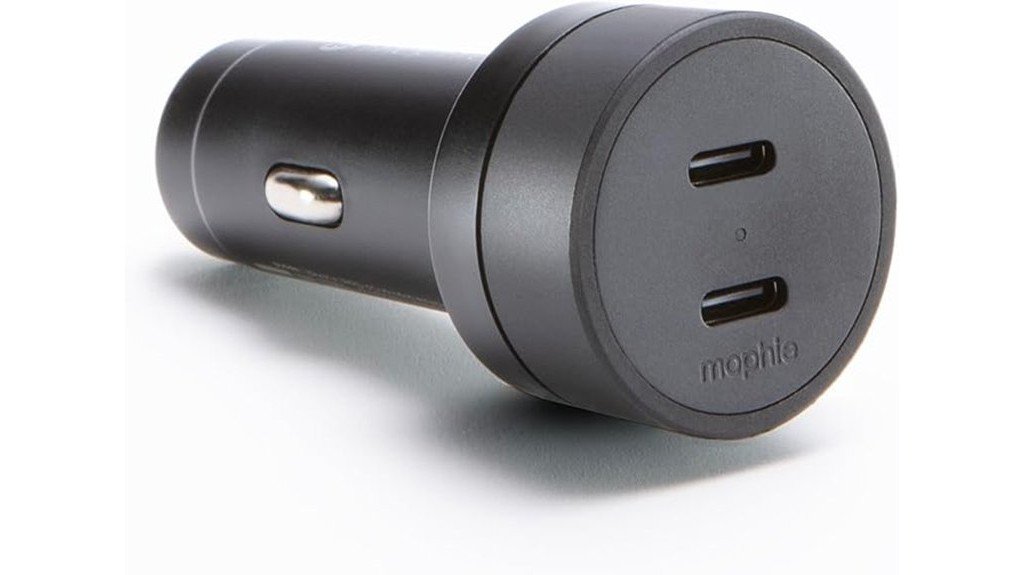
Charging two devices in your car can be frustrating when your adapter has only one port or does not provide enough power. The Mophie 60W Dual USB-C Car Charger addresses this problem with two USB-C Power Delivery ports, each rated for up to 30W. Its compact body, recycled-plastic housing, and LED power indicator add everyday convenience. However, its 60W rating is shared between both ports, and it may not suit laptops or devices that need more than 30W from one connection. This review explains its specifications, compatibility, practical benefits, and limitations so you can decide if it fits your needs.
Quick Verdict
Rating: Recommended with caveats
Best For: Drivers who regularly charge two USB-C phones, tablets, or smaller accessories during trips.
Bottom Line: Two independent 30W USB-C PD ports make this a practical upgrade from a basic single-port car charger. The main limitation is its 30W-per-port ceiling, so it is less suitable for power-hungry laptops or users who need USB-A connections.
Key Takeaways
- Two USB-C PD ports: Each port supports up to 30W, providing a maximum combined output of 60W.
- Simultaneous charging: You can connect two compatible devices without sharing a single USB-C socket.
- Compact construction: The charger measures approximately 2.7 x 1.2 x 1.2 inches and weighs 0.06 pounds, according to Mophie.
- Recycled materials: Its external housing contains up to 50% post-consumer recycled plastic.
- LED indicator: The light shows when electrical power is flowing through the charger.
- Two-year warranty: Mophie provides a limited warranty against manufacturing defects, subject to its warranty conditions.
- Important limitation: This is a dual 30W charger, not a charger that delivers 60W through one port.
Mophie 60W Dual USB-C Car Charger Specifications
| Specification | Details |
|---|---|
| Brand | Mophie |
| Product | 60W Dual USB-C Car Charger |
| Product type | Vehicle USB-C charging adapter |
| USB ports | 2 x USB-C |
| Charging technology | USB-C Power Delivery (PD) |
| Maximum combined output | 60W |
| Maximum output per port | 30W |
| Vehicle connection | Vehicle auxiliary power outlet, commonly called a 12V accessory socket |
| Dimensions | 2.7 x 1.2 x 1.2 inches |
| Weight | Approximately 0.06 lb |
| Color | Black |
| Housing | External case with up to 50% post-consumer recycled plastic |
| Indicator | LED power indicator |
| Device categories | Compatible phones, tablets, headphones, and other supported USB-powered devices |
| Box contents | 60W car adapter listed by Mophie; charging cables are not listed as included |
| Warranty | Two years against qualifying manufacturing defects, subject to terms |
What Is the Mophie 60W Dual USB-C Car Charger?
The Mophie 60W Dual USB-C Car Charger is a plug-in power adapter designed for your vehicle’s accessory power outlet. It converts the vehicle’s electrical supply into USB-C charging power for compatible portable electronics. Unlike a basic car charger with one USB port, this model offers two USB-C Power Delivery connections.
Mophie rates the combined output at up to 60W, with a 30W maximum for each port. This design suits drivers who want to charge a phone and tablet together or provide separate charging connections for two passengers. It is designed for convenience rather than maximum single-device laptop charging power.
How this review was prepared: We checked the published specifications and warranty information against Mophie’s official product information and warranty policy. This is an editorial specifications review, not an independently conducted charging-speed, heat, or durability test.
Who Should Buy It?
Best For
- Drivers who regularly charge two USB-C smartphones during a commute or road trip.
- Families who need one car adapter for a phone and a compatible tablet.
- Buyers who prefer two matching USB-C PD ports, a compact housing, and recycled-plastic construction.
Skip If
- You need more than 30W from one port for a laptop or another high-power device.
- Your accessories require a built-in USB-A port and you do not want to change cables.
- Your vehicle lacks a compatible accessory power outlet.
Power and Charging Features
Two USB-C Power Delivery Ports
The charger’s main advantage is its pair of USB-C PD outputs. Each port supports up to 30W of charging power, and the total maximum output is 60W when both ports are in use.
This lets you charge two compatible phones at once without choosing which one gets the faster port. It can also support a phone and a tablet, provided each device’s charging needs fall within the port limits.
USB-C Power Delivery allows compatible devices to request supported charging power from the adapter. However, actual charging speed depends on your device, cable, battery level, temperature, and supported charging profile.
What Does 60W Shared Output Mean?
The 60W figure describes the combined maximum available power, not the power supplied by either port individually.
- One device connected: That device can receive up to 30W, not 60W.
- Two devices connected: Each port can provide up to 30W, for a theoretical combined maximum of 60W.
- Lower-power accessories: Headphones and other small devices draw only the power they need, subject to compatibility.
For example, a phone that supports 20W USB-C PD charging does not suddenly draw 30W just because the port can provide that much. The connected device determines what it can accept.
Charging Speed Limitations
Thirty watts per port is useful for many phones and tablets. However, some high-performance phones require specific charging protocols to reach their highest advertised speeds.
USB-C PD support does not automatically guarantee every manufacturer’s proprietary fast-charging mode. If your phone requires USB PD PPS or another special protocol for maximum charging speed, confirm that the charger’s supported output profiles meet those requirements. Mophie’s published product overview does not provide a complete voltage, current, or PPS profile table.
The same limitation matters for laptops. Some USB-C laptops can accept a 30W input for slow charging, especially during light use. Others require substantially more power or may not charge reliably through a 30W connection.
Material and Design
Compact, Car-Friendly Construction
Mophie lists dimensions of approximately 2.7 inches long by 1.2 inches wide by 1.2 inches high. This compact size makes it easier to store in a glove compartment or move between compatible vehicles.
The black finish offers a simple appearance that fits many modern interiors. Its two-port design also keeps both USB-C connections together rather than requiring separate adapters.
Before purchasing, check the space around your vehicle’s accessory socket. A recessed outlet, hinged cover, or nearby trim could affect how easily you insert or remove the charger.
Recycled-Plastic Housing
The charger’s external housing uses up to 50% post-consumer recycled plastic, according to Mophie. This reduces reliance on newly produced plastic for that part of the product.
However, the recycled-content claim applies to the external case, not necessarily every internal component. It also does not establish that the entire charger is recyclable.
For buyers comparing similar USB-C car chargers, recycled material content is a useful additional consideration. Charging compatibility, port power, and reliability should still come first.
Compatibility and Indicator Features
Vehicle Power Outlet Compatibility
The Mophie charger plugs into a vehicle’s auxiliary power outlet, commonly known as the 12V accessory socket or cigarette-lighter socket. This is different from the 3.5 mm AUX audio jack used by some vehicle entertainment systems.
You do not need Bluetooth, a vehicle USB-C port, or a separate audio connection to operate it. You do need a working, compatible accessory power socket.
Some vehicles supply power to that socket only when the ignition or accessory mode is on. Others leave it powered while parked. Check your vehicle’s manual if you are unsure.
USB-C Device Compatibility
The charger works with compatible USB-powered devices when paired with the correct cable. USB-C smartphones and tablets are the most natural fit.
| Feature | What You Should Know |
|---|---|
| USB-C phones | Compatible models can charge using a suitable USB-C cable. Speed depends on the phone. |
| USB-C tablets | Supported tablets can use up to 30W from one port. |
| Lightning devices | May charge with a compatible USB-C-to-Lightning cable. |
| USB-A accessories | Require a suitable cable or adapter because the charger has no USB-A port. |
| USB-C laptops | Only suitable if the laptop supports charging at the available 30W level. |
| LED indicator | Indicates power flow, not the connected device’s exact battery percentage. |
LED Charging Indicator
The built-in LED gives you a visual signal that the charger is receiving and supplying power. This can help you identify whether the adapter is active after plugging it into the vehicle.
The LED is not a detailed battery monitor. It does not show a charging percentage, measured wattage, or an estimated time until your phone is fully charged.
Before You Buy: Confirm that the selected product has two USB-C ports and is labeled 60W combined, with 30W per port. Similar Mophie chargers include single-port 30W models, and an online listing may display a different variation. Also check that your vehicle has a compatible accessory power socket, not just an AUX audio jack.
How It Performs in Real Use
Based on the published specifications, here is how the charger fits common driving situations. These are practical use-case assessments, not measured charging test results.
Daily Commuting
During a commute, you can connect a compatible smartphone to one 30W USB-C port and keep the second port available. For phones that support an appropriate PD charging profile, this provides a useful way to recharge between home and work.
It is also handy when you use navigation on your phone. However, active navigation, screen brightness, and background apps can affect how quickly the battery percentage increases.
Charging Two Phones Together
When two people need power, each can use a separate USB-C connection. Because each port has its own 30W maximum, you do not need to reserve a single higher-rated port for one passenger.
The practical advantage is convenience. Both phones can remain connected during a trip, although their actual charging rates still depend on their individual charging requirements.
Road Trips With a Phone and Tablet
A phone-and-tablet combination is another suitable use case. One passenger can charge a compatible tablet while another uses the second port for a phone.
For a long drive, use cables long enough to reach the devices without crossing the driver’s controls. Keep devices secured instead of leaving them loose around the pedals or center console.
Charging a Laptop or Work Device
If you travel with a USB-C laptop, the charger’s limitations become more important. A laptop designed for a 45W, 65W, or higher-power adapter may charge slowly at 30W, refuse to charge, or lose battery power during demanding tasks.
For frequent laptop charging, a car charger with a higher single-port USB-C PD output is usually a better match. This Mophie model is more clearly suited to phones, tablets, and smaller accessories.
Setup Tips Before First Use
- Check the outlet: Find your vehicle’s working accessory power socket and make sure it is suitable for the charger.
- Inspect the adapter: Do not use it if the housing or electrical contacts appear damaged.
- Insert it securely: Plug the charger into the socket without excessive force.
- Check for power: Look for the LED indicator after the vehicle supplies power to the outlet.
- Connect the right cable: Use a suitable USB-C charging cable or a compatible USB-C-to-device cable.
- Confirm charging: Check your phone or tablet screen to see whether it has started charging.
- Keep cables clear: Route them away from the steering wheel, pedals, gear selector, and other controls.
Pro Tip: Before a long trip, test both USB-C ports with the devices and cables you plan to use. This helps you spot a faulty cable or unsupported charging combination before you depend on the charger away from home.
Compatibility and Safety
Manufacturer Safety Information
Mophie states that this charger has undergone third-party testing and meets applicable safety and technology requirements. However, its publicly available product overview does not provide enough detail to independently verify specific protection circuits or certification identifiers.
The original review describes protection against overcharging and overheating. Those are reasonable concerns for any power adapter, but the exact protection mechanisms of this model should not be assumed without more detailed manufacturer documentation.
For safer operation, follow the manufacturer’s instructions, avoid using damaged cables, and keep the charger away from liquid or excessive heat. If the adapter becomes unusually hot, smells abnormal, or repeatedly disconnects, stop using it and investigate the problem.
Safe Use While Driving
The charger’s compact design and LED indicator can make checking for power easier, but they do not remove the risk of driver distraction.
Connect your devices before driving whenever practical. Do not reach for loose cables or inspect charging settings while operating the vehicle.
Care and Storage
Keep the connector and USB-C openings free of debris. Inspect the charger periodically for damage, and unplug it before cleaning. Use a dry, soft cloth for the exterior, and do not insert metal objects into the ports.
When storing the adapter, keep it somewhere dry and protected from crushing or impact. Avoid leaving damaged accessories connected to it.
Pros and Cons
Pros
- Two USB-C PD ports support up to 30W each.
- 60W combined output supports convenient two-device charging.
- Compact dimensions make the adapter easy to store or carry.
- External housing uses up to 50% post-consumer recycled plastic.
- LED power indicator and a two-year manufacturer warranty add practical value.
Cons
- Each port is limited to 30W, even when the other port is unused.
- No built-in USB-A port for older cables and accessories.
- Charging cables are not listed in the manufacturer’s box contents.
Is It Worth the Price?
The Mophie 60W Dual USB-C Car Charger is best viewed as a mid-range, name-brand charging option rather than a basic single-port adapter. Its appeal comes from having two 30W USB-C PD connections, a compact body, recycled-plastic content, and a published two-year warranty.
It is worth considering when you regularly use both ports. A family car, shared vehicle, or daily commute involving multiple devices offers more reasons to choose it than a setup where only one phone needs occasional charging.
However, you may find better value in a simpler single-port charger if you rarely connect two devices. If your priority is fast laptop charging or a mixture of USB-A and USB-C accessories, another port configuration may be more useful.
Compare the current selling price, seller details, selected variation, and warranty eligibility before making a purchase.
How It Compares to Alternatives
The Mophie 30W Single Port USB-C Car Adapter is a simpler option when you only need one connection. The Anker PowerDrive III Duo offers two USB-C ports with a maximum combined output of 40W, making it another option for two-phone charging. The Mophie 60W model offers a higher combined rating and 30W per port.
If you need mixed connections, the UGREEN 63W USB-C Car Charger is worth comparing because its published specifications include a USB-C port rated up to 45W and a USB-A port rated up to 18W. That makes it more flexible for certain laptop and older-cable combinations. The Mophie 60W Dual USB-C model is the more straightforward choice when your priority is two matching 30W USB-C PD outputs.
Frequently Asked Questions
Does the Mophie 60W charger fast-charge every device?
No. Each USB-C PD port can supply up to 30W, but your device must support a compatible charging profile to use that power. Some devices require other protocols for their maximum advertised charging speed.
Can one USB-C port provide the full 60W?
No. Mophie rates each USB-C port for a maximum of 30W. The 60W figure represents the maximum combined output of both ports, not a 60W single-port charging mode.
Can I use this charger with non-USB-C devices?
Yes, some devices with other charging connectors can work through suitable USB-C-to-device cables. For example, certain older Apple devices can use USB-C-to-Lightning cables. Always check cable and device compatibility first.
Does it work in every car?
Mophie markets the charger for vehicles with compatible auxiliary power outlets. It plugs into an automotive accessory power socket, not a 3.5 mm audio AUX port. Check that your vehicle has a suitable working outlet and enough room around it.
What is the warranty period for the Mophie charger?
Mophie publishes a two-year warranty covering qualifying defects in materials and workmanship under normal use. Coverage depends on the purchase source, region, and other warranty conditions. Keep your proof of purchase and check the official warranty policy before claiming service.
Is the charger safe to use while driving?
It is designed for in-vehicle charging, and Mophie reports third-party safety testing. Still, you should use undamaged cables, install the charger securely, and avoid handling your phone while driving. The LED indicator is not a substitute for safe driving practices.
How does the LED indicator work in different lighting conditions?
The LED indicates when power is flowing through the charger. Its visibility may vary with cabin lighting, socket location, and viewing angle. Mophie does not publish detailed LED brightness measurements for this model.
Does the Mophie 60W car charger include charging cables?
Mophie’s official box-contents section lists the 60W car adapter and does not list charging cables. Plan to use your own compatible USB-C cables. Check the seller’s package description in case it offers a separate bundle.
The Bottom Line
The Mophie 60W Dual USB-C Car Charger is recommended with caveats for drivers who want two convenient 30W USB-C PD connections, a compact design, and recycled-plastic housing. It is less suitable if you need more than 30W through one port, a built-in USB-A connection, or a higher-powered laptop charger. Before purchasing, confirm that the selected product is the dual-port 60W version and that it meets your device’s charging requirements.
Ready to Buy?
Check the latest price, seller details, and selected 60W dual-port variation before you decide.