Disclosure: As an Amazon Associate, we earn from qualifying purchases. If you click a link on this page and make a purchase, we may receive a small commission at no extra cost to you.
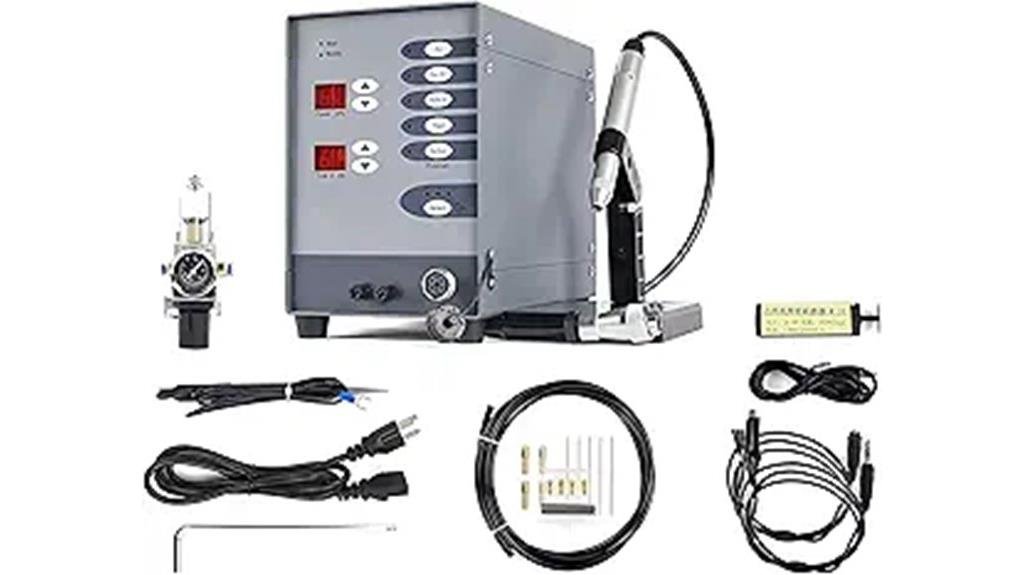
Permanent jewelry work depends on more than closing a small link. You need controlled output, repeatable settings, and a safe process around delicate chains and nearby skin. The TBVECHI Permanent Jewelry Welder is a seller-listed 110V, 60 Hz pulse arc spot welder with a stated 50 to 600 A adjustment range, five material modes, and a 0.8 to 3.5 mm working range. This review explains where those controls may help, what remains unverified, and why training and workspace safety matter before you use it in a studio or retail kiosk.
Quick Verdict
Rating: Recommended with caveats, 8.1/10
Best For: trained permanent jewelry makers, small repair benches, and studios that need adjustable pulse arc control for compatible chains and small metal parts.
Bottom Line: The TBVECHI welder offers a broad seller-listed adjustment range and several preset modes for small joining work. Its main tradeoffs are an incomplete verification trail, a real learning curve, and the need for proper eye protection, ventilation, barriers, and material testing.
| Specification | Detail |
|---|---|
| Brand | TBVECHI |
| Product type | Handheld pulse arc spot welder for small metal joining |
| ASIN | B0D4Z56K1X |
| Power input | Seller-listed 110V, 60 Hz design |
| Adjustment range | Seller-listed 50 to 600 A |
| Listed working diameter | 0.8 to 3.5 mm |
| Control description | IGBT inverter control with MCU regulation, according to the source listing details |
| Listed modes | Gold, cobalt-chromium, mixed metal, pure titanium, and orthodontic |
| Best use | Compatible chain links, jewelry repair, and small metal components after test welding |
| Professional-use note | Dental or orthodontic hardware work should be limited to qualified professionals following applicable standards |
| Safety requirements | Correct eye protection, ventilation, stable power, a clear bench, customer shielding, and trained handling |
What Is the TBVECHI Permanent Jewelry Welder?
The TBVECHI Permanent Jewelry Welder is a corded pulse arc machine intended for small, focused metal joins. Instead of heating a wide area with an open-flame torch, it sends a short arc at the contact point. That approach can suit chain links and small repair parts where excess heat may discolor or damage nearby material.
Its main selling point is adjustability. The source listing describes a 50 to 600 A range, a 0.8 to 3.5 mm working range, and five modes for different metal categories. Those figures should be treated as seller-listed specifications until you confirm them on the machine label and manual supplied with your unit.
This is a bench tool, not a casual bracelet-closing gadget. You need scrap pieces, a controlled station, suitable protective equipment, and enough practice to recognize a strong joint without overheating a thin link.
Before You Buy: The Amazon page and exact product specifications could not be independently confirmed during this review refresh. Check the voltage label, included manual, working range, accessories, and supported metals on the exact unit before using it near finished jewelry or customers.
Who Should Buy It?
Best For
- Permanent jewelry makers who already understand arc safety and can build a shielded customer station.
- Small jewelry studios that repeat similar chain repairs and want adjustable settings for controlled test work.
- Trained DIY users working on compatible small metal parts away from children, customers, and flammable materials.
Skip If
- You want a no-training craft tool that can be used safely without test welds or protective controls.
- You need a verified production machine for continuous, high-volume work.
- You cannot confirm the exact voltage, supported metals, included parts, or manual for the unit you receive.
Key Features That Matter
Pulse Arc Control for Small Joins
Pulse arc welding concentrates energy at a small contact point. For fine chain work, that can limit the heat spread compared with a broad flame, but only when the link, electrode position, and output setting are correct. A poor contact point can still create a weak join, a rough bead, or heat damage around the link.
The seller-listed 50 to 600 A adjustment range gives you room to tune output instead of relying on one fixed level. The broad range also increases the chance of a bad setting. Start low on matching scrap, then move upward only until the joint closes and passes a careful strength check.
Five Material Modes
The source details list modes for gold, cobalt-chromium, mixed metal, pure titanium, and orthodontic work. Presets may shorten setup by giving you a starting point, but they cannot identify an unknown alloy or account for every chain thickness, plating layer, surface coating, or joint shape.
Do not assume a mode name guarantees compatibility. Silver, stainless steel, plated fashion chains, filled metals, and mixed-alloy pieces may react differently. Confirm the manual, clean the joint area, and test a matching offcut before you work on a finished item.
IGBT and MCU Regulation
The source description mentions IGBT inverter control with MCU regulation. In practical terms, that suggests electronic control intended to make settings more repeatable than a basic fixed-output tool. Repeatability can help when you close the same chain style throughout the day.
Electronics do not correct poor technique. Dirty contact points, loose grounding, worn electrodes, unstable hand placement, and inconsistent link gaps can still change the weld result from one piece to the next.
110V Power and Bench Setup
The machine is described as a 110V, 60 Hz model for U.S.-style power. Check the rating label on your exact unit before plugging it in. Do not assume a travel adapter changes voltage, and do not use an improvised converter or extension setup that is not rated for the equipment.
Plan a stable bench with cord control, a nonflammable work area, clear access to the power switch, and enough space for protective barriers. A retail counter needs more separation than a private repair bench because customers may move unexpectedly or look toward the arc.
Compatibility and Material Limits
The listed 0.8 to 3.5 mm working range gives you a starting point, but it does not prove that every link or wire inside that range will weld cleanly. Cross-section, alloy, plating, surface cleanliness, joint gap, and electrode contact can matter as much as the measured diameter.
Plated and coated jewelry needs extra caution. Heat at the weld point may discolor a finish, expose base metal, or create an uneven surface. Do not polish away a decorative layer or alter a customer’s piece without explaining the risk and getting clear approval.
The orthodontic mode does not make the machine appropriate for general clinical use. Dental or orthodontic hardware work belongs with qualified professionals who can follow the equipment instructions, material requirements, and relevant workplace standards.
Performance, Control, and Learning Curve
The strongest case for this welder is adjustable control on repeated small jobs. Once you have documented a suitable setting for a known chain, the mode and output controls may help you reproduce similar joins more consistently than a fixed-output hobby tool.
The learning curve is the main limitation. A setting that closes a thick solid link can damage a thinner hollow or plated link. New operators should expect to spend time building a test chart, checking electrode condition, and learning what a complete joint looks like before accepting paid work.
Do not judge a weld only by appearance. A neat-looking spot may still be weak. Test representative scrap by bending or pulling the joint in a controlled way, then inspect the link for incomplete fusion, excess melting, cracking, or damage beside the weld.
How It Performs in Real Use
For Permanent Bracelets and Anklets
For a compatible chain, a short pulse can close a link without heating a wide section of the bracelet. The workflow becomes faster after you document the chain material, link size, mode, and setting. Customer-facing use still requires a shielded setup, protected skin, controlled positioning, and a way to remove the jewelry later.
For Small Jewelry Repairs
The machine may suit simple link rejoining and selected small components when the metal is known and accessible. It is less predictable on dirty, plated, hollow, antique, or unknown-alloy pieces. Valuable repairs may be better handled by a jeweler with a verified pulse arc or laser system and suitable finishing tools.
For Repeated Studio Work
A small studio gets the most value when it repeats a narrow group of chain styles. Logged settings and routine electrode care can reduce guesswork between jobs. The machine is less attractive for nonstop production, many changing alloys, or work that must look flawless without grinding, polishing, or refinishing.
For Mobile Events or Retail Kiosks
The 110V format may suit a fixed U.S. kiosk, but mobile work adds setup risks. You need a stable table, reliable power, protected cords, ventilation, controlled customer distance, and a barrier that prevents direct viewing of the arc. Do not operate in a crowded aisle or where children can enter the work zone.
Setup Tips Before First Use
Read the supplied manual and compare its ratings with the machine label before you switch it on. Confirm the handle, electrode, ground connection, cover, and any supplied accessories are installed as directed. Keep liquids, paper, solvents, aerosols, oils, and other flammable items away from the work area.
Use scrap made from the same material and a similar link size as the finished chain. Make several welds at the lowest practical setting, inspect each joint, and increase output in small steps only when the connection remains incomplete. Record the setting that produces a closed, clean joint without excess melting.
Keep the electrode and contact area clean. Stop if you notice unstable output, unusual heat, damaged insulation, a burning smell, loose connections, or repeated misfires. Follow the manual for inspection, consumable replacement, storage, and service.
Pro Tip: Build a chain-setting card for each style you sell. Record the alloy, link dimensions, mode, output setting, electrode condition, and test result so every operator starts from a proven setup instead of guessing.
Safety Notes for Studios and Retail Kiosks
An arc can produce intense light, heat, sparks, and fumes from the metal or surface coating. Use eye and face protection selected for the process, keep bystanders from viewing the arc, and provide a suitable shield around the weld point. Ordinary sunglasses are not welding protection.
Ventilation is important because jewelry may carry oils, plating, coatings, solder residue, or unknown alloying metals. Follow the manual and your local workplace rules for ventilation and protective equipment. Stop work when you cannot identify the material or control the fumes.
Permanent jewelry adds a customer-contact risk. Confirm the fit before welding, protect the customer from the hot work area, keep the chain and electrode positioned as the manufacturer directs, and maintain an immediate removal plan. When the product instructions are unclear, close the link away from the customer or refer the job to a qualified professional.
Common Mistakes to Avoid
- Starting too high: Excess output can melt or discolor a thin link before you learn how the machine responds.
- Skipping material tests: Similar-looking chains may use different alloys, cores, platings, or coatings.
- Using a dirty joint: Oil, polish, oxidation, and plating debris can affect contact and weld quality.
- Relying on appearance alone: A smooth spot can still fail when the link is flexed or pulled.
- Working without a customer barrier: People near the station may look directly at the arc or move into the work zone.
Pros and Cons
Pros
- Seller-listed 50 to 600 A adjustment range gives you more tuning room than a fixed-output tool.
- Five listed modes provide starting points for several metal categories and small hardware tasks.
- Focused pulse arc operation can limit the heated area compared with an open-flame torch.
- Useful for repeated chain styles when you document settings and test every material first.
- 110V, 60 Hz listing may fit a properly prepared U.S. studio or kiosk power setup.
Cons
- Exact listing details, included accessories, dimensions, weight, and warranty could not be independently confirmed.
- Safe, repeatable results require training, scrap testing, eye protection, ventilation, and careful station design.
- Material presets do not guarantee compatibility with plated, hollow, unknown-alloy, or high-value jewelry.
Is It Worth the Price?
The TBVECHI welder is worth considering when you perform enough compatible chain joins to justify the training, bench space, safety equipment, and setup time. It offers the most value to a small studio that repeats known materials and can document reliable settings.
It is harder to recommend for an occasional repair because a local jeweler may cost less than building a safe station and learning the process. It is also not the best fit for high-volume production or expensive repairs that demand verified specifications, precise cosmetic finishing, and strong manufacturer support.
Before buying, compare the current listing with the manual, package contents, return terms, and available support. Do not base the decision only on the stated output range or number of modes.
How It Compares to Alternatives
A jewelry torch can handle soldering and broader repair work, but it uses an open flame and spreads heat over a larger area. A professional laser welder offers finer control and cleaner cosmetic repair options, but it usually requires a much larger investment and more specialized training.
The TBVECHI sits between those approaches as a seller-listed pulse arc option for small spot joins. It makes the most sense when you want adjustable chain-link welding at a modest bench scale. Compare a verified professional pulse arc or laser system when documentation, support, duty cycle, and finish quality matter more than entry cost.
Frequently Asked Questions
Is the TBVECHI Permanent Jewelry Welder good for beginners?
A careful beginner can learn the controls, but this is not a no-skill craft tool. You should learn basic arc safety, practice on matching scrap, and prove the joint strength before working on finished jewelry or serving customers.
Can you use it for permanent bracelets in a retail kiosk?
Only with a controlled station and clear operating procedure. You need suitable eye protection, an arc shield, ventilation, stable power, protected skin, safe customer positioning, and a plan for removing the jewelry later.
What does the 0.8 to 3.5 mm working range mean?
It is a seller-listed working diameter, not a promise that every part in that range will weld correctly. Alloy, wall thickness, link shape, plating, cleanliness, and joint gap can change the required setting and final strength.
What metals does it work with?
The source listing names gold, cobalt-chromium, mixed metal, pure titanium, and orthodontic modes. Confirm the manual before using silver, stainless steel, filled metal, plated jewelry, or an unknown alloy, then test matching scrap first.
Can you weld while the chain is on the customer?
Follow the exact manufacturer procedure and your local workplace requirements. The customer must be protected from the arc, heat, and electrical contact. When the instructions are unclear or the station cannot control those risks, close the link away from the customer.
Does it replace a laser welder?
No. It is a pulse arc option for small joins, while a professional laser welder can offer finer heat control, easier access to complex repair areas, and better cosmetic finishing on valuable pieces.
What power setup does it need?
The source article lists 110V, 60 Hz power. Confirm the rating plate on your unit, use a properly grounded and rated circuit, and follow the manual for cords, protection, and any converter requirements.
What maintenance does it need?
Keep the electrode and contact area clean, inspect cords and connections, and store the machine away from dust and liquids. Stop using it when output becomes unstable, insulation is damaged, or the unit develops unusual heat, noise, or odor.
The Bottom Line
The TBVECHI Permanent Jewelry Welder is recommended with caveats for trained makers who need adjustable pulse arc control for compatible chains and small repair parts. Its strength is the broad seller-listed setting range and five modes, while its limitations are incomplete independent verification, material uncertainty, and the need for disciplined safety and test procedures. Skip it if you need a fully documented production machine or a casual tool that requires little training.
Ready to Buy?
Confirm the current listing, voltage, included parts, manual, and supported materials before you decide.