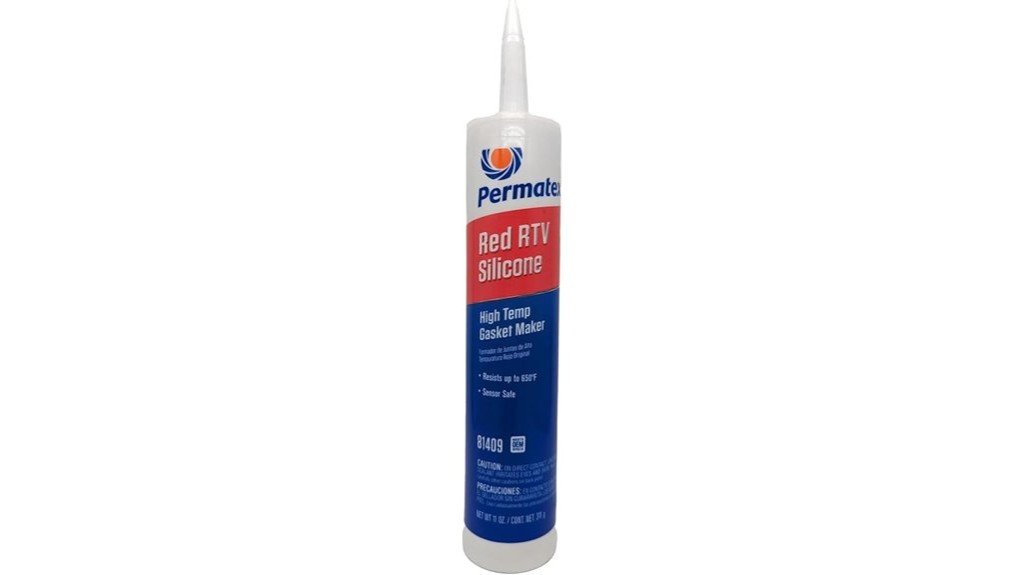
The Permatex 81409 High-Temp Red RTV Silicone Gasket is presented as a durable, moisture-cure sealant rated -65°F to 650°F, sold in an 11-ounce cartridge for automotive uses like valve covers, oil pans, and thermostat housings. It forms a flexible, oil-resistant gasket, cures to touch in 30–60 minutes with full cure in 24 hours, and tolerates thermal cycling; what are the trade-offs in visibility on light parts and cure time versus convenience?
Key Takeaways
- Permatex 81409 is an 11‑ounce, moisture‑curing red RTV silicone formulated for high‑temperature sealing up to 650°F intermittent.
- It resists oils, coolants, and solvents, making it suitable for valve covers, oil pans, and timing covers.
- Users report durable, flexible gaskets that resist cracking and shrinking under thermal cycling.
- Cure time depends on bead thickness, with a typical full cure recommendation of about 24 hours.
- Not recommended as a structural adhesive or for load‑bearing joints; red color may show on light surfaces.
Product Features and Specifications
Permatex 81409 High-Temp Red RTV Silicone Gasket presents a practical set of specifications tailored for heavy-duty and high-temperature sealing tasks, offering an 11-ounce cartridge size, a usable temperature range from -65°F to 650°F (-54°C to 343°C) intermittent, and compatibility with common automotive and shop fluids.
Permatex 81409 High-Temp Red RTV offers heavy-duty, moisture-curing sealing in an 11-oz cartridge, rated -65°F to 650°F and fluid-compatible
It emphasizes application versatility and temperature resistance.
What are the key features?
- Cartridge volume: 11 oz;
- Curing: moisture-curing RTV;
- Fluid compatibility: oils, coolants, solvents.
Practical considerations: bead size control, cure time at varying temps, and surface preparation.
Who should consider it? Technicians needing formed-in-place gaskets for robust, high-heat service.
Performance and Real-World Applications
Having established the product’s specs, attention turns to how the 11‑oz high‑temp red RTV performs in real workshop conditions and on the road.
The review examines real world applications and results from controlled performance testing. How robust is the seal? It resists shop fluids, thermal cycling, cracking and shrinking across -65°F to 650°F.
The 11‑oz cartridge covers multiple valve covers or oil pans.
Practical tips: cure 24 hours, torque per OEM, apply 2–3 mm bead.
Typical uses: valve covers, oil pans, timing covers, transmission pans, water pumps.
What about longevity? Field reports show durable, formed-in-place gaskets under heavy duty use.
Pros, Cons, and Buying Considerations
A concise assessment helps workshop buyers weigh the trade-offs between performance, cost, and application fit. This section lists pros and cons, buying tips, and practical measures.
Pros:
- high-temp range -65°F to 650°F intermittent
- resists fluids
- replaces cut gaskets
- 11 oz tube capacity
- resists cracking/shrinking.
Cons:
- red color may show on light surfaces
- cure time varies with bead thickness
- not structural adhesive for load-bearing joints.
Buying tips:
- match tube size to project scale
- confirm compatibility with substrate
- consider shelf life and storage.
Q: Is it right for towing/heavy-duty?
A: Yes, for sealing, not structural repair.
Frequently Asked Questions
Is Permatex 81409 Paintable After Curing?
No — it generally isn’t paintable after curing. Observers note poor paint adhesion on cured silicone; silicone flexibility and low surface energy prevent reliable coating. Specialized adhesion promoters or flexible coatings may be required for acceptable results.
How Long Is the Shelf Life Unopened?
Like a clock ticking, the unopened product lasts about 12 months. He notes shelf life depends on proper storage conditions: cool, dry place away from direct sunlight and extreme temperatures to preserve performance and reliability.
Is It Safe for Use on Aluminum Surfaces?
Yes. The product is aluminum compatible when applied to clean, dry aluminum; proper surface preparation—degreasing, removing old gasket material, and roughening if needed—ensures adhesion, ideal sealing, and resistance to thermal cycling and fluid exposure.
Does It Require Primer on Plastic Components?
No, it typically does not require primer on many plastics; however, compatibility concerns prompt testing. For ideal adhesion use proper application techniques: clean, dry, and roughen nonporous plastics or apply manufacturer-recommended primer when unsure.
Can It Be Used for Marine Saltwater Applications?
Yes; studies show metals corrode 3–4 times faster in seawater, so he notes the product’s marine applications suitability: it offers reliable saltwater resistance, high-temperature stability, and fluid resistance for lasting formed-in-place gaskets.