Disclosure: As an Amazon Associate, we earn from qualifying purchases. If you click a link on this page and make a purchase, we may receive a small commission at no extra cost to you.
Fuel, oil, heat, and vibration can expose weak gasket joints fast. You need a sealant that helps stop leaks without turning future service into a long scraping job. You also need the right formula for fuel-adjacent metal joints, not a random adhesive that may soften or fail later.
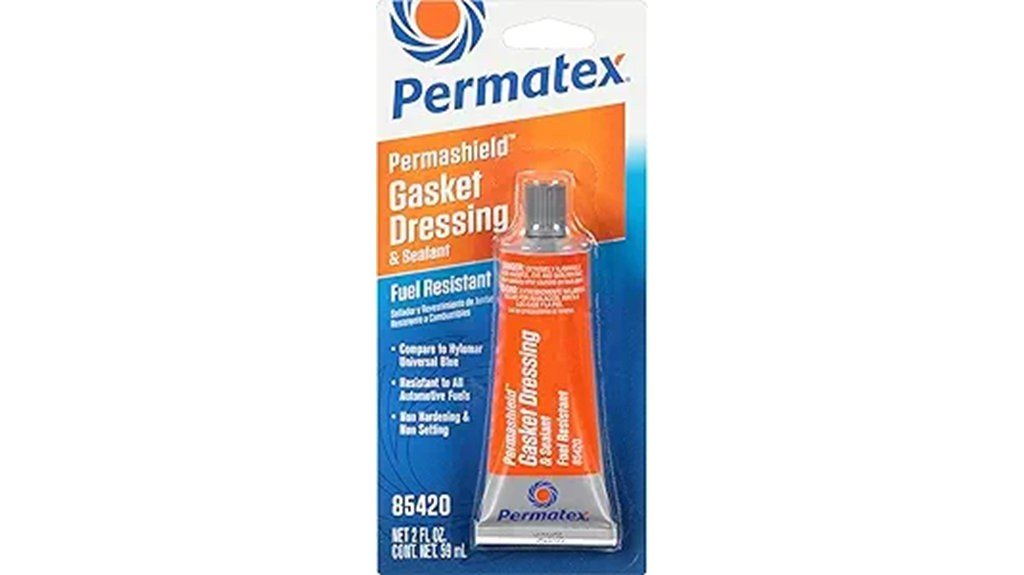
The Permatex 85420 PermaShield Fuel Resistant Gasket Dressing & Flange Sealant targets that exact problem. It uses a polyester urethane formula that resists gasoline and other automotive fluids. It works best on serviceable metal joints where you want fluid resistance, flexibility, and easier disassembly later.
This review explains what the 2 oz tube does well, where it has limits, and whether it deserves a place in your garage or shop drawer. You’ll also see how it compares with RTV-style gasket makers and why surface prep matters so much.
Our Verdict
Rating: 8/10
Best For: DIY mechanics and shop users who need a fuel-resistant, non-hardening dressing for metal-to-metal gasket work.
Bottom Line: Permatex 85420 PermaShield gives you strong fluid resistance, a flexible urethane formula, and service-friendly disassembly. It is not the right choice for cracked parts, plastic repairs, loose hose patches, or poor surface prep.
How this review was checked: We matched the Amazon listing with the official Permatex product page, then kept the details that matched the live listing, brand page, or original article.
| Specification | Detail |
|---|---|
| Brand | Permatex |
| Model / Item Number | 85420 |
| Product Type | Fuel resistant gasket dressing and flange sealant |
| Size | 2 oz tube |
| Item Weight | 2.88 ounces |
| Item Dimensions | 1.25 x 3.88 x 8 inches |
| Color / Packaging | Orange tube as listed on Amazon |
| Base Material | Polyester urethane gasketing compound |
| Item Form | Paste |
| Compatible Material | Metal |
| Temperature Range | -60°F to 500°F |
| Fluid Resistance | Gasoline, motor oil, ethanol-blended fuel, water, and antifreeze |
| Best Use | Metal-to-metal gasket joints that may need future disassembly |
| Formula Behavior | Non-setting, non-hardening, tacky, flexible, and vibration resistant |
| Suggested Applications | Axle assemblies, hydraulic parts, differential covers, cast oil pans, water pumps, bearing caps, gearboxes, intake manifold gaskets, and valve cover gaskets |
| Included Components | One tube |
| UPC | 686226854209 |
| Listed Options | 2 Ounce single tube; multi-packs of 6 or 12 are also listed by some sellers |
Key Takeaways
- Permatex 85420 PermaShield uses a polyester urethane formula that resists gasoline, oil, ethanol blends, water, and antifreeze.
- The 2 oz tube suits small gasket jobs on cast oil pans, water pumps, valve covers, intake manifold gaskets, and similar metal joints.
- Its -60°F to 500°F temperature range gives you more heat tolerance than many basic gasket dressings.
- The non-hardening formula stays tacky, so it works well when you expect repeated assembly and disassembly.
- You still need clean, dry surfaces, proper solvent evaporation time, and correct torque to get the best seal.
What Is the Permatex 85420 PermaShield Gasket Dressing?
The Permatex 85420 PermaShield Fuel Resistant Gasket Dressing & Flange Sealant is a 2 oz tube of gasket dressing for automotive and mechanical sealing work. Permatex positions it as either a gasket maker on its own or as a dressing you apply alongside an existing paper or cork gasket, which gives you flexibility depending on what your repair manual calls for. That gives it a clear role for small jobs where a gasket needs extra help sealing.
The headline feature is fuel resistance. Its polyester urethane formula resists gasoline and common automotive fluids, which matters when you work around fuel pumps, fuel injectors, oil pans, differential covers, axle assemblies, and valve cover gaskets. The formula also resists rapid temperature changes, so it suits parts that heat up and cool down often.
Unlike hard-setting sealants, PermaShield stays tacky and flexible. That non-hardening behavior helps when you want to remove parts later without destroying the gasket surface or spending extra time scraping cured material. It also allows unlimited assembly time, which gives you more control during slower repairs.
Who Should Buy It?
Who It’s For
- You service metal-to-metal gasket joints where fuel, oil, or vibration can create repeat leaks.
- You want a gasket dressing that allows future disassembly instead of locking parts together with a hard cured layer.
- You work on small automotive, tractor, boat, mower, chainsaw, or engine jobs where a 2 oz tube covers several light applications.
Who Should Skip It
- You need a permanent structural repair for a cracked tank, split hose, or damaged plastic part.
- You want a thick gap-filling RTV silicone for uneven surfaces that do not mate cleanly.
- You do not want to clean, dry, and prep the joint before applying sealant.
⚠ Before You Buy
PermaShield is built to sit between two clamped metal surfaces. It will not bridge a hole, patch a cracked tank, or seal a split hose from the outside. If a part is physically damaged rather than just leaking at a joint, replace the part or use a repair product made for that specific material instead.
Product Features and Specifications
Fuel and Automotive Fluid Resistance
PermaShield’s strongest selling point is its resistance to gasoline and automotive fluids. That makes it more useful around fuel-related joints than many general-purpose gasket products. It can also handle motor oil, ethanol-blended fuel, water, and antifreeze, which covers most of the fluids that collect around an engine bay or driveline.
You should still use it as a gasket dressing or flange sealant between prepared surfaces. It works best when the joint clamps the material in place, not when you smear it over an active leak from the outside. That difference matters because a sealed flange and a patched hole place very different stress on the product.
Flexible, Non-Hardening Formula
The polyester urethane formula stays tacky instead of curing into a hard layer. That helps you reopen a joint later, inspect the part, and reassemble it with less cleanup. For serviceable covers and housings, that can save time during repeat maintenance.
This trait matters on parts you may service again, such as differential covers, valve covers, water pumps, and bearing caps. A hard sealant can make those jobs slower because you often need more scraping and surface cleanup. PermaShield gives you a softer, more service-friendly seal when the joint surfaces already fit well.
Temperature Range and Vibration Resistance
Permatex lists the temperature range at -60°F to 500°F. That wide range helps the sealant handle cold starts, hot engine bay conditions, and repeated temperature swings. It also makes the product more useful across cars, small engines, boats, tractors, and shop equipment.
The tacky urethane formula also resists vibration and allows unlimited assembly time. That gives you a better fit for engines, gearboxes, hydraulic covers, lawn equipment, boats, tractors, and similar machines that shake during use. You can line up parts carefully instead of rushing before a fast-curing product skins over.
Application and Assembly
Permatex instructs you to clean and dry the surfaces first. Then you apply a thin film or bead to both surfaces, allow enough drying time for the solvent to evaporate, and assemble the parts. This product rewards patience because trapped oil, fuel film, or dirt can reduce sealing performance.
You should torque the fasteners to the manufacturer’s specification. That step matters because the sealant supports the joint, but correct clamp load creates the actual sealing pressure. Uneven torque can create small gaps that no dressing can fully overcome.
💡 Pro Tip
Apply the thinnest layer that still covers the joint face. A thick bead takes longer for the solvent to evaporate and is more likely to squeeze out once you torque the fasteners, which means more cleanup around the flange.
The product also allows unlimited assembly time. That helps when you need a slower, more careful fit-up instead of rushing before a fast-curing material skins over. For longer flange jobs, that extra working time can make assembly less stressful.
Material Compatibility and Handling Safety
Permatex designs PermaShield for metal-to-metal gasket joints, not as a general-purpose adhesive. If a joint includes a plastic housing, rubber seal, or composite cover, test a small hidden area first or check the joint against your repair manual, since solvent-based sealants can affect some plastics and rubber compounds differently than they affect bare metal.
The formula is solvent-based, so expect a noticeable chemical smell while you apply it and during the drying period. Work in a ventilated garage or shop bay, keep the tube away from open flame, and wear gloves to limit skin contact. Follow the safety data sheet and label warnings for full handling guidance, since they cover details this review does not, such as first-aid steps and exposure limits.
Replace the cap tightly after each use and store the tube below 100°F, which matches Permatex’s listed storage guidance. Keep it out of reach of children and pets, and dispose of an empty or expired tube according to your local hazardous waste rules rather than regular household trash.
Real-World Performance and Use Cases
How It Performs in Real Use
On Fuel-Related Gasket Jobs
PermaShield makes the most sense when gasoline resistance sits near the top of your list. Use it on properly prepared fuel pump flanges, carburetor-related metal joints, and fuel-adjacent gasket surfaces where the parts clamp together evenly. The 2 oz tube size fits small jobs where you only need a thin film.
You should not treat it as a patch for a damaged tank or loose hose fitting. Fuel-resistant sealants can still perform poorly when you use them outside the correct joint type. Your surface prep, joint condition, and application method matter as much as the formula.
On Valve Covers and Oil Pans
The 2 oz tube gives you enough material for multiple small gasket dressing jobs when you apply a thin layer. For valve covers, cast oil pans, and differential covers, the non-hardening formula helps seal small surface imperfections between metal parts. That works best when the cover and mounting surface still sit flat.
You still need flat mating surfaces. If a flange is bent, gouged, dirty, or over-tightened, no dressing can fully correct the mechanical problem. You should fix the surface issue first, then use PermaShield as sealing support.
For Shop and Garage Maintenance
PermaShield fits well in a garage drawer because it covers several automotive sealing tasks. You can use it on intake manifold gaskets, water pumps, bearing caps, gearboxes, hydraulic equipment covers, and other listed metal-joint applications. It is especially useful when one product needs to cover fuel, oil, heat, and vibration concerns.
The tube format also helps you control the amount. Apply a thin, even layer rather than a thick bead, because excess material can squeeze out and create cleanup work. A controlled film also reduces the chance of excess sealant moving where you do not want it.
On Small Engines, Boats, and Outdoor Power Equipment
PermaShield’s listed use cases go beyond cars and trucks to include boats, tractors, snowmobiles, lawn mowers, and chainsaws. For small-engine equipment that sits unused for weeks at a time, like a mower over winter or a boat engine between trips, the non-hardening formula means the seal stays workable instead of drying into a brittle layer that could crack the next time you open the cover.
This makes it a reasonable choice for seasonal equipment maintenance where you expect to open the same cover or housing more than once a year. As with automotive work, the result still depends on clean, flat mating surfaces and correct torque on the fasteners.
Application Tips and Best Practices
Surface prep decides most of the result. Clean oil, old gasket residue, fuel film, dust, and loose material from both mating surfaces before you apply the dressing. A clean metal surface gives the tacky formula a better chance to seal small imperfections.
Dry the surfaces completely before application. Solvent trapped under the dressing can weaken the bond or delay the seal, especially on cold parts or tight flanges. Good ventilation also helps because the solvent-based formula can smell strong during application.
Apply a thin film or bead to both surfaces. Let the solvent evaporate, then assemble the parts and torque the fasteners to the manufacturer’s specification. Use the product between mating faces, not as a thick outside patch over a leak.
Use a thin, even layer on clean, dry surfaces, then assemble the parts and torque them to the manufacturer’s specification.
Replace the cap after use and store the tube below 100°F. Use a fresh tube for critical work if the material thickens, dries out, separates, or smells unusually harsh. You should also wear gloves and follow the label directions because solvent-based sealants can irritate skin and eyes.
Pros and Cons
Pros
- Resists gasoline, oil, ethanol blends, water, and antifreeze, which suits fuel-adjacent gasket work.
- Handles a -60°F to 500°F temperature range for hot and cold mechanical conditions.
- Stays tacky and flexible, so future disassembly takes less effort.
- Works as either a gasket maker or gasket dressing on metal parts.
- Seals small surface imperfections between machined metal joint faces.
Cons
- Needs clean, dry surfaces and correct torque to perform well.
- Does not replace proper repairs for cracked parts, bad flanges, or damaged hoses.
- The solvent-based formula can have a noticeable chemical odor during application.
Is It Worth the Price?
The Permatex 85420 PermaShield offers strong value for the price if you often work on small automotive gasket jobs. A 2 oz tube fits routine maintenance better than a large container that may sit unused for months. It also gives you a targeted formula instead of a general adhesive that may not resist fuel well.
You get the most value when you use it for serviceable metal joints. The fuel resistance, non-hardening formula, vibration resistance, unlimited assembly time, and high temperature range all support that type of work. As a specialty fuel-resistant dressing rather than a general-purpose adhesive, it sits in the affordable, single-purpose tier of automotive sealants, priced for occasional shop and garage use rather than as a premium multi-task product. For DIY mechanics, those features make it a smart buy for everyday garage repairs.
It becomes less valuable if you need a general repair adhesive or a thick gap filler. In that case, you should choose a product that matches the damaged material and repair type more closely. PermaShield makes sense when the surfaces clamp together, not when the part itself needs structural repair.
How It Compares to Alternatives
If you want a fast, thick RTV-style gasket maker, Permatex Ultra Black may suit some oil-resistant engine jobs better. If you need a fuel-resistant gasket maker for small engines or powersports work, Permatex MotoSeal may also fit certain applications. Those products target different sealing needs, so you should match the sealant to the fluid, surface, and service plan.
PermaShield remains the stronger pick when you care about gasoline resistance and future disassembly on metal-to-metal joints. Its non-hardening urethane formula gives it a clear role beside regular RTV sealants and old-style gasket coatings. Choose it when serviceability matters as much as sealing strength.
Frequently Asked Questions
Does Permatex 85420 PermaShield resist gasoline?
Yes. Permatex lists gasoline and automotive fluid resistance as a core feature of the 85420 PermaShield formula. You should still use it between properly prepared mating surfaces rather than as an outside patch over an active leak.
What temperature range does Permatex 85420 handle?
Permatex lists the product temperature range at -60°F to 500°F. That range supports many automotive and mechanical sealing jobs where parts face heat cycles. It also helps when equipment moves between cold starts and hot operating conditions.
Can you use Permatex PermaShield on plastic parts?
Permatex positions this product for metal-to-metal applications and machined joint faces. Test material compatibility first if plastic or rubber sits near the joint. Do not use it as a general plastic repair adhesive.
Does Permatex 85420 cure hard?
No. The formula stays tacky, flexible, non-setting, and non-hardening. That behavior helps when you need repeated assembly and disassembly.
How should you apply Permatex 85420 PermaShield?
Clean and dry both surfaces first. Apply a thin film or bead to both surfaces, allow drying time for the solvent to evaporate, then assemble and torque the fasteners to the manufacturer’s specification. Avoid heavy application because extra material can squeeze out.
Is one 2 oz tube enough for several jobs?
Yes, one 2 oz tube can cover several small gasket dressing jobs when you apply a thin, even layer. Larger covers, repeated rework, or heavy application will use the tube faster. The 6-pack or 12-pack options make more sense for shops that use it often.
Does PermaShield replace the gasket itself?
It can work either way. Permatex describes it as suitable as a standalone gasket maker on some metal-to-metal joints, or as a dressing applied alongside a paper or cork gasket on others. Check your vehicle or equipment’s repair manual to see which approach the joint actually calls for.
How do you remove it if you need to redo a seal?
Since the formula stays soft instead of curing hard, you can usually wipe most of it away with a rag and a mild parts cleaner, then finish with a scraper on any stubborn residue. Clean and dry the surface fully before you reapply a fresh, thin layer.
The Bottom Line
The Permatex 85420 PermaShield Gasket Dressing earns an 8/10 rating because it solves a clear problem: fuel-resistant sealing on serviceable metal joints. You get a flexible, non-hardening urethane formula, a -60°F to 500°F temperature range, and strong usefulness for small automotive jobs. It also gives you easier future disassembly than many hard-setting sealants.
You should buy it if you work on fuel pumps, differential covers, oil pans, water pumps, valve cover gaskets, or similar metal joints. You should skip it if you need a structural patch, a plastic repair adhesive, or a sealant that can overcome poor surface prep. For the right metal-to-metal gasket job, it is a practical and trustworthy shop-drawer product.
Ready to Buy?