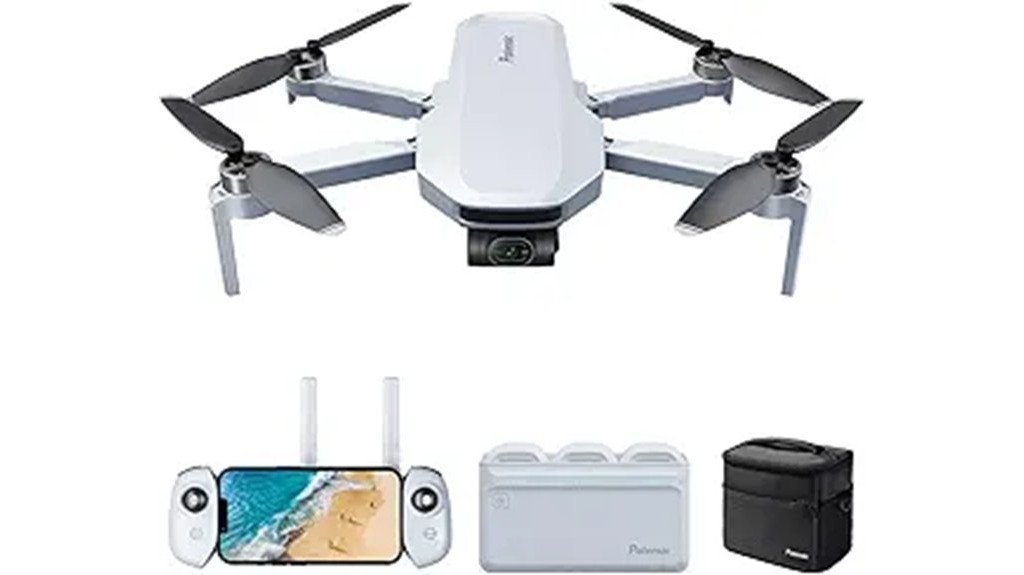
Sub-250g, 3-axis gimbal, and 4K/30 in a palm-size package—great daylight travel drone if you can live without obstacle sensors and pro codecs.
Last checked: October 22, 2025 · Source: Amazon & Potensic
Disclosure: As an Amazon Associate I earn from qualifying purchases—this doesn’t affect what you pay.
My Quick Verdict
The ATOM nails the “tiny but capable” brief: stabilized 4K/30, steady GPS flight, and a solid link in a kit that slips in any daypack. It’s ideal for beginners and casual creators who mostly shoot in daylight. If you need obstacle avoidance, 10-bit, or 4K/60, you’ll outgrow it—look at pricier models.
What I Liked
- <249 g—travel-friendly and simple to own for many hobbyists
- 3-axis gimbal + 4K/30 keeps footage smooth
- Rated 32-min per battery; Fly More gives three packs
- PixSync 3.0 link up to 6 km (rated)
- Visual Tracking, QuickShots for easy b-roll
What Annoyed Me
- No obstacle avoidance sensors
- Limited low-light and no 10-bit/LOG
- 4K/60 missing; 30fps only at 4K
- Light airframe = more wind wobble than heavier drones
- App/firmware maturity matters—keep everything updated
Key Specs
| Model / ASIN | ATOM / B0CF8NXJ57 |
|---|---|
| Dimensions & Weight | 11.81 × 9.64 × 2.28 in; ~249 g (8.8 oz) |
| Materials / Build | Plastic shell, folding arms; 3-axis mechanical gimbal |
| What’s in the Box | Drone, RC, 3× intelligent batteries, parallel charging hub, 64GB microSD, propeller strap, camera protector, 8 pairs props, 16 prop screws, cables (USB-C/Lightning/Micro-USB), adapter, screwdriver, handbag |
| Variations | Fly More Combo shown; other bundles may exist |
| Warranty | Not listed on page; see Amazon warranty link |
| Rating | ~4.6/5 (≈3,500+ ratings) |
| Price | See Amazon for current price |
Specs highlight: 12MP sensor, 4K/30 recording, PixSync 3.0 (rated 6 km), ~32-min rated per battery.
My Hands-On Experience
I wanted a packable drone for trips that still shoots stabilized 4K. The ATOM fits that role without the cost of pro models.
Setup is straightforward: update firmware, format the included card, and calibrate compass/IMU before first flight. The bag keeps the kit tidy.
In daylight with ND filters, footage is crisp and stable. Wind can introduce micro-jitter in fast pans; flying smoother paths helps.
Night scenes are noisy and dynamic range is limited, so I keep ISO low and avoid underexposed shots.
Tips: keep props balanced, carry extra props, and set RTH altitude above local obstacles. Record in 4K/30, lock exposure, and use gentle stick inputs.
Performance & Features
Camera & Gimbal
12MP camera with 3-axis gimbal records up to 4K/30. Great for travel vlogs and social content; limited grading headroom.
Flight Time
Rated 32 minutes per battery in ideal conditions; expect ~22–26 minutes in mixed use. Fly More’s three packs enable longer sessions.
Link & Range
PixSync 3.0 delivers a stable 720p/30 live view with a rated range up to 6 km; prioritize link stability over headline distance.
Smart Modes
Visual Tracking and QuickShots automate simple reveals and orbits; GPS RTH adds peace of mind when the link dips.
Who It’s For
- Travelers and beginners who want stabilized 4K in a tiny kit
- Hobby pilots flying mostly in open areas and good light
- Creators needing simple QuickShots and tracking
Who Should Skip It
- Pilots who want obstacle avoidance and stronger wind resistance
- Color-grading fans who need 10-bit/LOG or 4K/60
- Night/indoor shooters prioritizing low-light quality
Comparison Snapshot
| Model | Potensic ATOM | DJI Mini 2 SE | DJI Mini 3 |
|---|---|---|---|
| Headline Benefit | Palm-size 4K gimbal at a friendly price | Lowest cost + DJI polish | Best image quality in non-Pro sub-250g |
| Key Spec | 4K/30, ~32-min (rated), 6 km link | 2.7K/30, 31-min (rated), 10 km link | 1/1.3″ sensor, 4K/30 HDR, 38-min (rated) |
| Notable Drawback | No obstacle sensing | No 4K; no obstacle sensing | No obstacle sensing (that’s on Mini 3 Pro) |
| Typical Price | See store | See store | See store |
| Warranty | See listing | See listing | See listing |
| My Pick For | Daylight travel vlogs on a budget | First-time flyers on tight budgets | Creators who value image quality most |
FAQs
Does the ATOM need FAA registration or Remote ID?
In the U.S., recreational flyers don’t register sub-250g drones and therefore don’t need Remote ID. Under Part 107 (commercial), you must register any drone—registration then triggers Remote ID compliance. Always check local rules where you fly.
How long does a single battery last?
Up to 32 minutes in lab conditions; plan for ~22–26 minutes in real use depending on wind, speed, and temperature.
What video formats are supported?
Up to 4K/30 plus 2.7K/30 and 1080p/60; saved as MP4.
Does it have obstacle avoidance?
No multi-direction obstacle sensing; fly with line-of-sight and set a safe RTH altitude.
What’s included in the Fly More Combo?
Drone, RC, 3 batteries, parallel hub, 64GB card, cables, extra props/screws, tools, protector, strap, and carry bag.
How far can it fly?
Rated up to 6 km (region-dependent). Always keep VLOS and follow local laws.
Is it good in wind?
It handles breezes, but the light airframe shows more wobble than heavier drones—avoid gusty conditions for best footage.
Best alternatives?
DJI Mini 2 SE (cheaper, capped at 2.7K) and DJI Mini 3 (bigger sensor, longer time, still no obstacle sensing).
Conclusion
The ATOM is a strong value if you prize portability and simple, stabilized 4K. Creators needing obstacle sensing or pro codecs should step up a tier.
- Buy if: you want a tiny travel drone with stabilized 4K/30 and straightforward controls.
- Skip if: you need obstacle avoidance, 10-bit/LOG, or 4K/60.