Disclosure: As an Amazon Associate, we earn from qualifying purchases. If you click a link on this page and make a purchase, we may receive a small commission at no extra cost to you.
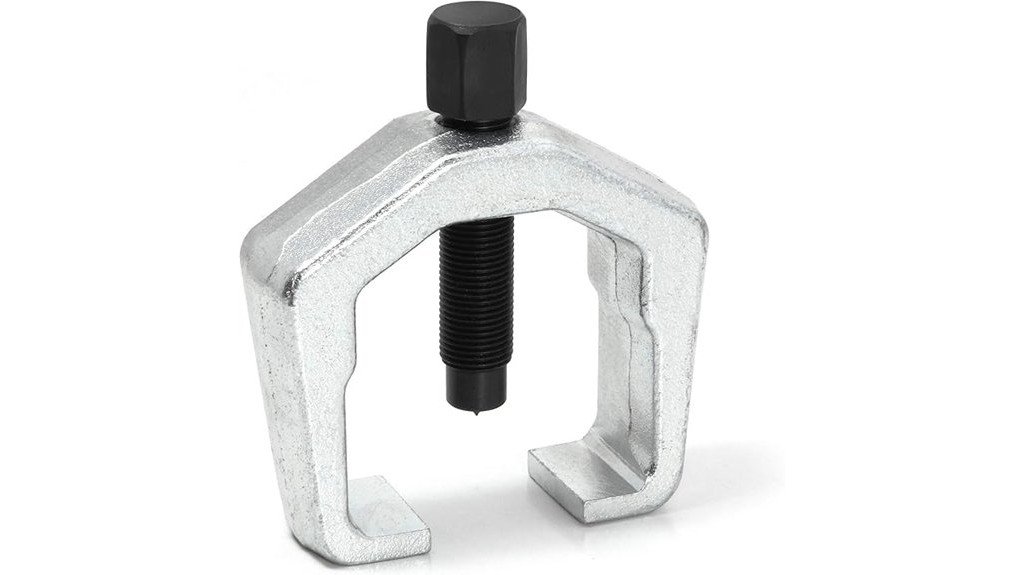
A stuck pitman arm can turn a simple steering repair into a frustrating job. The Powerbuilt 1-3/8-Inch (34mm) Pitman Arm Puller, model 648693, gives you a dedicated way to separate the arm from the steering gearbox shaft without relying on makeshift prying methods. Its forged steel construction, fine-threaded forcing screw, and compact jaw design make it worth considering for compatible cars and light trucks. However, its limited jaw opening means you must check the dimensions before buying, especially for larger truck applications.
Quick Verdict
Rating: Recommended with caveats
Best For: DIY mechanics and small repair shops removing pitman arms from compatible domestic cars and light trucks.
Bottom Line: The Powerbuilt 648693 offers a simple, forged-steel pulling design with a 1-3/8-inch jaw opening and fine-threaded screw. It is a practical choice when its jaws and available travel fit your steering assembly, but it is not a universal solution for oversized or heavily seized pitman arms.
Powerbuilt 648693 Key Specifications
| Specification | Detail |
|---|---|
| Brand | Powerbuilt |
| Model | 648693 |
| Product type | Pitman arm puller |
| Primary function | Separates a pitman arm from a steering gearbox shaft |
| Material | Drop-forged, heat-treated chrome vanadium steel |
| Jaw opening | 1-3/8 inches, marketed as 34mm |
| Advertised reach/travel | 2-1/2 inches. Listings describe this as jaw depth or pull travel, so confirm the required clearance. |
| Screw design | Fine-threaded center forcing screw |
| Tool interface | 19mm socket interface advertised on Amazon; a retailer also lists a 3/8-inch square drive port |
| Product weight | Approximately 1.84 lb, according to retailer specifications |
| Color | Silver |
| Package quantity | One pitman arm puller |
| Instructions | Manufacturer describes illustrated usage instructions |
| Intended applications | Compatible domestic cars and light trucks with pitman-arm steering systems |
| Before ordering | Check the arm width, jaw clearance, screw travel, and vehicle service information |
What Is the Powerbuilt 648693 Pitman Arm Puller?
The Powerbuilt 648693 is a single-purpose automotive service tool designed to remove a pitman arm from the splined shaft of a steering gearbox. On vehicles with traditional steering-box systems, the pitman arm transfers steering movement to the linkage. Removing it may be necessary during steering gearbox replacement, pitman arm replacement, or related linkage repairs.
The puller uses a forged yoke that grips behind the arm and a threaded center screw that applies force against the shaft. As you tighten the screw, the tool pushes against the shaft while pulling the arm away from its seated position. This design lets you apply controlled mechanical force rather than trying to lever the arm off surrounding components.
Powerbuilt markets this model for domestic vehicles and light trucks. The main buying point is its 1-3/8-inch jaw opening, which you should compare with your actual pitman arm before starting the job.
Key Takeaways
- Forged steel construction: The drop-forged, heat-treated chrome vanadium body is designed to handle pulling loads.
- 1-3/8-inch jaw opening: A useful size for compatible cars and light trucks, but too narrow for some larger steering assemblies.
- Fine-threaded forcing screw: Provides gradual mechanical pressure when properly lubricated, centered, and operated.
- Compact design: May help in steering areas with limited access, provided there is enough space to position and operate the tool.
- Single-purpose tool: Made for pitman arm removal, not for every tie rod, ball joint, or bearing removal task.
- Fit matters most: The right jaw width and pulling clearance are more important than a general vehicle-category claim.
Product Features and Specifications
Drop-Forged Chrome Vanadium Construction
The Powerbuilt 648693 uses drop-forged, heat-treated chrome vanadium steel. Forging shapes the steel under pressure, while heat treatment helps develop the mechanical properties needed for demanding tool applications.
That construction is useful because a puller must hold its jaw position while the screw applies force. A weak or poorly seated tool can flex, slip, or fail before the pitman arm releases.
Steel strength does not make the tool immune to damage. Excessive force, poor alignment, worn threads, or an incorrect application can still damage the yoke or forcing screw. Inspect the tool before each use.
1-3/8-Inch Jaw Opening and 2-1/2-Inch Reach
The advertised 1-3/8-inch opening is the tool’s most important fit measurement. The jaws must reach behind the pitman arm and grip the correct surface without resting against nearby seals, housings, or linkage parts.
Listings also specify 2-1/2 inches of depth or pulling travel. Because those terms describe different measurements, do not assume the entire advertised distance represents usable screw movement. Check the actual tool geometry against your vehicle’s available space.
A compact puller can be easier to position than a larger two-jaw puller. Still, a smaller body will not solve a clearance problem if the pitman arm itself is too wide.
Before You Buy: Do not assume this puller fits every Ford, Chevrolet, GMC, Dodge, or other domestic vehicle. Confirm that your vehicle has a pitman arm, then measure the arm and check the space behind it. A 1-3/8-inch opening may be unsuitable for large heavy-duty truck applications.
Fine-Threaded Center Screw
The fine-threaded forcing screw converts turning force into steady axial pressure. This design can help you make small, controlled adjustments as the jaws pull against the arm.
For reliable operation, the screw must remain centered on the steering shaft. If the screw pushes at an angle, the jaws can shift and place uneven stress on the arm or gearbox.
Amazon describes a 19mm socket interface, while another retailer lists a 3/8-inch square-drive port. Check the actual screw head and supplied instructions to identify the correct hand-tool interface before applying force.
Ready-to-Use Single-Tool Design
This model is sold as one pitman arm puller. It is not a complete steering repair kit, and a socket, ratchet, or other service tools may be needed to finish the job.
The manufacturer describes illustrated instructions to help with correct use. Those instructions are especially useful if you have not worked with a forcing-screw puller before.
Performance and Durability Evaluation
The Powerbuilt 648693 has design features that support controlled pitman arm removal: a forged yoke, a fine-threaded screw, and a defined jaw opening. However, the available product information does not establish a measured success rate, maximum pulling force, or tested service life for this specific model.
Its actual performance depends on how securely the jaws engage, how much force the seized connection requires, and whether the tool remains aligned during use.
How It Performs in Real Use
1. Routine Pitman Arm Replacement
For a compatible vehicle with accessible steering linkage, the 648693 can provide a more controlled removal method than improvised prying. The tool applies force through its screw and yoke while keeping the operation focused on the gearbox shaft and arm.
Before applying pressure, you still need to remove or reposition the vehicle’s retaining hardware as directed in the service manual.
2. Working in a Tight Engine Bay
Steering gearboxes are often surrounded by suspension parts, frame members, hoses, and other hardware. The Powerbuilt’s compact configuration may help when a large puller cannot be positioned.
Measure both the opening around the pitman arm and the working room for your ratchet or wrench. A puller that fits over the arm may still be difficult to turn if the frame blocks access to the forcing screw.
3. Removing an Older or Corroded Arm
Older vehicles can have corrosion or tightly seated spline connections that make pitman arm removal difficult. A screw-type puller can apply steady force, but it cannot guarantee removal in every case.
When resistance becomes excessive, stop and inspect the jaw engagement and screw alignment. A slipping jaw or bending tool is a reason to reassess the method, not to keep increasing force.
4. Repeated Garage or Shop Use
For mechanics who service compatible steering systems, a dedicated puller can reduce the need to improvise a removal method each time. Its one-piece yoke arrangement and screw mechanism are straightforward to inspect and maintain.
There are no verified controlled endurance results here showing how many removal cycles the 648693 can handle. Long-term durability depends on load, fit, lubrication, and correct storage.
How to Use the Powerbuilt Pitman Arm Puller Correctly
Correct positioning matters more than speed. Pitman arms can release suddenly while under high pulling force, so follow the supplied tool instructions and your vehicle’s service procedure.
- Confirm the application. Check your vehicle’s steering system and ensure that removing the pitman arm is part of the required repair.
- Prepare the vehicle safely. Park on a stable surface, prevent vehicle movement, and use approved lifting and support equipment if access from underneath is required.
- Follow the service procedure. Disconnect or remove only the necessary steering components and retaining hardware as specified by the vehicle manufacturer.
- Seat the jaws correctly. Make sure both sides engage the correct surface behind the arm without catching nearby components.
- Center the forcing screw. Align it with the gearbox shaft and protect the shaft or exposed threads as required by the service instructions.
- Apply controlled hand-tool force. Advance the screw gradually while watching for jaw movement, tool distortion, or interference.
- Inspect after removal. Check the pitman arm, shaft splines, threads, and puller for damage before proceeding with reassembly.
Do not use an impact wrench unless Powerbuilt expressly approves that method for this model. No verified impact-tool rating was established for the 648693 during this review.
Pro Tip: Before tightening the screw, check the jaw contact from more than one viewing angle. If one jaw sits higher than the other, correct the position before applying load. This simple check can help prevent slipping and uneven pressure.
Compatibility and Safety Considerations
Check Your Steering System First
Not every car or truck uses a pitman arm. Many vehicles have rack-and-pinion steering, which does not use the same pitman-arm connection found on traditional steering-box systems.
A general description such as “fits domestic vehicles” is not enough to establish compatibility. Use your service manual, vehicle-specific repair data, or a professional technician to confirm the correct removal tool.
Protect the Steering Components
Pitman arms, steering shafts, and linkage parts are safety-critical components. Incorrect pulling force or a misaligned tool can damage splines, threads, seals, or nearby components.
Wear eye protection and keep your hands away from loaded jaws. Never place yourself in the path of a tool or part that could release suddenly.
After replacement, use the vehicle manufacturer’s specified retaining hardware, torque values, and inspection procedures. If you are unsure about the removal or reinstallation process, have a qualified mechanic perform the repair.
Material and Tool Inspection
The puller is made from chrome vanadium steel, but no specific corrosion-protection coating has been verified for this model. Keep the tool clean and dry after use.
Inspect the yoke for cracks or distortion and the forcing screw for damaged threads. Do not use a puller that shows signs of structural damage.
Cleaning, Lubrication, and Storage
A forcing-screw puller needs basic care, especially when used around dirt, grease, road salt, and corrosion.
- After each use: Wipe off dirt, moisture, and debris from the yoke and screw.
- Thread care: Use the lubricant specified by the tool manufacturer. Avoid running a dry or contaminated forcing screw under heavy load.
- Check for wear: Look for flattened threads, damaged contact points, bent jaws, or cracks.
- Storage: Keep the tool dry and protected from impact inside a toolbox or storage drawer.
- Before reuse: Confirm that the forcing screw turns smoothly and the tool has no visible damage.
These steps can help preserve normal operation, but they do not establish a guaranteed service life.
Who Should Buy This Tool?
The Powerbuilt 648693 makes the most sense when you already know the size and layout of the pitman arm you need to remove. It is especially relevant for occasional steering-box repairs on compatible vehicles.
Best For
- DIY owners repairing compatible steering-box systems on domestic cars or light trucks.
- Independent mechanics who need a compact, single-purpose pitman arm puller.
- Home garages where the measured arm width and available clearance match this tool.
Skip If
- Your pitman arm is wider than the tool’s usable jaw opening.
- You service large heavy-duty trucks that require a dedicated larger puller.
- You need a complete steering and suspension removal kit rather than one specialty tool.
Pros and Cons
Pros
- Drop-forged, heat-treated chrome vanadium construction.
- Fine-threaded center screw allows gradual pressure application.
- Defined 1-3/8-inch jaw opening helps with pre-purchase measurement.
- Compact design may suit limited-access steering repairs.
- Simple single-tool setup with manufacturer-described illustrated instructions.
Cons
- Limited jaw width makes it unsuitable for some larger pitman arms.
- Correct alignment and available screw travel must be checked before use.
- Not a universal steering tool or a guaranteed solution for severely seized components.
Is It Worth the Price?
The Powerbuilt 648693 sits in the basic, single-purpose specialty-tool category rather than the larger professional puller-set category. Its value comes from having a dedicated tool for a particular steering repair, not from offering a broad range of applications.
For a compatible pitman arm, it can be a practical purchase if you want to keep a puller in your toolbox for future work. The forged construction and fine-threaded screw are useful features in a tool intended to apply controlled mechanical force.
However, buying the wrong jaw size offers little value. If you work on multiple heavy-duty trucks or frequently encounter difficult pitman arms, a larger vehicle-specific puller may justify the added expense. Compare the current price, warranty terms, and actual dimensions before deciding.
How It Compares to Alternatives
The OTC 6496 Pitman Arm Puller is another compact steering tool, with published applications covering several domestic SUVs and pickups. It is worth comparing when vehicle-specific access and compatibility are your main concerns.
For larger steering components, the Lisle 41970 is designed for heavy-duty pitman arm removal on 2005-and-newer Ford F-250 and F-350 trucks. The OTC 6497 also targets selected heavy-duty Ford, Ram, Jeep, and related applications, using a wider jaw arrangement with clamping bolts. These alternatives may be better for larger arms that exceed the Powerbuilt’s opening.
The Powerbuilt 648693 remains a reasonable choice when its compact jaw geometry matches your vehicle and you do not need a larger specialty puller.
Frequently Asked Questions
1. What vehicles does the Powerbuilt 648693 fit?
It is marketed for compatible domestic cars and light trucks that use pitman-arm steering systems. Fit is not guaranteed by vehicle category alone. Check the jaw opening, steering assembly layout, and vehicle repair procedure.
2. What is the jaw opening on this pitman arm puller?
The advertised jaw opening is 1-3/8 inches, also marketed as 34mm. Measure the arm where the jaws must grip, not just the visible outside diameter of the steering linkage.
3. Can I use this puller on a heavy-duty truck?
Only if the specific pitman arm and working clearance match the tool. Some heavy-duty steering systems require a larger puller, such as a vehicle-specific Lisle or OTC model.
4. What size wrench or socket does the Powerbuilt 648693 use?
Amazon describes compatibility with a 19mm socket, while a retailer also lists a 3/8-inch square-drive port. Inspect the tool and follow its instructions to choose the correct hand-tool interface.
5. Can I use an impact wrench with this puller?
An impact-tool rating has not been verified for this model. Use an appropriate hand tool unless Powerbuilt’s instructions explicitly permit impact use. Excessive or uncontrolled force can damage the puller and steering components.
6. Will it remove a rusted or stuck pitman arm?
It is designed to apply pulling force, but removal depends on the condition of the splined connection and the available working space. If the tool begins to slip, bend, or bind, stop rather than increasing force. A different removal method may be required.
7. How should I maintain the Powerbuilt pitman arm puller?
Clean the yoke and forcing screw after use, inspect the threads, and keep the tool dry. Apply manufacturer-approved thread lubricant when needed, and never reuse a puller with bent jaws or cracked metal.
8. Does the package include a full steering repair kit?
No. The product listing specifies one pitman arm puller. You may also need sockets, hand tools, replacement hardware, and vehicle-specific service equipment to complete the repair safely.
The Bottom Line
The Powerbuilt 648693 Pitman Arm Puller is worth considering for DIY mechanics and repair shops working on steering systems that fit its 1-3/8-inch jaw opening. Its forged steel design and fine-threaded screw offer a straightforward removal method, but limited fit and clearance mean it is not the right tool for every truck. Choose it for a confirmed compatible application, and consider a larger, vehicle-specific puller when your steering assembly requires one.
Ready to Buy?
Check the latest price, current product details, and jaw dimensions before you decide.