Pram strollers give newborns a comfortable way to travel while making everyday outings easier for parents. Their flat carrycots, sturdy wheels, and practical features can make walks more pleasant, especially during the early months. Understanding the real pram stroller benefits also helps you choose a suitable model and avoid common safety mistakes.
Quick Answer
The main benefits of pram strollers are a flat position suitable for newborn transport, a roomy interior, smoother movement, and greater convenience for caregivers. However, a pram is not automatically a safe sleeping space. Choose an age-appropriate model with reliable brakes, suitable restraints, and clear manufacturer instructions.
Key Features of Pram Strollers

A pram stroller typically has a flat carrycot or bassinet-style attachment that lets a newborn lie comfortably during walks. Unlike a standard upright stroller, it does not require a young baby to maintain a seated position before they have enough head and neck control.
When comparing models, focus on features that improve safety, comfort, and everyday handling.
- Flat carriage: Provides a lying-down position for newborn transport. Check that the manufacturer approves it for your baby’s age and size.
- Spacious interior: Gives your baby room to lie comfortably without needing extra pillows or padding.
- Large, sturdy wheels: Help the pram move smoothly over sidewalks and uneven paths. Wheel quality and suspension matter more than size alone.
- Adjustable handlebars: Let caregivers of different heights find a comfortable pushing position.
- Protective canopy: Provides shade and helps shield your baby from direct sunlight.
- Reliable brakes and restraints: Help prevent rolling and falls. Use the restraint system specified for the particular seat or carrycot.
- Strong frame and secure locks: Keep the stroller stable and help prevent accidental folding.
Choose durable materials that are easy to clean. Removable, washable fabrics and accessible wheels can make regular maintenance simpler.
How Is a Pram Different From a Regular Stroller?
A traditional pram carries a baby in a flat carriage, while a regular stroller often has a seated or reclining position. Many modern travel systems combine both designs using interchangeable attachments.
The NHS guidance on prams and pushchairs explains that young babies need a suitable flat position, while more upright models are intended for children with better sitting control.
Prams may be bulkier than lightweight strollers. Before buying, consider whether the folded frame fits your vehicle, storage area, and usual walking routes.
Benefits of Using a Pram Stroller
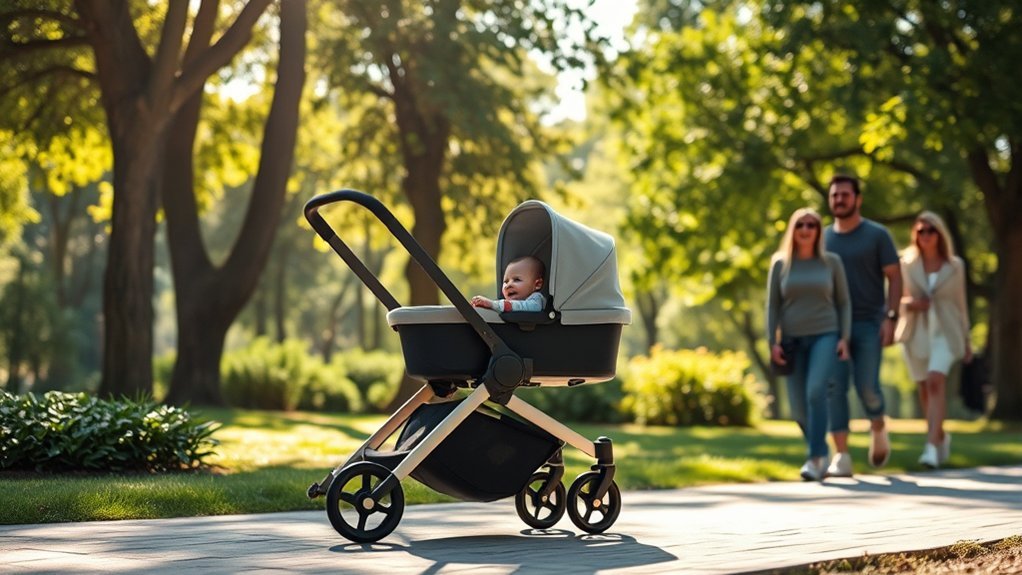
The main advantages of a pram stroller are newborn-friendly positioning, comfortable movement, and easier outings for caregivers. These benefits are especially useful during the early months, when babies have limited head control and need frequent attention.
- Comfortable newborn positioning: A suitable flat carriage supports your baby’s body during transport without placing them in an upright seat too early.
- Smooth mobility: Stable wheels and effective suspension can reduce jolts on uneven surfaces, making walks more comfortable for your baby and easier for you.
- Convenience for parents: Adjustable handlebars, accessible storage, and a well-balanced frame can make everyday errands less demanding.
Some parents also appreciate the extra space around their baby and the ability to use a compatible stroller seat as their child grows.
Are There Any Disadvantages?
Prams often weigh more and take up more storage space than compact strollers. Large wheels may handle rough paths well but can be inconvenient on crowded buses or narrow walkways.
A traditional carrycot also has a limited period of use. Once your baby reaches its size, weight, or developmental limits, you will need another suitable seat.
The American Academy of Pediatrics’ stroller safety guidance recommends checking stability, brakes, restraint systems, and folding mechanisms before choosing a stroller.
Importance of Proper Airway Management

Proper airway positioning is especially important for newborns because their head and neck control is still developing. A flat position during transport helps avoid the forward slumping that can occur in unsuitable upright seats.
However, a flat pram carriage and a certified infant sleep surface are not necessarily the same thing.
Why Does a Flat Position Matter?
When a young baby’s head falls forward, the chin can press toward the chest and make breathing more difficult. This risk is particularly important in inclined seating products.
The American Academy of Pediatrics recommends a firm, flat, level surface for infant sleep. Its safe-sleep recommendations identify surfaces inclined more than 10 degrees as unsafe for infant sleep.
These recommendations also advise moving a baby who falls asleep in a stroller to an appropriate sleep surface as soon as possible.
Warning: Never assume a pram is suitable for routine or unattended sleep just because it reclines fully. Do not add pillows, cushions, loose bedding, or aftermarket mattresses. A stroller bassinet should only be used for sleep when it meets applicable infant sleep standards and the manufacturer explicitly permits that use.
Can a Baby Sleep in a Pram Bassinet?
Some purpose-built bassinets may be approved for infant sleep, but not every pram attachment qualifies. A suitable sleep product needs a firm, flat surface and must meet the relevant safety requirements.
Health Canada’s guidance on safe sleep while traveling explains that some stroller accessories resemble bassinets without being safe sleep products.
During walks, supervise your baby and keep their face visible. If they fall asleep in a stroller that is not approved for sleep, move them to a suitable crib, cradle, or bassinet when practical.
Note: If your baby was born prematurely, has breathing difficulties, or needs special positioning, ask your pediatrician which pram or stroller setup is appropriate.
Enhancing Comfort During Outings
A well-designed pram can make outdoor trips more comfortable for both you and your baby. The best features reduce unnecessary movement, improve handling, and help protect your little one from changing weather conditions.
- Flat carriage: Allows newborns to lie comfortably during transport instead of remaining in a seated position.
- Spacious interior: Provides room for your baby without extra cushions or thick padding.
- Adjustable handlebars: Help you keep your arms and shoulders in a more natural position while pushing.
- Sturdy wheels and suspension: Make it easier to maintain a steady pace over ordinary sidewalk bumps.
- Adjustable canopy: Offers shade while allowing you to monitor your baby’s face and comfort.
How Can You Keep Your Baby Comfortable in Hot Weather?
Use the pram’s canopy for shade, dress your baby in suitable lightweight clothing, and check for signs of overheating. Babies younger than six months need particular protection from direct sunlight.
Never drape a blanket over the pram opening to block the sun. It can restrict airflow and increase the temperature inside.
The NHS sun-safety advice recommends proper sunshades, regular temperature checks, and breathable clothing.
For longer outings, take breaks when your baby needs feeding, changing, or a change of position. Avoid continuing a walk simply because your baby appears settled.
Supporting Developmental Needs of Infants
A pram can support your baby’s everyday comfort while giving you opportunities to interact during walks. It provides a suitable transport position for young infants, but it does not directly guarantee improved spinal development, cognitive growth, or sleep quality.
As your baby grows, everyday outings can become opportunities for gentle interaction and learning.
- Sensory experiences: Your baby may notice changing light, sounds, movement, and familiar voices during walks.
- Parent-child bonding: Talking, singing, and responding to your baby can make outings more engaging.
- Comfortable exploration: Smooth, supervised movement lets your baby experience different surroundings without needing to sit independently.
Pram time should not replace movement and play outside the stroller. Babies also need opportunities to move freely and develop muscle control.
The American Academy of Pediatrics recommends supervised tummy time while babies are awake to help develop the muscles and skills needed for later movement.
Balance stroller walks with floor play, feeding, cuddling, and interaction. This gives your baby a wider range of everyday experiences.
How to Use a Pram Stroller Safely
Using a pram safely requires more than choosing a sturdy model. Correct setup, suitable positioning, and regular checks help reduce the risk of falls, tipping, and other preventable problems.
Follow this practical checklist before and during each outing:
- Check the age and weight limits. Make sure the chosen carriage or seat is approved for your baby’s current size and developmental stage.
- Lock the frame. Confirm that the stroller is fully open and its folding mechanism is secured before placing your baby inside.
- Use the proper restraint. Secure your baby according to the manufacturer’s instructions. A seated stroller generally needs a properly fitted harness, while bassinet arrangements may differ.
- Apply the brakes when stopped. Always engage the parking brake before placing your baby inside or taking them out.
- Keep the stroller balanced. Use the designated storage basket instead of hanging heavy bags from the handlebars.
- Inspect moving parts. Check wheels, brakes, straps, and locking mechanisms for wear or damage.
- Supervise your baby. Keep the stroller close, avoid stairs and escalators, and never leave your baby unattended.
For US shoppers, the Consumer Product Safety Commission’s carriage and stroller standard is found in 16 CFR Part 1227. It addresses hazards involving brakes, stability, restraints, folding mechanisms, and other product features.
Frequently Asked Questions
Are Pram Strollers Suitable for Premature Babies?
Some pram strollers may be suitable for premature babies, but individual medical needs matter. A flat transport position and proper support are important. Ask your pediatrician or neonatal care team whether the selected model is appropriate, particularly if your baby has breathing or positioning concerns.
How Do I Clean and Maintain a Pram Stroller?
Clean your pram using the manufacturer’s fabric and frame care instructions. Remove loose dirt, wash approved removable fabrics, and wipe suitable surfaces with mild soap and water. Regularly inspect wheels, brakes, fasteners, and straps. Allow cleaned parts to dry thoroughly before reassembly.
Can Pram Strollers Be Used for Older Toddlers?
Convertible pram strollers can often accommodate older toddlers when fitted with an approved stroller seat. Traditional newborn carrycots are not intended for that stage. Always check the manufacturer’s weight, height, and developmental limits before switching configurations or continuing use.
What Accessories Can Enhance a Pram Stroller’s Functionality?
Useful pram accessories include approved storage organizers, cup holders, sunshades, and weather covers. Choose accessories compatible with your specific model. Avoid products that overload the handlebars, restrict ventilation, interfere with restraints, or add unsafe padding around your baby.
Are There Safety Regulations for Pram Strollers?
Yes, pram strollers are subject to product safety regulations that vary by country. In the United States, carriages and strollers must meet the applicable requirements of 16 CFR Part 1227. Check product labels, instructions, and recall information before buying or using a stroller.
How Long Can a Newborn Use a Pram Carrycot?
A newborn can use a pram carrycot until reaching the manufacturer’s weight, size, or developmental limits. Some carrycots must no longer be used once a baby begins pushing up or rolling. Follow the specific product instructions rather than relying on age alone.
Can a Pram Replace a Baby’s Crib for Overnight Sleep?
An ordinary pram should not replace a crib for overnight sleep. Only use a purpose-built bassinet for sleep if it meets applicable infant sleep safety requirements and the manufacturer approves that use. A fully reclining stroller seat alone is not enough.
Conclusion
Pram strollers can make everyday outings more comfortable with their flat newborn-friendly design, sturdy wheels, and convenient features. Choose a model that fits your baby’s developmental stage and your daily routine. Above all, prioritize safe positioning, reliable restraints, and correct use so you can enjoy walks together with greater peace of mind.
Sources
- NHS, What You’ll Need for Your Baby: Pram and pushchair differences, newborn positioning, and travel-system considerations.
- American Academy of Pediatrics, How to Choose a Safe Baby Stroller: Stability, brakes, harnesses, and general stroller safety.
- American Academy of Pediatrics, How to Keep Your Sleeping Baby Safe: Infant sleep positioning, flat surfaces, and stroller sleep precautions.
- Health Canada, Safe Sleep on the Go: Safety considerations for strollers, carriages, and bassinet attachments.
- NHS, Keeping Your Baby Safe in the Sun: Sun protection, ventilation, and overheating precautions.
- American Academy of Pediatrics, Back to Sleep, Tummy to Play: Supervised tummy time and infant physical development.
- US Consumer Product Safety Commission, Carriages and Strollers Business Guidance: Federal stroller safety requirements under 16 CFR Part 1227.