Disclosure: As an Amazon Associate, we earn from qualifying purchases. If you click a link on this page and make a purchase, we may receive a small commission at no extra cost to you.
Gates 22437 Premium Molded Coolant Hose Review
A weak lower radiator hose can turn a small coolant leak into an overheated engine. You need a hose that fits the correct vehicle, resists coolant chemistry, and holds its shape under heat and vacuum. This Gates 22437 Premium Molded Coolant Hose review explains where it fits, what the EPDM construction gives you, and when you should skip it for a different part number.
Our Verdict
Rating: 8/10
Best For: You need a direct-fit lower radiator hose for compatible Chevrolet, GMC, Cadillac, or Workhorse cooling systems.
Bottom Line: The Gates 22437 gives you molded EPDM construction, synthetic fiber reinforcement, and OEM-style fitment for supported vehicles. The tradeoff is fitment specificity, so you must verify your year, make, model, engine, and lower-hose position before buying.
| Specification | Detail |
|---|---|
| Brand | Gates |
| Model | 22437 Premium Molded Coolant Hose |
| Part Type | Lower radiator coolant hose |
| Material | EPDM tube, synthetic fiber knit reinforcement, EPDM cover, plastic component |
| Color | Black |
| Temperature Range | -40°F to 257°F (-40°C to 125°C) |
| Centerline Length | 18 in. (457 mm) |
| End Inside Diameter | 1.52 in. (39 mm) at both ends |
| Amazon Dimensions | 14.53 in. L x 5.39 in. W |
| Item Weight | 13.6 oz. |
| Standards | SAE 20R4 class D2 and DIN 73411 class A, except tolerances |
| Included Accessories | Premium Molded Coolant Hose |
| UPC | 072053447712 |
What Is the Gates 22437 Premium Molded Coolant Hose?
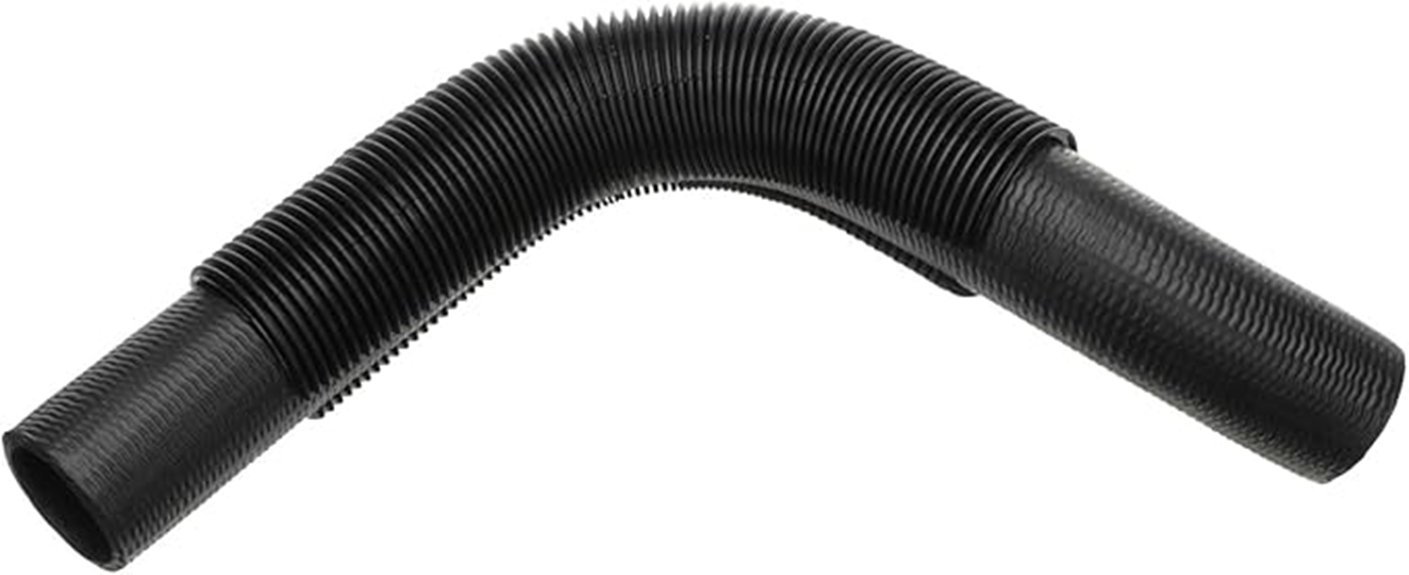
The Gates 22437 is a molded lower radiator coolant hose for specific vehicle applications. It is not a universal hose you cut to length. You buy it when your vehicle calls for this part number, matching lower-hose routing, end diameter, and molded bend shape.
Its main strength is the molded EPDM construction. The hose uses an EPDM tube, synthetic fiber knit reinforcement, and a heat, ozone, and chemical coolant-resistant EPDM cover. That structure helps the hose hold its shape better than a generic straight hose when the cooling system heats, cools, and pulls vacuum.
Gates positions its molded coolant hoses as OE-quality replacements for upper, lower, bypass, heater, and other coolant applications. For the 22437, the key buyer question is simple: does it match your exact vehicle and hose position? When it does, you get a cleaner install than you would with a flexible universal hose.
Key Takeaways
- You get a Gates 22437 lower radiator hose with molded EPDM construction and synthetic fiber knit reinforcement.
- The verified temperature range is -40°F to 257°F (-40°C to 125°C), not the higher 150°C claim found in the draft.
- The 18 in. centerline length and 1.52 in. inside diameter at both ends make fitment checks essential.
- It meets SAE 20R4 class D2 and DIN 73411 class A requirements, except tolerances.
- You should replace hose clamps during installation and avoid using this hose for fuel or oil transfer.
Who Should Buy the Gates 22437?
Who It’s For
- You need a lower radiator hose for a vehicle that matches the Gates 22437 application data.
- You prefer a pre-shaped hose that follows OEM-style routing instead of forcing a universal hose into place.
- You want EPDM construction that resists coolant chemicals, ozone, heat, and electrochemical degradation.
Who Should Skip It
- You have not confirmed the part number against your vehicle, engine, and hose position.
- You need a hose for fuel, oil, transmission fluid, or another non-coolant transfer application.
- Your cooling system requires an internal spring, branch connection, or quick-connect fitting built into the hose.
Design and Materials Analysis
Molded EPDM Construction
The Gates 22437 uses an EPDM tube, a synthetic fiber knit reinforcement layer, and an EPDM outer cover. EPDM is a common coolant-hose material because it handles heat, ozone, and coolant chemistry better than basic rubber compounds. For you, that means the hose is built for the repeated hot-cold cycles of a pressurized cooling system.
The molded shape matters as much as the material. A hose with the wrong bend can rub against brackets, kink near the radiator neck, or place stress on the clamp area. The Gates 22437 is pre-shaped to fit its intended applications and support sealed conditions at both hose ends.
Diameter, Length, and Fitment
The cataloged centerline length is 18 in. (457 mm). Both hose ends list a 1.52 in. (39 mm) inside diameter, so you should compare those measurements with your radiator outlet and engine-side connection before installation. Amazon also lists the product dimensions as 14.53 in. long by 5.39 in. wide, which is useful for storage and package expectations.
The hose is listed with no branch quantity, no quick-connect fitting quantity, and no internal spring. That is a benefit when your original hose is a simple lower radiator hose. It becomes a problem if your vehicle uses an integrated branch, connector, sensor, or spring in that hose location.
Standards and Coolant Resistance
Gates lists the hose as meeting SAE 20R4 class D2 and DIN 73411 class A requirements, except for tolerances. Those standards do not make the hose universal, but they do give you a useful baseline for coolant-hose material performance. The more important step is still matching the part number to your vehicle.
The verified temperature range is -40°F to 257°F (-40°C to 125°C). That covers normal coolant-system operation for many compatible passenger vehicles and trucks. It also corrects the earlier draft’s 150°C claim, which I did not verify for this part number.
Performance and Durability Assessment
Vacuum Collapse Resistance
The Gates 22437 uses specifically engineered materials intended to resist collapse under vacuum. That matters most during coolant cooldown, when pressure drops and a weak lower hose can flatten. A collapsed lower hose can restrict coolant flow and make an overheating problem harder to diagnose.
Because this hose does not list an internal spring, the material and molded shape do the support work. That keeps the part simpler, but it also means you should not substitute it where your original design requires a spring. Compare the removed hose and vehicle fitment data before you clamp it in place.
Electrochemical Degradation Protection
Gates describes the 22437 as engineered to resist electrochemical degradation, a leading cause of hose failure. Electrochemical degradation can attack rubber from the inside when coolant chemistry and electrical charge create a harsh environment. You will not see that damage early from the outside, so coolant maintenance still matters.
Use the right coolant type for your vehicle and keep the system clean. During oil changes or coolant checks, inspect the hose for swelling, surface cracking, rubbing, and soft spots near the clamps. These checks take less than a minute and can catch problems before a long drive turns into a tow.
Installation and Maintenance
Installation should start with a cold engine and a verified part match. The 1.52 in. end diameters need clean mating surfaces, even clamp pressure, and enough seating depth to seal correctly. Gates also recommends replacing hose clamps each time a new coolant hose is installed.
Do not twist the hose to make it fit. The molded routing should naturally line up with the radiator and engine connections on a compatible vehicle. If you need to force the bend, stretch the length, or rotate the ends under tension, the part number may be wrong for your application.
Standards Compliance and Application Suitability
The Gates 22437 is best treated as a specific lower radiator hose, not a general-purpose coolant hose. Catalog data lists it for applications including Chevrolet Silverado, Chevrolet Tahoe, Chevrolet Suburban, GMC Sierra, GMC Yukon, Cadillac Escalade, and Workhorse Custom Chassis models across certain years. You should still confirm by VIN, engine, and hose position before purchase.
The application summary also identifies a 1999-2013 Chevrolet Silverado Series Pickup with a V8 5.3 L engine in the lower position. That is helpful if you are cross-checking a common use case, but it is not the full fitment story. A vehicle lookup or parts catalog check is safer than relying on one model range alone.
This hose is for coolant service. Parts data specifically warns not to use it for fuel or oil transfer applications. If you need a hose for petroleum products, pressure oil lines, or fuel delivery, choose a hose designed and rated for that fluid.
How It Performs in Real Use
During a Routine Hose Replacement
For a compatible vehicle, the molded 18 in. centerline length helps the hose follow the factory path without sharp bends. The pre-shaped form reduces the need to trim, bend, or improvise during installation. You still need fresh clamps and clean connection points for a reliable seal.
In Stop-and-Go Driving
Stop-and-go driving repeatedly heats the cooling system and then lets temperatures drop. The EPDM tube and cover are designed for coolant exposure, ozone resistance, and heat resistance in that cycle. The 257°F upper temperature rating gives the hose a practical margin for normal coolant-system use.
On Older Trucks and SUVs
Older trucks and SUVs often need direct-fit cooling parts because brackets, fan shrouds, and radiator neck angles leave little room for error. The Gates 22437 works best when it replaces the correct lower hose and follows the original routing. It is not a shortcut for mismatched fitment or a damaged radiator neck.
Pros and Cons
Pros
- Molded EPDM tube, synthetic fiber reinforcement, and EPDM cover support coolant-system durability.
- 1.52 in. inside diameter at both ends gives you a clear measurement for fitment checks.
- 18 in. centerline length and pre-shaped routing reduce the need for universal-hose compromises.
- SAE 20R4 class D2 and DIN 73411 class A compliance add useful standards support.
- Designed to resist vacuum collapse and electrochemical degradation in coolant service.
Cons
- Fitment is specific, so this is the wrong choice if your vehicle does not call for Gates 22437.
- No branch, quick-connect fitting, or internal spring is listed for applications that require those features.
- Not suitable for fuel or oil transfer, even though the hose may look heavy-duty.
Is It Worth the Price?
The Gates 22437 is a strong value when it is the correct direct-fit lower radiator hose for your vehicle. You are paying for molded fitment, EPDM coolant compatibility, and Gates’ application engineering rather than a generic length of hose. That makes the most sense when the original hose shape is hard to duplicate safely.
You should not buy it just because the price looks reasonable. The best value comes from avoiding leaks, kinks, and repeated labor caused by a poor fit. For the right application, it is a smart buy for everyday repair and preventative cooling-system maintenance.
How It Compares to Alternatives
If you want another OE-style molded lower radiator hose, ACDelco Gold 24403L is a common competing option for some similar applications. Dayco 71990 and Continental 62261 also appear as cross-reference alternatives in parts catalogs. The Gates 22437 remains the choice when your lookup confirms this exact Gates part number and you want its EPDM construction and molded routing.
A universal flex hose can make sense for a temporary repair or a custom project. For a factory cooling system, a molded hose is usually the cleaner choice because the bend radius, length, and end alignment are already designed around the engine bay.
Frequently Asked Questions
Does the Gates 22437 fit every Chevrolet Silverado?
No. Parts data lists several Silverado applications, including certain 1999-2013 models, but fitment depends on year, engine, drivetrain, and hose position. Confirm by VIN or a trusted parts lookup before buying.
Is the Gates 22437 an upper or lower radiator hose?
The verified parts listings identify the Gates 22437 as a lower radiator hose. Do not use it as an upper hose unless your vehicle catalog specifically calls for this part in that position.
What temperature range is verified for this hose?
The verified temperature range is -40°F to 257°F (-40°C to 125°C). That replaces the unverified 150°C claim from the original draft.
Does it come with clamps?
The listed included component is the Premium Molded Coolant Hose. Clamps are not listed as included, and Gates recommends replacing hose clamps when you install a new coolant hose.
Can you use the Gates 22437 for fuel or oil?
No. Parts data cautions that this hose should not be used for fuel or oil transfer applications. Use a hose rated for the exact fluid and pressure in your system.
The Bottom Line
The Gates 22437 Premium Molded Coolant Hose earns an 8/10 because it combines molded fitment, EPDM construction, synthetic fiber reinforcement, and recognized coolant-hose standards. You should buy it when your vehicle lookup confirms this exact lower radiator hose. You should skip it if you need a universal hose, a fuel or oil hose, or a hose with branches, quick-connect fittings, or an internal spring.
Ready to Buy?