
Disclosure: As an Amazon Associate, we earn from qualifying purchases. If you click a link on this page and make a purchase, we may receive a small commission at no extra cost to you.
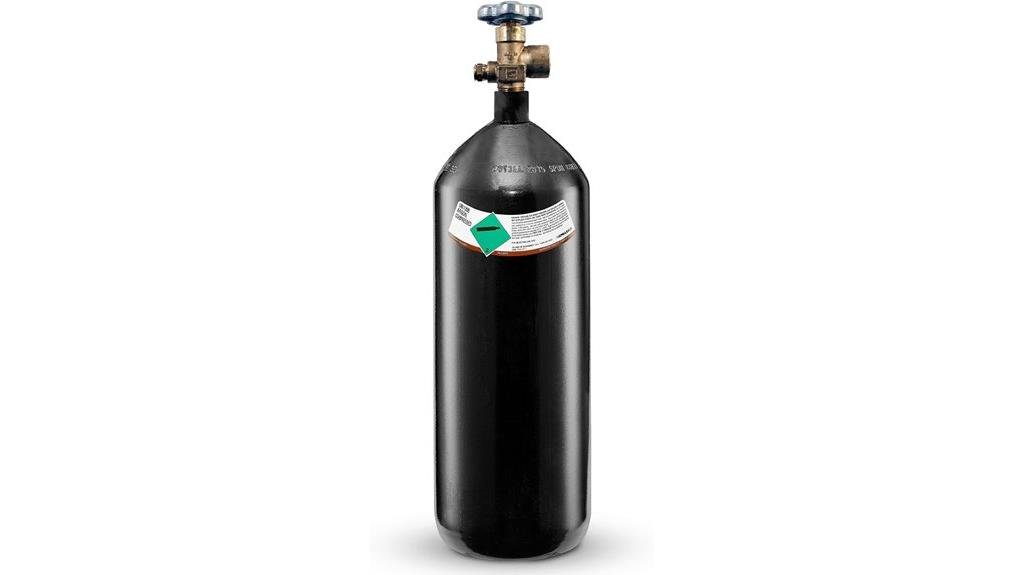
If monthly cylinder lease fees are draining your welding budget and last-minute trips to the gas supplier disrupt your workflow, owning your shielding gas tank is a practical solution. The PrimeWeld 125CF 100% Argon Gas Welding Tank is designed for TIG welders who want a reliable, high-capacity gas supply delivered pre-filled directly to their shop. This hands-on review explores its real-world run time, CGA-580 valve compatibility, local refill expectations, and overall value to help you decide if owning beats renting.
Quick Verdict
Rating: 9.2/10 (Highly Recommended)
Best For: Home and small-shop TIG welders who practice regularly and want to eliminate ongoing rental contracts.
Bottom Line: Arriving pre-filled with 100% pure argon and equipped with a standard CGA-580 valve, this 125CF DOT-certified cylinder offers consistent shielding gas for smooth TIG welds. While handling a heavy cylinder requires care and local refill policies vary, it quickly pays for itself compared to monthly lease fees.
| Specification | Detail |
|---|---|
| Brand | PrimeWeld |
| Model / ASIN | CF125-FULL-100AR (ASIN B09LP3WDSX) |
| Gas Type | 100% Pure Argon |
| Tank Capacity | 125 Cubic Feet (CF) |
| Valve Connection | CGA-580 (Standard U.S. inert gas stem) |
| Certification | DOT 3AA Specification (Stamped test date) |
| Ship Condition | Shipped 100% Full |
| Estimated Run Time | ~8 hr 20 min @ 15 CFH / ~6 hr 15 min @ 20 CFH (continuous flow) |
| Primary Applications | TIG welding (steel, stainless steel, aluminum); MIG welding on aluminum |
What Is the PrimeWeld 125CF Argon Cylinder?
The PrimeWeld 125CF Argon Cylinder is a customer-owned, refillable gas tank engineered to supply high-purity shielding gas for welding operations. Unlike standard cylinder rentals that require recurring lease payments and paperwork, this bottle is purchased outright and arrives delivered to your door 100% full of pure argon gas.
It features a DOT 3AA specification steel construction and a standard CGA-580 valve stem. With a 125 cubic feet capacity, it occupies the ideal middle ground between small, fast-emptying 40CF portable tanks and massive industrial lease cylinders. It is built specifically for home garage fabricators, auto restorers, and professional shop owners who want a reliable gas supply on demand.
Before You Buy: Call your local welding supply shops (such as Airgas, Praxair, or local independent distributors) before purchasing. Confirm their policy on refilling or exchanging customer-owned DOT 3AA cylinders with CGA-580 valves. While the tank carries proper certification, individual supplier policies regarding owner bottles can vary locally.
Who Should Buy It?
Best For
- Home and small-shop TIG welders who want to stop paying monthly rental fees.
- Regular fabricators needing extended torch time without frequent refill trips.
- Welders working on steel, stainless steel, or aluminum TIG projects.
Skip If
- Your local gas supplier refuses to refill or exchange customer-owned bottles.
- You primarily MIG weld mild steel and require an Argon/CO2 mix (such as 75/25 C25).
- You cannot safely store and secure an upright heavy steel cylinder in your workspace.
Key Features and Performance Analysis
Pure 100% Argon Shielding Quality
For TIG welding across carbon steel, stainless steel, and aluminum, 100% argon is the universal shielding baseline. The PrimeWeld cylinder delivers clean, uncontaminated argon that prevents atmospheric contamination in the weld pool. Consistent gas purity translates directly to cleaner arc starts, stable puddle control, and bright, un-oxidized weld beads.
CGA-580 Valve Compatibility
The cylinder comes fitted with a heavy-duty CGA-580 brass valve stem. This is the standard fitting used by nearly every major U.S. argon regulator and flowmeter brand. You can connect your existing flowmeter directly without needing brass adapters, reducing potential leak points and setup complications.
DOT 3AA Certification and Refill Compliance
To ensure long-term usability, the cylinder meets Department of Transportation (DOT) 3AA specifications and includes a fresh date stamp. Gas suppliers inspect these markings before refilling or exchanging cylinders. Having a certified, correctly stamped tank minimizes administrative hurdles when it comes time for a refill.
Gas Capacity and Practical Run Time Math
Understanding shielding gas consumption comes down to simple math: total tank capacity in cubic feet divided by your regulator flow setting in cubic feet per hour (CFH).
Real-World Continuous Flow Math:
- 125CF Tank at 15 CFH: Provides approximately 8 hours and 20 minutes of continuous flow.
- 125CF Tank at 20 CFH: Provides approximately 6 hours and 15 minutes of continuous flow.
- 40CF Tank Comparison (at 15 CFH): Provides only about 2 hours and 40 minutes of continuous flow.
Note: Actual welding trigger-on time is typically much lower than total shop time, so a 125CF tank usually lasts through several weeks of intermittent fabrication.
Pro Tip: Never increase your gas flowmeter past 20–25 CFH to combat workspace drafts. High flow rates cause turbulence, which pulls ambient air directly into the weld pool and wastes gas. Instead, block drafts using welding blankets or portable screens around your work area.
How It Performs in Real Use
For Intermittent Shop Practice
If you practice TIG welding several evenings a week, a 125CF cylinder delivers remarkable convenience. Smaller 40CF bottles run out quickly when establishing arc control and practicing bead placement, requiring frequent trips to the gas distributor. The 125CF capacity lets you focus on building muscle memory without constantly checking your tank pressure gauge.
For Fabrication Projects
During major fabrication tasks, such as building roll cages, aluminum intake pipes, or custom furniture frames, constant gas flow is critical. The steady supply pressure keeps your shield intact during long joint passes, preventing soot, porosity, and tungsten contamination.
For Long-Term Storage and Infrequent Use
For hobbyists who weld in bursts followed by weeks of inactivity, customer ownership is superior to leasing. A leased cylinder accrues monthly rental fees regardless of whether you strike an arc. The PrimeWeld bottle sits in your shop without generating ongoing bills, ready whenever your next project begins.
Setup, Safety, and Maintenance Tips
Proper cylinder handling ensures safety and extends the lifespan of your welding equipment:
- Crack the Valve First: Before threading on your regulator, momentarily open and close the tank valve to blow out any dust or debris inside the outlet threads.
- Check for Leaks: Apply soapy water or leak detector solution across all CGA-580 threaded joints and hose clamps after pressurizing the system.
- Secure Upright Storage: Always anchor the cylinder to a welding cart, wall rack, or sturdy post using heavy-duty safety chains or web straps to prevent tipping.
- Protect the Valve Stem: Keep the protective threaded safety cap screwed on whenever moving or transporting the cylinder.
Pros and Cons
Pros
- Arrives 100% pre-filled with clean argon gas to start welding immediately.
- Standard CGA-580 valve fits almost all standard U.S. argon regulators.
- Certified DOT 3AA steel construction with clear, long-window date stamping.
- 125CF capacity provides over 8 hours of arc time at standard flow rates.
- Eliminates monthly lease contracts, paperwork, and recurring rental fees.
Cons
- Heavy steel cylinder requires a wheeled welding cart for safe movement.
- Refill and exchange rules for owner bottles vary by local gas distributor.
- 100% argon gas is not suitable for standard mild steel MIG welding.
Is It Worth the Price?
Evaluating a customer-owned cylinder requires comparing upfront purchase cost against long-term rental math. Cylinder leases typically range from $10 to $15 per month. Over two to three years, leasing fees alone total $240 to $450, completely separate from gas refill expenses.
Purchasing the PrimeWeld 125CF cylinder delivered full represents a higher initial investment, but it locks in zero ongoing rental overhead. For fabricators who weld regularly or hobbyists who want an open-ended gas supply, owning the tank delivers strong long-term value and pays for itself within two years.
How It Compares to Alternatives
When setting up your shielding gas supply, three primary options exist:
- 40CF Customer-Owned Tanks: Extremely lightweight and portable, but they require frequent refill trips and run out quickly during regular TIG practice.
- 125CF PrimeWeld Cylinder: Provides the optimal balance of high capacity, manageable shop footprint, and zero lease fees.
- 150CF+ Industrial Rental Tanks: Ideal for high-production commercial shops burning through gas daily, but impractical for home users due to ongoing lease contracts and delivery fees.
Frequently Asked Questions
How long will a 125CF argon tank last at standard TIG flow rates?
At a standard flow rate of 15 CFH, a 125CF cylinder yields approximately 8 hours and 20 minutes of continuous gas flow. At 20 CFH, expect roughly 6 hours and 15 minutes. Because actual welding arc-on time is intermittent, a full tank typically lasts most hobbyists several weeks to a few months.
Will my regulator connect directly to the CGA-580 valve?
Yes. The CGA-580 fitting is the standard U.S. connection thread for argon, helium, and nitrogen shielding gas regulators. Standard TIG flowmeters thread directly onto this stem without needing adapters.
Can I use 100% argon gas for MIG welding?
Pure argon is required for MIG welding aluminum. However, for MIG welding mild steel or stainless steel, pure argon causes poor arc stability and deep narrow penetration. Steel MIG welding typically requires an Argon/CO2 blend (such as 75/25 C25).
Can I refill or exchange this tank at local welding supply stores?
Because the cylinder features standard DOT 3AA certification and date stamps, most independent welding gas suppliers will exchange or refill it. However, corporate supplier policies vary by location, so call your local shop to verify owner bottle exchange policies before ordering online.
How should I store a full argon cylinder safely in my shop?
Store the cylinder upright in a dry, ventilated space away from heat sources and electrical circuits. Secure it firmly with a chain or heavy strap to a welding cart or wall stud so it cannot fall over.
What does the DOT 3AA specification mean for refills?
DOT 3AA indicates that the cylinder is manufactured from seamless alloy steel according to strict Department of Transportation standards. The stamped date shows when the cylinder was hydrostatically tested, confirming to gas suppliers that it is safe to fill.
Does buying a cylinder save money over renting?
Yes, especially for long-term or intermittent welders. Avoiding $10 to $15 monthly lease fees means the cylinder pays for itself in roughly two years. After that point, your only expense is the gas refill cost.
What extra equipment is needed to start welding with this tank?
You will need an argon flowmeter or regulator with a CGA-580 inlet fitting, an inert gas hose, a secure welding cart or tie-down strap, and your TIG or aluminum MIG welder.
The Bottom Line
The PrimeWeld 125CF Argon Cylinder is a practical investment for welders who want to eliminate monthly lease paperwork and secure a reliable gas supply. Arriving pre-filled with 100% pure argon gas and equipped with a standard CGA-580 connection, it provides smooth, steady shielding for high-quality TIG welds. As long as you confirm local refill acceptance and have space for safe upright storage, it is an outstanding addition to any home garage or fabrication shop.
Ready to Buy?
Check the latest price and product details on Amazon before you decide.


