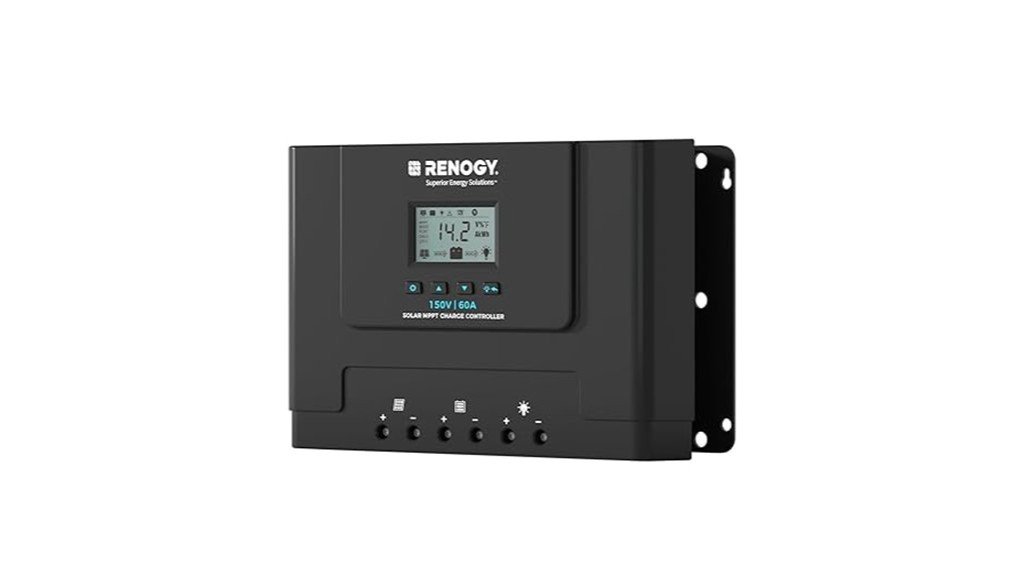
The Renogy 60A MPPT solar charge controller is presented as a high-capacity unit for 12–48V systems, offering 60A max charge current, 150V PV input, and operation from -31°F to 113°F. It features an LCD interface, multiple protection modes, and support for up to six 200W panels in series, making it suitable for RVs, cabins, and small off-grid installs. How does it perform in real-world installs, and is the two-year warranty enough to cover long-term reliability?
Key Takeaways
- 60A MPPT supports 12/24/36/48V batteries with up to 150V solar input, suitable for systems up to ~3 kW.
- High conversion efficiency often exceeds 98%, improving charging speed and energy harvest.
- Compatible with lithium, AGM, and gel batteries, with selectable charging profiles and low-temperature lithium protection.
- Install close to the battery (1–2 ft) with 10–6 AWG and keep cable runs under 10–15 ft to minimize voltage drop.
- Robust operation from -31°F to 113°F, self-cooling, and a two-year warranty covering defects and repairs.
Key Features and Technical Specifications
A concise technical summary sets expectations: the Renogy 60A MPPT Solar Charge Controller delivers up to 60 amps of charging current and supports 12V, 24V, 36V, and 48V systems, with a maximum solar input voltage of 150V.
It manages lithium, AGM, and gel batteries, offers built-in low-temperature protection, and operates from -31°F to 113°F.
What are key specs?
- Max charge current: 60A
- Max PV Voc: 150V
- Supported voltages: 12/24/36/48V
How does it help the user? It provides clear user benefits: improved charging efficiency, self-cooling reliability, and an intuitive user interface with LCD and buttons.
Installation Experience and Compatibility
Installation begins with site planning and unfolds into a straightforward wiring sequence that most DIYers and professional installers will find efficient and predictable.
The controller accepts 12V–48V systems, up to 150V input; connect up to six 200W panels in series.
Installation tips: mount within 1–2 ft of the battery bank, use 10–6 AWG cable depending on run length, fuse on PV and battery leads.
Compatibility concerns: supports lithium, AGM, gel batteries, but verify charging profiles.
Q: How long are cable runs? A: Keep runs under 10–15 ft when possible to minimize voltage drop and heat.
Performance, Reliability, and Warranty
Having covered siting and wiring recommendations, the review now examines how the Renogy 60A MPPT performs in real-world conditions, how reliably it handles stressors like temperature and high input voltage, and what the two-year warranty covers.
The controller posts strong efficiency metrics, often exceeding 98% under ideal irradiance, and sustains operation up to 150V input.
How resilient is it to heat and cold? Temperature resilience spans -31°F to 113°F, with self-cooling and low-temperature lithium protection.
Warranty: two years covering defects and repair; practical note—keep firmware updated, document serial numbers, and follow mounting venting guidance.
Frequently Asked Questions
Can It Charge a 48V Battery Bank From a 24V Solar Array via Step-Up?
No — despite apparent compatibility, it cannot. Juxtaposing theory and practice: solar array compatibility depends on input voltage; step-up DC conversion adds losses, and voltage conversion efficiency plus controller limits prevent charging a 48V bank from 24V panels.
Does It Support Programmable Battery Charging Profiles for Custom Chemistries?
Yes. It supports programmable custom charging profiles, allowing adjustment for different battery chemistry compatibility. The user can configure charge stages and parameters to match lithium, AGM, gel, and other chemistries for optimized battery maintenance.
What Protections Exist Against Lightning-Induced Surges on the PV Input?
It dramatically downplays storm fury: the controller offers limited surge protection on the PV input, recommending external lightning safety devices and proper grounding, since built-in safeguards are modest and external SPD installation is advised for robust defense.
Can Firmware Be Updated Through the Bluetooth Module or USB Port?
Yes, firmware update capability exists. The reviewer notes bluetooth connectivity can handle firmware updates via the optional Bluetooth module; USB port may allow service updates, though official support primarily cites the Bluetooth option.
How Does the Controller Behave During Partial Shading or Mismatched Panels?
Under partial shading performance, it cautiously seeks maximum power point, but panel mismatch effects can reduce overall harvest; the controller isolates mismatched strings, mitigates losses via MPPT tracking, yet total array output still diminishes noticeably.