SÜA Heavy Duty Oxy-Fuel Torch Review
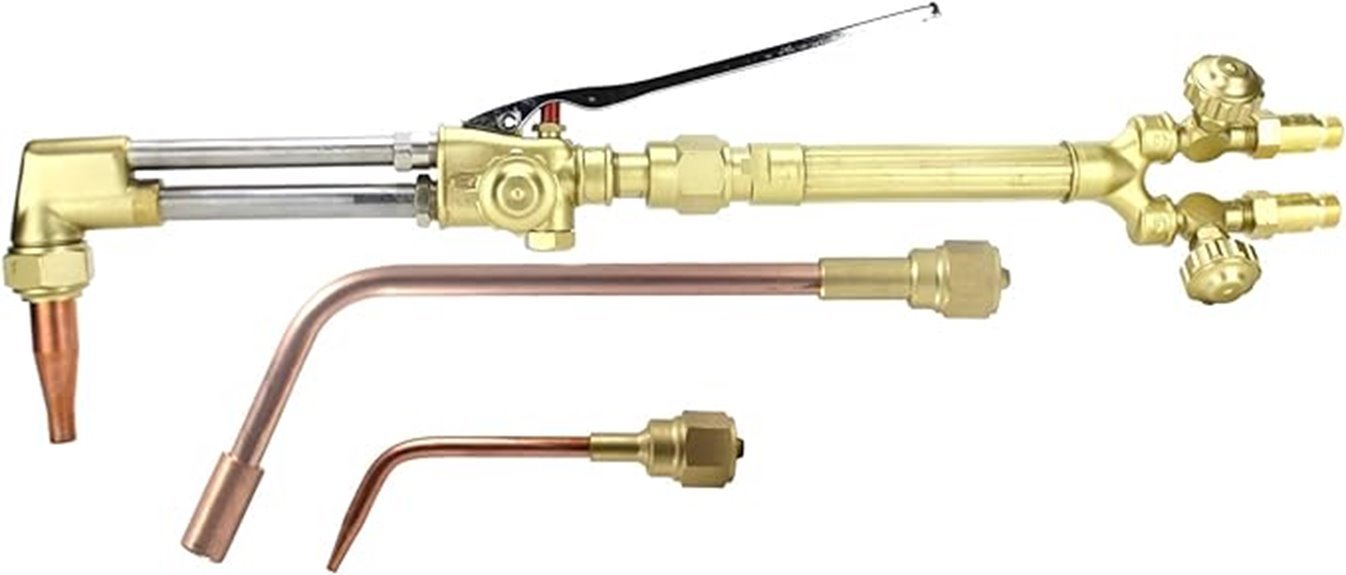
Choosing an oxy-fuel torch can be confusing when one listing offers several fuel types and tip combinations. The SÜA Heavy Duty Oxy-Fuel Torch uses a die-forged brass body, Victor-style Series 300 compatibility, and different cutting, welding, and heating configurations. However, the tips you receive depend on which version you order. This review explains the differences, key specifications, safety requirements, and buying tradeoffs so you can choose the right setup.
Editorial note: This review is based on published product information, manufacturer-related specifications, and safety guidance. It does not claim independent hands-on testing or measured cutting performance.
Quick Verdict
Rating: Recommended with caveats
Best For: Experienced metalworkers, farm maintenance users, repair shops, and hobby fabricators who need a Victor-style oxy-fuel torch.
Bottom Line: The SÜA torch offers brass construction, several tip configurations, and built-in check valves on complete torch assemblies. Its biggest drawback is the need to select the correct fuel-gas version and supply compatible regulators, hoses, and other safety equipment separately.
Key Specifications
The following details describe the SÜA Victor-style torch family and the specific acetylene configuration associated with the Amazon link. Package contents can differ between variants.
| Specification | Detail |
|---|---|
| Brand | SÜA |
| Product Type | Heavy-duty oxy-fuel cutting, welding, and heating torch family |
| Compatible Series | Victor-style Series 300 replacement equipment |
| Linked ASIN | B07G9R3WQH |
| Linked Configuration | Cutting + Welding + Heating (Acetylene) |
| Body Material | Die-forged brass |
| Assembled Length | 18.5 inches, handle and cutting attachment |
| Listed Item Weight | 4.4 lb on Amazon; another retailer lists 3 lb 6 oz for the assembled torch with tip. Confirm the measurement relevant to your purchase. |
| Acetylene Cutting Tip | 1-101-1 on the linked configuration |
| Welding/Brazing Tip | 1-W on the linked configuration |
| Acetylene Heating Tip | 4-MFA rosebud on the linked configuration |
| Propane Cutting Tip | 1-GPN-1 on applicable propane configurations |
| Propane Heating Nozzle | 8-MFN rosebud on the propane cutting and heating configuration |
| Tip Compatibility | Large Series 1-101 acetylene and 1-GPN propane cutting tips, with the matching gas setup |
| Check Valves | Listed on complete torch assemblies; not included with handle-only or cutting-attachment-only options |
| Additional Equipment | Compatible cylinders, regulators, hoses, fittings, flashback protection, and PPE |
| Typical Applications | Mild steel cutting, heating, and configuration-dependent welding or brazing |
Before You Buy: The linked Amazon ASIN selects an acetylene cutting, welding, and heating version, not the propane bundle. If you need the 1-GPN-1 propane tip and 8-MFN heating nozzle, select the correct propane configuration and confirm the package contents before ordering. Do not assume fuel-specific tips are interchangeable.
What Is the SÜA Heavy Duty Oxy-Fuel Torch?
The SÜA Heavy Duty Oxy-Fuel Torch is a Victor-style Series 300 replacement torch system designed for metal cutting, heating, and certain welding or brazing tasks. It uses oxygen mixed with a compatible fuel gas and requires the correct tips and gas-control equipment for each application.
Unlike an electric MIG welder, this torch relies on a controlled gas flame. That makes it useful for tasks such as cutting mild steel, heating metal before bending, or working on seized metal components. The available processes depend on the selected torch configuration.
The product family includes complete torch assemblies and individual replacement components. This flexibility can help if you already own compatible equipment. However, a handle-only purchase will not give you the same capabilities as a full cutting, welding, and heating package.
Who Should Buy It?
Best For
- Farm and equipment repair: You need a full-size oxy-fuel torch for cutting or heating metal parts.
- Home workshops and fabrication: You want a Victor-style torch with several compatible tip options.
- Experienced metalworkers: You already have compatible gas equipment and understand oxy-fuel safety procedures.
- Replacement equipment buyers: You need an appropriate torch assembly or component for an existing system.
Who Should Skip It?
Skip If
- You need a complete beginner outfit with regulators, hoses, and required protective equipment already included.
- You only need a compact torch for electronics or small soldering tasks.
- You cannot confirm that its fuel-gas requirements, tips, and fittings match your existing setup.
- You need documented industrial-duty performance, service support, or warranty coverage without checking the manufacturer first.
Key Features
Die-Forged Brass Body
The SÜA torch uses a die-forged brass construction. Brass is commonly used in oxy-fuel equipment because it offers corrosion resistance and suits precision gas-control components.
The metal construction makes this a more substantial tool than a compact hobby torch. However, brass alone does not prove that every valve, seal, or fitting will withstand years of professional use. Those parts still need proper inspection and maintenance.
18.5-Inch Assembled Length and Handle Design
The assembled torch handle and cutting attachment measure about 18.5 inches. This provides useful reach when cutting or heating metal in a workshop.
The added length may help you position the flame around larger workpieces. It does not replace heat protection or safe working distance from sparks and hot material.
Amazon lists an item weight of 4.4 lb, while another seller describes the assembled unit with a cutting tip as 3 lb 6 oz. These figures may represent different measurement bases. If torch weight affects your comfort, confirm the actual working weight with the seller.
Built-In Check Valves
The complete SÜA torch configurations are listed with built-in check valves. These devices help prevent reverse gas flow between the fuel and oxygen sides of the system.
However, a check valve is not the same as a flashback arrestor. A flashback arrestor is designed to prevent a flame from traveling into the gas supply system.
Use suitable flashback protection as required by your equipment instructions and applicable safety standards. Do not assume that built-in check valves make the rest of the gas setup safe.
Victor-Style Tip Compatibility
The SÜA torch family supports large Victor-style cutting-tip designs, including Series 1-101 for acetylene and 1-GPN for propane.
This gives you choices for different jobs. You can select cutting tips suited to the material and required gas system, provided the dimensions and fittings match.
Compatibility is not guaranteed solely by a familiar series number. Check the tip seat, physical dimensions, gas type, and manufacturer guidance before purchasing replacements.
Included Cutting, Welding, and Heating Tips
The package contents are one of the most important buying differences in this product family.
| Configuration | Listed Contents |
|---|---|
| Cutting (Acetylene) | Torch assembly with check valves and 1-101-1 cutting tip |
| Cutting + Welding (Acetylene) | Torch assembly, 1-101-1 cutting tip, and 1-W welding/brazing tip |
| Cutting + Welding + Heating (Acetylene) | Torch assembly, 1-101-1 cutting tip, 1-W welding/brazing tip, and 4-MFA heating tip. This is the linked configuration. |
| Cutting (Propane) | Torch assembly with check valves and 1-GPN-1 propane cutting tip |
| Cutting + Heating (Propane) | Torch assembly, 1-GPN-1 cutting tip, and 8-MFN heating nozzle |
| Torch Handle Only | Handle only; cutting attachment, tips, and check valves are not listed as included |
| Cutting Attachment Only | Attachment only; handle and other accessories must be sourced separately |
For acetylene cutting, the 1-101-1 tip is described by a retailer as capable of cutting up to 3/4-inch mild steel under suitable conditions. This is a published product claim, not a measured result from this review.
The propane cutting and heating version uses a different combination: the 1-GPN-1 cutting tip and 8-MFN rosebud nozzle. That version may fit you better if your existing system uses propane rather than acetylene.
Pro Tip: Before buying, write down your fuel gas, existing hose connection type, intended metal thickness, and the operations you need. Compare those details with the selected Amazon variation and the manufacturer’s tip specifications. This helps prevent buying the wrong package.
How It Performs in Real Use
The following examples describe applications supported by the listed configurations. Actual performance depends on equipment condition, gas supply, tip selection, and operator skill.
1. Cutting Mild Steel in a Workshop
With a compatible cutting tip and gas system, this torch can be used for mild steel cutting during fabrication or repair work.
The listed 1-101-1 acetylene tip has a published cutting-capacity claim of up to 3/4 inch mild steel. However, the maximum cutting thickness alone does not tell you how clean or fast the result will be.
Tip condition, oxygen supply, metal surface condition, and correct operating technique all affect cutting quality. Follow the manufacturer’s cutting chart rather than relying on a general capacity claim.
2. Heating Seized Metal Components
Heating nozzles can be useful when you need to apply heat to metal parts during repair work. Common examples include seized fasteners, brackets, and components that need controlled heating before further work.
The linked acetylene package lists a 4-MFA rosebud heating tip. The propane cutting and heating version lists an 8-MFN heating nozzle instead.
Both configurations require an adequate gas supply for the selected nozzle. Heating large parts can demand more gas flow than small cutting operations.
Avoid heating components that contain fuel, pressure, sealed cavities, or heat-sensitive materials unless an appropriate professional procedure has been established.
3. Welding and Brazing Work
The linked acetylene cutting, welding, and heating configuration includes a 1-W welding/brazing tip. This makes it more versatile than the cutting-only version.
For suitable metal joints, this tip can support oxy-fuel welding or brazing when you use the correct filler material and follow the proper process.
Joint preparation, material thickness, and the correct flame characteristics still matter. For small, precise jobs, a different torch size or process may give you better control.
4. Farm and Equipment Maintenance
A full-size oxy-fuel torch can be useful in maintenance shops where you need both cutting and heating capability.
The SÜA design may suit users who already have compatible gas cylinders, regulators, and hoses. You can select a configuration that matches the type of work you do most often.
However, this is not a compact, self-contained field repair tool. The complete gas equipment requires secure transport, safe storage, and proper setup. It is better suited to prepared work areas than unplanned repairs without adequate safety controls.
Setup Tips Before First Use
Correct component selection is essential for both performance and safety. Before using this torch, review the instructions for the complete gas system rather than the torch body alone.
Confirm the Fuel-Gas Configuration
Check whether your selected package is intended for acetylene or propane. The linked ASIN uses acetylene-specific cutting, welding, and heating tips.
Never assume you can switch fuel types by changing only one component. The complete setup must be approved for the selected gas.
Check Your Existing Connections
The torch is described as Victor-style Series 300 compatible, but that does not mean every hose, fitting, or accessory will fit automatically.
Compare the connection specifications with your equipment manual. If you are unsure, ask a qualified supplier or technician to verify compatibility before connecting the system.
Inspect the Equipment
Inspect the torch, fittings, valves, hoses, and accessories for visible damage or wear before use. Damaged or leaking equipment should be removed from service.
Have a qualified person address questionable fittings or gas-control components. Never try to repair an unknown gas leak by improvising parts or sealants.
Follow the Correct Operating Instructions
Use the fuel-specific manufacturer’s guidance for regulator selection, safe operating limits, lighting, shutdown, and maintenance.
The correct gas pressures and operating procedures vary by tip and fuel type. A generic setting should not replace the approved tip chart or equipment instructions.
Safety Features and Best Practices
Oxy-fuel work involves oxygen, flammable gas, open flame, and very hot metal. Safe operation depends on the whole system, not just the torch.
Check Valves and Flashback Protection
Complete SÜA torch assemblies are listed with check valves. These help reduce reverse gas flow, but they do not replace appropriate flashback protection.
Select flashback arrestors approved for your fuel gas and system. Follow the equipment manufacturer’s instructions and applicable workplace requirements for their installation.
Regulators, Hoses, and Cylinders
Use regulators, hoses, connections, and cylinders designed for your chosen gas. Keep oxygen equipment free from oil and grease.
Secure cylinders properly and protect them from impacts, heat, sparks, and falling objects. Do not operate a system with damaged or leaking components.
For workplace safety requirements, see the OSHA oxygen-fuel gas welding and cutting standard.
Personal Protective Equipment
Use suitable eye and face protection with the correct filter shade for oxy-fuel work. Wear flame-resistant clothing, suitable gloves, and protective footwear.
Ordinary sunglasses or general-purpose eyewear are not substitutes for properly rated oxy-fuel eye protection. If you also perform arc welding, make sure your welding helmet or protective gear meets the requirements of that process.
Protect nearby people from sparks, flame, fumes, and hot workpieces. Keep the work area clear of flammable materials and use suitable ventilation.
Training and Fire Prevention
New users should receive practical instruction from a qualified trainer before operating oxy-fuel equipment.
Keep appropriate fire protection available, follow site hot-work procedures, and check the surrounding area for hidden combustible materials.
If any component behaves abnormally, stop using the system and follow the manufacturer’s emergency and inspection procedures.
Pros and Cons
Pros
- Die-forged brass construction
- Victor-style Series 300 compatibility
- Separate acetylene and propane configurations
- Complete assemblies include check valves
- Linked acetylene version includes cutting, welding/brazing, and heating tips
Cons
- Different configurations can be easy to confuse
- Regulators, hoses, cylinders, and other safety equipment are not part of the listed torch-only packages
- Connection compatibility, exact working weight, and service support need confirmation before purchase
Is It Worth the Price?
The SÜA Heavy Duty Oxy-Fuel Torch is worth considering if you want a brass Victor-style torch without buying an entire new oxy-fuel outfit. Its configuration choices can offer practical value when your existing gas system is compatible.
The linked acetylene version provides cutting, welding/brazing, and heating tips in one configuration. That may be more convenient than buying those components separately. However, it does not remove the cost of cylinders, regulators, hoses, flashback protection, and suitable PPE.
The listing is best viewed as a replacement or upgrade option rather than an automatic budget choice. Compare the total cost of your required accessories with a complete kit. Also confirm warranty terms, available replacement parts, selected package contents, and the current seller’s return policy before purchasing.
How It Compares to Alternatives
Victor-style complete oxy-fuel kits: These may be better if you need a broader package with regulators, hoses, and other essential equipment. Check the exact components because not every kit includes the same safety accessories.
Harris oxy-fuel equipment: Harris setups are worth comparing when you care about professional equipment options and replacement-part availability. Make sure the tip and connection systems suit your existing equipment.
Forney oxy-fuel kits: These may be worth considering for home workshops that need a packaged starting setup rather than individual torch components.
The SÜA makes the most sense when you already own suitable gas equipment and want a specific Victor-style cutting, welding, or heating configuration. A complete outfit may be simpler if you are building your setup from scratch.
Frequently Asked Questions
What Gas Does the SÜA Heavy Duty Oxy-Fuel Torch Use?
The product family offers both acetylene and propane/LPG configurations, used with oxygen and the correct gas-specific equipment. The Amazon ASIN linked in this review selects the acetylene cutting, welding, and heating configuration. Choose a propane version if that is the fuel your approved system requires.
What Tips Come With the Linked SÜA Torch?
The linked acetylene version lists a 1-101-1 cutting tip, a 1-W welding/brazing tip, and a 4-MFA heating tip. The propane cutting and heating version instead lists a 1-GPN-1 cutting tip and an 8-MFN heating nozzle. Confirm the selected variant before ordering because package contents differ.
Can the SÜA Torch Cut 3/4-Inch Mild Steel?
A retailer lists a cutting capability of up to 3/4 inch mild steel for the 1-101-1 acetylene cutting tip. This is a published capacity claim, not a verified hands-on test. Actual results depend on the correct tip, approved gas supply, metal condition, and operator skill.
Does the SÜA Torch Include Flashback Arrestors?
The complete torch configurations list built-in check valves, but flashback arrestors are separate protective devices. Do not treat check valves as full flashback protection. Use suitable protective equipment according to the manufacturer and applicable safety requirements.
Can You Use Victor Replacement Cutting Tips?
The torch is described as compatible with large Victor-style Series 1-101 acetylene and 1-GPN propane cutting tips. However, the correct series name alone does not guarantee a safe fit. Verify the seating dimensions, connection design, fuel gas, and manufacturer specifications before using another tip.
Can You Use This Torch for Welding or Brazing?
Yes, the linked acetylene cutting, welding, and heating package includes a 1-W welding/brazing tip. You still need the correct filler material, gas system, and operating technique for the workpiece. Do not assume that every cutting-only or propane configuration includes welding capability.
Can It Connect to a Small Propane Camping Cylinder?
Do not assume compatibility with disposable propane camping cylinders. This torch requires an approved oxy-fuel setup with suitable regulators, hoses, connections, and adequate gas flow. Ask the equipment manufacturer or a qualified gas supplier to verify the intended fuel source.
Is the SÜA Heavy Duty Oxy-Fuel Torch Good for Beginners?
It can be considered by a beginner who receives proper training and has access to a correctly specified gas system. However, it is not the simplest choice if you need all components in one package. A suitable complete outfit and qualified instruction may be a better starting point.
The Bottom Line
The SÜA Heavy Duty Oxy-Fuel Torch is worth considering if you want brass construction, Victor-style Series 300 compatibility, and a choice of cutting, welding, or heating configurations. It is best for trained users with compatible equipment, while beginners seeking a ready-to-use outfit should compare complete kits instead. Its main buying risk is choosing the wrong fuel-gas variant, so confirm the exact package and safety requirements before purchase.