Disclosure: As an Amazon Associate, we earn from qualifying purchases. If you click a link on this page and make a purchase, we may receive a small commission at no extra cost to you.
Sanzeus Hardware Cloth Review: 19-Gauge Galvanized Wire Mesh for Gardens, Coops, and Pest Protection
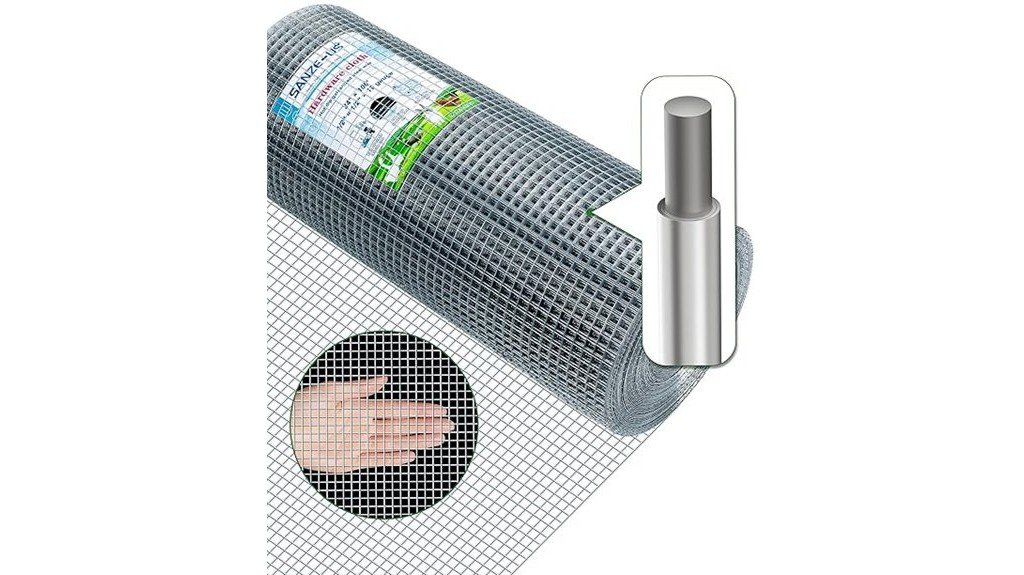
Weak or widely spaced fencing can leave vegetable beds, coop openings, and outdoor enclosures exposed. The Sanzeus Hardware Cloth gives you a welded 19-gauge mesh with 1/2-inch square openings in a 24-inch by 50-foot roll. Its post-weld galvanizing and firm grid make it more suitable for shaped barriers than basic woven chicken wire.
This review explains where the mesh works well, what installation requires, and which limits you should consider before buying. Its practical size and workability suit many home projects, but the 1/2-inch openings and 19-gauge construction are not appropriate for every pest, predator, or structural application.
Quick Verdict
Rating: 8/10
Best For: Gardeners, chicken keepers, and DIYers who need workable 1/2-inch welded mesh for raised beds, coop reinforcement, plant guards, or fence-base barriers.
Bottom Line: The welded 19-gauge grid and double-layer hot-dip galvanizing offer a useful balance of rigidity, corrosion resistance, and cutting flexibility. You still need suitable framing, secure fasteners, safe handling, and a finer or heavier mesh when your project involves tiny pests or strong predators.
| Specification | Detail |
|---|---|
| Brand | Sanzeus |
| Product Type | Welded hardware cloth roll |
| Roll Size | 24 inches wide x 50 feet long |
| Nominal Coverage | Approximately 100 square feet before overlaps, burial, and cutting waste |
| Wire Gauge | 19 gauge |
| Base Material | Black annealed steel wire |
| Mesh Openings | 1/2 inch x 1/2 inch |
| Construction | Welded square grid |
| Coating | Double-layer hot-dip galvanizing after welding |
| Suggested Uses | Coop reinforcement, garden barriers, raised-bed guards, plant cages, fence-base barriers, and light trellises |
| Typical Fasteners | Fencing staples, hog rings, screws with washers, or suitable wire ties |
| Tools Needed | Wire cutters, measuring tape, gloves, eye protection, and tools for your chosen fasteners |
What Is the Sanzeus Hardware Cloth?
The Sanzeus Hardware Cloth is a roll of steel wire welded into a firm square grid. Each opening measures 1/2 inch, while the full roll measures 24 inches wide and 50 feet long. Laid flat without overlaps or waste, those dimensions provide about 100 square feet of mesh.
The wire receives a double-layer hot-dip galvanizing treatment after the grid has been welded. Coating the finished grid also covers the welded intersections, which can be vulnerable areas on untreated steel. The coating can slow corrosion, although cut ends, scratched areas, and sections left in wet soil may still need inspection.
Compared with flexible chicken wire, the welded grid holds a straighter edge and keeps its shape more easily. That rigidity helps when you build flat panels, plant cages, vent covers, or low garden borders. It also means the roll can spring back while you unroll or cut it, so careful handling matters.
Who Should Buy It?
Best For
- Gardeners building 24-inch-high borders, raised-bed guards, or individual plant cages.
- Chicken keepers reinforcing vents, lower wall sections, doors, or perimeter skirts on a properly framed coop.
- DIYers who need a cut-to-size roll for several small outdoor barriers and support projects.
Skip If
- You need mesh fine enough to exclude tiny insects, very small rodents, hatchlings, or similarly small animals.
- Your enclosure faces strong predators or physical loads that call for heavier 16-gauge or 14-gauge wire.
- You need tall freestanding fencing, rigid prefabricated panels, or a decorative vinyl-coated finish.
Before You Buy: A 1/2-inch opening does not make an enclosure fully snake-proof, rodent-proof, or predator-proof. Animal size, ground gaps, doors, corners, roof coverage, fastener spacing, and supporting frames all affect protection.
Material Quality and Durability
The 19-gauge black annealed steel gives the mesh enough stiffness to hold a shaped border while remaining practical to cut with suitable hand tools. It is firmer than lightweight woven wire, but it is not structural fencing. Posts, rails, or a wooden frame must carry the load and keep the mesh under even tension.
Because the wire is welded at each crossing, a cut section generally keeps a more predictable grid shape than woven chicken wire. This helps you align edges with square frames and close gaps around doors or vents. Cut ends remain sharp, however, and exposed welds or damaged coating can become corrosion points over time.
The post-weld galvanized finish is designed for outdoor exposure. It should resist ordinary rain and humidity better than bare steel, but galvanizing does not eliminate maintenance. Sections touching wet soil, manure, fertilizer, or standing water deserve more frequent checks.
Mesh Size and Pest Protection
The 1/2-inch grid is the main buying factor. It is smaller and more rigid than common poultry netting, which can make it useful around raised beds, coop openings, and the base of existing fences. Water, sunlight, and airflow can still pass through the openings.
You should not treat the mesh size as a guarantee against every animal. Very small snakes, young rodents, insects, and animals that can dig under or push through an unsecured edge may still enter. For fine insect exclusion, you need a much smaller opening. For powerful predators, you may need heavier wire, closer framing, stronger fasteners, and complete roof and floor protection.
The roll is only 24 inches wide. That width works well for low barriers, skirts, vents, and plant cages, but taller walls require stacked rows or a different roll size. Every horizontal seam adds fastening work and another area that needs inspection.
Installation and Setup
Measure the complete perimeter or panel area before cutting. Include extra material for overlaps, corners, buried edges, outward-facing aprons, and mistakes. Although the flat roll covers about 100 square feet, your usable coverage will be lower after those allowances.
Unroll the mesh on a flat surface and secure one end before cutting. Use wire cutters designed for the wire thickness, then bend or cap exposed points where people or animals could brush against them. Gloves and eye protection help protect you from sharp wire and spring-back during handling.
Fastener choice depends on the frame. Fencing staples or screws with washers can hold the mesh against wood. Hog rings can join overlapping mesh sections. Place fasteners closely enough to prevent lifted edges, especially around corners, doors, vents, and the bottom of an enclosure.
Pro Tip: Cut a small test section before sizing the whole project. The test helps you check your cutters, fastening method, overlap allowance, and edge finishing without wasting a long section of mesh.
Common Installation Mistakes to Avoid
- Cutting every panel to its exact visible size without leaving material for overlap or fastening.
- Stretching the mesh between widely spaced posts without a firm top, bottom, or side frame.
- Leaving sharp cut ends exposed near animals, children, paths, gates, or garden work areas.
- Relying on above-ground mesh when the target animal can dig beneath an unsecured edge.
- Ignoring gaps around doors, corners, hinges, utility openings, and uneven ground.
- Allowing the roll to remain in constant contact with pooled water or wet soil without inspection.
How It Performs in Real Use
Building or Upgrading a Chicken Coop
The welded grid works best when you attach it firmly to a wooden or metal frame. Its 1/2-inch openings can provide closer coverage than common chicken wire around vents, lower wall areas, and doors. The 24-inch width is also convenient for perimeter skirts or short lower panels.
It should not be the only part of a predator-control plan. The roof, floor, door latches, corners, seams, and buried or outward-facing edges must also be secure. Larger or determined predators may justify a heavier gauge and stronger framing.
Protecting Raised Beds and Vegetable Gardens
You can shape the mesh into a low border, rectangular cage, or individual plant guard. The welded squares keep the barrier more upright than soft netting, while the openings allow rain and irrigation water to pass. Stakes or a frame help prevent leaning and gaps along uneven ground.
The mesh will not exclude small insects, and very small animals may fit through a 1/2-inch opening. Check the likely pest before choosing the opening size. A removable framed panel may also be easier to manage than permanently fastening the mesh around plants you frequently harvest.
Adding a Barrier Along an Existing Fence
The 24-inch width can cover the lower section of a fence where larger openings allow animals through. Overlap adjoining pieces and secure the top and bottom edges so animals cannot push behind the added layer. On sloped ground, shorter stepped sections usually produce fewer gaps than one loosely fitted strip.
For digging animals, you can extend the material below grade or form an outward-facing ground apron. The suitable depth or apron width depends on the animal, soil, drainage, and local conditions. Inspect any buried section because constant moisture can shorten coating life.
Making Plant Supports and Small Project Panels
The square grid can support climbing plants or form guards around young shrubs. You can also cut it into small vent covers, compost-bin panels, or tool-area dividers. Its stiffness helps these pieces hold shape, but every cut panel needs safe edges and firm attachment.
Care, Inspection, and Long-Term Use
Inspect outdoor installations several times a year and after severe weather or animal activity. Look for loose fasteners, bent sections, separated welds, exposed sharp points, soil gaps, and areas where the coating has worn away. Repairing a small opening early is easier than rebuilding a damaged panel.
Remove trapped leaves, manure, damp bedding, or soil from sections where moisture can remain against the steel. When cleaning a coop installation, avoid bending the wire or scraping the coating more than necessary. Let the area drain and dry instead of leaving the lower edge in pooled water.
If you cut the roll into stored sections, flatten sharp points, label each piece, and keep them dry. Roll longer leftovers around a firm core and tie them securely so they do not spring open during storage.
Installation Safety
Wire mesh can produce sharp ends and may recoil as you open the roll. Wear sturdy gloves, eye protection, long sleeves, and closed footwear while cutting or tensioning it. Keep children and animals away from the work area until every edge and offcut has been collected.
Do not leave cut points facing into a coop, walkway, gate opening, or garden work zone. Fold exposed ends away from contact areas, cover them with suitable trim, or sandwich them beneath a frame member. Use fasteners that suit the frame and outdoor conditions.
This product is a physical barrier, not a load-bearing structure. Do not use it where failure could allow a person or large animal to fall, and do not rely on it as a guardrail, climbing barrier, or structural support.
Pros and Cons
Pros
- Welded 19-gauge grid holds a straighter shape than lightweight woven chicken wire.
- Double-layer hot-dip galvanizing after welding covers both wire and welded intersections.
- 1/2-inch openings suit many raised-bed, coop, plant-guard, and fence-base projects.
- The 24-inch x 50-foot roll provides about 100 square feet before installation allowances.
- You can cut and form it for panels, cages, borders, skirts, and other custom projects.
Cons
- The 1/2-inch openings cannot exclude tiny insects, very small rodents, or every snake.
- The 19-gauge wire may be too light for high-pressure predator barriers or structural applications.
- The 24-inch width creates extra seams when you need a taller enclosure.
Is It Worth the Price?
The Sanzeus Hardware Cloth belongs in the mid-range category for home garden and small-animal projects. You get a welded grid, 1/2-inch openings, post-weld galvanizing, and a 50-foot roll that can cover several small jobs or one medium barrier.
It offers the best value when you need more shape retention than woven chicken wire but do not require the strength of heavy 14-gauge or 16-gauge fencing. Gardeners and coop owners who already have cutters, fasteners, and framing materials can use the roll across several applications.
It is not the best fit if your priority is fine insect exclusion, maximum predator resistance, or tall fencing with few seams. In those cases, paying more for smaller openings, heavier wire, a wider roll, or rigid panels may reduce installation work and improve protection.
How It Compares to Alternatives
Standard woven chicken wire is usually easier to bend around curves, but it can sag and deform more readily. The Sanzeus welded grid makes more sense when you want flatter panels, straighter borders, or a firm plant cage.
A 1/4-inch hardware cloth is better for smaller openings, while 16-gauge or 14-gauge mesh offers more resistance to force. Those alternatives are typically harder to cut and shape. The Sanzeus 19-gauge roll is the balanced option when workability and general home-project coverage matter more than maximum strength.
Frequently Asked Questions
Is 1/2-inch hardware cloth enough to keep snakes out?
It can block snakes that are larger than the openings, but it cannot guarantee exclusion of every species or juvenile. Ground gaps, seams, corners, doors, vegetation, and the top of the barrier also affect performance.
Can this replace chicken wire on a coop?
It can replace or reinforce chicken wire in areas where you want a firmer welded grid and smaller openings. Your coop still needs secure framing, doors, latches, roof coverage, floor protection, and a gauge suited to the predators in your area.
How much area does one roll cover?
The 24-inch x 50-foot roll provides about 100 square feet when laid flat. Actual project coverage is lower after you allow for overlaps, corners, buried sections, trimming, and cutting waste.
What tools do you need to install it?
You will normally need suitable wire cutters, a tape measure, gloves, eye protection, and tools for your selected fasteners. Fencing staples, hog rings, wire ties, or screws with washers may work depending on the frame.
Can you bury the bottom edge?
You can extend the mesh below ground or shape an outward-facing apron when digging animals are a concern. Choose the depth or apron size for the target animal and soil conditions, then inspect buried areas for corrosion and gaps.
Will the galvanized wire rust?
The galvanized coating is intended to slow corrosion, including at the welded joints. Cut ends, scratches, manure, fertilizer, wet soil, and standing water can still shorten service life, so periodic inspection remains necessary.
Can you use it around vegetable beds?
The mesh can serve as a perimeter barrier or plant guard around vegetable beds. Keep sharp edges away from working areas, wash your hands after handling the wire, and follow any care or safety directions supplied with the product.
Who should choose a different mesh?
Choose finer mesh for insects or very small animals, and choose heavier wire for powerful predators or high-pressure areas. A wider roll or rigid panel may also be better when you need tall coverage with fewer seams.
The Bottom Line
The Sanzeus Hardware Cloth earns an 8/10 rating for gardeners, chicken keepers, and DIYers who need a workable 19-gauge welded mesh for general outdoor barriers and reinforcement. Its main strengths are the 1/2-inch welded grid, post-weld galvanizing, and useful 24-inch x 50-foot roll size.
You should skip it when your project requires fine insect exclusion, heavy predator resistance, structural strength, or tall panels with minimal seams. Installed on a suitable frame with secure edges and regular inspection, it provides a practical middle ground between flexible chicken wire and heavier hardware cloth.
Ready to Buy?
Check the latest product details, size, and availability before you decide.