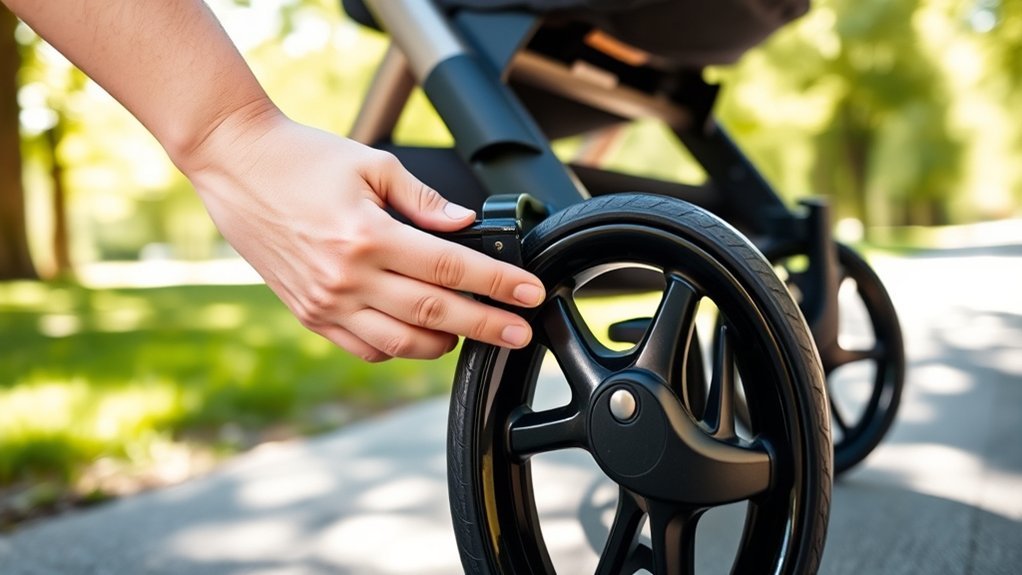
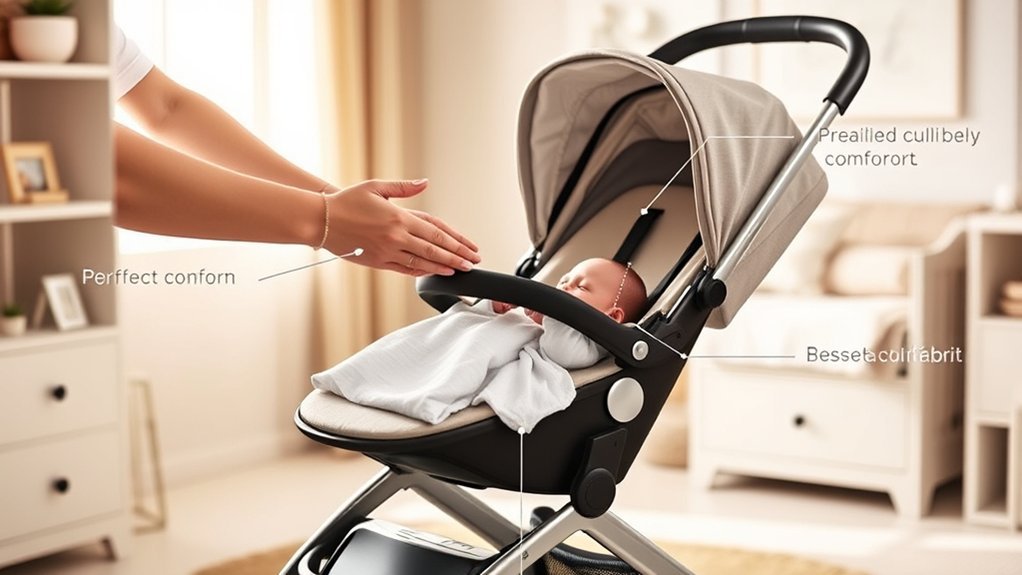
To keep your baby comfy during stroller naps, choose a model with a fully reclining seat and a five-point harness. Make sure the stroller offers good ventilation and avoid covering it with blankets. Supervise your baby closely and look for signs they’re getting sleepy—try to limit naps to 90 minutes to prevent overtiredness. With the right setup, you can adapt routines easily. There’s more useful information to help you enhance your stroller napping experience.
Understanding Baby Sleep Needs
Understanding your baby’s sleep needs is essential for their growth and well-being. Babies typically require 14-17 hours of sleep daily, with naps playing a key role in meeting those needs.
Understanding your baby’s sleep needs is crucial; they need 14-17 hours of sleep daily, with naps being essential for growth.
Each sleep cycle lasts about 45-60 minutes, so timing your baby’s nap duration is vital for quality rest. Pay attention to their sleepy cues and aim to create a consistent routine that aligns with their natural patterns.
Prioritizing safe sleep practices—ensuring they sleep alone, on their backs, in a crib or bassinet—provides a secure environment for napping.
With these strategies, you’ll empower your baby to get the restorative sleep they need while you navigate daily activities, giving you both a sense of freedom and ease.
Adapting to Naps On-the-Go

As you navigate daily life with your little one, incorporating stroller naps can be a game changer. They allow you to stick to napping routines while still enjoying errands or outdoor activities. The soothing motion of the stroller mimics the womb, helping your baby drift off more easily. Fresh air can boost their mood and improve sleep quality, too.
| Stroller Accessories | Benefits | Tips |
|---|---|---|
| Reclining seat | Guarantees comfort | Adjust for maximum support |
| Sunshade | Provides shade | Use to protect from sun rays |
| Soft blanket | Adds coziness | Keep it lightweight and breathable |
Stroller Sleeping: Safety First
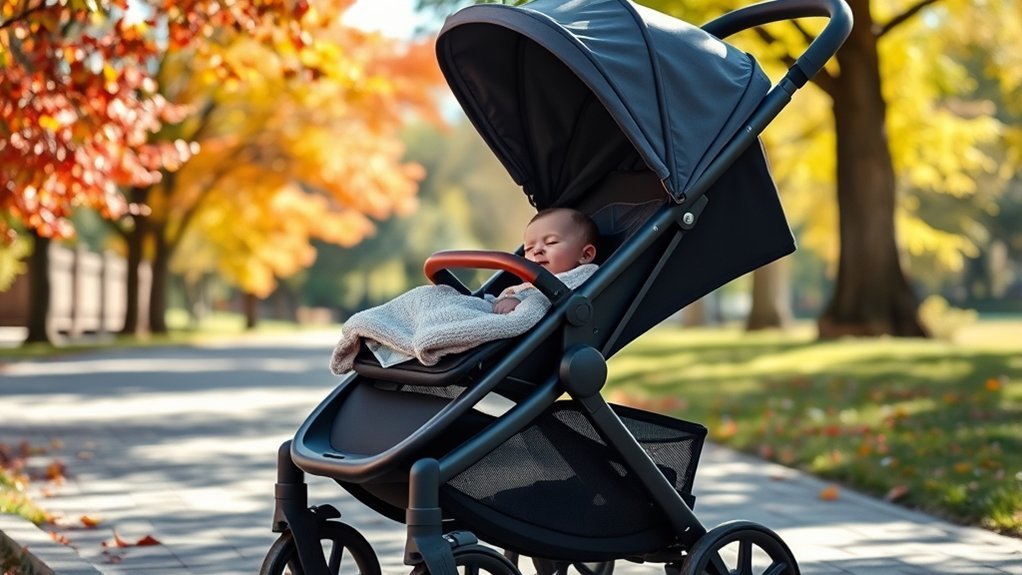
When you’re out and about with your baby, keeping safety in mind during stroller naps is essential. Always supervise your little one, as constant monitoring prevents potential risks.
Choose strollers with features that offer a flat or nearly flat recline—these ideal angles help reduce the risk of positional asphyxiation and support proper head and neck positioning. Dress your baby appropriately for the weather, avoiding over-bundling to prevent overheating.
Always make certain the five-point harness is securely fastened to keep your baby safe and prevent slipping. Finally, never drape blankets over the stroller, as this can obstruct ventilation and visibility, increasing the risk of suffocation.
Prioritizing safety allows you to enjoy those precious moments of freedom with peace of mind.
Choosing the Right Stroller
Finding the right stroller can make all the difference for naps on the go. Look for stroller features that prioritize your baby’s comfort and safety.
A fully reclining seat is essential for providing a safe position for newborns and infants, allowing them to sleep soundly. Don’t forget a sunshade or canopy to protect your little one from harmful UV rays during outdoor naps.
A five-point harness system secures your baby, preventing any shifts that could lead to asphyxiation. Smooth suspension systems help create a gentle, soothing motion, making it easier for your baby to drift off.
Finally, consider strollers with accessories like a bassinet attachment for added infant support, ensuring a cozy nap experience wherever you are.
Ventilation and Comfort
When your baby naps in the stroller, ensuring proper airflow is essential for their comfort and safety.
Avoid covering the stroller with blankets, as this can block ventilation and lead to overheating.
Instead, dress your little one appropriately for the weather to keep them cozy without over-bundling.
Ensure Proper Airflow
To guarantee your baby stays comfortable during naps in the stroller, it’s essential to prioritize proper airflow.
Start by choosing a stroller designed with mesh panels or breathable fabric, which enhances ventilation. Always adjust the canopy to provide shade while allowing for adequate airflow around your little one.
Avoid draping blankets over the stroller, as this can restrict airflow and lead to overheating. Regularly check your baby’s temperature to ascertain they’re comfortable, especially on warmer days.
Position the stroller to dodge direct sunlight and catch a gentle breeze, fostering a cozy sleeping environment.
Dress Appropriately for Weather
How can you guarantee your baby stays comfortable during stroller naps, no matter the weather?
Start by using layering techniques that allow you to easily adapt to changing temperatures. Dress your little one in breathable fabrics like cotton to promote ventilation, especially on warm days.
In colder conditions, opt for a cozy, insulated blanket or sleeping bag designed for strollers—this keeps your baby warm without excessive bundling. Remember, avoid overdressing; a good rule is to add one extra layer compared to what you’d wear.
Always monitor your baby for signs of discomfort or overheating, like sweating or flushed skin, and adjust their clothing as needed. This way, you make certain your baby naps peacefully, no matter the weather.
Harness Safety
Guaranteeing your baby’s safety during stroller naps is essential, and a reliable five-point harness system plays a key role in that. Always use this system to minimize the risk of falls or injuries. Make certain the harness is snug but not too tight, allowing for some movement while keeping your baby secure.
| Action | Frequency | Importance |
|---|---|---|
| Harness Adjustments | As baby grows | Maintains secure fit |
| Safety Checks | Before each use | Guarantees proper function |
| Supervision | Constantly while napping | Prevents unsafe positions |
Regularly check for wear and tear, and supervise closely to guarantee your baby naps safely. Your vigilance guarantees peace of mind for both you and your little one.
The Pros and Cons of Stroller Naps
Stroller naps can be a game-changer for your daily routine, giving you the flexibility to run errands or enjoy some fresh air while your baby sleeps.
However, it’s important to reflect on the quality of sleep your little one gets in the stroller and the potential safety risks involved.
Balancing convenience with these concerns can help you make the best choice for both you and your baby.
Convenience and Flexibility
Napping on the go can be a game changer for busy parents. Stroller naps offer incredible convenience and flexibility, allowing you to keep up with daily routines while ensuring your little one gets the rest they need.
Here are three key benefits:
- Routine Maintenance: You can run errands without disrupting your baby’s sleep schedule.
- Soothing Motion: The gentle movement mimics the womb, making it easier for your baby to drift off.
- Outdoor Air Exposure: Stroller naps allow for outdoor time, which can be invigorating for both of you.
However, be mindful of stroller features and safety.
Overreliance on stroller naps can impact nap duration and disrupt established crib habits.
Balancing convenience with quality is essential for your baby’s well-being.
Sleep Quality Concerns
While stroller naps can be a lifesaver for busy parents, it’s vital to reflect on the potential impact on your baby’s sleep quality. Stroller naps provide soothing motion but may disrupt sleep cycles, leading to shorter naps and increased crankiness factors.
| Pros | Cons |
|---|---|
| Convenient for outings | Lower sleep quality |
| Mimics womb motion | Potential for crankiness |
| Easy to maintain routine | Risk of positional issues |
Limiting stroller naps is important to prevent overreliance and guarantee your baby maintains healthy crib sleeping habits. Remember, stroller naps should complement, not replace, safe sleep environments, especially for infants under six months who need flat surfaces to support their airways.
Safety Considerations
Guaranteeing your baby’s safety during stroller naps is essential, especially since improper positioning can lead to serious risks like positional asphyxiation.
To keep your little one safe and comfortable, consider these key factors:
- Choose the Right Stroller Features: Look for a stroller that offers a flat or nearly flat recline to support a safe sleep position for newborns.
- Always Supervise Naps: Keep a watchful eye on your baby while they nap in the stroller to guarantee they’re comfortable and safe.
- Limit Stroller Naps: While convenient, over-reliance on stroller naps can disrupt established crib habits, impacting overall sleep quality.
Tips for Safe and Comfortable Stroller Naps
Creating a safe and comfortable environment for stroller naps is essential for both your baby’s well-being and your peace of mind.
Always supervise your little one during these naps, checking their position to avoid any risks. Use a stroller that reclines flat or nearly flat, especially for newborns, to support their developing neck and head control.
Limit nap duration to 90 minutes or 2 hours, then transfer your baby to a crib for quality sleep. Avoid draping blankets over the stroller, ensuring ventilation and visibility.
Consider stroller accessories like bassinet attachments, which provide a secure sleeping space for younger infants.
With these tips, you can enjoy your outings while keeping your baby safe and comfortable.
Babywearing for Naps on the Go
Babywearing can be a game-changer for nap time on the go, creating a cozy space that mimics your warmth and heartbeat to help soothe your baby to sleep.
By following safe babywearing practices like the T.I.C.K.S. guidelines, you can guarantee both comfort and security while keeping your little one close.
Plus, the gentle movement and familiar sounds around you can make it easier for your baby to drift off, even in busy environments.
Benefits of Babywearing
When you choose to wear your baby, you’re not only fostering a strong bond but also creating an ideal environment for naps on the go.
Here are some key babywearing benefits that can transform your experience:
- Comfort and Security: Your baby feels your warmth and heartbeat, promoting better sleep wherever you are.
- Soothing Motion: The gentle sway mimics womb sensations, making it easier for your little one to drift off.
- Hands-Free Convenience: You can go about your daily activities while keeping your baby close, encouraging napping in different settings.
Safe Babywearing Practices
As you embrace the benefits of babywearing, it’s important to prioritize safety for both you and your little one.
Follow the T.I.C.K.S. guidelines: guarantee your baby is Tight, In view at all times, Close enough to kiss, with their chin off their chest, and a Supported back.
These babywearing techniques create a comforting environment for naps on the go, allowing your baby to feel secure.
Always remain awake while your baby sleeps in the carrier to monitor their breathing and comfort.
Experiment with various movement levels; some babies enjoy gentle sways, while others might prefer more active motion.
Practicing babywearing at home builds your confidence and helps your baby adapt, making outings smoother and more enjoyable.
Managing Sleep Transitions After Stroller Naps
Managing sleep shifts after stroller naps can be challenging, but a little planning makes it easier. Here are three tips to help you navigate those changes:
Navigating sleep transitions after stroller naps can be tricky, but with some planning, it’s manageable.
- Recognize Transition Cues: After a stroller nap, watch for signs your baby is sleepy. If they seem drowsy, it’s time to shift back to their crib for a smooth nap extension.
- Adjust the Schedule: For naps lasting 30 minutes or less, wake your baby and add 10-45 minutes to their wake window to avoid overtiredness.
- Use a Travel Sound Machine: When moving from the stroller to the crib, this can help your baby feel secure in a new sleep environment.
With consistent routines, you can empower your baby to adapt effortlessly!
Frequently Asked Questions
Can I Use a Stroller for My Infant’s Naps Every Day?
Yes, you can use a stroller for your infant’s naps daily. Just guarantee proper stroller safety by securing them well and avoiding long naps. Balance stroller time with safe sleep practices for their overall well-being.
How Do I Prevent My Baby From Waking up During Stroller Naps?
To prevent your baby from waking during stroller naps, create a calm, cozy environment. Use white noise to drown out disturbances and a stroller shade to block bright sunlight. These simple strategies support serene snoozing!
What Age Is Appropriate for Stroller Naps?
Stroller naps are great for babies around 3 to 4 months old, when they can hold their head up. Just guarantee stroller safety and use napping techniques, like swaddling and white noise, for better sleep.
Are There Any Specific Stroller Brands Recommended for Napping?
When you’re searching for a stroller that’s a cozy haven for naps, consider brands like Baby Jogger or Uppababy. Look for adjustable recline, travel convenience, and ample sunshade to guarantee peaceful sleep on the go.
How Long Should My Baby Nap in the Stroller?
Your baby should nap in the stroller for about 30 to 90 minutes, depending on their age and stroller comfort. Keep an eye on them to guarantee they’re getting the restful sleep they need.
Conclusion
In the whirlwind of parenthood, finding ways for your little one to nap on the go can feel like catching clouds. By understanding their sleep needs and ensuring their comfort and safety, you can turn stroller rides into serene slumbers. Embrace babywearing as an alternative, and remember that flexibility is key. With a few thoughtful strategies, you can navigate the busy streets of life while nurturing your child’s rest, keeping their dreams as bright as the sun shining above.