
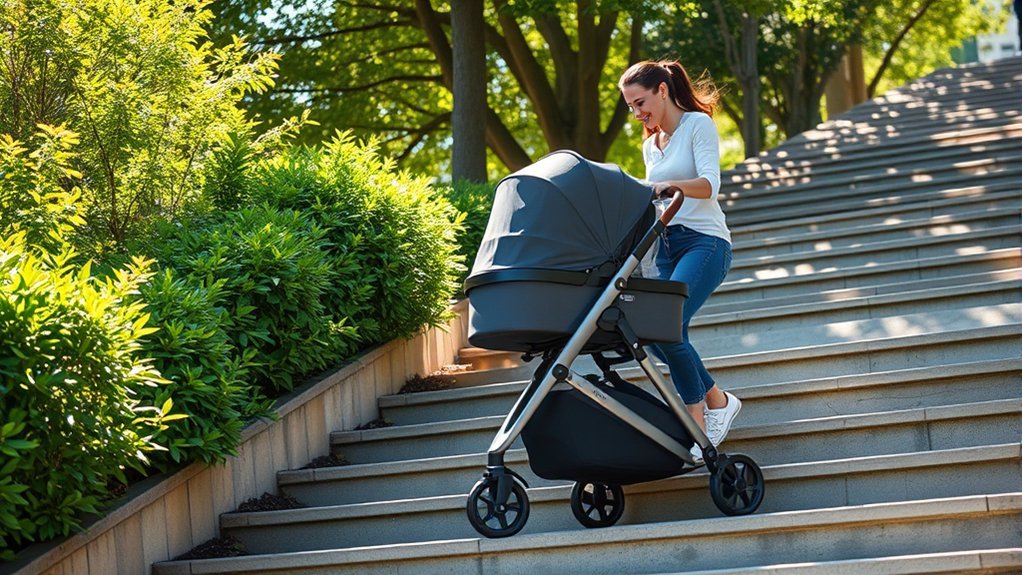
Navigating stairs with a stroller presents significant safety challenges for parents and caregivers. According to guidelines from the U.S. Consumer Product Safety Commission (CPSC), placing an occupied stroller on stairs or escalators creates severe tipping and fall risks. The safest strategy involves transferring your baby to an ergonomic baby carrier, folding your lightweight stroller, and handling each component separately. Below, discover essential safety protocols, lightweight gear choices, and step-by-step techniques for stair navigation.
Quick Answer
To safely navigate stairs with a stroller, never transport a child inside a stroller on stairs or escalators. Transfer your child into an ergonomic baby carrier first, engage the stroller’s wheel brakes, fold the frame, and carry the empty stroller using the handrail for support. If the stroller cannot be folded, seek assistance from another adult to carry the empty frame.
Key Takeaways
- Never Keep Children in Strollers on Stairs: CPSC and AAP standards prohibit rolling or lifting an occupied stroller on stairways.
- Use an Ergonomic Carrier: Transfer your baby to a hands-free front carrier prior to approaching any staircase.
- Invest in Ultra-Lightweight Gear: Strollers weighing under 15 lbs with compact folding mechanisms simplify solo carrying.
- Check Accessibility First: Always search for elevators or ramps before attempting stair navigation.
At a Glance
| Time Required | 2–5 minutes per staircase |
| Difficulty | Moderate (requires preparation and caution) |
| Tools Needed | Ergonomic baby carrier, lightweight stroller (under 15 lbs) |
| Safety Compliance | CPSC & AAP Child Safety Guidelines |
Warning: Never attempt to bump, bounce, or roll a stroller on stairs or escalators while a child is sitting inside. Doing so can cause structural failure, wheel disengagement, or loss of balance, leading to severe falls and head injuries.
Invest in a Good Baby Carrier
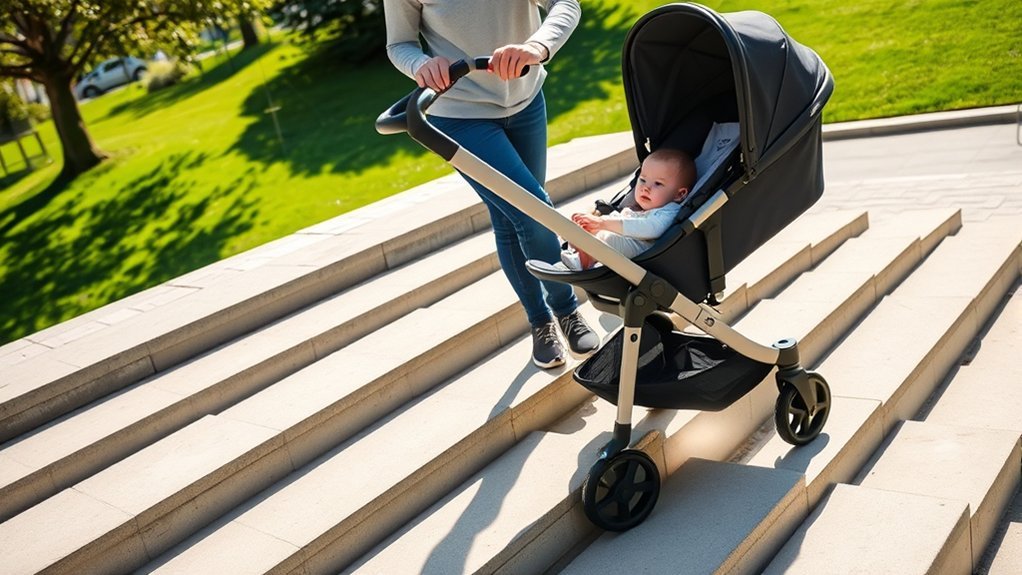
When navigating multi-level environments, investing in a high-quality baby carrier provides unmatched safety and convenience. Using an ergonomic carrier allows you to move hands-free while maintaining complete physical control over your body on staircases.
Structured front carriers support your infant’s spine and hips in a natural ‘M’ position while keeping your balance centered over your feet. According to the American Academy of Pediatrics (AAP), holding your baby close to your chest reduces physical strain and minimizes fall risks in tight or crowded urban spaces.
“Using an ergonomic baby carrier keeps your center of gravity stable, leaving your hands free to hold handrails and manage equipment safely on stairs.”
By securing your baby in a carrier prior to reaching stairs, you eliminate the temptation to maneuver an occupied stroller up or down steps.
Carry One at a Time
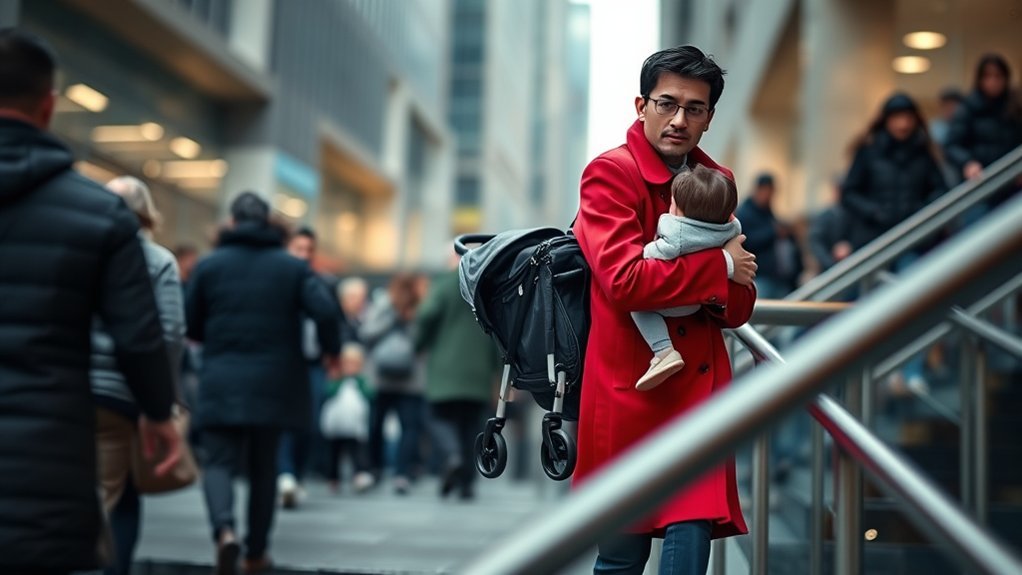
When managing both a baby and equipment on stairways, always handle your child and your stroller separately.
Dividing tasks into distinct trips ensures you never compromise your balance or overburden your grip while ascending or descending steps.
Prioritize Safety First
Always secure your baby before handling your stroller frame. If you are in a secure home or apartment setting, place your baby in a crib, playpen, or carrier first. Never leave a child unattended near the top of an open staircase.
Take deliberate, measured steps. Avoid carrying heavy diaper bags, groceries, and strollers simultaneously. Making separate, focused trips guarantees full control over your foot placement and balance.
Workout Benefit Included
Making separate trips for your gear provides a practical physical benefit. Controlled stair climbing engages core stability muscles, legs, and cardiovascular endurance without compromising safety.
- Focus on foot placement and grip the handrail securely on every trip.
- Keep your child safely secured in a carrier or playpen while moving gear.
- Maintain a calm, measured pace rather than rushing up or down steps.
- Build functional leg strength through controlled step movements.
- Practice situational awareness to identify loose treads or clutter on stairs.
Pro Tip: When traveling alone in subway stations or public buildings, strap your baby into a front carrier before leaving home. This keeps your hands completely free to fold and shoulder your stroller whenever you encounter unexpected staircases.
Invest in a Super Lightweight Stroller

Selecting an ultra-lightweight travel stroller simplifies urban transit and stair navigation. Heavy full-size strollers can exceed 30 pounds, making them dangerous to carry on steep or narrow staircases.
Compact strollers like the BABYZEN YOYO2 (weighing ~13.6 lbs) and the GB Pockit+ (weighing ~10.6 lbs) fold rapidly into small packages. Many models feature integrated carry straps, allowing you to sling the folded frame over your shoulder like a tote bag while holding the staircase handrail with your free hand.
Verify that any stroller you purchase complies with standard safety requirements (ASTM F833 standards), featuring reliable auto-lock latches that prevent the frame from unfolding during transport.
Go One Step at a Time
If you encounter a staircase with an empty stroller and no elevator is accessible, follow structured safety procedures for carrying your equipment.
Note: The instructions below apply strictly to empty strollers. Always remove your child and place them in a carrier before executing these steps.
Safe Descending Techniques
To safely descend a staircase with an empty, folded lightweight stroller:
- Ensure your child is securely strapped into a chest carrier.
- Engage the stroller’s parking brake and lock the frame in its fully folded position.
- Hold the building’s handrail firmly with one hand.
- Carry the folded stroller by its dedicated handle or shoulder strap on the opposite side.
- Descend one step at a time, keeping your eyes on the stair treads.
Proper Ascending Methods
When ascending stairs with an empty stroller frame:
- Confirm your baby is secure in a carrier and your hands are sweat-free for a solid grip.
- Fold the empty stroller completely and verify the frame lock is engaged.
- Grasp the stair handrail with your dominant hand.
- Lift the folded frame close to your body to maintain your center of gravity.
- Step deliberately, placing your entire foot flat on each step tread before advancing.
Seek Assistance When Needed
If you have an unfolded, heavy empty stroller that cannot be easily folded solo, ask a fellow pedestrian for help using the two-adult carry method:
- Confirm the child has been removed from the stroller completely.
- Position one adult at the top handle and one adult at the lower front frame.
- Maintain clear verbal communication before lifting (“Ready, lift on three”).
- Move slowly, taking one step at a time until reaching the landing.
General Tips for Stair Navigation
Maneuvering multi-level environments with baby gear requires advance planning and constant situational awareness.
Before approaching stairways, inspect the steps for moisture, loose carpeting, or debris. In busy transit hubs, step aside to let fast-moving pedestrian traffic pass before beginning your climb or descent.
Avoid using strollers on escalators entirely. Escalator comb plates can catch stroller wheels, triggering sudden stopping hazards and tip-overs. Always locate building elevators or use folded stroller carrying methods.
Stroller Safety Matters
Routine maintenance keeps your stroller safe for daily use and travel:
- Always secure your child with a 5-point harness when seated in the stroller.
- Test wheel brakes regularly to verify both rear wheels lock firm.
- Inspect folding latches and frame hinges for wear or loose rivets.
- Never hang heavy shopping bags on the handlebar, which causes tipping risks.
- Check the CPSC Recall Database regularly for product safety updates.
Frequently Asked Questions
Can I Use a Regular Stroller on Stairs?
No, you should never roll, bump, or carry an occupied regular stroller on stairs. Doing so violates CPSC safety guidelines due to severe fall and tip-over risks. Always remove your child and place them in a carrier before moving an empty stroller on stairs.
What Should I Do if I Encounter an Unexpected Stair?
Pause immediately and assess your surroundings for ramps or elevators. If no accessible option exists, secure your child in a baby carrier or hold them firmly, lock and fold the empty stroller, and navigate the steps using the handrail.
Are There Specific Strollers Designed for Stair Navigation?
No strollers are certified for rolling on staircases with a child inside. However, ultra-lightweight travel strollers (weighing under 15 lbs) are specifically designed for rapid one-handed folding, making them easy to carry up stairways while empty.
How Do I Secure My Stroller Before Lifting?
Engage the parking brakes, remove loose items from the storage basket, collapse the frame using the folding mechanism, and verify that the automatic frame lock latch is securely engaged before lifting.
Is It Safe to Navigate Stairs Alone With a Stroller?
It is safe only if you transfer your child into a hands-free carrier first, fold the empty stroller, and use the handrail while climbing or descending. Attempting to lift or roll an occupied stroller alone on stairs is dangerous and strongly discouraged by safety experts.
Conclusion
Navigating stairs with baby gear does not have to compromise safety. By adhering to official CPSC and AAP safety rules—always removing your baby from the stroller, utilizing an ergonomic front carrier, and choosing an ultra-lightweight folded stroller—you can manage stairs safely and confidently. Prioritize safety on every outing, hold the handrail, and enjoy peaceful adventures with your little one.
Sources
- U.S. Consumer Product Safety Commission (CPSC) — Pram and Stroller Safety Guidelines & Escalator Warnings
- American Academy of Pediatrics (HealthyChildren.org) — Stroller Safety Tips for Parents
- Stokke / BABYZEN YOYO — Compact Travel Stroller Specifications & Folding Standards
- GB Child Safety — Ultra-Lightweight Pockit Stroller Specifications & User Manuals


