To guarantee your toddler’s comfort in a stroller, adjust the seat angle to a semi-reclined position until they can sit independently. Check that the five-point harness is snug but not too tight, allowing just two fingers to fit between the straps and chest. Ascertain the footrest supports your child’s feet properly and helps maintain good posture. Regular checks and adjustments prevent discomfort during outings. For additional tips on optimizing your stroller setup, keep exploring!
Understanding the Transition to Stroller Seat

As your baby grows and shows signs of wanting to sit up, understanding the change from a bassinet to a stroller seat becomes essential.
Typically, this bassinet shift happens around three months when your little one begins to prefer an upright position and is more aware of their surroundings.
The transition from bassinet to stroller seat usually occurs around three months as your baby seeks a more upright view of the world.
Look for signs of stroller readiness, like discomfort in the bassinet or reaching weight limits.
When you make the switch, make certain the stroller seat is adjusted to a semi-reclined position for proper support of the head, neck, and spine.
As your baby’s head control improves, you’ll need to adjust the seat angle monthly.
Always secure the five-point harness correctly for safety and comfort during outings.
Adjusting the Stroller Seat Angle
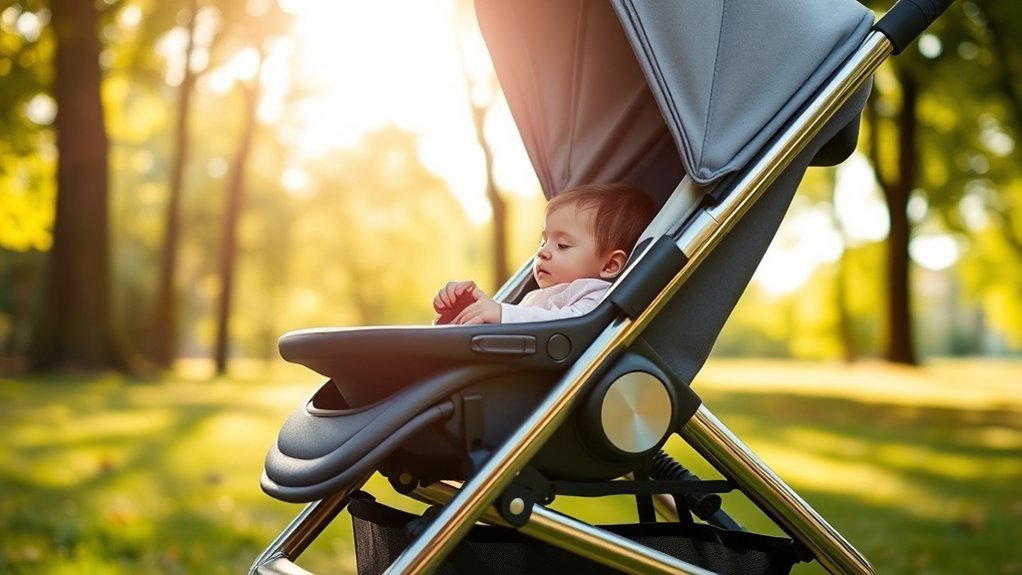
Once your baby is comfortably settled in the stroller seat, adjusting the angle becomes important for their comfort and safety.
The seat angle plays a vital role in supporting your baby’s posture as they grow. Ideally, the angle should keep their head lifted with space between the chin and chest, guaranteeing proper alignment.
As your baby develops head control, be prepared to adjust the seat angle monthly to meet their evolving needs. If you notice any discomfort or struggle to lift their head, it may mean the angle is too reclined.
A semi-reclined position is best until they can sit up independently, usually around six months. Regular adjustments guarantee your baby’s neck, spine, and overall posture remain supported.
Securing Your Child With a Five-Point Harness

A five-point harness is essential for securely holding your child in the stroller, guaranteeing both safety and comfort during outings.
To effectively use this harness type, follow these installation tips:
- Position shoulder straps at or just above your child’s shoulders.
- Confirm the crotch strap buckle is below the belly button and level with the hips.
- Align waist straps with your child’s hips for stability.
- Adjust the harness so only two fingers can fit between the straps and your child’s chest.
- Keep all straps flat and free of twists for even pressure distribution.
Importance of Footrest and Leg Support
Providing proper footrest and leg support in a stroller is essential for your child’s comfort and safety. A well-positioned footrest height guarantees your child’s feet are supported, reducing back pressure and promoting better posture. If their feet can’t reach, using folded towels under their legs provides necessary leg elevation. This simple adjustment keeps their hips level and back against the seat, enhancing stability during stroller rides. As your child grows and can sit independently, the need for additional leg support will diminish.
| Support Type | Benefits |
|---|---|
| Proper Footrest | Guarantees comfort and posture |
| Leg Elevation | Reduces back pressure |
| Towels Under Legs | Provides temporary support |
Final Safety Checks for a Comfortable Ride
Making sure your child is comfortable in their stroller goes beyond just footrest and leg support; safety checks are equally important for a smooth ride.
Ensuring your child’s comfort in the stroller involves more than support; safety checks are crucial for a pleasant experience.
Before heading out, double-check the following:
- Verify the harness is snug, allowing two fingers to fit between the straps and your child’s chest.
- Confirm shoulder straps are positioned level with or just above their shoulders.
- Verify waist straps are aligned with their hips, and the crotch strap buckle sits below the belly button.
- Inspect the straps for twists to guarantee even pressure across their body.
- Make certain any rolled-up towels or blankets for support extend to the base of the ribcage for comfortable arm movement.
These safety equipment checks guarantee ideal harness placement and a secure, enjoyable outing.
Tips for Maintaining Comfort During Outings
To keep your toddler comfortable during outings, regularly adjust the stroller seat angle to a semi-reclined position that supports their developing head and spine.
Make sure the five-point harness is snug, allowing for two fingers to fit between the straps and your toddler’s chest for ideal safety and comfort.
Additionally, provide proper leg support by adjusting the footrest and using rolled towels if necessary to maintain good posture.
Adjust Seat Angle Regularly
As your toddler grows, adjusting the stroller seat angle regularly becomes essential for maintaining their comfort during outings.
Use these reclining techniques to support your baby’s posture effectively:
- Maintain a semi-reclined position for head and neck support.
- Adjust monthly as your toddler approaches independent sitting, usually by six months.
- Confirm there’s space between their chin and chest to promote proper posture.
- If your baby struggles to lift their head, tilt the seat more upright for better comfort.
- Regularly check the footrest for adequate leg support, adjusting as needed.
Secure Harness Properly
Adjusting the stroller seat angle is important for your toddler’s comfort, but securing the harness properly is just as essential for safety and support during outings.
Start by ensuring the shoulder straps of your chosen harness type are level with or just above your toddler’s shoulders to prevent discomfort. The crotch strap buckle should sit below the belly button, while waist straps must be secured at the hips for stability.
Make necessary strap adjustments so the harness is snug enough that only two fingers fit between the straps and your child’s chest.
Finally, always check that the straps are flat and free from twists to maintain even pressure distribution, enhancing comfort during your adventures together.
Provide Leg Support
Leg support plays an essential role in your toddler’s comfort during stroller outings. Proper leg positioning not only enhances toddler posture but also minimizes back pressure, making trips more enjoyable.
Here are some tips to guarantee adequate leg support:
- Adjust the footrest so your toddler’s feet rest comfortably, not dangling.
- If their legs don’t reach the footrest, use soft supports like folded towels.
- Confirm your toddler’s back is against the seat for stability.
- Keep their hips level to promote ideal leg positioning.
- Regularly check and adjust stroller accessories as your child grows to accommodate changes in height.
Frequently Asked Questions
At What Age Can My Toddler Sit Upright in a Stroller?
Your toddler can typically sit upright in a stroller around 6 to 9 months, depending on their development. Always prioritize stroller safety, ensuring they have strong neck and back control before moving to an upright position.
How Can I Tell if My Child Is Comfortable in the Stroller?
You can tell your child’s comfortable by observing their toddler signals. Look for relaxed body language, a calm demeanor, and occasional smiles. If they fidget or cry, it’s likely they need adjustment for comfort.
What Types of Strollers Offer Better Reclining Options?
Travel system strollers and lightweight umbrella strollers typically offer better reclining options. You’ll find adjustable seats that promote comfort, ensuring your little one can relax easily while you’re on the go.
Can I Use a Stroller for Sleeping Toddlers During Outings?
Yes, you can use a stroller for sleeping toddlers during outings. Just make certain it’s safe and securely reclined for toddler naps, promoting comfort while keeping your child safe and supported as they rest.
How Often Should I Adjust the Recline as My Child Grows?
As your little one blossoms, you’ll want to make regular recline adjustments every few months. Keeping the stroller comfy guarantees your toddler enjoys every outing, supporting their growth and encouraging a sense of freedom.
Conclusion
In summary, ensuring your toddler’s comfort in a stroller is essential for enjoyable outings. By understanding seat adjustments, securing them with a five-point harness, and checking footrest support, you’re setting the stage for a smoother ride. Remember, just like a trusty old car, a well-maintained stroller can make all the difference in your journey. With these tips, you’re not just pushing a stroller; you’re creating a comfortable space for your child to explore the world.