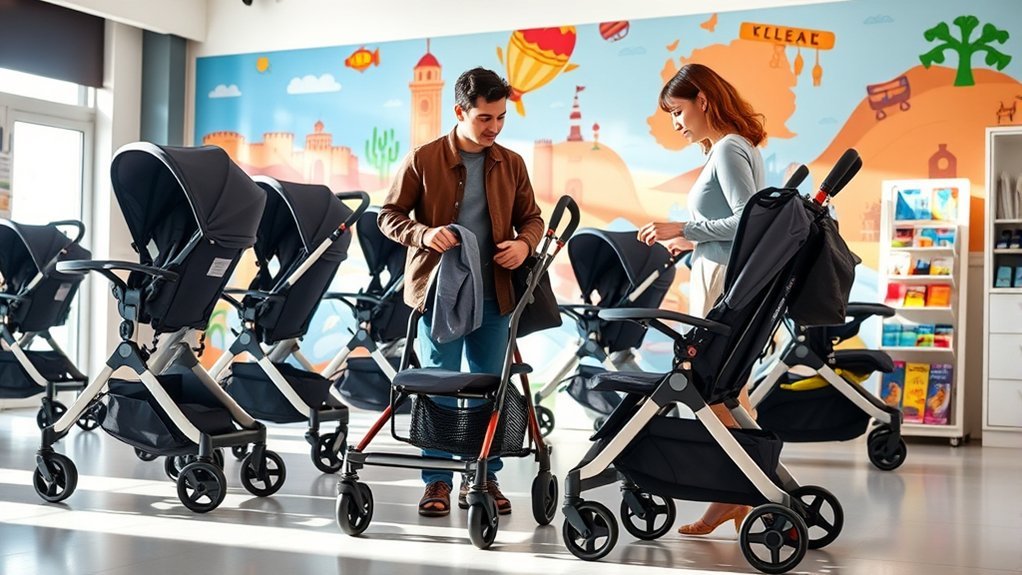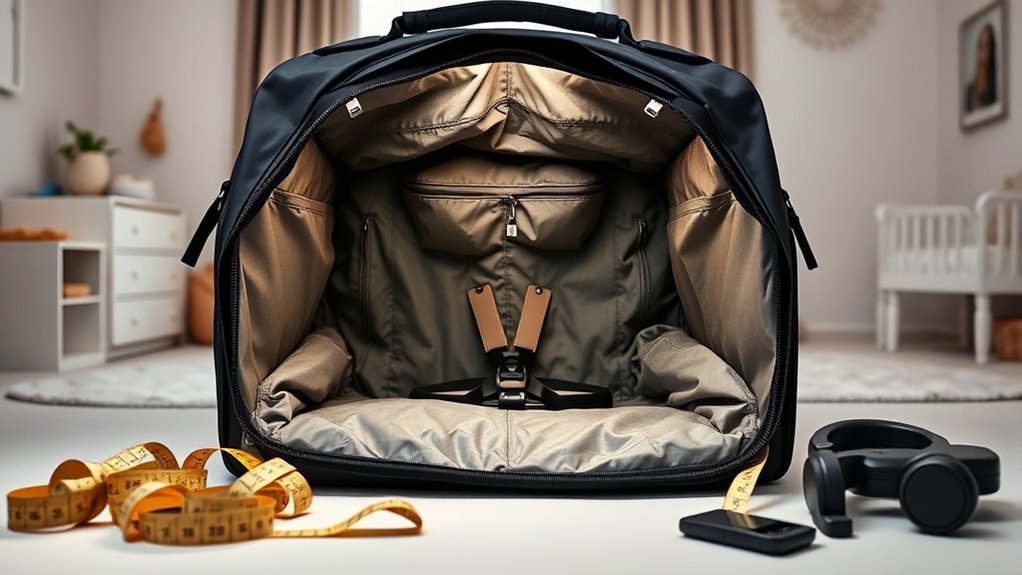
A stroller travel bag should fit your folded stroller and match how your airline will transport it. Cabin carry-on, gate-checked, and counter-checked strollers follow different rules, so one bag size will not work for every situation. Understanding those differences helps you choose the right protection and avoid problems at the airport.
Quick Answer
There is no universal stroller travel bag size requirement. Some airlines use 22 x 14 x 9 inches for cabin baggage, while others have different limits. Gate-checked stroller bags can be much larger. Measure your stroller when fully folded, compare its size with the bag’s usable dimensions, and confirm your airline’s stroller policy.
Key Takeaways
- A stroller that qualifies for free gate-checking may still be too large to take into the cabin.
- Airlines may use three separate measurements or a combined length, width, and height limit.
- For gate-checking, choose a bag with secure closures, clear identification, and enough room for the folded frame.
- Keep diapers, medication, snacks, and other flight essentials in cabin baggage rather than inside a checked stroller bag.
Understanding Stroller Travel Bag Dimensions
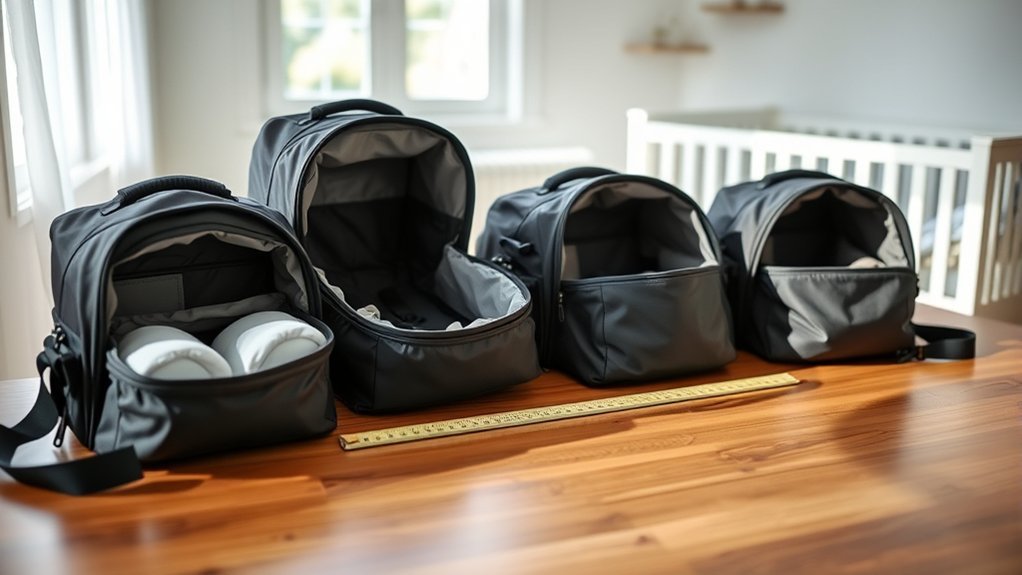
Stroller travel bag dimensions describe the space a bag occupies or the folded stroller it can accommodate. The correct size depends on your stroller model, its folding design, and whether the airline will carry it in the cabin or aircraft hold.
Two measurements matter: the folded stroller dimensions and the outside dimensions of the packed travel bag. They are not always the same.
For example, a compact stroller may fit inside a bag measuring 22 x 14 x 9 inches. However, many standard strollers, jogging strollers, and double strollers need much larger bags.
The International Air Transport Association (IATA) identifies 56 x 45 x 25 cm, approximately 22 x 18 x 10 inches, as a common carry-on baggage reference. It also makes clear that individual airlines set their own allowances.
These figures are explained in the IATA passenger baggage guidance. They are general baggage references, not a guarantee that every folded stroller can travel in the cabin.
Before purchasing, pay attention to:
- Length: The longest measurement of the stroller when folded.
- Width: The distance across its widest point, including wheels.
- Depth: The thickness of the folded stroller.
- Bag capacity: The interior space available after accounting for padding and closures.
- Total packed weight: The combined weight of the stroller, travel bag, and any permitted accessories.
Extra padding, reinforced seams, and water-resistant fabric can improve protection. However, protective features cannot compensate for a bag that is too small or an airline policy that does not allow cabin storage.
Airline-Specific Size Requirements for Stroller Bags

Airline stroller bag requirements vary by carrier. Some airlines allow small folded strollers in overhead bins, while others primarily provide gate-checking or counter-checking.
The most useful distinction is between cabin dimensions and the limits for checking a stroller. A gate-check bag does not need to fit ordinary carry-on measurements when the airline accepts it as a checked stroller.
| Airline | Stroller Size and Handling Rules |
|---|---|
| United Airlines | A compact folding stroller may be carried in the cabin if it meets the 22 x 14 x 9-inch carry-on size limit when collapsed. |
| Delta Air Lines | The general cabin baggage limit is 22 x 14 x 9 inches. Strollers can be checked free at the ticket counter or gate. |
| American Airlines | A fully collapsible stroller under 20 pounds may be carried on if it fits an overhead bin. Larger strollers are subject to checking requirements. |
| Singapore Airlines | A cabin stroller must weigh less than 7 kg and have combined length, width, and height of no more than 115 cm. It must fit overhead and be suitably bagged. |
| British Airways | For aircraft-door return at eligible destinations, a fully collapsible stroller must be no larger than 117 x 38 x 38 cm. This is not a cabin-baggage allowance. |
| Air Canada | Small strollers up to 92 cm long and 25.5 cm in collapsed diameter can be gate-checked free. Larger strollers must be checked at the counter. |
| IATA General Reference | 56 x 45 x 25 cm is a common cabin-baggage reference, not a mandatory airline-wide stroller limit. |
These distinctions are supported by the official United family travel guidance, Delta stroller rules, and American Airlines conditions of carriage.
International policies also differ. The Singapore Airlines cabin stroller policy requires an appropriate bag and counts an accepted stroller toward cabin baggage allowance.
Meanwhile, British Airways stroller guidance separates stroller return at the aircraft door from cabin baggage. The Air Canada stroller rules also distinguish small gate-checked strollers from larger counter-checked models.
For connecting flights, the operating airline’s requirements may differ on each segment. Aircraft type, available overhead space, and airport handling procedures can also affect where your stroller travels.
Best Practices for Measuring Your Stroller Bag
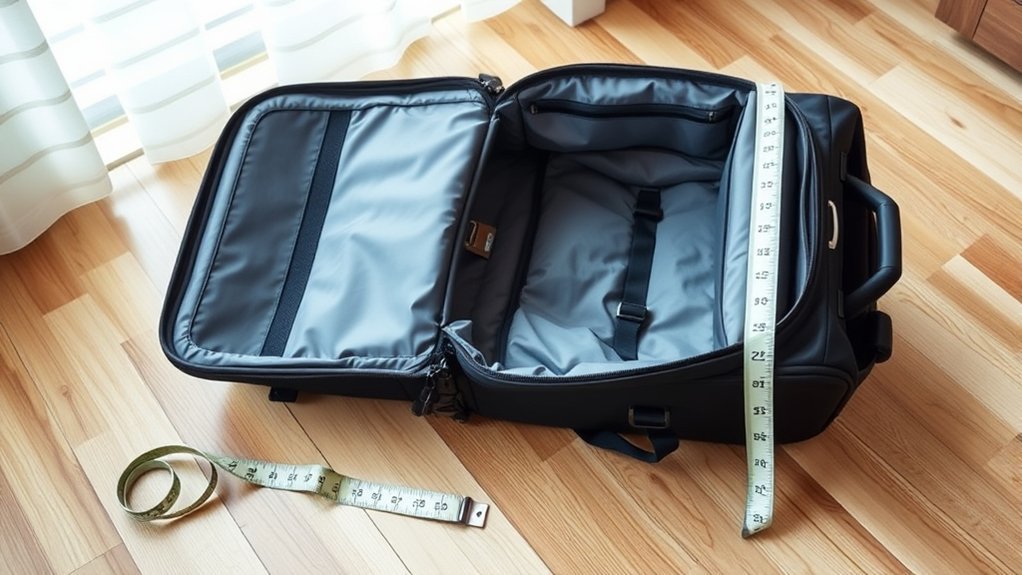
To measure a stroller travel bag correctly, start with the stroller fully folded in its normal transport position. Then measure the packed bag separately.
Use a tape measure on a flat surface and record the largest outside measurements.
- Fold your stroller completely. Follow the manufacturer’s folding instructions and engage any folding lock.
- Measure the longest side. Include fixed handles, wheels, and parts that extend beyond the folded frame.
- Measure the widest side. Check across the wheels or any other protruding components.
- Measure the depth. Record the stroller’s maximum thickness while folded.
- Compare the measurements with the bag. Confirm the manufacturer’s stated usable size and compatibility list.
- Pack the stroller and measure again. Include external pockets, handles, wheels, and any padding that changes the outside dimensions.
- Weigh the complete package. Use the packed weight when comparing it with a specific airline’s weight requirement.
If the stroller only fits when you force the zipper or stretch the fabric tightly, choose a larger bag. The bag should close securely without pressing heavily against vulnerable parts.
Also check whether the stroller manufacturer permits removing wheels or accessories for transport. Do not force components apart to make the stroller fit.
Record the final measurements in inches and centimeters. This makes comparing airline requirements easier, especially on international flights.
Types of Stroller Bags and Their Sizes
Stroller travel bags generally fall into three groups: compact cabin bags, gate-check bags, and padded checked-baggage cases. Each serves a different purpose.
Compact Carry-On Stroller Bags
These bags are designed for very small, folded travel strollers. They work best when the stroller itself meets an airline’s cabin-size and weight restrictions.
Some compact stroller bags approach 22 x 14 x 9 inches, but that size is not suitable for every folding stroller. Confirm both the stroller’s measurements and the airline’s acceptance policy.
Gate-Check Stroller Bags
Gate-check bags usually accommodate larger folded strollers. They often use lightweight polyester or nylon, drawstring closures, reinforced stitching, and carrying handles.
For example, the J.L. Childress Gate Check Bag for Single & Double Strollers has stated in-use dimensions of 46 x 21 x 13 inches. It is intended for compatible strollers that will be gate-checked rather than placed in overhead bins.
Gate-check bags focus on protecting the stroller from dirt, surface contact, and handling during loading. Thin fabric offers less impact protection than a padded case.
Padded or Wheeled Stroller Travel Bags
These bags are more suitable for travelers who want additional cushioning or easier movement through airports.
Look for padded sides, reinforced bottoms, sturdy zippers, and wheels where available. They may be useful for larger stroller frames and travel systems.
Remember that a travel system can include a stroller and infant car seat as separate pieces. A bag fitting the stroller does not automatically fit the car seat.
Common Mistakes to Avoid When Choosing a Stroller Bag
The most common mistakes involve confusing cabin and gate-check rules, buying a bag without measuring the stroller, and choosing weak materials for checked transport.
A little preparation can help prevent damaged equipment, packing difficulties, and unexpected handling changes.
Ignoring Size Restrictions
Do not assume that every stroller must fit within 22 x 14 x 9 inches. That measurement applies to certain cabin baggage allowances, not all stroller travel bags.
Likewise, a stroller bag advertised as airline-friendly is not automatically approved for every aircraft.
Pay particular attention to weight restrictions. The original 20-pound rule is not a universal gate-check limit; it appears in specific airline policies, including American Airlines’ rules for carrying compact strollers.
Another mistake is checking only the bag’s advertised dimensions without testing it with your stroller. Wheels, canopies, and handles may create fit problems that measurements alone do not reveal.
Overlooking Material Quality
A poorly constructed bag can tear or open during handling. Choose durable materials such as polyester, Oxford cloth, or nylon, with reinforced seams in high-stress areas.
Water-resistant is not the same as waterproof. Some bags resist light rain but may allow moisture through zippers, drawstrings, or stitching.
For frequent flying, look for:
- Reinforced bottom panels to handle contact with airport surfaces.
- Padded sides to reduce minor impacts.
- Strong carrying handles and adjustable straps.
- Secure closures that do not open easily.
- An identification area for your contact information.
A lightweight bag is easier to carry, but a more protective bag may be worth the extra weight when you need to check an expensive stroller.
How to Ensure Your Stroller Bag Meets Airline Policies
Confirm how the airline classifies your stroller before deciding which travel bag to use. The requirements depend on whether you plan to carry it onboard, gate-check it, or check it with regular baggage.
Follow the same process for each airline operating a flight on your itinerary.
Airline Size Restrictions
Airlines may use different rules for overhead storage, gate-checking, and baggage-counter acceptance.
Before flying, confirm these details:
- Whether your specific folded stroller is accepted in the cabin.
- Whether the stroller counts toward cabin baggage allowance.
- Whether its weight or design requires counter check-in.
- Whether a protective travel bag is required.
- Where the stroller will be returned after arrival.
Many airlines transport qualifying strollers without a separate stroller-checking fee when you travel with a child. However, oversized equipment, extra items, or unusual circumstances may follow different rules.
Do not assume that gate-checked items will always be returned at the aircraft door. Some airlines and airports deliver them to baggage claim instead.
Material and Durability
A travel bag’s materials primarily affect protection and handling, not whether it qualifies as cabin luggage.
For a stroller traveling in the aircraft hold, prioritize abrasion resistance, secure fasteners, and padding around fragile parts. For a carry-on stroller, a lighter bag that folds away easily may be more practical.
Inspect the bag before each flight. Look for loose stitching, damaged zippers, worn straps, or holes near wheel contact points.
Warning: A protective travel bag does not guarantee that an airline will accept a stroller in the cabin or prevent damage during checked transport. Remove loose accessories and follow the stroller manufacturer’s instructions before packing.
Compartment Organization Features
Good organization makes a stroller travel bag easier to manage, but pockets should not increase its packed size beyond any applicable baggage limits.
Look for:
- Small compartments for manufacturer-approved removable stroller accessories.
- Secure interior straps that help keep the folded stroller in place.
- A visible name and contact information panel.
- A storage pouch for folding the empty travel bag between uses.
Keep valuables, identification, medication, and essential baby supplies outside any bag that might be checked. Use a separate cabin bag for items you need during the flight.
Tips for Packing Your Stroller Bag Efficiently
The safest packing approach is to prepare the stroller for transport and keep your child’s essential supplies in a separate, accessible bag.
Use this packing sequence:
- Empty the stroller basket. Remove toys, snacks, bottles, and other loose belongings.
- Remove approved accessories. Detach cup holders, organizers, and other parts according to the manufacturer’s directions.
- Fold and lock the stroller. Make sure moving sections cannot open unexpectedly.
- Protect vulnerable parts. Use the travel bag’s built-in padding or approved protective inserts around exposed sections.
- Place the stroller inside the bag. Position it so wheels and handles do not strain the closure.
- Secure the bag. Close all zippers, drawstrings, or straps and attach identification.
- Check the packed size. Confirm the bag is ready for the transport method your airline permits.
Pack diapers, wipes, a changing pad, feeding supplies, snacks, and an extra outfit in your cabin bag. Use quick-access pockets for items you need frequently.
Rolling clothing can save space in that separate bag. Avoid putting essential supplies inside the stroller travel bag because you may not have access to it until arrival.
At a US airport, stroller equipment must pass security screening. The TSA guidance for traveling with children explains that strollers are screened by X-ray when possible, with alternative inspection when required.
After each trip, remove crumbs and debris, clean the bag according to its care instructions, and let it dry completely before storing it.
Recommended Stroller Bags for Air Travel
The right stroller bag depends on your stroller’s folded size and the level of protection you need. The following options from the original selection are worth comparing, although their features and compatibility require model-specific checks.
J.L. Childress Gate Check Bag
This is a practical option for parents who want a lightweight bag for gate-checking a compatible stroller.
The manufacturer lists its standard single-and-double stroller bag at 46 x 21 x 13 inches in use. Features include reinforced seams, carrying handles, a drawstring closure, an identification area, and a compact storage pouch.
The J.L. Childress product specifications also provide compatibility guidance.
Best for: Travelers prioritizing lightweight handling and basic protection during gate-checking.
Baby Jogger City Mini GT2 Travel Bag
Owners of a Baby Jogger City Mini GT2 should look for a travel bag explicitly compatible with their stroller version. A model-specific bag may offer a closer fit than an oversized universal cover.
The City Mini GT2 stroller folds compactly for transport, but that does not mean its folded size meets airline cabin limits.
Confirm the travel bag’s exact product name, dimensions, compatible stroller models, storage pockets, and padding before purchasing.
Best for: City Mini GT2 owners who want to prioritize stroller-specific compatibility.
Gogobabyz Travel Bag
A wheeled stroller travel bag can make airport transport more comfortable, particularly when moving a heavier folded stroller.
The Gogobabyz option mentioned in the original article is associated with padded protection and wheeled transport. However, the exact current model and those features need confirmation.
Check its interior measurements, zipper access, padding, wheel design, and handling weight before choosing it for your stroller.
Best for: Travelers considering a padded, wheeled bag for easier movement through large airports, provided the selected model is compatible.
Whichever bag you choose, prioritize confirmed stroller fit over marketing terms such as universal, airline-approved, or travel-friendly.
Frequently Asked Questions
Can I Use Any Stroller Bag for My Travel Stroller?
No. Your stroller bag must fit your stroller’s folded dimensions, including its wheels and handles. It should close securely without forcing the stroller into position. You also need to choose a bag suitable for cabin transport, gate-checking, or counter-checking.
Are Stroller Travel Bags Waterproof?
Not all stroller travel bags are waterproof. Many offer water-resistant fabric that helps protect against light rain and splashes. For stronger protection, check the fabric, seams, and closure design. A waterproof material alone does not guarantee a completely waterproof bag.
How Much Do Stroller Travel Bags Typically Weigh?
Some stroller travel bags weigh approximately 1.5 to 3 pounds, although lighter and heavier models are available. Weight varies with size, padding, fabric, wheels, and reinforcement. Check the manufacturer’s specifications and include the bag’s weight when calculating your total packed stroller weight.
Do Stroller Bags Come With a Warranty?
Many stroller travel bags include a manufacturer’s warranty, but coverage varies. Some warranties address defects in materials or workmanship rather than damage caused by airline handling. Read the warranty terms and keep your purchase receipt in case you need to make a claim.
Can I Carry My Stroller Bag as a Personal Item?
A stroller bag can qualify as a personal item only if it meets the airline’s personal-item rules and fits in the required storage space. Most full-size stroller bags are too large. An empty, folded stroller cover may qualify when its packed dimensions are small enough.
Do Airlines Require a Travel Bag for Gate-Checked Strollers?
Not every airline requires a travel bag for gate-checked strollers. Some allow a folded stroller without a cover, while certain cabin policies require suitable packaging. A bag can help reduce dirt and surface damage, but its use does not replace the airline’s handling requirements.
Can I Gate-Check a Large Stroller for Free?
Many airlines allow strollers to be checked free when traveling with a child, but large strollers may need to go through the ticket counter instead of the gate. Size, weight, and design restrictions vary by carrier. Free stroller transport does not always mean free gate-checking.
Conclusion
Choosing the right stroller travel bag starts with measuring your folded stroller and understanding how your airline will transport it. A secure fit, durable construction, and the right level of padding can make travel easier while helping protect your stroller.
Although claims that nearly 30% of strollers are damaged during air travel sometimes appear in travel advice, that specific figure needs a reliable supporting source. The practical takeaway is simpler: use suitable protection, follow your airline’s handling rules, and prepare the stroller carefully before flying.
Sources
- International Air Transport Association (IATA), Passenger Baggage Rules: General carry-on size references and airline-specific baggage requirements.
- United Airlines, Flying With Kids and Family Boarding: Compact stroller acceptance and cabin-baggage requirements.
- Delta Air Lines, Children and Infant Baggage Items: Complimentary stroller checking and transport options.
- American Airlines, Conditions of Carriage: Compact stroller carry-on requirements and weight restrictions.
- Singapore Airlines, Travelling With Children: Cabin stroller dimensions, weight, packaging, and storage requirements.
- British Airways, Car Seats, Pushchairs and Children’s Bags: Stroller dimensions for aircraft-door return.
- Air Canada, Children and Travel: Small and large stroller checking requirements.
- Transportation Security Administration, Traveling With Children: Airport screening procedures for strollers and other child equipment.
- J.L. Childress, Gate Check Bag for Single and Double Strollers: Product dimensions, materials, and intended use.