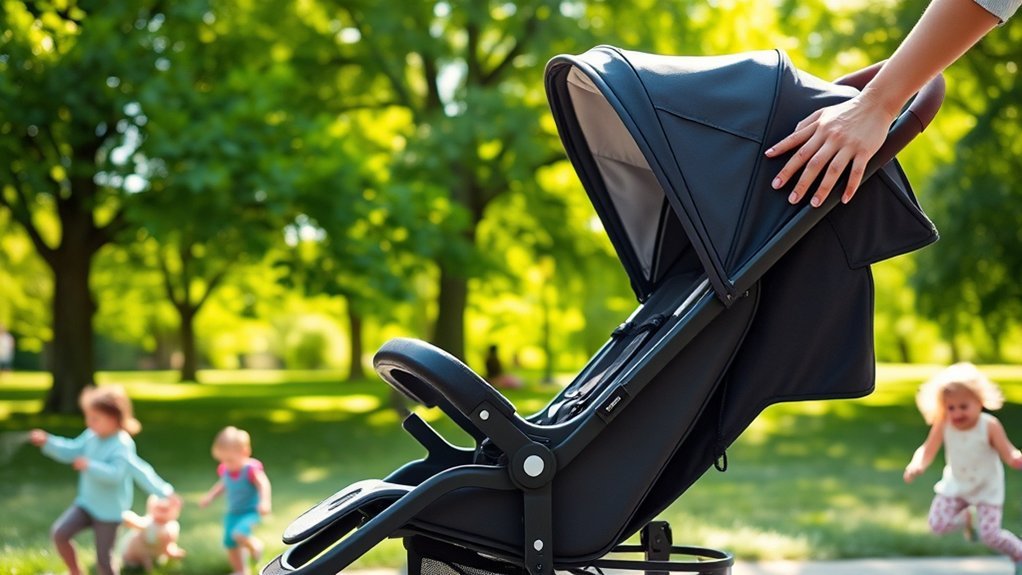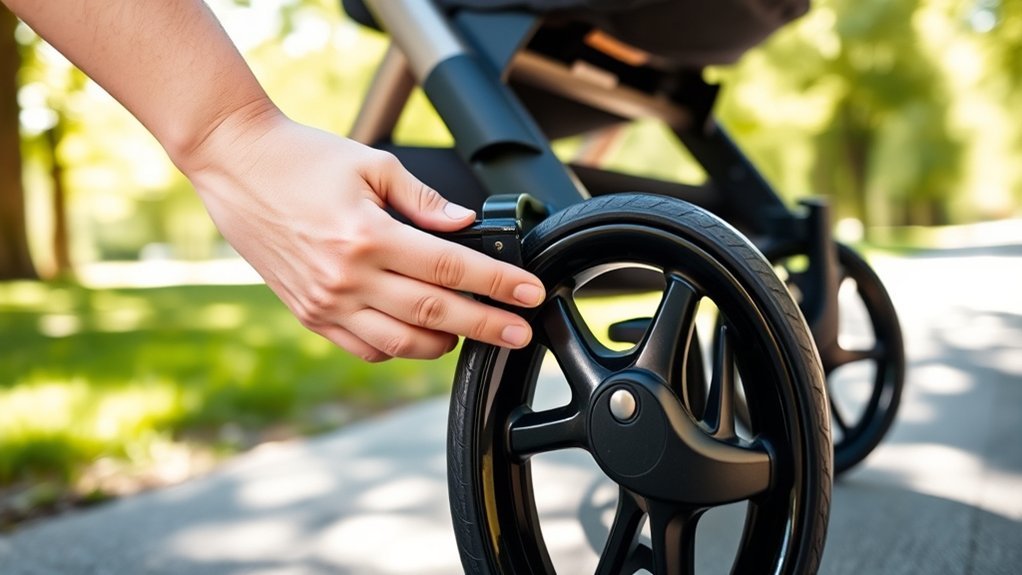
When selecting a stroller for your toddler, it’s essential to adhere to weight limits for safety and functionality. Typically, full-size strollers hold 50-75 pounds, while umbrella models support 15-50 pounds. Overloading can lead to dangerous tip-overs and brake failures. Always check the total load capacity and avoid heavy bags on the handlebars. Being aware of these limits guarantees secure outings. Want to explore more tips and insights on stroller safety?
Understanding Weight Limits: What Every Parent Should Know
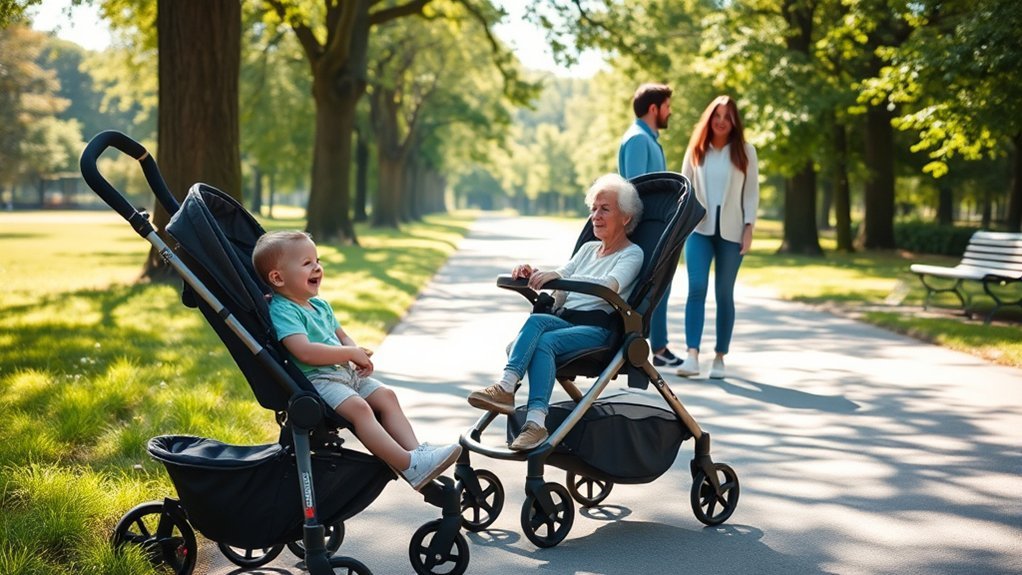
When you’re choosing a stroller for your toddler, understanding weight limits is essential to confirm safety and functionality.
Choosing a stroller for your toddler requires understanding weight limits for optimal safety and functionality.
Stroller durability hinges on adhering to these limits, which typically range from 50 to 75 lbs. Remember, the total load capacity includes your child’s weight plus any items in baskets or pockets.
Overloading can compromise weight distribution, leading to tip-overs or frame failures. Lightweight and umbrella strollers often have lower limits, suitable for toddlers aged 3 to 5, usually between 15 to 50 lbs.
To verify safe operation, always consider the combined weight of your child and accessories. By respecting these guidelines, you’ll foster a secure and enjoyable experience for both you and your little one.
Typical Weight Limits for Toddler Strollers

When choosing a toddler stroller, it’s essential to understand the typical weight limits associated with different types.
Full-size strollers usually accommodate between 50 to 75 pounds, while umbrella and lightweight models support 15 to 50 pounds.
For families with multiple children, double strollers can handle 80 to 110 pounds, and stroller wagons can manage up to 300 pounds, depending on the design.
Common Stroller Types
Understanding the different types of strollers is essential for choosing the right one for your toddler, as each type comes with its own weight limit specifications.
Umbrella and lightweight strollers typically support 15 to 50 pounds, ideal for toddlers aged 3 to 5.
Full-size single strollers can handle 50 to 75 pounds, accommodating your child and any stroller accessories you might need.
For active parents, jogging strollers offer weight limits between 65 to 100 pounds, suitable for early school-age kids.
If you have two little ones, double or tandem strollers can carry a combined weight of 80 to 110 pounds.
Finally, stroller wagons are built for heavier loads, supporting 110 to 300 pounds, perfect for transporting multiple children and gear.
Weight Capacity Overview
Selecting the right stroller for your toddler involves knowing the typical weight limits associated with different models. Most toddler strollers can support weights ranging from 50 to 75 pounds, depending on the type.
Lightweight and umbrella strollers usually accommodate 15 to 50 pounds, ideal for toddlers aged 3 to 5. Full-size strollers generally handle 50 to 75 pounds, including kids and extra cargo.
For active parents, jogging strollers offer higher capacities, accommodating 65 to 100 pounds. If you need to transport two children, double and tandem strollers support combined weights of 80 to 110 pounds.
Always consider stroller durability and weight distribution to guarantee safety and comfort for your little one as they grow.
Age vs. Weight: Finding the Right Stroller for Your Child
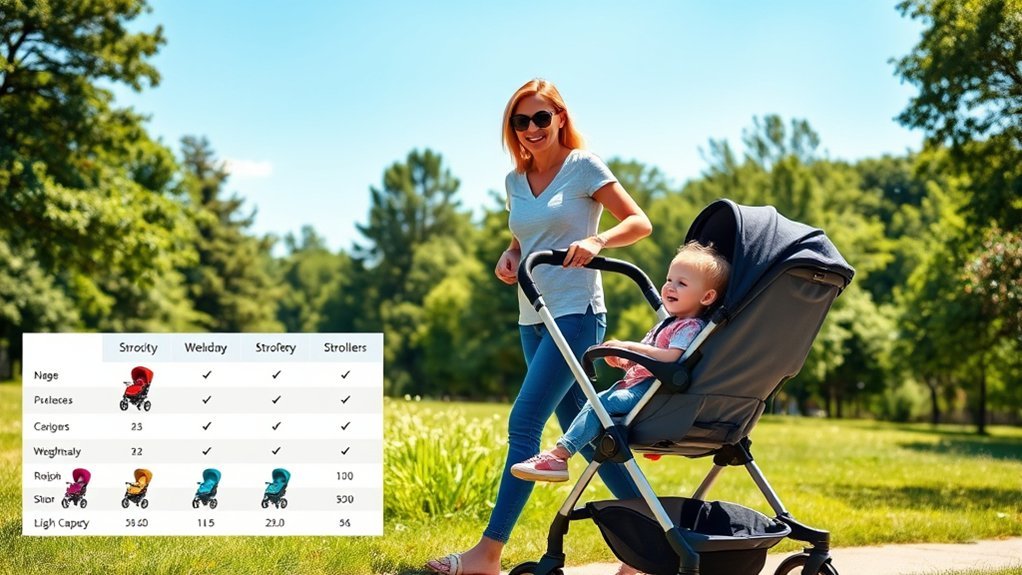
How do you choose the right stroller for your child based on their age and weight? Understanding age milestones and weight considerations is essential for making a smart decision. Here’s a quick breakdown to guide you:
| Stroller Type | Age & Weight Range |
|---|---|
| Umbrella/Lightweight | 3-5 years, 40-50 lbs |
| Full-size | Infancy to early elementary, 50-75 lbs |
| Jogging | Late infancy to early school age, 65-100 lbs |
| Double/Tandem | 0-5 years combined, 80-110 lbs |
Choosing the right stroller means factoring in your child’s age and weight to guarantee comfort and safety. Always remember that the stroller’s weight limit includes any extra items, so keep your total load in check!
Safety Risks of Exceeding Stroller Weight Limits
Choosing the right stroller based on your child’s age and weight is only part of the equation; equally important is recognizing the safety risks associated with exceeding weight limits.
Overloading your stroller can lead to dangerous tip-overs, brake failures, and even frame collapses due to improper load distribution and structural stress. As you approach the weight capacity, stroller stability notably decreases, increasing the risk of accidents.
Overloading your stroller compromises stability, increasing the risk of tip-overs and structural failures. Prioritize safety by adhering to weight limits.
Hanging heavy bags from the handlebars can shift the center of gravity, making tipping more likely. Additionally, maneuvering uneven surfaces or tight corners while overloaded can lead to premature wear and frame failures.
Prioritizing your child’s safety means adhering to the recommended weight limits to guarantee a secure and enjoyable experience.
Tips for Staying Within Stroller Weight Limits
To guarantee your stroller remains safe and functional, it’s essential to stay within the specified weight limits. Here are some tips to help you manage weight effectively:
- Always check the total load capacity, including your child’s weight and stroller accessories.
- Limit under-seat basket contents to 10–15 lb to maintain stability.
- Avoid hanging heavy bags from the handlebars; this can shift weight distribution and cause tip-overs.
- Regularly inspect your stroller for signs of wear, especially if you’re near weight limits.
- Shift out of stroller use around ages three to four, as children typically exceed 40–50 lb by then.
Following these guidelines will guarantee a safer, more enjoyable experience for you and your child.
Features to Look for in Toddler Strollers
Staying within stroller weight limits is just the first step in ensuring a safe and comfortable experience for your toddler. Look for strollers with a weight limit of at least 50 lb to accommodate growing toddlers.
Prioritize safety mechanisms, like a secure five-point harness, to keep your little one secure during active moments. Comfort features such as multiple reclining positions allow your toddler to nap or relax comfortably while on the go.
A sturdy frame and wide-set wheelbase enhance stability, preventing tipping as toddlers shift their weight. Additionally, choose strollers with good suspension systems to absorb shocks, providing a smoother ride across various terrains.
These essential features will help you create enjoyable outings with your toddler.
Real-World Examples of Stroller Weight Limitations
Understanding real-world stroller weight limitations is essential for ensuring your toddler’s safety and comfort during outings.
Here are some practical stroller comparisons to help you choose wisely:
- Full-size single strollers: 50-75 pounds, ideal from infancy to early elementary age.
- Umbrella strollers: 15-50 pounds, perfect for toddlers aged 3-5 years.
- Jogging strollers: 65-100 pounds, great for active families with older toddlers.
- Double or tandem strollers: 80-110 pounds, accommodating two children comfortably.
- Stroller wagons: 110-300 pounds, excellent for transporting multiple kids and gear.
Frequently Asked Questions
Can I Use a Stroller for My Older Child?
You can definitely use a stroller for your older child as long as it meets their weight and height needs. Ensuring toddler safety is key, so check the stroller age recommendations for ideal use.
How Do I Know if My Stroller Is Sturdy?
To determine your stroller’s sturdiness, check for stroller durability tests and assess the stroller frame materials. Strong materials like aluminum or steel enhance safety, ensuring your child’s comfort and security during every outing.
What Materials Are Best for Lightweight Strollers?
Imagine a bird soaring effortlessly; aluminum frames offer that freedom in strollers. Combine lightweight structures with breathable fabric choices, and you’ve got a perfect blend for mobility and comfort, ensuring your adventures remain unhindered.
Are There Strollers Designed for Multiple Children?
Yes, there are strollers designed for multiple children. You can choose between double strollers, which accommodate two kids side by side, or tandem strollers, where one child sits behind the other, maximizing space and convenience.
How Often Should I Check My Stroller’s Weight Limit?
You should check your stroller’s weight limit every few months. Notably, nearly 30% of parents overlook this. Following weight limit guidelines is essential for safety, so incorporate these stroller maintenance tips into your routine.
Conclusion
In summary, understanding stroller weight limits is essential for your child’s safety and comfort. Ignoring these limits could turn your stroll into a high-stakes balancing act, where one wrong move might catapult your toddler into the unknown! By choosing the right stroller and adhering to weight guidelines, you guarantee a smooth ride for your little one. So, stay informed and prioritize safety—because a safe stroll is a happy stroll, and that’s what every parent deserves!