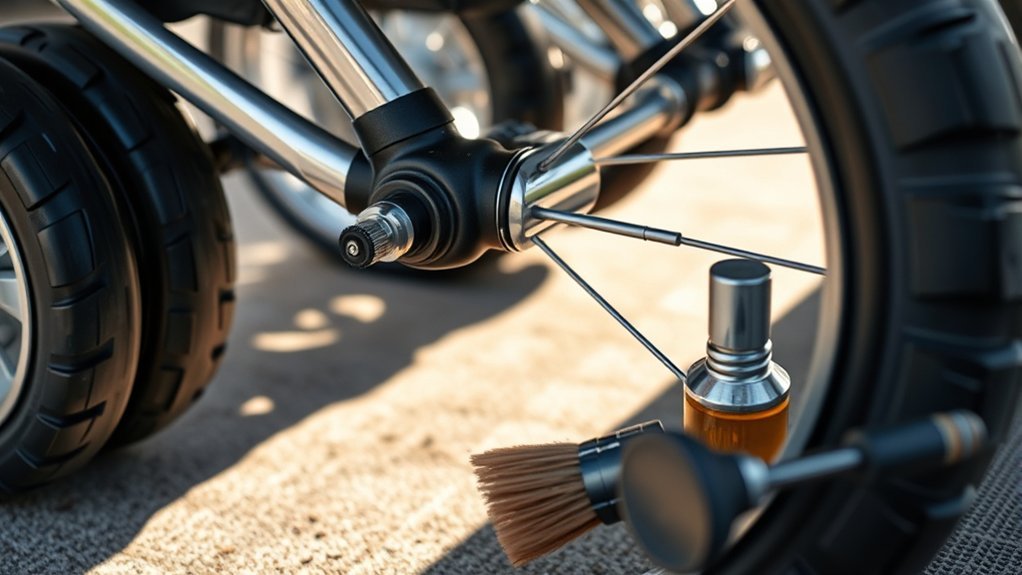
Keeping your stroller wheels in top shape is essential for smooth rides and safety. Make it a habit to clean wheels with mild soap and a brush monthly, and inspect for cracks or wear. Don’t forget to lubricate the axles and bearings with silicone spray every few months. If you notice wobbling or strange noises, it might be time to replace those wheels. Stick around to discover more tips for long-lasting stroller performance.
Why Wheel Maintenance Is Essential for Strollers

When it comes to keeping your stroller safe and efficient, wheel maintenance is essential. Regularly checking your wheels not only guarantees smooth operation, but it also protects against safety hazards.
With over 361,000 stroller-related injuries linked to tipping and brake failures, you can’t afford to overlook this. Aim for a maintenance frequency of every one to two months for inspections. Look for signs of wear or damage that could lead to wobbly wheels.
Lubricating the moving parts with silicone spray every few months keeps them performing well, extending your stroller’s lifespan. By addressing alignment and stability issues promptly, you maintain wheel safety and comfort for your little one, allowing you both to enjoy your adventures without worry.
How to Clean Your Stroller Wheels Effectively

Cleaning your stroller wheels doesn’t have to be a hassle; you just need the right tools and a simple process.
Start with mild soap, warm water, and a soft brush to tackle dirt and debris effectively.
Let’s walk through the steps to keep those wheels rolling smoothly!
Essential Cleaning Tools
Maintaining your stroller wheels doesn’t have to be a challenging task; with just a few essential cleaning tools, you can keep them in tip-top shape.
Start with a good cleaning brush designed specifically for wheels. This’ll help you dislodge stubborn dirt, especially from the treads and bearings. A vacuum attachment with a crevice tool is also a game-changer, letting you reach those tight spaces in the wheel assembly where grime loves to hide.
For sticky messes, a soft cloth dampened with a baby-safe all-purpose cleaner works wonders.
Finally, after cleaning, make sure to dry the wheels thoroughly to prevent moisture accumulation, which can lead to rust.
With these tools, your stroller wheels will stay clean and functional!
Step-by-Step Cleaning Process
To keep your stroller wheels in great shape, it’s crucial to follow a step-by-step cleaning process. Start by removing the wheels from the stroller; this gives you access to those hidden spots that collect dirt.
Use mild soap and warm water with a soft cloth or brush to scrub the wheel treads, axles, and surrounding areas. Don’t forget to pay special attention to the wheel bearings and moving parts—applying a silicone-based lubricant here guarantees smooth operation and prevents rust.
After cleaning, dry the wheels thoroughly with a clean cloth. Regularly inspect for signs of wear, like cracks or wobbling, during your wheel care routine.
Stick to this maintenance schedule, and your wheels will roll smoothly for years to come!
Lubrication Techniques for Smooth Operation
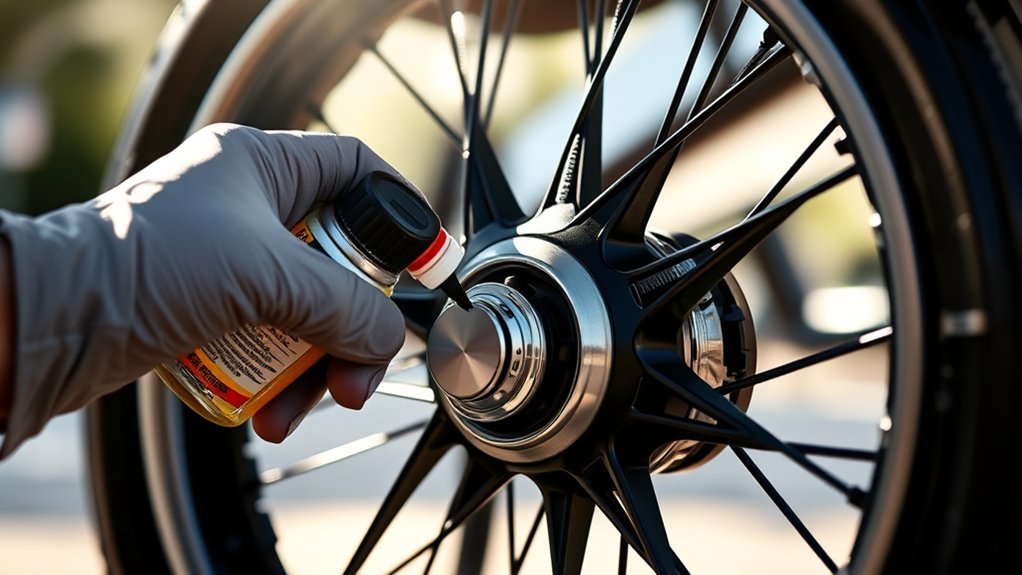
While stroller wheels may seem simple, keeping them well-lubricated is crucial for smooth rides and longevity. You should apply silicone-based lubricants to the axles and bearings every month as part of your maintenance schedule. This prevents wear and guarantees a seamless glide.
Avoid using WD-40 as a long-term lubricant; it’s better for cleaning stuck parts than for ongoing lubrication. If you’re out of grease lubricant, petroleum jelly can provide added protection and keep those wheels functional.
Always keep an ear out for squeaks or stiff movement—these signs mean it’s time for some lubrication. And don’t forget to wipe away any excess lubricant afterward to keep dust from sticking and to maintain peak performance.
Inspecting Wheels for Damage and Wear
When you push your stroller, it’s easy to overlook the condition of the wheels, but regular inspections can save you from surprises down the road.
Here’s how to keep your wheels in tip-top shape:
- Inspect for visible damage: Look for cracks, deep scratches, or chips on all wheel types.
- Conduct alignment checks: Make sure the wheels are aligned properly to guarantee smooth steering and stability.
- Listen for squeaks: Persistent squeaking can be a sign of wear that needs addressing.
- Secure fastenings: Before each use, check that all wheel fastenings are tight to avoid hazards.
Common Signs Your Wheels Need Replacement
If you’ve noticed unusual noises while rolling your stroller, it might be time to take a closer look at the wheels.
Wobbling or visible cracks can signal instability, which isn’t safe for you or your little one.
Keeping an eye on these signs can help guarantee smooth rides and peace of mind.
Unusual Noises While Rolling
As you push your stroller along, the last thing you want to hear is a persistent squeak or grinding noise coming from the wheels.
These unusual sounds can signal a problem that shouldn’t be ignored. Here are some signs that your wheels may need replacement:
- Squeaking sounds: This could indicate worn bearings.
- Grinding issues: If you hear grinding, it’s a sign of serious wear.
- Wobbly wheels: They can create instability, compromising safety.
- Rust or corrosion: Regular inspections can help catch these issues early.
Don’t let these noises slide; addressing them now can prevent complete wheel failure and guarantee your child’s safety while using the stroller.
Trust your instincts—if something sounds off, it probably is!
Visible Damage or Cracks
Stroller wheels endure a lot of wear and tear, and visible damage can signal a need for replacement. Keep an eye out for cracks or deep scratches; these flaws can compromise the wheel’s structural integrity and pose safety risks.
Regular crack detection is vital—if you spot any significant deterioration or bulging in the tire or rim, it’s time for a wheel replacement. Don’t wait until it’s too late!
If you hear persistent squeaking or grinding, it’s wise to inspect the wheels for damage. Make it a habit to check your stroller wheels every one to two months.
Early detection of visible issues can prevent serious safety hazards, allowing you to keep cruising with peace of mind.
Wobbling or Instability Issues
When you notice your stroller wheels wobbling or feeling unstable, it’s time to take action. Wobbling causes can range from misalignment to visible damage, and ignoring them could compromise your safety.
Here are some clear signs your wheels need replacement:
- Noticeable Movement: If the wheels sway during use, it’s a red flag.
- Persistent Squeaking: This often hints at underlying issues that need fixing.
- Visible Damage: Cracks or breaks in the wheel structure are immediate indicators for replacement.
- Steering Difficulty: If you’re struggling to steer due to misaligned wheels, seek instability solutions by replacing them.
Regular checks can prevent accidents and guarantee your stroller remains safe and enjoyable for you and your little one.
Tips for Storing Your Stroller to Prevent Rust
To keep your stroller in top shape and prevent rust, it’s crucial to store it properly.
Start by finding a cool, dry space indoors; this helps keep moisture away and avoids rust prevention issues.
Make sure to clean and dry your stroller thoroughly before long-term storage—this way, mold and mildew won’t have a chance.
When you’re ready to store it outside, use a protective cover to shield it from dust and weather elements.
Avoid placing your stroller in damp areas like sheds or garages, especially in winter when moisture levels soar.
Best Practices for Long-lasting Stroller Wheels
Maintaining your stroller wheels is essential for ensuring a smooth ride and safety during your outings. By following these best practices, you can extend the life of your wheels, regardless of the wheel types or stroller brands you use:
- Clean your stroller wheels monthly with mild soap and water to prevent dirt build-up.
- Lubricate wheel bearings with silicone spray every three months for smooth operation.
- Regularly inspect your wheels for wear, wobbling, or damage—address any issues immediately.
- Store your stroller in a dry, shaded area to avoid moisture-related rust.
If you notice persistent squeaking, visible cracks, or if the wheels don’t turn smoothly, it’s time for a replacement.
Prioritize these steps for a hassle-free ride!
Frequently Asked Questions
How Often Should I Inspect My Stroller Wheels?
You should inspect your stroller wheels monthly. Keep an eye out for wheel wear, and stick to a maintenance schedule. Regular checks help guarantee a smooth ride and keep your stroller in top shape.
Can I Use Any Lubricant for Stroller Wheels?
You can’t just use any lubricant for stroller wheels. Stick to wheel lubrication options designed for strollers. It’s a stroller maintenance essential that keeps your wheels rolling smoothly and guarantees safety during your outings.
What Are the Best Cleaning Products for Stroller Wheels?
For squeaky stroller wheels, try simple soap solutions or specialized stroller cleaners. These cleaning techniques keep wheels rolling smoothly. Look for product recommendations that emphasize non-toxic, effective ingredients to guarantee safety and satisfaction.
How Do I Know if My Stroller Wheels Are Misaligned?
You’ll know your stroller wheels are misaligned if it pulls to one side while pushing, or if you notice uneven wear on the tires. Proper wheel alignment is essential for ideal stroller performance and safety.
Is It Safe to Use My Stroller on Uneven Surfaces?
It’s generally safe to use your stroller on uneven surfaces, but keep an eye on stroller stability. Rough terrain can impact maneuverability, so watch how it handles. A 30% drop in control can happen on bumpy paths!
Conclusion
Taking care of your stroller wheels might seem like a small task, but it’s essential for smooth rides and safety. Just think about that time you were rushing to the park, and a wobbly wheel slowed you down. By following these maintenance tips, you can avoid those frustrating moments. Keep your wheels clean, lubricated, and inspected, and you’ll guarantee countless joyful outings with your little one. After all, every adventure deserves a smooth start!