Disclosure: As an Amazon Associate, we earn from qualifying purchases. If you click a link on this page and make a purchase, we may receive a small commission at no extra cost to you.
Buying the wrong roof rack feet can leave you with bars that will not attach securely to your vehicle. The Thule Evo Flush Rail Foot Pack (710601) includes four feet for approved vehicles with flush roof rails. Its torque-limiter key helps with correct tightening, but you still need compatible bars and a vehicle-specific fit kit. This review explains how to check fit, calculate your roof load, and decide whether these feet are worth the extra system cost.
Quick Verdict
Recommendation: Recommended with caveats (fit must be confirmed)
Best For: Drivers building a Thule Evo system after confirming an approved flush-rail fit for their exact vehicle.
Bottom Line: The Thule Evo Flush Rail Foot Pack supports four Thule crossbar families and includes a torque-limiter key for controlled installation. However, the four feet are not a complete roof rack, and an approved fit kit and bars add to the cost.
| Specification | Detail |
|---|---|
| Brand | Thule |
| Model | Evo Flush Rail, 710601 |
| Product type | Roof rack foot pack |
| Quantity | Pack of 4 feet |
| Color | Black |
| Published product weight | 2.27 lb (Thule product listing) |
| Maximum load | 165 lb (75 kg), subject to lower vehicle or component limits |
| Vehicle fit | Vehicle-specific applications with flush roof railings |
| Bar compatibility | Thule WingBar Evo, AeroBlade, SquareBar Evo, and ProBar Evo |
| Lock compatibility | Thule One-Key System compatible; locks sold separately |
| Included tool | Ergonomic torque-limiter key |
| Installation tightening | 4 Nm with the supplied torque-limiter key, as shown in Thule instructions |
| UPC | 091021734142 |
| Country of origin | Sweden |
| Required separately | Two compatible crossbars and the vehicle-specific fit kit, sold separately |
| Best use | Building a Thule Evo roof rack system on compatible flush rails |
| Safety note | Follow Thule’s fit guide and instructions; check bar spacing, roof clearance, and the lowest load limit. |
What Is the Thule Evo Flush Rail Foot Pack?
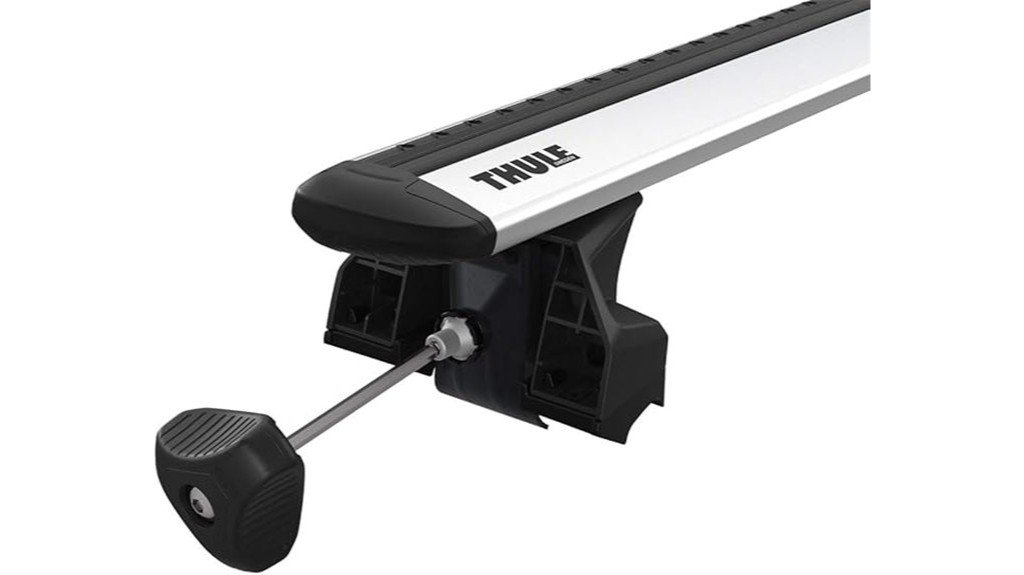
The Thule Evo Flush Rail Foot Pack is a set of four load-carrier feet for the Thule Evo roof rack system. Model 710601 is designed for vehicles whose factory rails sit close to the roof, with little or no open space underneath.
The four feet connect the vehicle-specific fit kit to two compatible Thule crossbars. Thule lists WingBar Evo, AeroBlade, SquareBar Evo, and ProBar Evo support, but the right bar length and fit kit depend on your vehicle. A roof with raised rails or a bare roof needs a different mounting system.
The included torque-limiter key is designed to click at the specified tightening point. Thule’s 710601 instructions show a 4 Nm setting and separate components for the foot pack, vehicle fit kit, and bars. The key is useful if you remove and reinstall the rack for seasonal use.
Before You Buy: Flush rails that look alike can require different fit kits. Check your exact year, make, model, roof option, specified bar length, and fit kit in Thule’s vehicle-fit information before ordering. Do not rely on the 165 lb rating alone.
Key Takeaways
- Model 710601 is a four-foot pack for compatible vehicles with flush roof railings.
- It is not the correct foot type for bare roofs, fixed points, gutters, or raised rails with an open gap underneath.
- Thule lists a 165 lb (75 kg) maximum, but your usable capacity may be lower.
- It fits Thule WingBar Evo, AeroBlade, SquareBar Evo, and ProBar Evo crossbars.
- The supplied torque-limiter key indicates the specified 4 Nm tightening point.
- Thule One-Key locks are compatible but sold separately.
Who Should Buy It?
Best For
- You have confirmed flush-rail fitment for model 710601 through Thule.
- You own suitable Thule crossbars or plan to purchase a matched pair and the required fit kit.
- You want a roof base for a compatible cargo box, bike rack, ski rack, or kayak carrier within your load limit.
Skip If
- Your vehicle has raised rails, a bare roof, fixed mounting points, or another roof style.
- You want a complete rack in one box without separate crossbars or fit components.
- Your planned rack, accessory, and cargo weight exceeds the lowest limit in the setup.
Design and Compatibility Overview
The black feet sit on approved flush rails rather than gripping an exposed raised-rail gap. They give the rack a neat appearance on many SUVs, wagons, and crossovers, but the bars and mounted gear still add height and can create wind noise.
Compatibility matters more than appearance. Two vehicles may both have flush rails but use different rail profiles, mounting positions, bar lengths, or fit kits. You should treat Thule’s vehicle-specific fit result as the deciding factor, not a visual comparison with another car.
Thule lists a 165 lb (75 kg) maximum for this foot pack. That is not an automatic payload allowance. The usable load is capped by the lowest limit across your vehicle roof, feet, bars, and carriers, after accounting for the weight of installed equipment.
Fit and Vehicle Compatibility
Flush rails run along the roof but sit close to the vehicle body. Raised rails leave a visible opening underneath, while bare roofs and fixed-point roofs use different mounting methods. Choosing the wrong foot type can prevent a secure clamp and may damage the rail or roof.
Check your vehicle’s year, make, model, trim, and exact roof option before ordering. Thule’s fit guide determines the kit, bar length, and allowed mounting positions. Do not copy bar placement from another trim or assume any two flush rails use the same clamping pieces.
Sunroofs, antennas, tailgates, and cargo boxes may also affect your setup. Confirm clearance before tightening the rack or loading an accessory.
Build Quality and Weather Exposure
The feet use covers over the mounting points and are intended for outdoor use as part of a complete roof rack. Fit-kit contact pieces must sit on the rail as shown in the vehicle instructions. Do not use a missing pad, substitute a clamp, or file down a part to force it into place.
Thule’s product page lists the pack weight as 2.27 lb. Its assembly instructions show a different pictogram weight for the feet, so do not use that listing number alone for precise load calculations. Include the actual mounted feet, bars, fit hardware, carrier, and cargo in the total roof load.
Inspect the covers, contact pads, clamps, bars, and hardware for damage or movement. Wash road salt and grime off the mounting areas, especially in winter, and replace worn parts rather than trying to repair damaged load-bearing pieces.
Installation and Security Features
Clean the rails and gather the four feet, the correct vehicle fit kit, two compatible bars, and both sets of instructions. Assemble them in Thule’s specified order, position the bars where the fit guide directs, and tighten with the supplied torque-limiter key. Thule’s 710601 manual shows 4 Nm; use the click indication rather than tightening further by feel.
After assembly, check each connection and pull on the bars to confirm they do not shift. The Thule manual illustrates checks after 50 km and 500 km. Inspect the system before trips and during long drives, particularly after rough roads or large temperature changes.
The feet accept Thule One-Key lock cylinders, but those locks are not included. Budget for a lock set if you leave the rack on the car. A lock makes theft harder; it does not replace checking the mounting hardware before driving.
Pro Tip: After the first correct installation, keep the fit kit part number, bar-length details, torque-limiter key, and any One-Key lock number together. You will need these details when replacing a missing component or reinstalling the rack.
Load Capacity and Performance
The listed maximum load is 165 lb (75 kg), but a lower roof or accessory limit always wins. For example, a 100 lb roof limit does not become 165 lb because the Thule feet support more. Count the rack, bars, cargo carrier, and contents together, not just the gear inside the box.
Distribute cargo as the carrier maker instructs and keep the center of gravity low. Bikes, kayaks, skis, and boxes require compatible mounts and suitable straps. For a long boat or board, follow its carrier’s front and rear tie-down requirements.
Roof cargo can change braking, cornering, side-wind sensitivity, and fuel use. Leave more stopping room and reduce speed when conditions require it. Never use the rack’s 165 lb rating as a reason to ignore the vehicle or accessory manual.
How It Performs in Real Use
For Daily Driving
For a commuter, the main benefit is a fitted mounting point for removable cargo bars. Wind noise can still come from the bar profile, speed, or a roof accessory. These are expected use considerations, not results from a hands-on road test.
For Road Trips
On a long trip, a cargo box or ski carrier can keep bulky gear out of the cabin, if the carrier and the full rack are approved for your vehicle. Check clamps, locks, and straps at stops, and plan parking around the added vehicle height.
For Kayaks and Other Long Loads
For a kayak or other long item, the feet are only the base. The carrier, bar spread, boat length, and restraint instructions matter just as much. Use approved straps and bow or stern lines when required; do not use bungee cords as the main restraint.
For Seasonal Use
For ski or summer gear seasons, the supplied tool allows a repeatable tightening process when you refit the same approved system. Store small kit parts safely, clean the rail contact areas, and repeat the full installation check whenever you put the rack back on.
Setup Tips Before First Use
- Confirm the roof type: Make sure the rails are flush, not raised, fixed-point, or bare-roof mounts.
- Match the full system: Verify the foot pack, bar model, bar length, and required fit components together.
- Clean contact areas: Remove grit from the rails and mounting surfaces before assembly.
- Follow the listed bar positions: Use your vehicle’s approved bar spacing rather than estimating or copying another car.
- Count every pound: Weigh or verify the complete installed rack and carrier, then add the cargo and compare against the lowest rating.
- Check for movement: Test the mounted bars before driving and follow Thule’s 50 km and 500 km inspection illustrations.
- Measure total height: Include the rack and cargo before entering garages, parking structures, or drive-through lanes.
Compatibility and Safety Notes
Use the lowest load limit in the complete setup. A 165 lb foot-pack rating does not increase a lower vehicle, crossbar, or accessory rating. Do not modify the feet or substitute unapproved hardware to force a fit.
Thule’s roof rack guidance says you must adapt your speed to the load, traffic, weather, and road conditions and never exceed 80 mph (130 km/h). The manual also depicts a lower 50 mph (80 km/h) caution for certain long-roof-load situations. Posted limits or an accessory’s own instructions can require lower speeds.
Use the supplied torque tool and approved hardware. Secure cargo with the carrier maker’s straps and recheck tension during travel. Do not attempt to fit a different roof type with improvised hardware. Consult the official Thule 710601 installation manual for the assembly sequence and inspection illustrations.
Pros and Cons
Pros
- Purpose-built for compatible vehicles with flush roof railings.
- Works with four major Thule bar families.
- Included torque-limiter key reduces tightening guesswork.
- Manufacturer lists a compact 2.27 lb product weight; still verify installed system weight.
- Accepts optional Thule One-Key locks for added theft deterrence.
Cons
- Both the crossbars and the correct vehicle-specific fit kit are separate purchases.
- Flush rails alone do not guarantee fit; the exact vehicle and roof option must be listed.
- One-Key lock cylinders are an extra purchase.
Is It Worth the Price?
The Thule Evo Flush Rail Foot Pack sits in the premium roof rack category. You pay for a vehicle-specific connection, support for four Thule bar families, and a supplied tool that signals the specified installation torque.
The expense makes more sense if you already own compatible bars or expect to use several Thule carriers over time. Once you confirm a fitted base, you can change compatible accessories without replacing the feet each time.
For one short trip, a tight budget, or a car you expect to replace soon, the full cost may be hard to justify. Add up the foot pack, fit kit, two bars, optional lock cylinders, and the carrier before comparing systems.
How It Compares to Alternatives
Thule Evo Raised Rail feet suit approved raised rails with a clear gap underneath. Thule Evo Clamp feet are for selected bare-roof vehicles that use a clamp fit kit. Neither is a substitute for 710601 on a vehicle approved for Evo Flush Rail feet.
If you prefer a lower-profile flush-rail setup, compare the Thule Edge Flush Rail system as well, but check its own bar and foot requirements. Choose from Thule’s vehicle-fit results rather than assuming the Evo and Edge parts mix.
Frequently Asked Questions
Does the Thule Evo Flush Rail Foot Pack fit every vehicle with roof rails?
No. Model 710601 is for approved vehicles with flush roof railings. Confirm your exact year, make, model, trim, and roof type through Thule’s fit guide before ordering.
Is this a complete roof rack system?
No. The package contains four feet for the mounting base. You still need compatible Thule crossbars and any vehicle-specific fit components listed for your car.
Do I need a separate fit kit?
Yes. The 710601 installation system uses a vehicle-specific fit kit as well as the feet and crossbars. Check Thule’s current fit result for the correct kit number.
What Thule bars work with it?
Thule lists WingBar Evo, AeroBlade, SquareBar Evo, and ProBar Evo. You must still buy the approved bar length for your vehicle; a compatible bar family alone is not enough.
How much weight can the rack carry?
Thule lists 165 lb (75 kg), but your car or accessories can have a lower limit. Include the weight of the mounted rack and carrier, not only the contents.
Are locks included?
No. The feet are compatible with the Thule One-Key System, but lock cylinders are sold separately. Add them when theft deterrence matters for an installed rack.
How often should I check the rack after installation?
Check the rack before each trip and follow Thule’s illustrated inspections after 50 km and 500 km. Recheck clamps and cargo during long or rough-road journeys.
Who should skip this foot pack?
Skip it if your vehicle does not have an approved flush-rail application or if you want an all-in-one rack. It is also unsuitable when your planned total roof load exceeds the lowest limit in the system.
The Bottom Line
The Thule Evo Flush Rail Foot Pack is recommended with caveats for drivers whose vehicle appears in the Thule 710601 fit guide. Its four-foot design, compatible bar choices, and torque-limiter tool are useful strengths, but you must buy the correct fit kit and bars separately.
Buy it for a confirmed flush-rail Evo build within your roof limit. Skip it for raised rails, fixed points, bare roofs, or a budget that does not cover the full rack system.