Disclosure: As an Amazon Associate, we earn from qualifying purchases. If you click a link on this page and make a purchase, we may receive a small commission at no extra cost to you.
Tusk Motorcycle Recovery Strap Review: Compact 12-Foot Recovery Gear for Off-Road Motorcycles
When you ride off-road on a motorcycle, getting stuck in mud, sand, or a tight trail spot can turn a good day into a long one. The Tusk Motorcycle Recovery Strap offers a lightweight solution designed specifically for single-bike recoveries rather than heavy towing. This 12-foot strap aims to give solo riders a practical tool they can actually carry without adding much weight or bulk to their setup.
In this review, we examine how the Tusk strap performs under real trail conditions, what its 1,500 lb rating actually means for motorcycle use, and whether the included carry pouch and simple design deliver enough value for off-road riders who want dependable recovery gear without overcomplicating their kit.
Our Verdict
Rating: 7.5/10
Best For: Solo off-road motorcycle riders who need a compact, easy-to-carry strap for light recoveries on dirt bikes and adventure motorcycles.
Bottom Line: You get a genuinely portable nylon strap that holds its rated load well and packs small, but the 1,500 lb capacity and 12-foot length limit it to lighter single-bike use. It is not a heavy-duty tow strap or kinetic rope.
| Specification | Detail |
|---|---|
| Brand | Tusk |
| Model | Motorcycle Recovery Strap (12 ft) |
| Material | 1-inch wide nylon webbing |
| Length | 12 feet |
| Rated Capacity | 1,500 lbs |
| Carry Pouch | Nylon, approximately 6 x 2 x 1 inches, with belt loop |
| Stretch | Minimal (static webbing, not kinetic) |
| Best Use | Lightweight off-road motorcycle recovery |
| Not Recommended For | Heavy vehicles, trucks, or shock-loaded recoveries |
What Is the Tusk Motorcycle Recovery Strap?
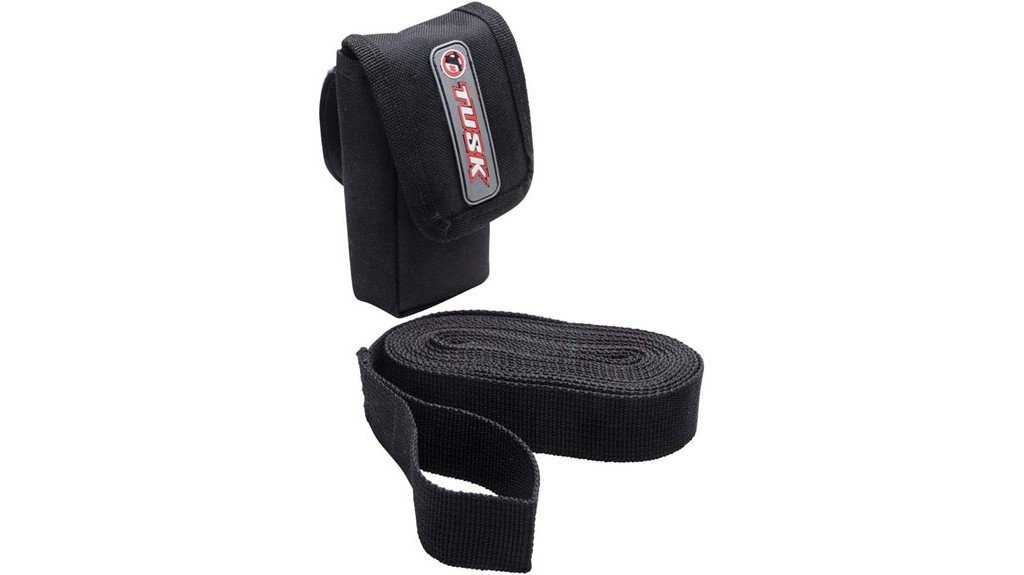
The Tusk Motorcycle Recovery Strap is a compact recovery tool built for off-road motorcycle riders. It consists of 12 feet of 1-inch wide nylon webbing rated at 1,500 pounds, paired with a small nylon carry pouch that includes a belt loop for easy attachment to your riding gear.
Tusk positions this strap as a practical, lightweight option for solo riders who want something they can actually keep on the bike without adding noticeable bulk. The nylon webbing provides minimal stretch compared to kinetic recovery ropes, which means it works best with steady, controlled pulls rather than sudden shock loads.
The included pouch measures roughly 6 by 2 by 1 inches, making the whole package easy to store under a seat, in a tank bag, or clipped to a belt. This focus on portability sets it apart from longer, heavier tow straps meant for trucks or UTVs.
Who It’s For
- Solo adventure and dual-sport riders who regularly explore remote trails and want a compact recovery tool they can carry every ride.
- Dirt bike riders who occasionally get stuck in mud, sand, or loose terrain and need a simple strap for self-recovery or helping another rider.
- Riders who prioritize low weight and small packed size over maximum pulling capacity or length.
Who Should Skip It
- Riders with full-size adventure bikes or heavier motorcycles who may exceed the 1,500 lb rating during recovery.
- Anyone needing a longer strap or kinetic energy assistance for difficult extractions where stretch helps free a stuck vehicle.
- People who tow heavier vehicles or participate in organized recovery scenarios that require higher-capacity equipment.
Design and Build Quality
The strap uses straightforward 1-inch nylon webbing construction. In testing referenced in product information, it held its full 1,500 lb rated load without visible stretching or seam failure under controlled conditions. The nylon material offers moderate resistance to UV exposure and dries quickly after getting wet, which matters when you ride in rain or cross streams.
The carry pouch is simple but functional. It keeps the strap contained, prevents tangling, and includes a belt loop so you can attach it to your riding pants or jacket when you need quick access. The overall weight stays low enough that most riders will not notice it in their kit.
Build quality is adequate for the intended lightweight use. There are no reinforced ends or heavy hardware, which keeps weight down but also means you should inspect the stitching and webbing regularly for wear, especially after exposure to abrasion or sharp edges on the trail.
Performance and Real-World Durability
The Tusk strap performs reliably within its design limits. It handles steady pulls at the rated capacity without dramatic stretch, which makes it predictable when you have solid anchor points. Riders report that it resists fraying reasonably well during normal use and packs back into the pouch without much fuss.
Long-term durability depends heavily on care. Moderate UV exposure over months can cause some fading and gradual weakening of the nylon, so storing the strap in its pouch and out of direct sunlight when not in use helps extend its life. After muddy or wet rides, rinsing off dirt and allowing it to dry fully prevents hidden abrasion from embedded grit.
Because it is static webbing rather than a kinetic rope, it does not store and release energy the same way. This makes it safer in some situations but less effective when you need the extra “snap” to free a deeply stuck bike.
How It Performs in Real Use
On the Trail – Solo Recovery
When you high-center your dirt bike in a rut or soft spot, the 12-foot length usually gives you enough reach to a nearby tree, rock, or another rider’s bike. The compact size means you can deploy it quickly without unpacking a large kit. The lack of stretch requires smooth, steady throttle input from the pulling vehicle rather than jerky movements.
Group Rides and Helping Others
In small groups, the strap works well for extracting a single stuck motorcycle. Its light weight makes it easy to pass between riders. However, if multiple bikes are involved or the stuck bike is heavier, you may need to reposition anchors or accept that this strap is better suited as a backup tool rather than primary heavy recovery gear.
Storage and Daily Carry
The pouch with belt loop is one of the more practical features. Many riders clip it to their belt or stash it under the seat. Because the whole package stays small, you are more likely to actually bring it along instead of leaving a bulky strap at home.
Pros
- Extremely compact nylon pouch (roughly 6 x 2 x 1 inches) with belt loop makes it easy to carry on every ride.
- Lightweight 1-inch nylon webbing rated at 1,500 lbs holds steady loads without visible stretch in testing.
- Quick to deploy and repack, which matters when you are alone on the trail.
- Dries quickly after water exposure and offers moderate UV resistance for occasional outdoor use.
- Affordable entry point for riders who want dedicated recovery gear without investing in heavier equipment.
Cons
- 1,500 lb rating limits it to lighter single-motorcycle recoveries; not suitable for heavier bikes or trucks.
- Only 12 feet long, which can be short depending on anchor placement and recovery angle.
- Static webbing provides minimal stretch, so it lacks the kinetic assistance of dedicated recovery ropes.
- Requires proper hard anchor points and correct technique; not forgiving of shock loads.
Is It Worth the Price?
The Tusk Motorcycle Recovery Strap sits in the budget-friendly category for dedicated motorcycle recovery gear. Its value comes mainly from portability and simplicity. If you ride solo in areas where you might need to self-recover or help another rider with a single bike, the small packed size and low weight make it more likely that you will actually carry recovery equipment instead of leaving it behind.
For riders who already own a basic tow strap or kinetic rope for heavier use, this strap serves as a lightweight complement rather than a replacement. It shines when your priority is minimizing what you carry while still having something purpose-built for motorcycle recoveries.
Buyers who frequently tackle difficult terrain with heavier bikes or who want maximum pulling length and stretch may find the limitations noticeable. In those cases, stepping up to a longer kinetic rope or higher-capacity strap usually makes more sense.
How It Compares to Alternatives
If you want more length and some stretch for tougher extractions, consider a dedicated kinetic recovery rope designed for motorcycles. These typically offer greater elasticity and can help free a bike that is more deeply stuck, though they usually cost more and pack larger.
For riders who occasionally help with UTVs or need higher capacity, a traditional 2-inch or 3-inch tow strap provides significantly more strength but loses the compact, motorcycle-friendly packaging that makes the Tusk strap convenient to carry every day.
The Tusk strap remains a sensible choice when your primary need is a small, always-with-you tool for single-bike off-road recoveries and you accept its capacity and length limits.
Frequently Asked Questions
Can the Tusk strap handle a full-size adventure motorcycle?
It can manage many single-bike recoveries within its 1,500 lb rating, but heavier adventure bikes or difficult angles may push or exceed that limit. Always assess the situation and use proper technique with solid anchor points.
Does this strap stretch like a kinetic recovery rope?
No. It is static nylon webbing with minimal stretch. It works best with steady, controlled pulls rather than sudden shock loading. Kinetic ropes store and release energy differently and are better suited for more difficult recoveries.
How long should the strap be for most motorcycle recoveries?
Twelve feet works for many trail-side situations when you have a nearby anchor, but tighter spaces or awkward angles may require repositioning or a longer strap. Many riders carry this as a compact primary or backup option.
What maintenance does the strap need?
Rinse off mud and dirt after use, allow it to dry fully, and store it in the pouch away from direct sunlight when possible. Inspect the webbing and stitching regularly for abrasion, cuts, or wear, especially along edges that contact sharp objects.
Can I attach it to soft points like clothing or tree branches?
No. Always attach to solid, rated hard points such as frame tubes, tow hooks, or proper recovery points. Soft attachments are unsafe and can fail under load.
Is the carry pouch durable enough for regular trail use?
The pouch holds up well for normal packing and transport. It is not heavily armored, so avoid crushing it under heavy gear or exposing it to constant abrasion. Its main job is keeping the strap organized and easy to deploy.
The Bottom Line
The Tusk Motorcycle Recovery Strap earns its place in a solo off-road rider’s kit because it is genuinely compact, lightweight, and purpose-built for the kind of recoveries most dirt bike and adventure riders actually face. It delivers predictable performance within its 1,500 lb rating and makes it easy to carry recovery gear on every ride.
At the same time, its limitations in capacity, length, and lack of stretch mean it is not a universal solution. Riders with heavier bikes or more demanding recovery needs will likely want additional or higher-capacity tools. For its intended audience, however, it offers a practical balance of portability and capability.
Ready to Buy?