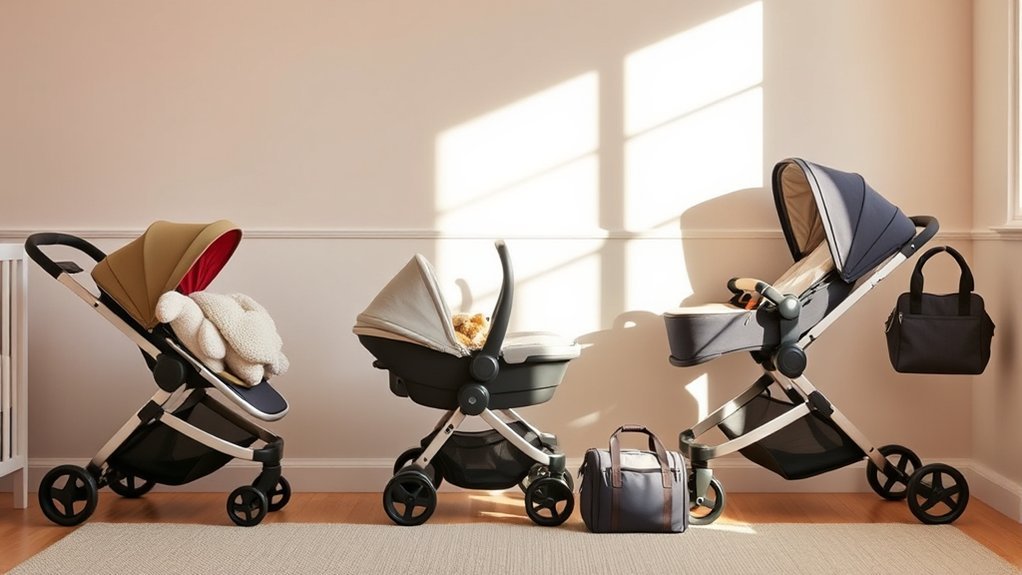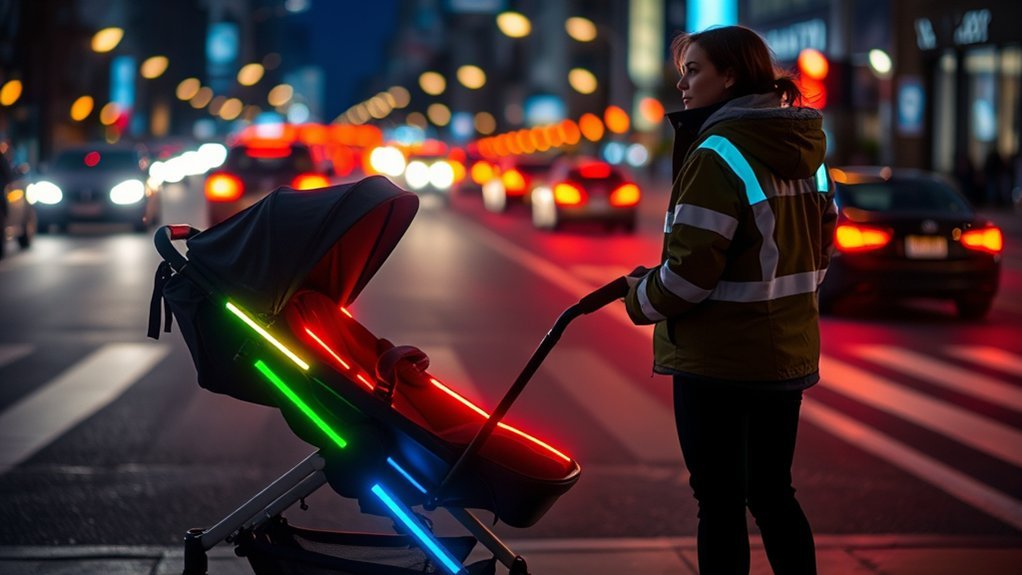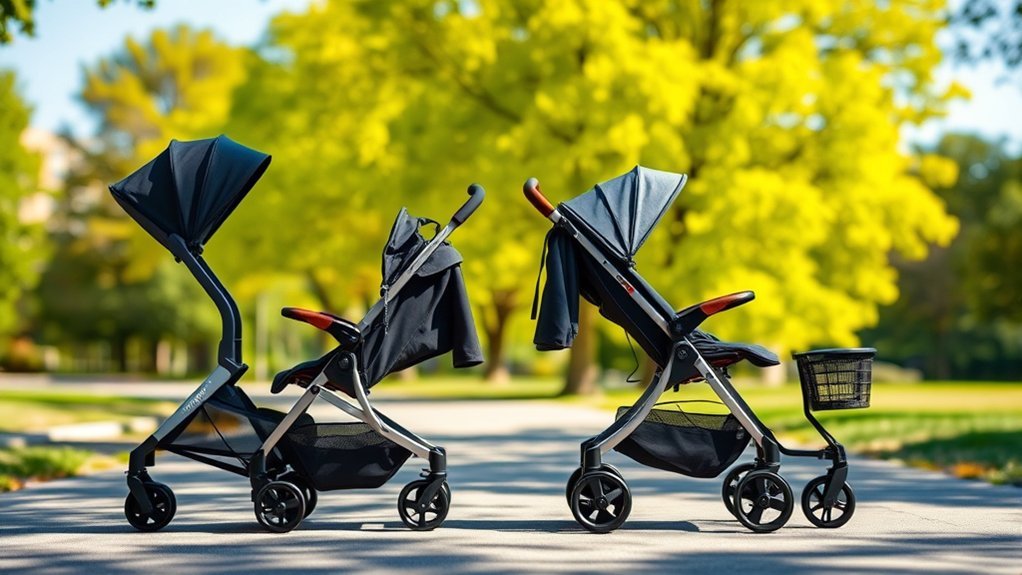
When deciding between an umbrella stroller and a lightweight stroller, you’ll notice key differences. Umbrella strollers are compact and budget-friendly but compromise on comfort and safety features. In contrast, lightweight strollers offer better support, a sturdier build, and improved safety measures, accommodating children from birth to toddlerhood. Both options excel in portability, yet their suitability varies depending on your needs. To compare further, you’ll find additional insights on their advantages and limitations.
Overview of Umbrella Strollers
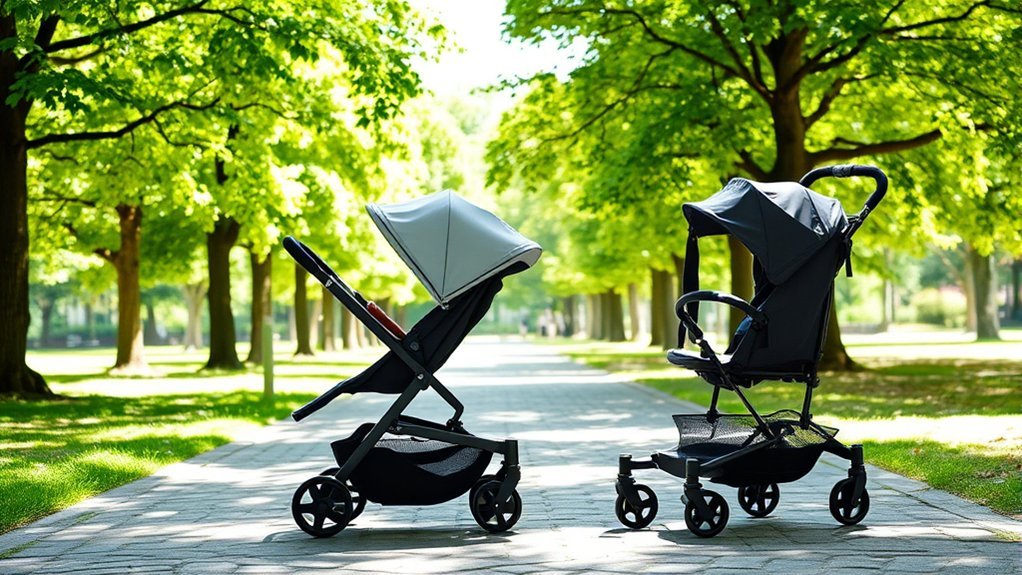
When you’re looking for a convenient solution for transporting your little one, umbrella strollers offer a lightweight and compact option that meets many parents’ needs. They’re ideal for children aged 6 months and older, accommodating weights up to 40-50 pounds.
The simple folding mechanism makes it easy to store in car trunks or small spaces, a significant umbrella stroller benefit for parents on the go.
However, keep in mind the umbrella stroller drawbacks; they often lack advanced features like suspension systems and extensive storage options.
While more affordable than full-size strollers, many parents are now opting for more feature-rich travel strollers that provide better adaptability and comfort, addressing specific needs as children grow.
Overview of Lightweight Strollers
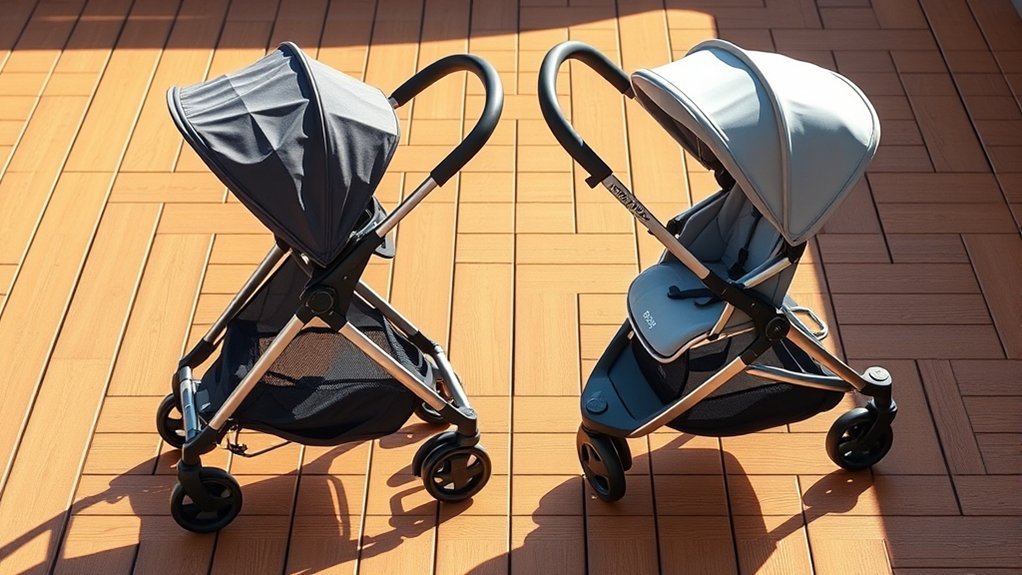
Lightweight strollers are a practical choice for parents seeking a balance between convenience and functionality. Typically weighing between 10-20 pounds, these strollers are designed for easy carrying and maneuverability, perfect for parents on-the-go.
They often feature lightweight materials, allowing for quick storage and transport. With efficient folding mechanisms, you can easily fit them into smaller spaces, like car trunks or closets.
Most lightweight strollers accommodate children from 6 months and up, supporting weight limits ranging from 40 to 55 pounds. While they provide essential features like basic sun canopies and simple reclining options, they tend to be more affordable than full-size models, though they may lack advanced features like extensive storage or enhanced suspension systems.
Comfort and Features Comparison
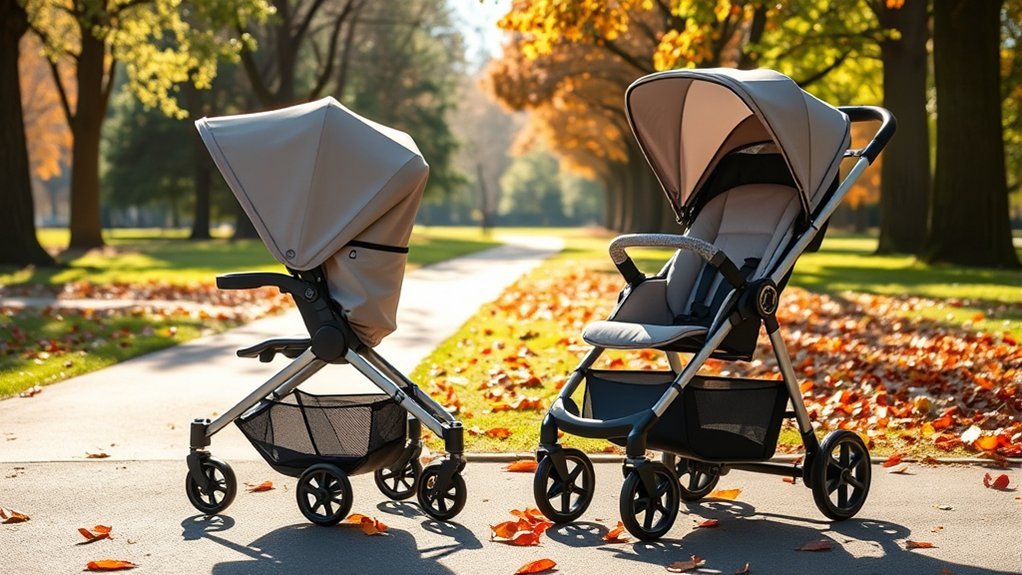
When comparing comfort and features between umbrella and lightweight strollers, you’ll notice distinct differences in design and portability.
While umbrella strollers focus on being lightweight and easy to carry, they often compromise on comfort and support, offering basic features.
In contrast, lightweight strollers enhance your child’s experience with advanced safety features and superior comfort options for longer outings.
Design and Portability
While both umbrella strollers and lightweight strollers prioritize portability, their design and comfort features cater to different needs.
Umbrella strollers, weighing around 10-13 pounds, excel in compactness, making them perfect for quick trips and easy transport. Their design versatility is evident in their easy folding mechanisms.
In contrast, lightweight strollers, weighing between 10-20 pounds, offer more robust builds with enhanced comfort features like adjustable handlebars and basic sun canopies. They also provide better storage options, featuring larger underseat baskets and multiple pockets for essentials.
While umbrella strollers are suited for children 6 months and older, lightweight strollers accommodate infants from birth, emphasizing their versatility and adaptability for various parenting needs.
Comfort and Support
Choosing the right stroller for your child involves considering comfort and support, as these factors greatly impact your baby’s experience during outings.
Lightweight strollers typically offer basic comfort levels, featuring sun canopies and simple reclining mechanisms, making them ideal for short trips. However, they often lack the support structures found in full-size strollers, which provide advanced features like adjustable handlebars and multi-position reclines.
Full-size options also incorporate shock-absorbing suspension systems, enhancing comfort during bumpy rides. While lightweight strollers excel in maneuverability, they may not be suitable for longer walks or outdoor activities where superior comfort and support are essential.
Ultimately, understanding these differences helps you choose the best stroller for your family’s needs.
Safety Features Overview
Safety features play a critical role in stroller selection, influencing how secure and protected your child feels during outings.
Both umbrella and lightweight strollers meet essential safety regulations, but lightweight strollers often offer enhanced safety features. They typically include a 5-point harness system, ensuring your child stays secure, while umbrella strollers may have basic harness options.
Lightweight strollers also boast improved stability with wider frames and shock-absorbing wheels, providing better safety during outdoor use. Although both types feature secure locking mechanisms and brakes, lightweight strollers generally provide superior support and safety for infants and toddlers.
Ultimately, if you prioritize safety features, a lightweight stroller is likely the better option for your family’s outings.
Safety Features Analysis
When considering stroller options, it’s essential to evaluate the safety features of both umbrella and lightweight strollers. Both types meet fundamental safety standards, but their safety ratings differ.
Traditional lightweight strollers often boast a 5-point harness system, enhancing child security compared to some umbrella strollers, which may only include basic harnesses. While umbrella strollers emphasize portability, this can compromise stability and support for infants.
Lightweight strollers typically incorporate additional safety enhancements, such as a W-shaped frame, offering better support. It’s important for you to verify the safety features of each option, as lightweight strollers generally provide a more secure environment for your child than many umbrella models, ensuring you can enjoy outings with peace of mind.
Portability and Storage Considerations
Evaluating stroller options goes beyond safety; portability and storage are significant factors to contemplate.
Umbrella strollers shine in travel convenience, folding to under a foot in height, making them ideal for tight spaces. Their lightweight design allows for easy carrying, perfect for on-the-go parents.
Umbrella strollers excel in travel ease, folding compactly and offering lightweight portability for busy parents.
While lightweight strollers weigh between 10-20 pounds, they provide sturdiness for longer outings. Both types fit into car trunks with ease, but umbrella strollers often feature simpler folding mechanisms, enabling quick setup and takedown.
When it comes to storage, lightweight strollers typically offer around 10 gallons of underseat storage, compared to the limited 5-8 gallons of umbrella strollers.
Your choice ultimately depends on your specific needs for stroller dimensions and overall portability.
Age and Growth Potential
When choosing between an umbrella stroller and a lightweight stroller, consider your child’s age and weight capacity needs.
Umbrella strollers work best for children 6 months and older, while lightweight strollers can support infants from birth with proper features.
Both options accommodate growing toddlers, but lightweight strollers often provide better longevity due to their robust construction and versatility.
Suitable Age Range
While both umbrella and lightweight strollers serve the needs of parents and their growing children, they differ markedly regarding suitable age range and growth potential.
Umbrella strollers typically cater to children aged 6 months and older, lacking the necessary infant support for younger babies.
In contrast, lightweight strollers accommodate infants from birth, making them a versatile choice as your child grows.
With age recommendations that extend up to toddlerhood, lightweight strollers often support weight limits of up to 55 pounds, providing longevity.
Although both types can be used for toddlers, lightweight strollers generally offer more features for comfort and adaptability, ensuring they meet your child’s needs throughout different growth stages.
Weight Capacity Comparison
Understanding weight capacity is essential when choosing between umbrella and lightweight strollers.
Umbrella strollers typically support a weight capacity of around 40-50 pounds, making them ideal for children aged six months and older. However, lightweight strollers usually accommodate children up to 55 pounds, providing more room for growth and longevity.
This sturdier construction enhances stroller durability, allowing for use into the toddler years. While lightweight strollers can be used from infancy with compatible car seats, umbrella strollers aren’t recommended for newborns due to limited recline options.
When selecting a stroller, consider your child’s growth potential; lightweight options may serve you longer and adapt better to your child’s developing needs, fostering a sense of freedom in mobility.
Cost Considerations
Cost plays a significant role in the decision-making process for parents choosing between an umbrella stroller and a lightweight stroller.
Cost is a crucial factor for parents when selecting between an umbrella stroller and a lightweight stroller.
Here are some key points to evaluate:
- Price Range: Umbrella strollers typically range from $100 to $300, making them budget options for quick trips.
- Affordability: Lightweight strollers often provide a cost-effective alternative to full-size models, which can exceed $300.
- Feature Trade-offs: While umbrella strollers are affordable, they may lack advanced features found in pricier lightweight strollers, like enhanced suspension systems.
Advantages of Each Stroller Type
When weighing your options between umbrella and lightweight strollers, it’s important to contemplate the unique advantages each type offers.
Umbrella advantages include affordability, typically ranging from $70 to $150, making them budget-friendly for occasional use. Their compact design facilitates easy folding and storage, perfect for urban living.
On the other hand, lightweight benefits are notable too; these strollers often feature better sun canopies and improved suspension, enhancing versatility for various activities. They can accommodate children up to 55 pounds, extending their usability.
Additionally, lightweight strollers frequently offer larger storage baskets and adjustable recline options, improving functionality for daily outings.
Understanding these advantages can help you make a well-informed choice that meets your family’s needs.
Limitations of Each Stroller Type
While both umbrella and lightweight strollers have their benefits, they also come with specific limitations that can affect your choice.
- Durability: Umbrella strollers often lack the durability needed for frequent outdoor use, making them less reliable over time.
- Storage Space: Many umbrella strollers feature limited storage space, which can be a hassle when you need to carry essentials.
- Comfort and Safety: Lightweight strollers generally provide better comfort and safety features, like adjustable footrests and suspension systems, which umbrella strollers may not offer.
If you’re planning to use a stroller for longer outings or with an infant, these limitations might steer you towards a more robust lightweight option, ensuring better functionality for you and your child.
Frequently Asked Questions
Can I Use an Umbrella Stroller for a Newborn?
You shouldn’t use an umbrella stroller for a newborn since they often lack proper support and safety features. Opt for a stroller designed specifically for infants to guarantee your baby’s comfort and safety during outings.
How Much Do Lightweight Strollers Typically Weigh?
Lightweight strollers typically weigh between 10 to 15 pounds. These lightweight features make them easy to maneuver, enhancing stroller benefits for parents seeking convenience and portability during outings with their little ones.
Are Umbrella Strollers Suitable for Travel on Public Transportation?
Absolutely, umbrella strollers shine in public transport compatibility, offering travel convenience with their lightweight design. They fold easily, making your journey smoother, ensuring you navigate crowded buses and trains with the freedom you crave.
What Are the Best Brands for Lightweight Strollers?
When searching for the best lightweight strollers, consider popular brands like Baby Jogger, Chicco, and Summer Infant. They offer durability, ease of use, and comfort, making your outings with your little one enjoyable and hassle-free.
Can I Attach a Car Seat to an Umbrella Stroller?
You can’t attach a car seat to most umbrella strollers due to safety concerns and compatibility issues. Always check the manufacturer’s guidelines to guarantee your child’s safety and stroller functionality before making a choice.
Conclusion
In the great debate of umbrella strollers versus lightweight strollers, it really comes down to your lifestyle and needs. If you’re maneuvering crowded sidewalks like a modern-day knight, an umbrella stroller might be your trusty steed. However, if you prefer a bit more comfort for longer outings, a lightweight stroller could be your best bet. Weigh the advantages and limitations of each type carefully, and you’ll find the perfect fit for your family’s adventures.