Disclosure: As an Amazon Associate, we earn from qualifying purchases. If you click a link on this page and make a purchase, we may receive a small commission at no extra cost to you.
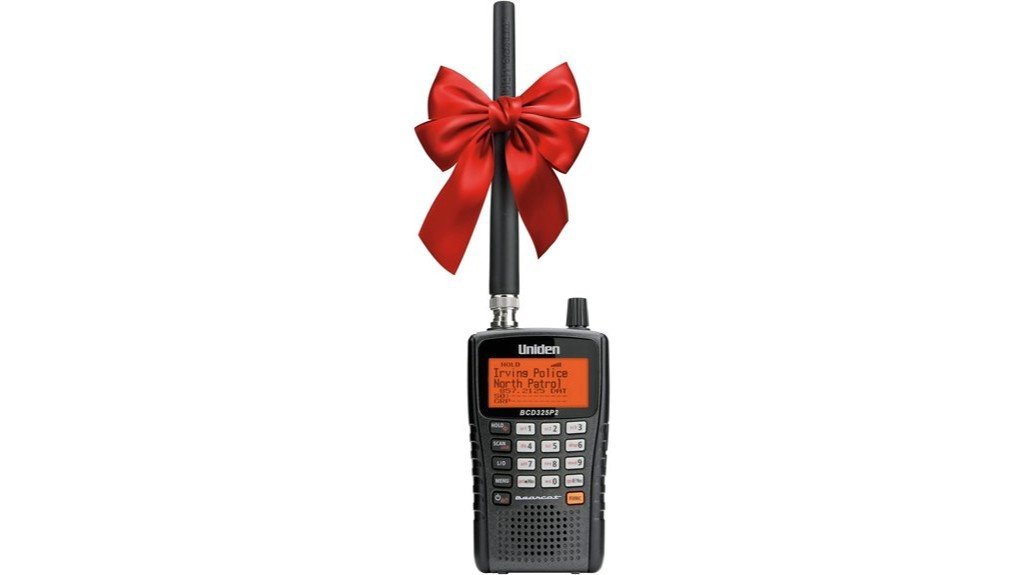
Choosing a handheld scanner starts with one question: can it receive the unencrypted radio systems used in your area? The Uniden BCD325P2 supports APCO P25 Phase I and Phase II, several analog trunking formats, conventional channels, and location-based scanning with optional GPS hardware. Its compact body, 25,000-channel dynamic memory, replaceable AA batteries, and BNC antenna connection suit experienced hobbyists who value control. The tradeoff is a steep setup process, an older mini-USB interface, and no database-driven setup or onboard audio recording.
Quick Verdict
Rating: 8/10, recommended with caveats
Best For: Scanner hobbyists and field users who need a compact, manually programmed receiver with P25 Phase II support.
Bottom Line: The BCD325P2 gives you broad trunking support, flexible dynamic memory, replaceable AA power, and useful tools such as Close Call and 100 quick keys. Buy it only after confirming local system compatibility and accepting that programming takes time.
Key Takeaways
- The BCD325P2 receives APCO P25 Phase I and Phase II, conventional analog channels, and supported Motorola, EDACS, and LTR trunked systems.
- Dynamic memory supports up to 25,000 channels, 500 systems, 1,000 total sites, and 20 groups per system.
- The scanner measures about 2.64 x 1.29 x 4.53 inches without projections and weighs about 9.6 ounces with its antenna and batteries.
- It uses two AA alkaline or rechargeable NiMH batteries and can run from USB power with the batteries removed.
- The 64 x 128 dot-matrix LCD has an orange backlight. It is not a color display.
- The antenna jack is BNC, not SMA, so confirm connector type before buying an antenna or adapter.
- It cannot decode scrambled or encrypted traffic, and local laws may restrict portable or vehicle use.
Key Specifications
| Specification | Detail |
|---|---|
| Brand | Uniden |
| Model | BCD325P2 |
| Product type | Compact digital handheld scanner |
| Digital support | APCO P25 Phase I and Phase II |
| Trunking support | TrunkTracker V; supported Motorola, Motorola Astro 25, P25 one-frequency trunk, EDACS, EDACS SCAT, and LTR systems |
| Memory | Up to 25,000 dynamically allocated channels, 500 systems, and 1,000 total sites |
| Organization | Systems, sites, groups, channels, number tags, and 100 quick keys |
| Display | 64 x 128 full dot-matrix LCD with orange backlight |
| Dimensions | 2.64 x 1.29 x 4.53 inches without antenna, knob, clip, or other projections |
| Weight | 9.6 ounces with antenna and batteries |
| Power | Two AA alkaline or rechargeable NiMH batteries; 5V USB power support |
| Antenna connection | BNC, 50-ohm antenna system |
| Other connections | 5-pin mini-USB and 3.5 mm headphone jack |
| Key features | Close Call RF Capture with DND, location-based scanning, S.A.M.E. weather alerts, CTCSS/DCS/NAC decoding, and PC control |
| Listed box contents | Scanner, antenna, USB cable, hand strap, two rechargeable AA NiMH batteries, belt clip, and printed materials |
| Warranty | One-year limited warranty for the original retail owner in the United States, subject to Uniden terms |
| Important limitation | Not waterproof and cannot decode scrambled or encrypted transmissions |
What Is the Uniden BCD325P2?
The Uniden BCD325P2 is a manually programmed handheld radio scanner. It monitors supported conventional and trunked radio systems, including APCO P25 Phase I and Phase II digital voice. TrunkTracker V also covers several older analog trunking formats that remain useful in some areas.
Dynamic memory replaces fixed channel banks with systems, sites, groups, and channels. That structure gives you more control over a large regional setup, but it also creates a learning curve. You will get the best results after researching your local system type, control channels, talkgroups, and encryption status.
Close Call RF Capture can detect strong nearby transmissions, while an optional compatible GPS receiver can enable location-based scanning. These tools add flexibility, but neither replaces accurate system programming.
Who Should Buy It?
Best For
- You need P25 Phase II support in a compact handheld format.
- You prefer detailed manual control over systems, sites, groups, talkgroups, and quick keys.
- You value replaceable AA batteries, USB power, a BNC antenna connector, and optional GPS-based scanning.
Skip If
- You want a scanner with a built-in frequency database and simple ZIP-code setup.
- Your target agencies use encrypted traffic or a system the scanner does not support.
- You need onboard recording, Wi-Fi, smartphone control, or a weather-resistant body.
Before You Buy: Check your local radio system before ordering. P25 Phase II support does not help when an agency uses encryption, an unsupported format, or a system that receives poorly at your location.
Key Features and Hardware Overview
The BCD325P2 keeps its controls, speaker, keypad, and display in a body measuring about 4.53 inches tall without projections. At 9.6 ounces with the antenna and batteries, it remains easy to carry on the included belt clip or hand strap.
The display is a 64 x 128 dot-matrix LCD with an orange backlight. It shows system names, channel tags, talkgroup details, signal information, and menu options, but it is not a large color screen. The keypad gives you direct access to number tags, quick keys, hold, lockout, menu, and search functions.
The BNC antenna jack supports the supplied antenna and many aftermarket options without relying on a delicate SMA fitting. A 3.5 mm headphone jack and 5-pin mini-USB port cover private listening, PC programming, serial control, charging, and external power.
Trunking and Digital Scanning Capabilities
TrunkTracker V follows supported analog Motorola, Motorola Astro 25, P25 one-frequency trunk, EDACS, EDACS SCAT, and LTR systems. APCO P25 Phase I and Phase II support makes the scanner suitable for many unencrypted public-safety networks, but compatibility depends on the exact system used near you.
The dynamic memory system supports up to 500 systems, 1,000 total sites, 20 groups per system, and 25,000 channels. Multi-site programming lets related sites share talkgroup IDs, which reduces duplicate entries when one trunked network covers a large area.
CTCSS, DCS, and NAC decoding helps separate users that share a frequency. Adjustable delays, priority functions, temporary lockouts, channel volume offsets, and control-channel-only scanning give experienced users detailed control over how the scanner behaves.
Programming, Controls, and PC Use
The BCD325P2 is easier to manage after you understand Uniden’s system, site, group, and channel structure. Its 100 quick keys let you enable or disable selected systems, sites, groups, and searches without rebuilding the entire scan list.
You can program from the keypad or use compatible third-party software through the mini-USB connection. The USB serial mode also supports PC control. This approach offers more flexibility than a basic analog scanner, but it demands more research than a database-driven model.
Firmware can be updated from a Windows PC with Uniden’s update tools when a compatible release is available. The documented feature set does not include onboard audio recording, built-in Wi-Fi, or native smartphone control.
Antenna and Reception Notes
The supplied antenna gives you a starting point, not a guarantee of ideal reception on every band. Signal quality changes with transmitter distance, terrain, building materials, indoor electronics, and the radio band you monitor.
The BNC connector makes antenna changes straightforward. A band-specific handheld antenna may improve portable use, while a properly installed external or vehicle antenna may help in fixed or mobile setups. Match the antenna to your target frequencies and confirm any adapter requirements before buying.
Close Call RF Capture works best with strong nearby transmissions. It can help you identify local activity, but it will not discover distant talkgroups or replace correct trunked-system programming.
Battery and Power
The scanner runs on two AA alkaline or rechargeable NiMH batteries. Replaceable cells give you more flexibility than a sealed battery because you can carry a spare charged set or use alkaline batteries when charging is unavailable.
The included mini-USB cable can power the scanner with the batteries removed. Rechargeable batteries can also charge inside the scanner, but charging occurs only while the scanner is turned off and uses a timer-based process.
Never try to charge alkaline or other non-rechargeable cells inside the scanner. Battery runtime varies with cell capacity, audio activity, volume, backlight use, temperature, and scanning conditions, so Uniden does not present one universal runtime figure in the manual.
Compatibility, Legal, and Safety Notes
The scanner cannot decode scrambled or encrypted transmissions. It also does not receive every digital format simply because it supports P25 Phase II. Confirm the exact system type and encryption status for the agencies or services you plan to monitor.
Scanner laws vary by country, state, city, and use case. Portable or vehicle use may be restricted or require a permit in some places. Follow local law, do not interfere with emergency operations, and do not treat this review as legal advice.
Uniden does not represent the BCD325P2 as waterproof, so keep it away from rain and moisture. Set the speaker volume to a comfortable level before connecting headphones, and use the correct headphone type described in the manual.
How It Performs in Real Use
For Local Monitoring
The BCD325P2 works best when you build a focused list of nearby systems, sites, and talkgroups. Quick keys and temporary lockouts help you narrow the scan to the services you care about instead of cycling through a crowded regional file.
For Public Safety and Digital Systems
P25 Phase II support gives you access to many compatible unencrypted systems. Reception can still vary by site layout and location, and encrypted talkgroups remain unavailable regardless of signal strength.
For Weather Alerts
S.A.M.E. weather alert support lets you program FIPS codes for selected areas. This feature can supplement a weather radio setup, but you must configure the correct codes and keep the scanner powered for alerts.
For Travel and Field Use
The compact body, belt clip, hand strap, and replaceable AA batteries suit travel and field monitoring. With optional compatible GPS hardware, the scanner can enable or disable programmed systems based on your location, which helps when crossing several coverage areas.
Setup Tips Before First Use
- Research the system first: Confirm whether your target uses conventional analog, P25 Phase I, P25 Phase II, another supported trunking format, or encryption.
- Start with one area: Build a small local system before importing thousands of channels. A focused file is easier to test and troubleshoot.
- Use clear text tags: Name systems, sites, groups, and channels so active traffic makes sense at a glance.
- Assign quick keys early: Group systems by county, service, or travel route so you can switch them on and off quickly.
- Set squelch carefully: Use the lowest setting that prevents constant noise. Excessive squelch can hide weaker signals.
- Test before changing antennas: Compare reception near a window, outdoors, and in different parts of your home before buying accessories.
- Confirm battery type: Charge only rechargeable NiMH cells and keep the scanner off during internal charging.
Pro Tip: Save a backup of your programming file before major edits or firmware work. Rebuilding systems, sites, talkgroups, and quick-key assignments from scratch can take hours.
Pros and Cons
Pros
- Supports APCO P25 Phase I and Phase II plus several analog trunking formats.
- Stores up to 25,000 channels with flexible systems, sites, groups, and quick keys.
- Uses replaceable AA batteries and can operate from USB power.
- BNC antenna connector supports practical antenna upgrades.
- Close Call, S.A.M.E. alerts, tone decoding, optional GPS scanning, and PC control add useful depth.
Cons
- Manual programming has a real learning curve, especially for trunked systems.
- No onboard recording, Wi-Fi, native smartphone control, or built-in frequency database.
- Mini-USB, timed in-scanner charging, and a non-waterproof body feel dated.
Is It Worth the Price?
The BCD325P2 sits in the mid-range to advanced handheld scanner category. Its value comes from P25 Phase II support, broad trunking compatibility, dynamic memory, replaceable AA power, and detailed manual control rather than a modern touchscreen or app.
It is worth considering when you already know your local systems are compatible and want a compact scanner you can organize precisely. The same purchase makes less sense when you need instant database setup, encrypted traffic access, onboard recording, or remote smartphone monitoring.
Budget for any extras your setup needs, such as programming software, a band-specific antenna, an external power source, or compatible GPS hardware. Confirm the seller’s current package contents before ordering.
How It Compares to Alternatives
The Uniden BCD436HP is easier to consider when you want a handheld model with a HomePatrol database and less manual frequency research. The HomePatrol-2 goes further toward touchscreen and ZIP-code-based setup, while the BCD996P2 makes more sense for a fixed desk or vehicle installation.
The BCD325P2 remains the better fit when compact size, replaceable AA batteries, a traditional keypad, BNC antenna support, and detailed manual organization matter more than database convenience.
Frequently Asked Questions
Does the Uniden BCD325P2 receive P25 Phase II?
Yes. It supports APCO P25 Phase I and Phase II. Your target traffic must still be unencrypted and carried on a system the scanner supports.
Can the BCD325P2 decode encrypted police channels?
No. It cannot decode scrambled or encrypted transmissions. A stronger antenna or different programming cannot overcome encryption.
Does it have a built-in frequency database?
No. You program systems and channels manually from the keypad or through compatible PC software. Buyers who want ZIP-code setup should compare database-driven Uniden models.
What type of batteries does it use?
It uses two AA alkaline or rechargeable NiMH batteries. Charge only rechargeable cells, and remember that internal charging works while the scanner is turned off.
Does the BCD325P2 use an SMA antenna connector?
No. The scanner uses a BNC antenna jack. Check the connector on any replacement antenna and buy the correct adapter only when needed.
Can it record audio or connect to a smartphone?
The documented feature set does not include onboard audio recording, Wi-Fi, or native smartphone control. It supports PC programming and serial control through the mini-USB port.
Is the BCD325P2 waterproof?
No. Uniden states that the scanner is not waterproof and should not be exposed to rain or moisture. Use a protective case and keep it dry during field use.
Is it a good scanner for beginners?
It can work for a patient beginner, but it is not a plug-and-play model. Expect to learn local system research, dynamic memory, quick keys, talkgroups, and antenna basics.
The Bottom Line
The Uniden BCD325P2 earns an 8/10, recommended-with-caveats verdict for buyers who need compact P25 Phase II scanning, detailed dynamic memory, replaceable AA power, and a BNC antenna connection. Skip it when you need database-driven setup, encrypted traffic, onboard recording, smartphone control, or weather resistance.
Ready to Buy?
Check the latest price, seller package contents, and product details before you decide.