
When inspecting a used stroller, you need to check key areas for safety. Inspect the frame for cracks, test locking mechanisms for functionality, and examine wheels for wear. Verify safety harnesses buckle properly and check for any recalls or compliance with safety standards. Regular maintenance and cleaning are crucial for hygiene and performance. For an extensive checklist that guarantees your child’s safety, you’ll find essential tips and resources as you explore further.
Importance of Inspecting Used Strollers
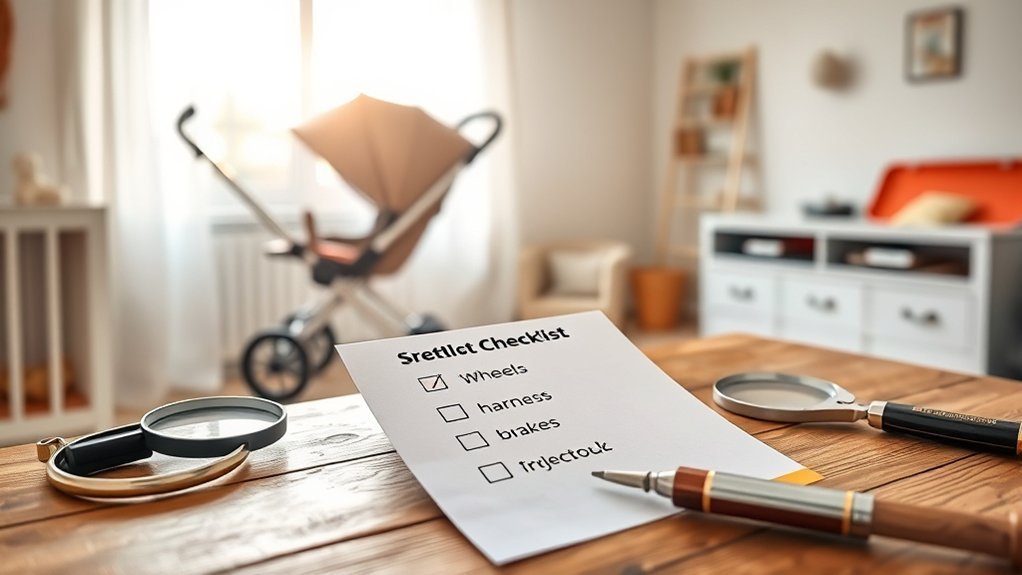
When you consider buying a used stroller, it’s important to inspect it thoroughly to guarantee your child’s safety. Stroller safety is paramount, especially since nearly 64% of injuries among children under 5 are linked to strollers and similar items.
A thorough inspection helps you identify hidden structural damage and makes sure that essential safety mechanisms like brakes and harnesses function properly. Missing components or worn-out parts can greatly increase the risk of accidents.
Additionally, checking for recalls is critical, as many older models may not meet current safety standards. By researching the stroller’s history and asking the seller about any past accidents or repairs, you take an important step toward injury prevention, making certain your child’s ride is secure and safe.
Key Inspection Criteria for Strollers

While inspecting a used stroller, you should focus on several key criteria to confirm its safety and functionality. Securing stroller durability is vital for long-term use, so check the frame for any visible damage or cracks. Test the locking mechanisms by folding and unfolding the stroller several times to validate they work smoothly. Inspect the wheels and casters for wear, confirming they rotate freely without wobbling. Safety enhancements like intact harnesses are important, so buckle and unbuckle the straps multiple times. Finally, verify that the stroller meets current safety standards by checking for the manufacturing date and any recall information.
| Inspection Criteria | Action Items |
|---|---|
| Frame | Check for damage and cracks |
| Locking Mechanisms | Test folding/unfolding |
| Wheels and Casters | Inspect for wear and smooth rotation |
| Safety Harnesses | Confirm straps buckle/unbuckle correctly |
| Safety Standards | Verify manufacturing date and recalls |
General Inspection Process
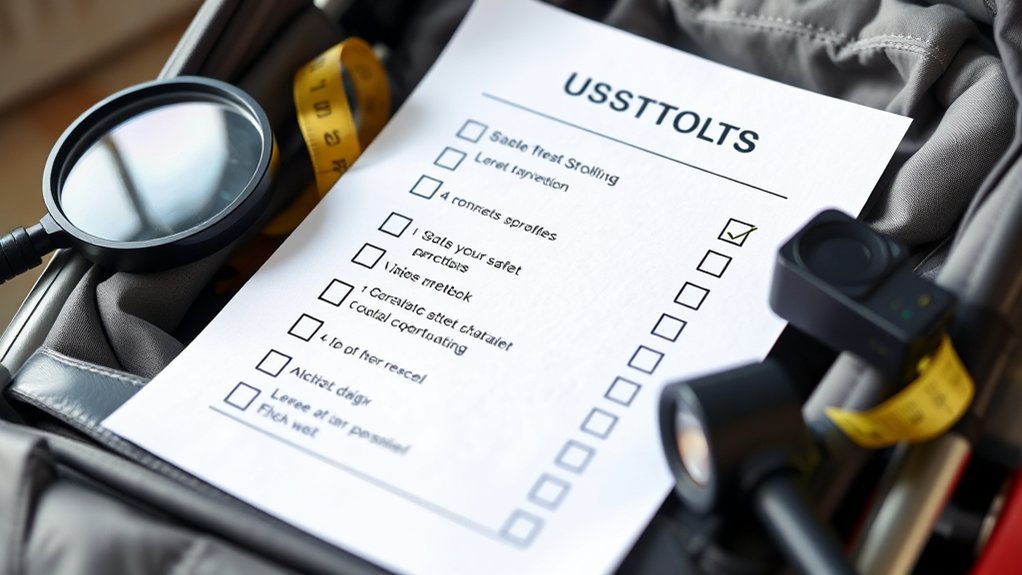
Before you plunge into inspecting a used stroller, it’s essential to start with a thorough evaluation of its overall condition.
Begin with a frame inspection, looking for visible damage or wear; verify there are no cracks or dents that could compromise safety.
Next, check the wheel condition; inspect the wheels or casters for any damage and make certain they rotate smoothly and securely.
You’ll also want to examine safety harnesses and straps, confirming they’re intact and free from fraying.
Test the locking mechanisms on folding parts to confirm they engage properly for stability.
Finally, take a close look at the fabric or upholstery for any tears, stains, or signs of wear, as these can impact safety and hygiene.
Compliance and Safety Standards
When inspecting a used stroller, you need to be aware of vital compliance regulations and safety standards that protect your child.
Strollers manufactured after September 10, 2015, must meet specific federal safety requirements, guaranteeing they’ve undergone rigorous testing for key features.
Staying updated on recent safety changes is essential to avoid potential hazards and secure a safe ride for your little one.
Essential Compliance Regulations
To guarantee the safety of your child, it’s crucial to understand the compliance regulations governing strollers. Familiarize yourself with safety certifications mandated by the Consumer Product Safety Improvement Act (CPSIA) and ASTM F833, which guarantee features like secure harness placements and structural integrity.
Strollers made after September 10, 2015, must meet federal safety standards covering stability, locking mechanisms, and strength. Additionally, the American Society for Testing and Materials (ASTM) requires rigorous mechanical and physical safety testing.
Don’t overlook the European Toy Safety Standards (EN 71), which protect against harmful chemicals. Staying updated on regulatory updates and conducting regular compliance checks is essential to minimize risks, especially given the reported 1,203 nonfatal stroller incidents from 2008 to 2012.
Testing and Evaluation Standards
Understanding testing and evaluation standards is essential for guaranteeing that used strollers provide a safe environment for your child. Compliance with safety standards like CPSIA and ASTM F963 ensures that strollers meet vital mechanical, physical, and chemical safety requirements.
Testing methodologies established by the U.S. Consumer Product Safety Commission (CPSC) focus on harness placement, stability, and strength, particularly for strollers manufactured after September 10, 2015. You should routinely check for recalls on the CPSC website to verify the stroller isn’t subject to safety warnings or defects.
Additionally, ongoing evaluations are important, as they utilize incident reports to refine evaluation criteria, helping to enhance child safety standards over time. Remember, a safe stroller is key to your child’s well-being.
Recent Safety Updates
As safety standards evolve, staying informed about recent updates in stroller compliance is crucial for parents seeking to provide a secure environment for their children.
The Consumer Product Safety Commission (CPSC) established stringent regulations effective September 10, 2015, enhancing stroller safety requirements considerably. Strollers manufactured after this date must meet rigorous standards for harness placement, brake performance, and structural integrity, reflecting recent stroller innovations.
The ASTM F963 standard also applies to strollers with toy features, guaranteeing mechanical, physical, and chemical safety. These stroller safety trends have led to a notable reduction in stroller-related injuries.
Always check for recalls and compliance before purchasing used strollers to guarantee your child’s safety remains a top priority.
Detailed Safety Checklist
When inspecting a used stroller, it’s vital to focus on key safety criteria to guarantee your child’s protection.
You should check for frame integrity, wheel stability, and the functionality of the harness system.
Additionally, familiarize yourself with compliance testing standards to make informed decisions about your purchase.
Key Inspection Criteria
Before you decide to purchase a used stroller, it’s crucial to conduct a thorough inspection to confirm your child’s safety.
Start by checking for visible damage on the frame; verify there’s no cracking or flexing that compromises frame stability.
Next, inspect the wheels for excessive wear—spin each one to assess their performance and verify smooth operation.
Test the safety harnesses and straps for functionality, confirming they’re intact and free from fraying.
Additionally, check that all folding mechanisms work smoothly without sticking.
Finally, conduct a smell test to identify any unusual odors that could indicate hygiene issues.
Compliance Testing Standards
Conducting a thorough inspection of a used stroller isn’t just about checking for visible wear and tear; it’s also crucial to understand the compliance testing standards that guarantee safety.
Look for safety certifications like ASTM F833, which guarantees strollers are safe for children up to 36 months. The Consumer Product Safety Improvement Act (CPSIA) mandates rigorous safety standards, including limits on harmful substances.
If the stroller was made after September 10, 2015, it should have passed enhanced stability and braking tests, minimizing accident risks. Additionally, European Toy Safety Standards (EN 71) apply, covering mechanical and chemical safety.
Stay informed on regulatory updates to verify the stroller you choose meets these critical safety benchmarks.
Tips for Cleaning and Maintaining Used Strollers
To guarantee your used stroller remains safe and functional for your child, regular cleaning and maintenance are essential.
Start by machine washing the fabric parts according to the manufacturer’s instructions, using baby-safe detergent to eliminate stains and odors.
For plastic and metal components, employ effective cleaning techniques by disinfecting with warm, soapy water and a soft cloth, ensuring all surfaces are wiped down.
Don’t forget to check the stroller’s wheels and brakes, cleaning them of debris for smooth operation.
Inspect the upholstery for mold or mildew, especially in seams, and clean or replace as necessary.
Finally, regularly tighten any loose screws or bolts to maintain structural integrity, ensuring your stroller and its accessories provide a safe ride.
Common Risks Associated With Secondhand Strollers
Cleaning and maintaining a used stroller is important, but it’s equally essential to be aware of the risks that come with purchasing secondhand models.
Hidden structural damage can compromise safety, increasing the chances of accidents or failures during use. Worn-out safety mechanisms, like brakes and locks, may lead to unexpected collapses or rollaways.
Additionally, missing harness straps or user manuals can hinder proper usage, putting your child at risk. Hygiene is another concern, as fabric seats can harbor spills, mold, and allergens.
Finally, be cautious of outdated safety standards in older strollers, as they may not meet current regulations. Understanding these risks helps guarantee stroller longevity and enhances your overall user experience.
Resources for Further Information and Support
When you’re maneuvering through the world of secondhand strollers, having access to reliable resources can make all the difference in ensuring your child’s safety.
Start by visiting the Consumer Product Safety Commission (CPSC) website to check for recalled products; it’s essential for verifying safety compliance before making a purchase.
BabyCenter offers expert guidelines on safe practices for buying and using secondhand strollers, stressing the importance of thorough inspections.
Additionally, Consumer Reports evaluates strollers based on safety and usability, providing insights to aid your decision.
Don’t forget to consult the American Academy of Pediatrics for recommendations on stroller features and usage.
Finally, Safe Kids Worldwide emphasizes the importance of choosing compliant products, ensuring your child’s safety while enjoying their stroller.
Frequently Asked Questions
Where Can I Find a Used Stroller Inspection Checklist?
You can find a used stroller inspection checklist online through parenting blogs, safety websites, or secondhand shopping platforms. Prioritizing stroller safety guarantees you make informed choices while enjoying budget-friendly finds for your family.
How Often Should I Inspect a Used Stroller?
You should inspect a used stroller every few months, or more often if you’re feeling adventurous. Stroller maintenance guarantees it meets safety standards, keeping your little one safe while you boldly traverse the world.
What Brands Are Known for Safer Used Strollers?
Britax strollers and Baby Jogger are known for their safety and reliability. When shopping for used options, consider these brands to guarantee your child’s comfort and protection, giving you peace of mind during outings.
Can I Return a Used Stroller if It’s Unsafe?
Yes, you can return a used stroller if it’s unsafe, depending on the store’s return policy. Always prioritize stroller safety; check the terms before purchasing to guarantee you’re protected if issues arise.
Are There Age Limits for Using Secondhand Strollers?
There aren’t strict age limits for using secondhand strollers, but you should always follow safety guidelines. Make sure the stroller suits your child’s age and size for maximum safety and comfort during use.
Conclusion
In the journey of parenthood, a used stroller can be a trusty steed, ready to carry your little one safely through life’s adventures. By following this inspection checklist, you’re not just ensuring safety; you’re also investing in peace of mind. Like a well-tended garden, a little care and attention can transform a secondhand stroller into a reliable companion. Embrace the opportunity to create cherished memories, knowing you’ve taken the steps to keep your child secure on every outing.




Leave a Reply