Used Stroller Inspection Checklist: How to Check Safety Before You Buy
What’s in This Article
- Why Used Stroller Inspections Matter
- Key Safety Checks for a Used Stroller
- Step-by-Step Used Stroller Inspection Process
- Stroller Safety Standards and Recall Checks
- Detailed Used Stroller Safety Checklist
- How to Clean and Maintain a Used Stroller
- Common Risks of Secondhand Strollers
- Trusted Resources for Stroller Safety
- Frequently Asked Questions
A used stroller can save you money, but only if it still protects your child. Small problems, such as weak brakes, loose locks, or worn harness straps, can create real safety risks.
This checklist shows you how to inspect the frame, wheels, brakes, harness, folding locks, fabric, recalls, and safety labels before you buy or use a secondhand stroller.
Quick Answer
Inspect a used stroller by checking the frame, brakes, wheels, folding locks, harness, seat fabric, labels, and recall status. Buy it only if every safety part works, the stroller has no cracks or missing pieces, and the model meets current safety requirements.
Key Takeaways
- Check the frame first because cracks, bends, or loose joints can make the stroller unsafe.
- Test the brakes, folding locks, and harness before you place a child in the stroller.
- Look up recalls through the Consumer Product Safety Commission before you buy.
- Clean all fabric and hard surfaces before use, even if the stroller looks clean.
- Skip any stroller with missing labels, missing parts, strong odors, mold, or unsafe repairs.
Why Used Stroller Inspections Matter
When you buy a used stroller, you need to inspect it thoroughly before your child rides in it. Stroller safety matters because falls, tip-overs, brake failures, and broken parts can cause injuries.
A careful check helps you spot hidden frame damage and confirm that essential safety mechanisms, such as brakes and harnesses, work as they should. Missing parts, weak locks, or worn straps can raise the risk of accidents.
You should also check for recalls because older models may not meet current safety standards. Ask the seller about past crashes, repairs, storage conditions, and missing parts before you decide.
Key Safety Checks for a Used Stroller

Focus on the parts that affect safety, support, and daily use. A stroller should feel sturdy, fold and unfold smoothly, and stop firmly when you use the brakes.
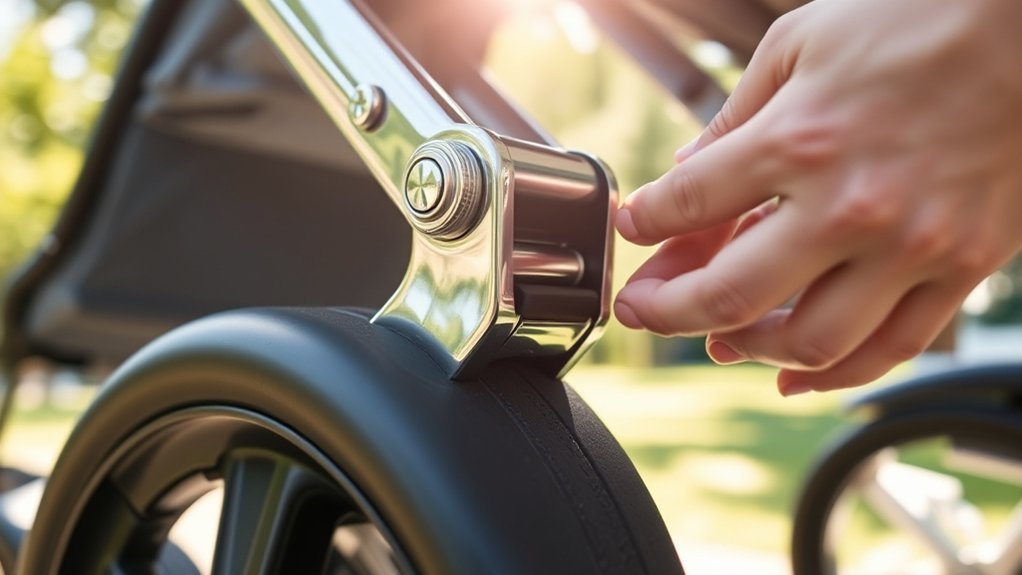
Check the frame for visible cracks, bends, rust, or loose joints. Test the locking mechanisms several times, then inspect the wheels and casters for wear, wobbling, or poor rotation.
Safety enhancements like intact harnesses are also crucial. Buckle and unbuckle every strap several times, then confirm the stroller has a visible model number and manufacturing date so you can check recalls.
| Inspection Criteria | Action Items |
|---|---|
| Frame | Check for cracks, bends, rust, and loose joints |
| Locking Mechanisms | Test folding and unfolding several times |
| Wheels and Casters | Inspect for wear, wobbling, and smooth rotation |
| Safety Harnesses | Confirm straps buckle, tighten, and release correctly |
| Safety Standards | Verify the manufacturing date, model number, and recalls |
Step-by-Step Used Stroller Inspection Process
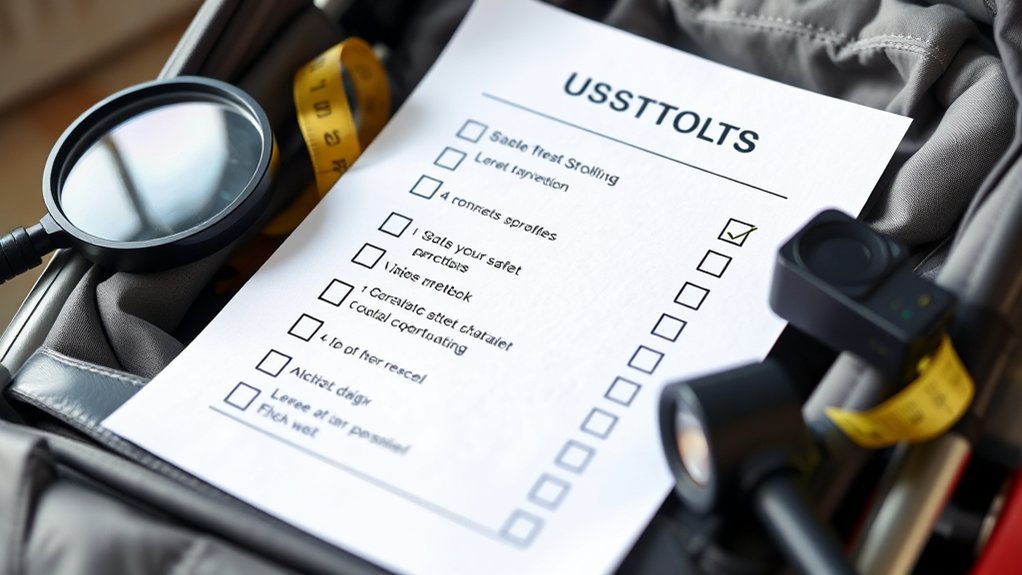
Before you inspect small parts, look at the stroller’s overall condition. A stroller with heavy wear, missing labels, broken plastic, or strong odors may not be worth the risk.
- Check the frame. Look for cracks, dents, rust, bending, or uneven joints that could weaken support.
- Test the wheels. Push the stroller forward and backward, then turn it to confirm the wheels move smoothly.
- Lock the brakes. Apply the brakes on a flat surface and gently push the stroller to test if it stays still.
- Try the folding locks. Fold and unfold the stroller several times to make sure the locks engage fully.
- Inspect the harness. Check that every strap, buckle, and adjustment point works without fraying or sticking.
- Review the fabric. Look for tears, stains, mold, mildew, loose seams, or padding that has shifted.
- Confirm the labels. Find the model number and manufacturing date so you can check recalls.
Warning: Do not use a stroller with a cracked frame, faulty brakes, missing harness straps, or a recalled defect that lacks a completed repair.
Stroller Safety Standards and Recall Checks
When you inspect a used stroller, check whether it follows key compliance regulations and safety standards. These rules help reduce hazards linked to stability, brakes, locking systems, hinges, restraint systems, and structural strength.
In the United States, the Consumer Product Safety Commission (CPSC) has a federal safety standard for carriages and strollers. Strollers made after September 10, 2015, must meet this standard.
You should also check the model on the CPSC recall database before buying. A recalled stroller may need a repair kit, replacement part, or full stop-use action.
Essential Compliance Regulations
Look for signs that the stroller meets the rules that apply in your market. In the United States, the Consumer Product Safety Improvement Act (CPSIA) sets requirements for many children’s products, including limits on certain harmful substances.
Many stroller safety rules refer to ASTM F833, a standard that covers carriages and strollers. It addresses hazards such as stability, parking brakes, restraint systems, folding locks, and openings that could trap a child.
European stroller standards differ from U.S. rules. If you buy an imported stroller, confirm that it meets the safety rules that apply where you live.
Testing and Evaluation Standards
Safety standards use tests to check how a stroller performs under stress. These tests can include brake checks, stability checks, locking checks, restraint checks, and structural strength tests.
A used stroller may have met a safety standard when new, but age and wear can change how it performs. That is why you still need a hands-on inspection before use.
Check all labels and ask the seller for the manual if they still have it. The manual can help you confirm weight limits, approved seating positions, folding instructions, and replacement part details.
Current Safety Checks to Confirm Before Purchase
Stroller standards have changed over time, so you should not rely only on the seller’s claim that a model is safe. Confirm the manufacturing date, model name, and recall status before you pay.
Pay close attention to the harness, brake system, folding locks, and frame. These parts handle the most safety-critical work during daily use.
If a stroller includes toy features, trays, or removable accessories, inspect those parts too. Loose, broken, or sharp pieces can create choking, pinching, or cut risks.
Detailed Used Stroller Safety Checklist
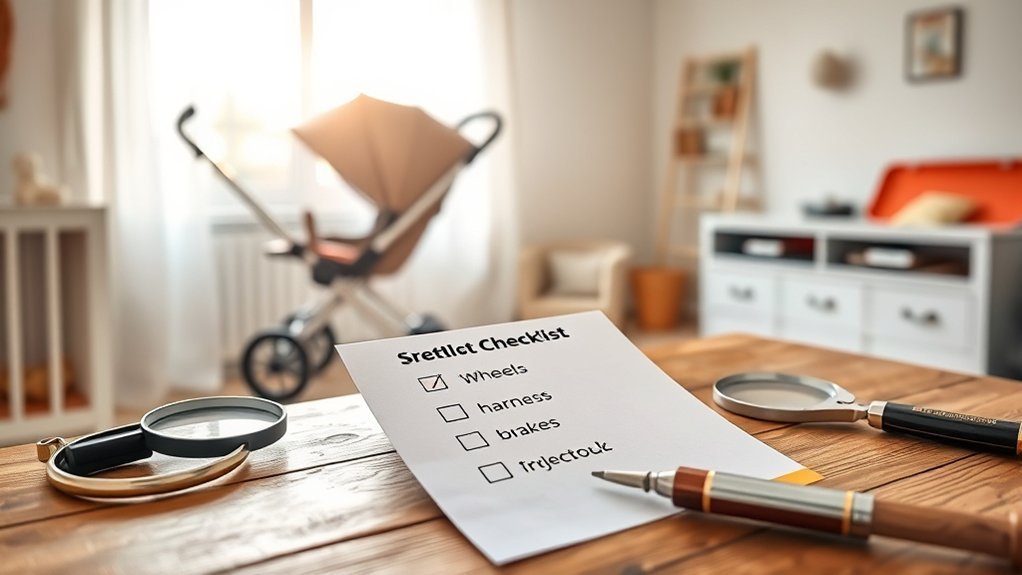
Use this checklist when you inspect the stroller in person. Bring a flashlight, a clean cloth, and your phone so you can look up recalls and model details on the spot.
Key Inspection Criteria
Start with the frame because it supports the whole stroller. Reject the stroller if you see cracking, deep rust, bent tubing, unstable joints, or repairs that look weak.
Next, inspect the wheels for heavy wear. Spin each wheel, check for wobbling, and make sure the stroller tracks straight when you push it.
Test the safety harnesses and straps for strength and function. The buckles should click firmly, release only when you press them, and adjust to hold your child snugly.
Check that all folding mechanisms work smoothly without sticking. A lock that only partly engages can let the stroller collapse during use.
Finish with a smell test and fabric check. Strong odors, mold, mildew, heavy staining, or sticky residue can point to hygiene problems or poor storage.
Compliance Testing Standards
Look for a clear label with the manufacturer, model name, model number, and manufacturing date. You need these details to check recalls and find the correct manual.
For U.S. products, confirm whether the stroller falls under CPSC rules and ASTM F833-related safety requirements. For products sold in other regions, check the safety standard used in that country.
Do not assume a stroller is safe because it looks clean or has a well-known brand name. Wear, missing parts, and poor repairs can make even a high-quality stroller unsafe.
What to Ask the Seller Before Buying
Ask clear questions before you inspect the stroller. Honest answers can help you decide whether the stroller deserves a closer look.
- Ask whether the stroller has ever been in a crash, fall, or major impact.
- Ask whether any parts have been replaced or repaired.
- Ask whether the seller still has the manual, receipt, or registration card.
- Ask where and how the stroller was stored.
- Ask whether the stroller has any missing accessories or broken parts.
Walk away if the seller avoids basic safety questions. You need enough information to judge risk before your child uses the stroller.
How to Clean and Maintain a Used Stroller
Regular cleaning and maintenance help your used stroller stay safe and usable. Start with the manufacturer’s instructions because some fabric parts can go in a washing machine, while others need hand cleaning.
Use baby-safe detergent for fabric parts, then let them dry fully before reassembly. Damp fabric can trap odors and encourage mold growth.
Clean plastic and metal parts with warm, soapy water and a soft cloth. Wipe handles, trays, buckles, wheel housings, and brake pedals because these areas collect dirt fast.
Check the wheels and brakes after cleaning. Remove hair, grit, and debris that could stop smooth movement or reduce braking power.
Tighten any loose screws or bolts if the manual allows it. Replace damaged parts only with parts approved by the manufacturer.
Pro tip: Take photos before you remove fabric or straps so you can reinstall each part in the correct position.
Common Risks of Secondhand Strollers
A secondhand stroller can look fine while hiding safety issues. Hidden frame damage can weaken support and increase the chance of failure during use.
Worn-out safety mechanisms, such as brakes and locks, can cause rollaways or sudden folding. Missing harness straps or missing manuals can also lead to unsafe setup.
Hygiene is another concern because fabric seats can hold spills, allergens, mold, or pest residue. Clean the stroller fully before use, even if the seller says they already cleaned it.
Older strollers may not meet current rules or may have recall issues. Check the model before you buy so you do not bring home a stroller that needs repair or replacement.
When to Skip a Used Stroller
Some safety problems should end the sale right away. Do not try to make a risky stroller work just because the price is low.
- Skip it if the frame has cracks, bends, deep rust, or loose joints.
- Skip it if the brakes slip, stick, or fail to hold the stroller still.
- Skip it if the harness is missing, frayed, broken, or hard to adjust.
- Skip it if the stroller has no model label or manufacturing date.
- Skip it if the stroller has mold, strong odors, or signs of pests.
- Skip it if the stroller has an unresolved recall.
Your child’s safety matters more than a bargain. A safer used stroller or a budget new stroller may cost less than fixing unsafe parts.
Trusted Resources for Stroller Safety
Reliable safety resources can help you make a better choice before you buy a secondhand stroller. Start with the Consumer Product Safety Commission (CPSC) recall database to check whether the model has a recalled product notice.
You can also review the manufacturer’s website for manuals, replacement parts, and repair instructions. Use the exact model number because stroller names can sound similar across different years.
Consumer Reports, the American Academy of Pediatrics, and Safe Kids Worldwide also publish general child safety guidance. Use these sources to compare features, safe use tips, and age or weight guidance.
Frequently Asked Questions
Where Can I Find a Used Stroller Inspection Checklist?
You can use this used stroller inspection checklist while you shop in person. You can also check parenting safety sites, manufacturer manuals, and the CPSC recall database for model-specific safety details.
How Often Should I Inspect a Used Stroller?
Inspect a used stroller before the first ride, then check it every few months. Check it sooner after travel, rough use, heavy rain, storage, or any fall or impact.
What Brands Are Known for Safer Used Strollers?
Well-known stroller brands may offer stronger manuals, replacement parts, and recall support, but brand name alone does not prove safety. Inspect the exact stroller in front of you, then check its model number for recalls and missing parts.
Can I Return a Used Stroller if It’s Unsafe?
You may be able to return a used stroller if the seller or store allows returns. Check the return policy before you pay, and avoid private sales that offer no protection when safety details feel uncertain.
Are There Age Limits for Using Secondhand Strollers?
A stroller’s age matters less than its condition, recall status, and fit for your child. Always follow the manufacturer’s weight, height, and age guidance for that exact model.
Is It Safe to Use a Stroller Without the Manual?
You can use a stroller without the original paper manual only if you can find the correct manual online. Do not guess about folding steps, weight limits, car seat compatibility, or harness setup.
Safety Disclaimer: This article is for informational purposes only and does not replace guidance from the stroller manufacturer, a qualified child passenger safety technician, or a product safety professional. Stop using any stroller that appears damaged, recalled, or unsafe.
Conclusion
A used stroller can be a smart buy when every safety part works and the model passes a recall check. Inspect the frame, brakes, wheels, folding locks, harness, labels, and fabric before your child rides in it.
Clean it well, replace only approved parts, and keep the manual nearby for setup and weight limits. When a stroller fails a safety check, walk away and choose a safer option.
With a careful inspection, you can turn a secondhand stroller into a dependable ride for daily outings.
References
- Recalls — Consumer Product Safety Commission
- Carriages and Strollers Business Guidance — Consumer Product Safety Commission
- ASTM F833 Standard Consumer Safety Performance Specification for Carriages and Strollers — ASTM International
- Consumer Product Safety Improvement Act Business Guidance — Consumer Product Safety Commission