Disclosure: As an Amazon Associate, we earn from qualifying purchases. If you click a link on this page and make a purchase, we may receive a small commission at no extra cost to you.
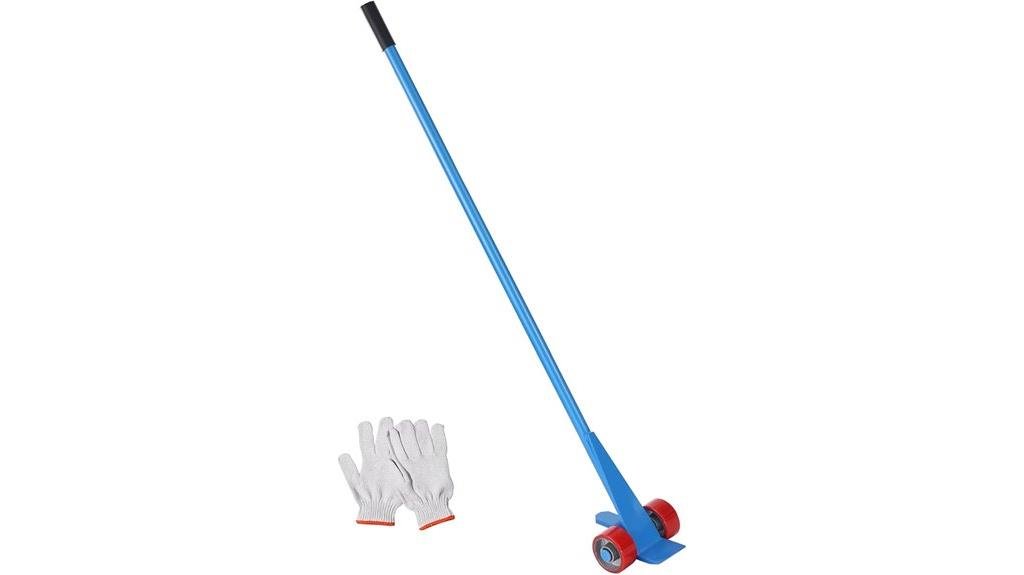
Moving or prying up a heavy pallet, crate, or piece of equipment can demand more leverage than a standard pry bar provides. The VEVOR Pallet Buster, also sold as a prylever bar, uses a 60-inch overall design, an enlarged pry surface, and wheeled leverage to make that first lift more manageable. Its Q235 carbon-steel construction and rated 8,818 lb capacity give it serious working capability, although its 21.16 lb weight and long frame make it a specialized tool rather than something you will want for every small job. This review covers its verified specifications, build, practical uses, limitations, maintenance needs, and the buyers who can get the most value from it.
Quick Verdict
Rating: 8.5/10
Best For: Workshops, warehouses, pallet work, construction tasks, and buyers who need strong manual leverage for bulky loads.
Bottom Line: The VEVOR WBS-007 combines a long lever, high rated capacity, reinforced steel construction, and rolling wheels in a practical heavy-duty tool. Its main tradeoffs are its substantial weight, long overall size, and the need to use it on a stable surface with proper load-handling practices.
| Specification | Detail |
|---|---|
| Brand | VEVOR |
| Model | WBS-007 |
| Product Type | Pallet buster / rolling pry lever bar |
| Material | Q235 carbon steel |
| Rated Capacity | 8,818 lb / 4T |
| Total Length | 60 in / 152.4 cm |
| Handle Length | 56.49 in / 143.5 cm |
| Handle Sleeve | 3.93 to 5.90 in / 10 to 15 cm |
| Wheel Size | 4 in variant |
| Wheel Material | Carbon steel |
| Product Weight | 21.16 lb / 9.6 kg |
| Product Size | 60 x 8.89 x 7.87 in / 1524 x 226 x 200 mm |
| Key Design Features | Enlarged pry surface, two upgraded wheels, extended handle, and reinforced welding area |
What Is the VEVOR Pallet Buster?
The WBS-007 is a manual leverage tool designed to get under heavy objects and create an initial lift using a long handle and rolling fulcrum. VEVOR describes it as a pallet buster and demolition pry tool, while the same basic design also suits controlled lifting and repositioning tasks where a conventional short pry bar does not provide enough leverage.
The tool measures 60 inches overall and uses a 56.49-inch handle. Its two 4-inch carbon-steel wheels act as the rolling support point while the enlarged front plate provides more contact area with the object being lifted. At 21.16 pounds, it is substantial enough for demanding work but heavier and less compact than an ordinary pry bar.
Key Takeaways
- Q235 carbon-steel construction supports a manufacturer-rated capacity of 8,818 lb.
- The 60-inch overall length gives you more leverage than a short hand pry bar.
- A larger pry surface spreads contact across more of the load.
- Two 4-inch carbon-steel wheels provide a rolling fulcrum during lifting and positioning.
- The tool weighs 21.16 lb, so its strength comes with extra bulk during carrying and storage.
- Reinforced welding areas are intended to improve stability under demanding use.
Before You Buy: An 8,818 lb capacity does not mean you should use the bar as a permanent support or assume every floor, load point, or moving setup can safely handle that weight. Confirm the load, use a solid contact point, follow VEVOR’s instructions, and use properly rated lifting or moving equipment for the next stage of the job.
Design, Materials, and Build Quality
The main frame uses Q235 carbon steel, a practical choice for a tool that depends on stiffness and leverage. VEVOR also uses an enlarged welding area around critical sections of the structure. That added reinforcement matters because the working force is concentrated around the pry head, wheel support, and handle connection.
The two upgraded carbon-steel wheels are described as rust-resistant and are designed to take the load while the tool pivots. Unlike a fixed pry bar that scrapes or rotates directly against the floor, the wheeled design gives you a rolling fulcrum. This can make controlled lifting and small positioning adjustments easier on suitable surfaces.
The enlarged pry surface is equally important. More contact area can make it easier to position the head beneath a pallet, crate, block, or suitable equipment edge. It also gives you a broader contact point than a narrow pry tip, although you still need to make sure the item itself has a strong enough lifting point.
Performance and Ease of Use
Mechanical advantage is the main reason to choose this tool. With a 60-inch overall length, you can apply force from a more upright position instead of relying entirely on a short bar and your upper body. The 56.49-inch handle gives you a long lever arm while the wheels act as the pivot point.
The tradeoff is that this is not a lightweight hand tool. At 21.16 pounds and 60 inches long, it takes more effort to carry between locations and requires meaningful storage space. In a workshop, warehouse, construction area, or other setting where it stays close to the work, that matters less. For occasional mobile jobs, you should account for its size before buying.
How It Performs in Real Use
Breaking Down or Lifting Pallet Sections
The broad pry surface and long handle are well suited to pallet-related work, which is the primary use highlighted by VEVOR. The added leverage can reduce how much force you need to apply compared with a short conventional pry bar. You still need to position the head carefully so the load does not slip as you apply pressure.
Creating the First Lift Under Heavy Equipment
One difficult part of moving a bulky object is often creating enough clearance to place another moving device underneath it. The rolling pry design can help create that initial gap when the equipment has a suitable lifting point. Once clearance is available, use properly rated skates, dollies, blocking, or other handling equipment appropriate for the load rather than relying on the lever as a support.
Moving Crates and Heavy Blocks
The combination of a wide contact surface and wheeled pivot can also help with controlled adjustments to crates, heavy blocks, and similar objects. The wheels allow the leverage point to roll as you work the handle. The actual ease of movement will still depend on the object’s shape, center of gravity, available clearance, and floor condition.
Repeated Workshop or Warehouse Jobs
For frequent use, the long handle can reduce the amount of deep bending needed during the initial lift. That can make repeated jobs more efficient. However, the tool does not remove the need for safe lifting technique, a clear working area, and correctly rated equipment for moving or supporting the load.
How to Use It More Effectively
Start by checking that the floor is stable and clear of debris that could interfere with the wheels. Position the enlarged pry surface under a structurally suitable point on the object, then make sure the tool is aligned before applying force to the handle.
Apply pressure smoothly instead of jerking the handle. Sudden movement can reduce your control of a heavy load. Once you have created enough clearance, transfer the load to equipment designed to support or move it rather than keeping it suspended on the pry bar.
Pro Tip: Before applying full leverage, make a light test lift. This lets you confirm that the pry surface is fully seated, the wheels are tracking correctly, and the load is not beginning to twist or slide.
Compatibility and Safety
This tool makes the most sense on firm, reasonably smooth working surfaces where its wheels can stay stable. Uneven ground, soft flooring, steep slopes, or weak load contact points can make any heavy-object handling job less predictable.
Keep hands and feet away from pinch points, and never place part of your body beneath a load that is being raised. Inspect the wheels, frame, weld areas, and pry surface before demanding jobs. If you notice visible damage, deformation, excessive corrosion, or a wheel that does not operate correctly, stop using the tool until the issue is addressed.
Also remember that the stated capacity applies to the product itself, not automatically to every object, floor, pallet, attachment point, dolly, or accessory used with it. Follow the product instructions and the safety procedures that apply to your workplace and load.
Durability and Maintenance
The Q235 steel frame, reinforced welding area, and carbon-steel wheels give the WBS-007 a straightforward heavy-duty construction. There are fewer complicated parts than you would find on hydraulic lifting equipment, which can make routine inspection relatively simple.
After use, remove dirt and debris from the wheels and pry area. Check the frame and welded sections for visible damage, and keep the tool dry during storage to limit corrosion. If wheel lubrication or other service is required, follow the current VEVOR manual rather than assuming a fixed service interval for every working environment.
A dry indoor storage area is preferable when possible. Its 60-inch length is worth planning for before purchase, especially if your workshop has limited wall or floor space.
Who Should Buy It?
Best For
- Workshop or warehouse users who regularly need to create clearance beneath heavy objects.
- Construction and pallet work where a long manual lever provides useful mechanical advantage.
- Buyers who prefer a simple steel leverage tool instead of using hydraulic equipment for every initial lift.
Skip If
- You need a device that can safely hold a load in a raised position.
- You mainly work on uneven or unsuitable surfaces where the wheels cannot remain stable.
- You need a compact, lightweight pry tool for frequent transport.
Pros and Cons
Pros
- Manufacturer-rated 8,818 lb capacity for demanding leverage tasks.
- Q235 carbon-steel construction with reinforced welding areas.
- 60-inch overall length provides substantial mechanical advantage.
- Two 4-inch carbon-steel wheels create a useful rolling fulcrum.
- Enlarged pry surface provides broader contact with suitable loads.
Cons
- At 21.16 lb, it is heavier to carry than a standard hand pry bar.
- The 60-inch frame requires more transport and storage space.
- It creates leverage and clearance but is not a substitute for equipment designed to support a raised load.
Is It Worth the Price?
The value of the VEVOR WBS-007 depends mostly on how often you need this type of leverage. For a shop, warehouse, pallet operation, or work area where heavy objects regularly need an initial lift, its long handle, steel construction, wheels, and 8,818 lb rating give it a clear purpose.
It is less compelling if you only need a basic pry bar for light jobs. You are paying for a larger and heavier specialized tool, so buyers who rarely work with bulky loads may not use enough of its capability to justify the added storage space.
For the right workload, it offers strong value because the design is simple and focused. It is worth considering when your main problem is getting controlled leverage beneath heavy objects without immediately reaching for a more complicated lifting system.
How It Compares to Alternatives
A conventional long pry bar is usually lighter and easier to transport, but it lacks the dedicated rolling wheels and broad pry surface found on this VEVOR design. That makes a standard bar more convenient for general demolition or small jobs, while the WBS-007 is better suited to repeated heavy-object leverage.
A toe jack paired with machinery skates is a more complete option when you need both controlled lifting and transportation of equipment. That setup is more complex and uses additional components. The VEVOR makes the most sense when you primarily need a strong manual lever to create initial clearance or make limited positioning adjustments.
Frequently Asked Questions
What is the capacity of the VEVOR WBS-007?
VEVOR lists the WBS-007 with a weight capacity of 8,818 lb, or 4 metric tons. You should still confirm that the load, contact point, floor, and any additional moving equipment are suitable for the job.
How long is the VEVOR Pallet Buster?
The tool measures 60 inches overall, while VEVOR specifies the handle length at 56.49 inches. That extended design provides greater mechanical advantage but also requires more storage and transport space.
What material is it made from?
The WBS-007 uses Q235 carbon steel for the main construction. VEVOR also describes the two upgraded wheels as carbon steel and uses additional welding area to improve structural stability.
Can it replace a jack or machinery skate?
No. Its main job is to provide leverage and create clearance beneath a suitable load. If the object needs to remain raised or travel a meaningful distance, use equipment designed and rated for supporting or transporting that load.
How much does the tool weigh?
VEVOR lists a product weight of 21.16 lb, or 9.6 kg. That weight contributes to the tool’s substantial construction but makes it less convenient to carry than a standard pry bar.
What should you check before using it?
Check the wheels, frame, weld areas, pry surface, floor condition, and planned contact point. Keep the work area clear and make sure the object cannot unexpectedly roll, slide, or fall as leverage is applied.
Who should skip this prylever bar?
Skip it if you mainly perform light prying jobs, need an especially portable tool, or require equipment that holds loads in a raised position. A smaller pry bar or a purpose-built jack and moving system may suit those jobs better.
The Bottom Line
The VEVOR WBS-007 is a strong fit when you regularly need substantial manual leverage for pallets, bulky objects, or suitable heavy equipment. Its Q235 steel construction, 60-inch overall length, enlarged pry surface, and 4-inch wheels are its main strengths, while its 21.16 lb weight, large size, and specialized role are the main reasons some buyers should choose a simpler tool instead.
If those tradeoffs match your workload, the 8.5/10 verdict stands: it is a capable heavy-duty leverage tool, provided you use it as a pry and positioning aid rather than as permanent load-support equipment.