Disclosure: As an Amazon Associate, we earn from qualifying purchases. If you click a link on this page and make a purchase, we may receive a small commission at no extra cost to you.
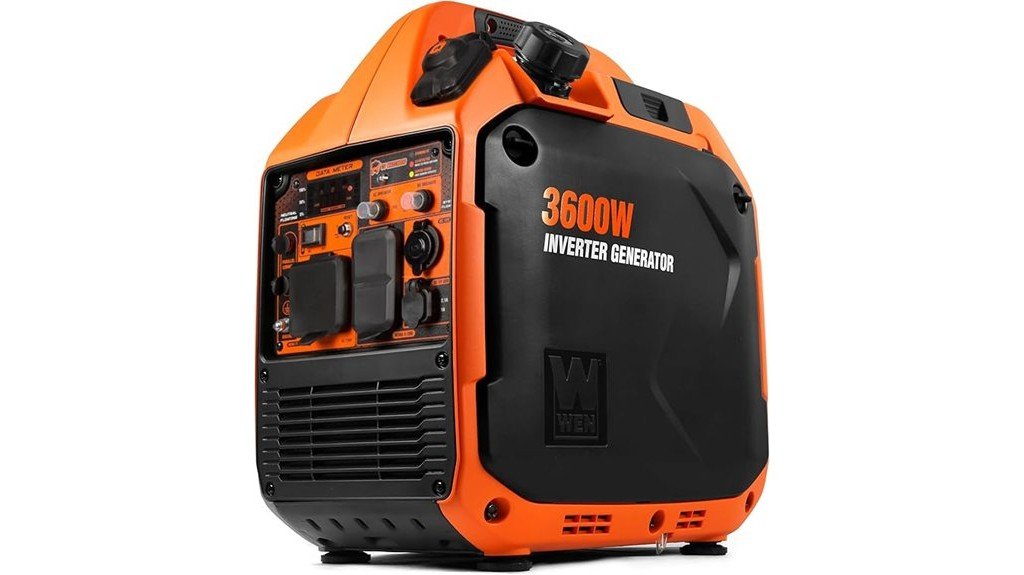
Running your RV essentials or keeping a few appliances working during an outage takes more than a generator with an impressive starting-watt rating. You need enough continuous power, manageable noise, practical outlets, and a fuel supply that suits your plans. The WEN DF360iX dual fuel inverter generator offers 2,900 running watts on gasoline, 2,600 on propane, and a compact design weighing about 49.6 pounds. This review explains its real strengths, running limits, safety features, and whether it makes sense for your camping, RV, or backup power needs.
Quick Verdict
Rating: Recommended with caveats
Best For: RV owners with moderate power needs, campers who want fuel flexibility, and homeowners seeking backup power for selected essentials.
Bottom Line: The WEN DF360iX combines dual-fuel operation, RV-ready outlets, and a relatively lightweight enclosure. However, its limited running wattage and manual recoil start make it less suitable for heavy electrical loads or buyers who need remote starting.
Key Takeaways
- Dual-fuel output: Produces 3,600 starting watts and 2,900 running watts on gasoline, or 3,500 starting watts and 2,600 running watts on propane.
- Portable construction: Weighs approximately 49.6 pounds and measures 17.913 × 11.653 × 19.685 inches.
- Fuel runtime: Manufacturer figures are approximately five hours on gasoline at half load and 14 hours on a 20-pound propane tank at half load.
- Noise: Rated at approximately 65 dB at 25% load. Noise changes with electrical demand and operating conditions.
- RV connectivity: Includes a 120V TT-30R RV receptacle, two household-style 120V outlets, a 12V DC outlet, and two USB charging ports.
- Safety: WEN Watchdog carbon monoxide shutdown, low-oil protection, and overload protection provide useful safeguards but do not make indoor operation safe.
- Important limitation: The generator uses manual recoil starting and does not offer built-in remote or electric start.
Key Features and Specifications
The WEN DF360iX is a 120V inverter generator built around a 149cc four-stroke engine. Its enclosed design, dual-fuel capability, and dedicated RV outlet make it a practical option for portable electricity without moving to a much larger conventional generator.
The table below separates running watts from starting watts. This distinction matters because you cannot operate appliances continuously at the higher surge rating.
| Specification | Detail |
|---|---|
| Brand | WEN |
| Model | DF360iX |
| Generator type | Portable dual-fuel inverter generator |
| Gasoline starting watts | 3,600 W |
| Gasoline running watts | 2,900 W |
| Propane starting watts | 3,500 W |
| Propane running watts | 2,600 W |
| Electrical output | 120V AC, 60 Hz, single phase |
| Engine | 149cc four-stroke OHV |
| Gasoline tank | 1.53 gallons |
| Gasoline runtime | Approximately 5 hours at half load |
| Propane runtime | Approximately 14 hours at half load on a 20 lb tank |
| Noise level | 65 dB at quarter load |
| Weight | 49.6 lb (22.5 kg) |
| Dimensions | 17.913 L × 11.653 W × 19.685 H inches |
| Engine oil capacity | 16.9 fl oz (0.5 L) |
| Starting method | Manual recoil |
| Parallel operation | Supported with a compatible WEN parallel kit sold separately |
| Included accessories | Engine oil, LPG regulator hose, funnel, screwdriver, wrench, spark plug socket |
| Warranty | Limited residential warranty, up to 3 years or 500 operating hours, whichever comes first; additional coverage restrictions apply |
What Is the WEN DF360iX?
The WEN DF360iX is a portable inverter generator that operates on either unleaded gasoline or propane. It converts engine power into regulated electrical output for compatible appliances and electronics. Its inverter design is particularly useful when you want to power devices such as laptops, phone chargers, lights, and selected household appliances.
Unlike a large stationary standby generator, this model is designed to be carried outdoors and connected directly to suitable appliances or an RV power cord. The compact housing contains the engine and inverter system, while the control panel provides household outlets, an RV connection, USB charging, and operating information.
Its biggest advantage is fuel flexibility in a fairly small package. However, you still need to plan around its running-watt limits, refueling needs, manual start, and outdoor-only operation.
Who Should Buy It?
Best For
- RV owners who need a TT-30R connection and can keep their total electrical demand within 2,900 watts on gasoline or 2,600 watts on propane.
- Campers and tailgaters who want a portable generator with household outlets and USB charging.
- Homeowners who need temporary outdoor generator power for selected essentials during an outage.
Skip If
- You need to run several high-wattage appliances or a large RV air conditioner at the same time.
- You want electric or remote starting instead of pulling a recoil cord.
- You need 240V output or enough capacity for extensive whole-house backup.
Before You Buy: The TT-30R RV outlet does not mean the generator can deliver 30 amps continuously. Its maximum rated output on gasoline is 2,900 watts, which is approximately 24.2 amps at 120V. Propane output is lower. Check your RV’s total running load and appliance starting requirements before choosing this generator.
Performance and Fuel Efficiency
Gasoline vs. Propane: How Much Power Do You Get?
Gasoline provides the highest available output, with 2,900 running watts and 3,600 starting watts. This gives you more room for appliances with short motor-starting surges.
On propane, output drops to 2,600 running watts and 3,500 starting watts. That reduction matters if you are using a refrigerator, air conditioner, or other motor-driven appliance while several smaller devices are already running.
For example, two devices that together require 2,700 continuous watts fall within the gasoline rating but exceed the propane rating. You should also allow for starting demands and the rating of each outlet.
Runtime and Fuel Economy
WEN specifies approximately five hours of gasoline operation at half load using its 1.53-gallon fuel tank. A 20-pound propane tank provides approximately 14 hours at half load under the manufacturer’s stated conditions.
Runtime reminder: Five hours on gasoline and 14 hours on propane are half-load figures, not guaranteed runtimes for every appliance setup.
A smaller load may allow longer operation, while a heavy load will usually consume fuel faster. The propane and gasoline tests also use different rated outputs and fuel supplies, so the runtime figures do not represent identical fuel efficiency.
Propane can be convenient when you already carry cylinders for RV or campsite use. Gasoline provides slightly greater power capacity and may be preferable when you need that extra electrical headroom.
Eco-Mode and Noise Control
The DF360iX produces approximately 65 dB at quarter load according to the manufacturer’s listing. This makes it more manageable than many large open-frame generators, though it is not silent.
The Eco-Mode switch allows the engine to adjust speed as electrical demand changes, helping reduce unnecessary fuel consumption and noise at lighter loads.
WEN instructs owners to use Eco-Mode when the electrical load is below 2,000 watts and to switch it off for loads above that level. This gives the engine the operating speed needed for larger demands.
Remember that noise depends on load, distance, surroundings, and generator placement. The quarter-load figure should not be treated as the noise level during full-power operation.
Safety and Reliability
Portable generators produce carbon monoxide, hot exhaust, and electrical power. The DF360iX includes safeguards intended to reduce certain risks, but none replaces safe setup and operation.
Built-In Protection Features
| Feature | Function | Limitation |
|---|---|---|
| WEN Watchdog CO Sensor | Shuts down the generator when dangerous CO conditions are detected | Does not make indoor use safe |
| Low-Oil Shutdown | Stops the engine when oil protection is triggered | Oil still needs regular checks |
| Overload Protection | Interrupts electrical output during an overload | Loads must still be calculated before use |
| Fuel Shutoff | Allows remaining fuel in the carburetor to be consumed before shutdown | Does not replace regular maintenance |
Safe Outdoor Placement
Never operate this generator inside an RV, garage, basement, enclosed porch, tent, or home. An open garage door does not make operation safe.
Place the generator outdoors, far from doors, windows, vents, and occupied areas, with its exhaust directed away from buildings. Follow the manufacturer’s operating clearances, and use battery-powered carbon monoxide alarms in nearby occupied spaces.
Keep the generator dry, maintain safe access to its outlets, and use correctly rated outdoor electrical cords. Never connect it directly to a home’s wiring through a regular wall outlet. Building connections require appropriate transfer equipment installed by a qualified electrician.
Propane Connection Safety
The included LPG regulator hose connects to the generator’s quick-connector. Before starting on propane, check the hose and fittings for damage or leaks following the manual’s instructions.
Keep the propane cylinder upright and secured. Do not allow the hose to kink or contact hot engine or exhaust surfaces. Close the cylinder valve and disconnect the hose as directed when the generator is no longer in use.
Portability and Usability
At approximately 49.6 pounds, the DF360iX is portable enough for many people to load into an RV storage area or vehicle, but it is still a substantial piece of equipment. The integrated carrying handle helps with short moves.
Its approximate 18-inch length, 11.7-inch width, and 19.7-inch height make it relatively compact. You should still measure your available storage space and allow room for safe lifting and unloading.
The enclosure is intended to make the machine easier to handle and reduce operating noise compared with a similarly sized open-frame design. However, it does not eliminate engine vibration, heat, or the need for ventilation.
Starting and Controls
The DF360iX uses a recoil starter and a four-in-one operating switch. It does not have a factory electric-start button or remote-control key fob.
The control panel includes a data meter with operating information such as load level, fuel level, voltage, frequency, and runtime. This makes it easier to monitor the generator than relying on engine sound alone.
If limited mobility or easy restarting is a priority, a factory electric-start generator may be more practical.
Connectivity, Outlets, and Accessories
The DF360iX includes useful connections for both regular household devices and RV electrical systems.
| Outlet | Quantity | Typical Use |
|---|---|---|
| 120V NEMA 5-20R | 2 | Compatible household appliances and equipment |
| 120V TT-30R | 1 | Compatible 30A-style RV shore power connections, subject to generator limits |
| 12V DC | 1 | Compatible 12V accessories within outlet ratings |
| 5V USB | 2 | Phones and small USB-powered devices |
RV Outlet Compatibility
The TT-30R connection is a major advantage for RV owners because it accepts a compatible 120V RV shore power plug without needing a basic household-to-RV adapter.
However, the presence of a TT-30R receptacle does not increase the generator’s available running watts. If your RV has a rooftop air conditioner, electric water heater, microwave, or other high-demand equipment, you must manage how many items run together.
The generator does not provide a 240V outlet, making it unsuitable for appliances that specifically require 240V power.
Parallel Operation and Accessories
The DF360iX supports parallel operation with compatible WEN equipment and a separately purchased connection kit. This may help if you later need greater total available power.
Before buying another generator or a parallel kit, check WEN’s approved compatibility list. Do not assume that any two inverter generators can safely connect together.
The package also includes a propane regulator hose, engine oil, a funnel, and basic service tools. A propane cylinder and compatible parallel kit should not be assumed to be included.
How It Performs in Real Use
The scenarios below show how the published specifications apply to common power needs. They are planning examples, not results from independent hands-on testing.
1. RV Camping
The TT-30R outlet lets you connect a compatible RV power cord, while the dual-fuel engine gives you a choice between gasoline and propane. It may be a sensible option for lights, charging, refrigeration, and other moderate electrical loads.
The main challenge is power management. A large air conditioner may have a starting demand that exceeds the generator’s capacity, especially when other appliances are running. Check both starting and continuous wattage before relying on it for RV air conditioning.
2. Weekend Camping and Tailgating
For a campsite or tailgate, the household outlets and USB ports make it convenient to power compatible small appliances, speakers, chargers, and lighting.
Eco-Mode is useful with lighter loads because the engine adjusts its speed instead of running at a constant high output. Still, generator use may be restricted by campsite noise rules, quiet hours, and fire-safety requirements.
3. Emergency Home Backup
During a power outage, the DF360iX can support selected appliances, such as a refrigerator, lights, and small electronics, as long as their combined running and starting demands stay within its rating.
It is not a whole-house standby system. Electric space heaters, large pumps, ovens, and multiple motor-driven appliances can consume most or all of its available capacity.
Plan essential loads in advance and arrange safe outdoor operation. If you need to supply household circuits, use a properly installed transfer switch or other code-compliant equipment.
4. Extended Outdoor Power
For longer outdoor power sessions, the propane connection may reduce the need to refill the small gasoline tank during a single run. WEN’s stated 14-hour figure applies to a 20-pound propane tank at half load.
Actual runtime will depend on the load, available propane, ambient conditions, and maintenance. Plan for fuel replacement and safe shutdowns rather than assuming uninterrupted all-day operation.
Setup Tips Before First Use
Correct setup matters for power delivery, engine life, and safety. Use these steps with the official DF360iX instruction manual.
- Inspect the generator and accessories: Check for shipping damage, damaged cords, missing parts, and loose fittings before starting.
- Add and check engine oil: Follow the manual’s oil specification and filling procedure. The engine oil capacity is approximately 16.9 fluid ounces, but always confirm the correct level using the dipstick.
- Select your fuel: Use fresh gasoline meeting WEN’s requirements or connect the supplied LPG regulator hose to a suitable propane cylinder.
- Choose a safe outdoor location: Keep the generator level, dry, and well away from occupied buildings and air openings.
- Start without connected electrical loads: Follow the manual’s starting procedure and allow the engine to stabilize before plugging in equipment.
- Calculate electrical demand: Add the running wattage of connected devices and account for motor-starting surges. Do not exceed the generator or individual outlet limits.
- Use Eco-Mode correctly: Follow WEN’s guidance to use it with loads below 2,000 watts and turn it off for higher loads.
- Shut down safely: Disconnect electrical loads and follow the fuel-specific stopping procedure before handling or storing the machine.
Pro Tip: Make a simple wattage list for the appliances you plan to run. Record each device’s running watts and starting watts, then check the totals against the gasoline or propane rating. This is more reliable than judging compatibility from the RV outlet or the generator’s advertised 3,600-watt nameplate alone.
Maintenance and Long-Term Ownership
The DF360iX requires normal small-engine maintenance. Regular oil changes, air-filter care, spark plug inspection, and proper fuel storage are especially important if you use the generator only during occasional trips or outages.
Oil and Filter Maintenance
The WEN manual specifies an initial engine oil change after the first eight hours of use, another after the first 25 hours, and subsequent changes every 50 hours. Check the oil level before use or every eight hours of operation.
The air filter should be inspected regularly, including the manual’s 50-hour check interval. Clean or replace it as required by its condition and the maintenance schedule, especially in dusty areas.
The manual identifies the Torch E6RTC spark plug and NGK BPR6HS as a specified alternative. Use the manual’s recommended inspection, gap, and replacement procedures rather than guessing at service intervals.
Fuel Storage and Carburetor Care
The built-in fuel shutoff helps limit stale gasoline left in the carburetor. This is useful when you store the generator between camping trips or keep it as emergency equipment.
WEN also recommends draining the carburetor as directed and avoiding extended storage with old gasoline. The manual advises against leaving gasoline in the tank for more than two months.
Use only the approved fuel type, keep vents clear, and store the cooled generator according to the manufacturer’s instructions. Inspect the propane hose and fittings before each propane-powered session.
Pros and Cons
Pros
- Runs on gasoline or propane, giving you two practical fuel options.
- Delivers 2,900 running watts on gasoline with 3,600 watts available for starting surges.
- Includes a TT-30R RV outlet, household receptacles, 12V DC, and USB ports.
- Relatively portable at approximately 49.6 pounds.
- Includes CO shutdown, low-oil protection, Eco-Mode, and parallel capability.
Cons
- Propane operation provides only 2,600 continuous watts, limiting heavier RV and household loads.
- Manual recoil starting may be inconvenient for users who want push-button or remote operation.
- The 1.53-gallon gasoline tank offers approximately five hours at half load, so longer sessions may require refueling or a propane supply.
Is It Worth the Price?
The WEN DF360iX is worth considering if you want a relatively compact dual-fuel inverter generator without moving to a larger wheeled machine. Its strongest value comes from having gasoline and propane operation, a dedicated RV outlet, inverter power, and integrated safety features in one portable unit.
For campers and RV owners with moderate electrical needs, these features may justify choosing it over a simpler gasoline-only generator. The separate propane supply can also be convenient when you already use propane for outdoor equipment.
However, buyers who need higher running watts, easier electric starting, or longer gasoline runtime should compare alternatives before deciding. Since seller pricing and availability can change, check the current listing rather than assuming a fixed price or discount.
How It Compares to Alternatives
The Champion 201531 4500-Watt Dual Fuel Inverter Generator is a close alternative. It provides 3,250 running watts on gasoline and 2,925 on propane, giving it more continuous capacity than the WEN DF360iX while retaining a compact, manually started design.
The Westinghouse iGen4000DFc offers 3,300 gasoline running watts, 2,970 propane running watts, and electric and remote starting, but weighs more. The WEN DF360iX remains appealing if you prioritize lighter carrying weight and its particular combination of outlets and dual-fuel operation over extra output or start convenience.
Frequently Asked Questions
Can the WEN DF360iX power an RV air conditioner?
It depends on the air conditioner’s running and starting wattage, plus any other loads in your RV. The DF360iX provides 2,900 running watts on gasoline or 2,600 on propane. Some smaller systems may fit within those limits, but large units or high starting surges may require a more powerful generator.
Does it include a remote start or keyless ignition?
No. The WEN DF360iX uses a manual recoil starter and does not include factory electric or remote start. If push-button or key-fob operation is a priority, consider a generator designed with that feature rather than an unapproved aftermarket modification.
Can it run continuously for over 24 hours?
Not on the stated fuel supplies at half load. WEN lists approximately five hours on its gasoline tank and 14 hours on a 20-pound propane cylinder under those conditions. Extended operation requires fuel planning, safe shutdowns, and maintenance in line with the manual. Never refuel a running or hot generator.
Can you use it inside an RV or garage because it has a CO sensor?
No. The WEN Watchdog sensor is an added shutdown safeguard, not permission to operate indoors. Always run the generator outside, far from windows, doors, vents, and occupied areas. Never use it in a garage or RV compartment, even if a door is open.
What maintenance schedule and parts are recommended?
Check engine oil before use or every eight operating hours. WEN specifies oil changes after the first eight hours, after the first 25 hours, and every 50 hours afterward. Inspect the air filter, spark plug, and fuel system according to the official maintenance schedule. Use replacement parts specified for model DF360iX.
Is it covered for commercial use under warranty?
The manual lists a limited personal-use warranty of three years or 500 operating hours, whichever comes first, with additional restrictions on parts and labor. Professional or commercial use is limited to 90 days under the stated terms. Review the current warranty document and confirm coverage with WEN before buying for business use.
Are replacement batteries or oil filters included?
No replacement battery or oil-filter package is listed among the included accessories. The generator uses a recoil starter, so it does not require an electric-start battery. The manual describes conventional oil draining and filling rather than replacement of a spin-on oil filter. Check the DF360iX parts list before ordering service components.
Does it automatically switch from propane to gasoline when propane runs out?
No. Its Auto Fuel Selection system prioritizes propane while a usable propane supply is connected. If the connected propane tank runs empty, the generator does not automatically switch to gasoline. The manual states that the LPG regulator hose must be disconnected for the unit to switch to gasoline. Follow the approved shutdown and fuel-switching procedures.
Sources and Review Method
This review evaluates the WEN DF360iX using published product specifications, the model-specific instruction manual, and documented features. It does not claim independent laboratory noise measurements, hands-on electrical load testing, or personal long-term ownership experience.
Technical specifications and maintenance information were checked against the WEN official product information and the DF360iX instruction manual. Actual performance may vary with load, fuel, conditions, and maintenance.
The Bottom Line
The WEN DF360iX dual fuel inverter generator is recommended with caveats for RV owners, campers, and homeowners who need portable power within its 2,900-watt gasoline or 2,600-watt propane running limits. Its dual-fuel design, RV outlet, and portable enclosure are useful strengths, but buyers who need higher output, 240V service, or electric starting should choose a more suitable model.
Ready to Buy?
Check the latest price, seller options, and product details before you decide.