When looking for a stroller, prioritize safety, especially for newborns in a flat position. Choose a lightweight model for easy portability, and take into account modular options for versatility, like attachments for car seats or bassinets. Make sure the stroller is suitable for your terrain, whether urban or running. Check for compatibility with car seats and explore accessories that enhance functionality, like rain covers and storage baskets. There’s a lot to take into account to make the best choice for you and your baby.
Key Features to Consider
When you’re choosing a stroller, it’s essential to evaluate several key features that can greatly affect your daily life.
First, check safety standards, confirming the stroller accommodates newborns in a flat position for proper airway management.
You’ll also want to reflect on its weight; lighter models like the Travel LX enhance portability, making outings easier.
Modular features, such as the ability to convert into a bassinet or attach a car seat, can save you from needing multiple products.
Don’t overlook terrain suitability; some strollers excel in urban settings, while others are perfect for running.
Finally, prioritize stroller maintenance to keep your investment in top shape and guarantee safety for your little one.
Choose wisely to embrace freedom with your stroller!
Stroller Types and Their Uses
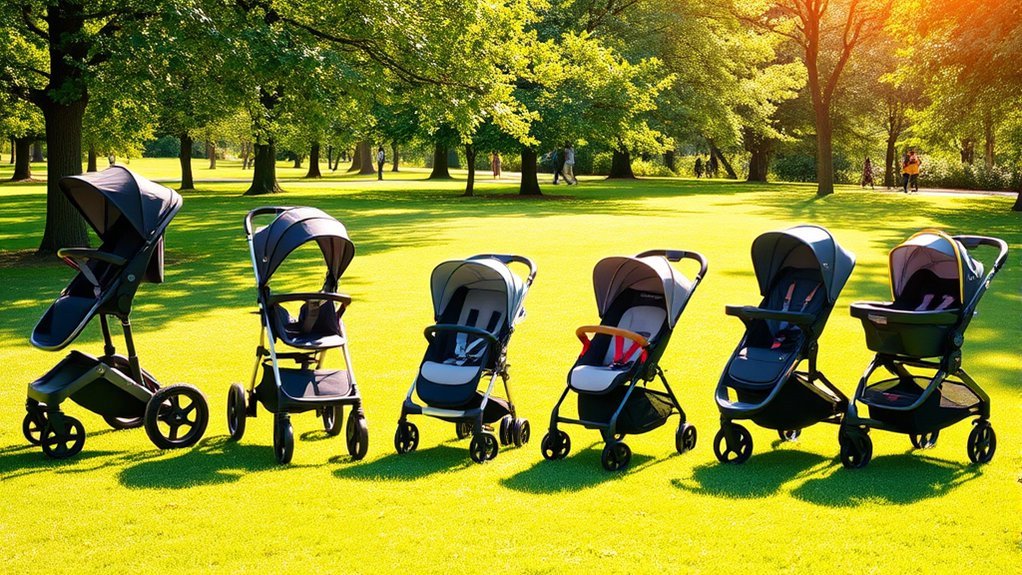
Choosing the right stroller type can make all the difference in your parenting journey. Traditional strollers offer fixed seats but may lack flexibility.
Selecting the ideal stroller is crucial for a smoother parenting experience, balancing functionality with your family’s needs.
If you value versatility, consider modular options like the Vista or Cruise, which feature removable seats. For the active parent, running strollers with three tires provide stability and ease during workouts.
Lightweight and portable strollers are great for everyday use, but remember, not all are under 7 lbs. Economical models may convert to a bassinet, but check for stroller safety certifications for overnight sleep.
Travel systems simplify shifts from car to stroller, but compatibility varies, so always consult knowledgeable staff.
Prioritize stroller maintenance to guarantee longevity and safety for your little one.
Importance of Compatibility With Car Seats

Ensuring compatibility with car seats is essential for a smooth parenting experience, especially for families on the go. By pairing a stroller with a compatible car seat, you create a convenient travel system that simplifies changes.
It’s vital to verify car seat compatibility with your chosen stroller, as not all models fit together seamlessly. Consult knowledgeable staff to find the right match.
Prioritize stroller safety by selecting one that supports newborns in a flat position, ensuring proper airway management. Some strollers accommodate newborns without extra accessories, while others may need a separate bassinet.
Keep in mind the weight and size limitations of both car seats and strollers, as your child’s growth will affect compatibility over time.
Weight, Portability, and Pricing Insights
Finding the right stroller involves balancing weight, portability, and pricing to suit your family’s needs.
Lightweight options, like the Travel LX at about 15 lbs, excel in travel convenience, making them easier to manage during trips. However, some models, such as the Nuna Mix Next and Peg Perego Vache, weigh considerably more, posing challenges for lifting and transport.
Compact fold features can enhance convenience, but heavier strollers may not fit easily in your car or home.
When considering pricing, it’s essential to recognize that investing in a higher-priced stroller, like the Vista version 3 at around $900, often provides better long-term performance.
Weigh your options carefully to find the perfect stroller that fits your lifestyle and budget.
Accessories for Enhanced Functionality
While exploring the world of strollers, you’ll discover that accessories can greatly enhance their functionality and make your outings smoother. Essential add-ons like snug seats provide proper head positioning for newborns, eliminating the need for a separate bassinet. Car seat adapters create a seamless travel system, allowing you to transfer your baby without waking them. Additional storage options, such as parent trays and under-seat baskets, offer convenience for carrying essentials. Weather protection is also vital; consider rain covers and sunshades for comfort regardless of the elements. Don’t forget cup holders and snack trays for easy access to drinks and snacks.
| Accessory | Benefits |
|---|---|
| Snug Seat | Proper head positioning |
| Car Seat Adapter | Simplifies transfers |
| Rain Cover/Sunshade | Weather protection |
Frequently Asked Questions
How Do I Clean and Maintain My Stroller?
To clean and maintain your stroller, regularly wipe down surfaces with a damp cloth, check for loose parts, and wash the fabric as needed. Following these stroller cleaning and maintenance tips guarantees safety and longevity for your little one.
What Safety Certifications Should I Look For?
“Safety first” rings true when choosing a stroller. Look for certification labels indicating compliance with safety standards. These labels guarantee your child’s protection, giving you peace of mind as you explore the world together.
Can Strollers Accommodate Taller Parents?
Yes, many strollers accommodate taller parents with adjustable handles. Look for models that let you customize the height, ensuring comfort during strolls. This feature promotes a more enjoyable experience for you and your little one.
Are There Any Stroller Recalls I Should Be Aware Of?
You should stay informed about stroller recalls for safety. For instance, a recent recall involved a model with harness issues. Regularly check recall updates to guarantee your child’s safety and enjoy peace of mind while strolling.
How Long Can I Use a Stroller Before Outgrowing It?
You can typically use a stroller until your child reaches around 50 pounds or about four years old, depending on growth milestones. Always check manufacturer guidelines to verify safety and comfort as your child develops.
Conclusion
Choosing the right stroller can feel like maneuvering through a medieval maze, but it doesn’t have to be overwhelming. By considering key features, stroller types, and compatibility with car seats, you’ll find the perfect fit for your family. Don’t forget about weight, portability, and price—these factors matter too. With the right accessories, you can enhance your stroller’s functionality, making outings much easier. Trust your instincts, and enjoy the journey with your little one!