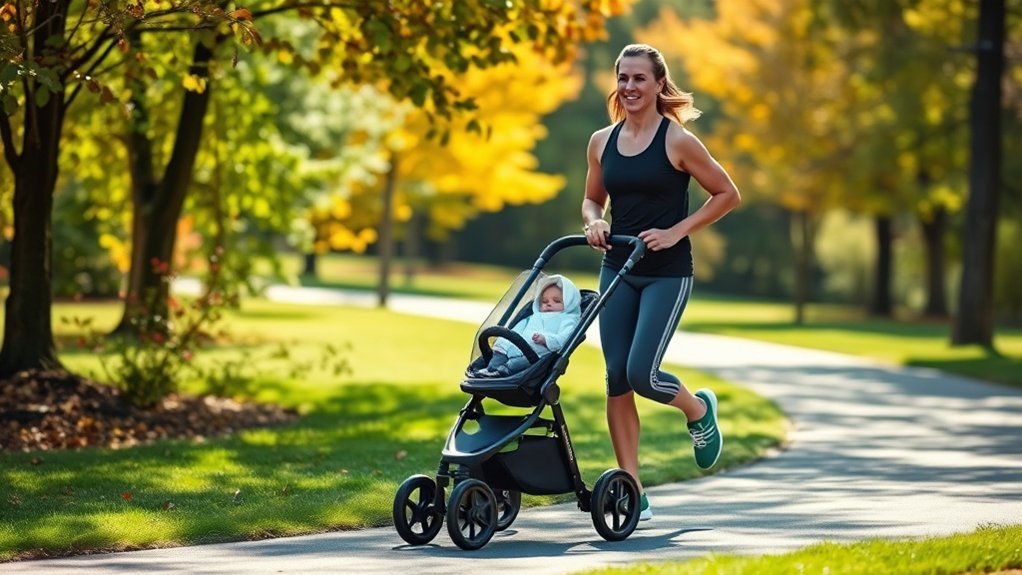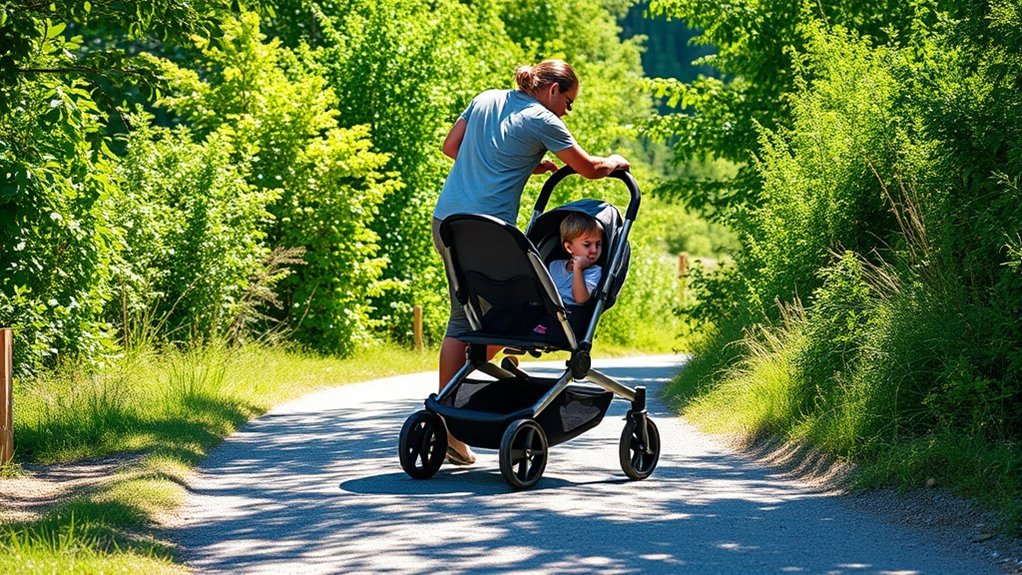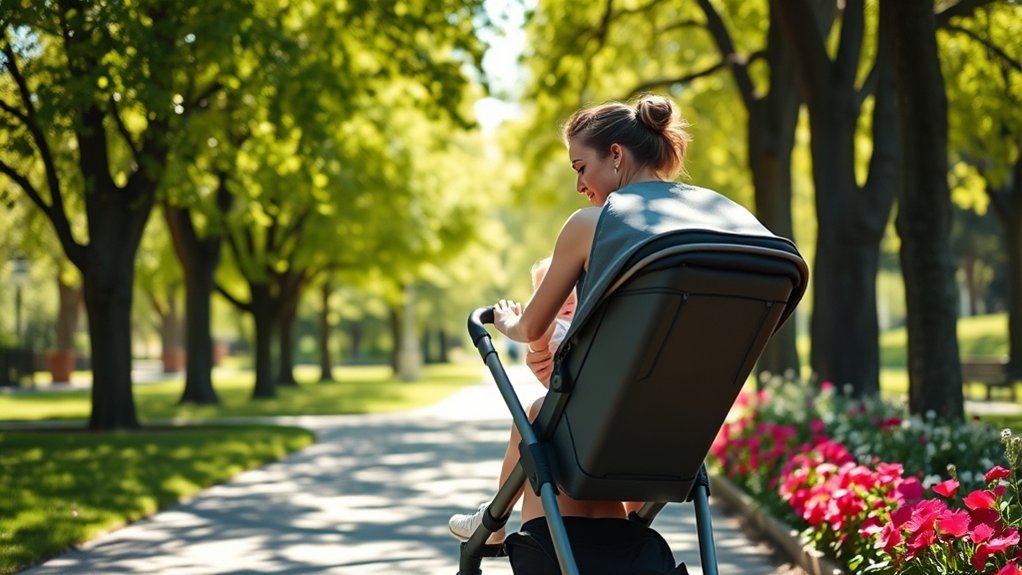
Your baby can face forward in a stroller when the specific stroller seat permits that configuration and your baby can maintain the posture required by the seat. A fixed age alone cannot answer the question because stroller recline, support, inserts, and minimum-use rules vary between models.
Quick Answer
A baby can usually ride forward-facing when the stroller manual allows it and the baby has steady head, neck, and trunk control for that seat position. This is often around 6 months for an upright stroller seat, but some babies and strollers need more time. Never use age as the only test.
Key Takeaways
- Check your stroller manual before changing the seat direction or using an upright seat.
- Your baby needs enough head, neck, and trunk control to avoid slumping in the approved seat position.
- Independent sitting is especially important when the stroller has a fixed, upright seat with limited recline.
- Curiosity about the surroundings may affect preference, but it is not a safety milestone.
- Use the complete harness, engage the brake while loading, and confirm the seat is locked onto the frame.
- Facing forward in a stroller is not the same as turning a car seat forward-facing.
Understanding Stroller Orientation

Stroller orientation describes whether your baby faces you or faces the direction of travel. It does not automatically determine how upright, supported, or safe the seat is.
A reversible stroller may provide the same recline and harness support in both directions. In that case, turning the seat around may not require a new developmental milestone. A lightweight stroller with a fixed forward-facing seat may have limited recline and require stronger head and trunk control.
The safest starting point is always the manufacturer’s manual. Check the approved age or developmental stage, minimum weight, permitted recline positions, insert requirements, and seat-orientation instructions for your exact model.
Note: “Forward-facing” describes only the stroller seat’s direction. It does not mean the seat must be fully upright.
Developmental Milestones for Facing Forward

Development varies from one baby to another, so milestones are more useful than a rigid birthday. The Centers for Disease Control and Prevention lists sitting without support as a milestone most babies reach by 9 months. Some stroller seats can be used before independent sitting because they provide an approved recline and additional support.
Head and Neck Control
Your baby should be able to keep their head centered without repeated forward, backward, or sideways flopping. This control is especially important when the stroller seat is upright or has limited head support.
Watch your baby during movement, turns, curb changes, and stops. A baby who can hold their head steady while sitting on your lap may still slump in a stroller because the seat angle and road movement are different.
Age Recommendations
Many babies develop enough control for an upright stroller seat at around 6 months, but this is only a general reference. The correct timing may be earlier or later depending on your baby and the stroller.
A stroller with a manufacturer-approved near-flat recline, bassinet, newborn insert, or compatible infant car seat may be suitable earlier. A fixed upright travel or umbrella stroller may require independent sitting and a higher minimum age.
Never override a manufacturer’s minimum age, weight, or developmental requirement because your baby appears strong enough.
Developmental Readiness Signs
Use the checklist below together with your stroller manual. Your baby should meet every condition that applies to the seat you plan to use.
| Readiness Check | What You Should See | Wait If |
|---|---|---|
| Manual approval | The manual permits your baby’s age, weight, developmental stage, seat direction, and recline. | The seat has a higher minimum age or requires independent sitting. |
| Head control | Your baby keeps their head centered during normal stroller movement. | The head repeatedly drops, tilts, or bounces without control. |
| Trunk control | Your baby remains centered with the harness fitted and the seat at an approved angle. | Your baby folds forward, twists, or slides to one side. |
| Harness fit | The shoulder, waist, and crotch straps fit as the manual describes without large gaps. | The straps sit incorrectly, cannot tighten, or allow your baby to slide down. |
| Comfort | Your baby breathes normally, remains supported, and appears comfortable during a short test walk. | Your baby looks strained, becomes unusually distressed, or cannot maintain a safe position. |
Signs Your Baby Is Ready to Face Forward

Your baby may be ready when the stroller manual permits forward-facing use and your baby can remain properly positioned throughout a short ride. Strong head control, stable trunk support, a correct harness fit, and comfort in the approved recline are more useful signs than age alone.
Interest in people, pets, traffic, or scenery may show that your baby enjoys a wider view. However, curiosity is a preference rather than a safety requirement. A baby who enjoys looking around may still need a more reclined or parent-facing setup.
Independent sitting becomes especially relevant when the seat is upright and offers little side or head support. If your baby still needs substantial help to sit, continue using an approved reclined position, bassinet, infant car-seat attachment, or parent-facing setup allowed by the manufacturer.
Safety Considerations for Front-Facing Strollers
Before every ride, confirm that the seat is fully attached to the frame and that any direction-changing or recline mechanism has locked. Some systems can appear connected even when one side has not engaged correctly.
- Use every part of the stroller’s harness on every ride.
- Adjust the straps according to the manual so your baby cannot slide or climb out.
- Engage the parking brake before placing your baby in the stroller or taking them out.
- Keep bags and heavy items out of places that could make the stroller tip.
- Do not use stairs or escalators while your baby is seated in the stroller.
- Stay within the seat’s age, weight, and height limits.
- Inspect the frame, wheels, brakes, buckles, and attachment points regularly.
- Check the U.S. Consumer Product Safety Commission recall database for your brand and model.
Warning: Facing forward in a stroller is unrelated to turning a car seat forward-facing in a vehicle. Infant and convertible car seats have separate rear-facing limits and crash-safety instructions. Follow the car-seat manual and applicable child-passenger guidance.
If your baby’s chin drops toward the chest, the body folds forward, or the head repeatedly falls sideways, stop the stroller and reposition the seat within the manufacturer’s approved recline range. Return to a more supportive setup if the problem continues.
A stroller is also not a replacement for an approved infant sleep space. Supervise a sleeping baby, keep the face uncovered, and move the baby to an appropriate sleep surface when practical.
Benefits of Parent-Facing Strollers
A parent-facing position lets you watch your baby’s breathing, posture, facial expressions, and comfort without stopping the stroller. This can be useful for younger babies, children who become overstimulated, and babies who need frequent reassurance.
Direct eye contact also makes it easier to talk, smile, and respond during the walk. These interactions can make outings pleasant, but a parent-facing stroller is not required for healthy emotional development.
Key practical advantages include:
- Faster detection of slumping, spit-up, distress, or a poor harness position
- Easier communication and reassurance
- Protection from some wind or visual stimulation, depending on the stroller design
- A familiar view during the transition from a bassinet or infant car seat
Advantages of Front-Facing Strollers
A forward-facing position gives your baby a clear view of the direction of travel. Older babies may enjoy watching people, animals, vehicles, trees, and other activity during a walk.
The direction does not automatically make a stroller safer, more supportive, or more spacious. Recline, suspension, canopy coverage, storage, and harness design depend on the model.
Enhanced Exploration Opportunities
Forward-facing seats can make it easier for a baby to observe approaching sights and sounds. You can support this interest by describing what your baby sees and taking breaks when the environment becomes noisy or overwhelming.
Do not feel pressured to switch for developmental reasons. Babies can explore, learn, and interact in either orientation through conversation, play, floor time, and everyday experiences.
Improved Social Interaction
A forward-facing baby may see more people during an outing and may respond to voices, faces, and movement. This can make walks entertaining, but it does not guarantee improved social skills or cognitive development.
Some babies enjoy the wider view immediately. Others prefer to see their caregiver, especially when tired, hungry, or in an unfamiliar place. Comfort and safe positioning should guide the decision.
Transitioning From Parent-Facing to Front-Facing
Make the first forward-facing ride short and familiar. Choose a smooth route close to home, use the most supportive approved recline, and check your baby’s position after the stroller begins moving.
- Read the manual and confirm that your baby meets every relevant requirement.
- Turn or install the seat while the stroller is empty.
- Pull gently on both sides of the seat to confirm that it is locked.
- Place your baby in the seat and fasten the complete harness.
- Check that the head and torso remain centered.
- Take a short walk and stop if your baby slumps or appears uncomfortable.
- Return to parent-facing use if your baby needs more support or reassurance.
Pro Tip: A reversible seat does not need to remain in one direction permanently. You can use parent-facing mode during naps or busy outings and forward-facing mode when your baby is alert and comfortable, provided both positions are approved.
Choosing the Right Stroller for Your Baby
Choose a stroller by matching its support and approved configurations to your baby’s current development. A newborn generally needs a manufacturer-approved bassinet, near-flat seat, newborn insert, or compatible infant car seat rather than an unsupported upright seat.
Useful features include:
- A clearly stated minimum age, weight, or developmental requirement
- Multiple approved recline positions
- A complete adjustable harness
- A reliable parking brake
- Clear seat-lock indicators
- A stable frame and appropriate weight limit
- A canopy with ventilation and a clear view of the baby
- Replacement parts and an accessible product manual
Reversible full-size strollers can give you more flexibility during the first year. Compact and umbrella strollers may be easier to carry but often have more upright seats and higher minimum-use requirements.
Jogging strollers require extra care. The age at which a baby may sit in the stroller can differ from the age at which the manufacturer permits running with the baby. Follow both instructions separately.
When buying secondhand, locate the model number and manufacture date, download the correct manual, inspect all safety parts, and search for recalls before use. Do not use a stroller with a damaged frame, missing restraint, unreliable brake, or uncertain seat attachment.
Expert Recommendations and Resources
U.S. carriages and strollers are covered by 16 CFR Part 1227, the federal safety standard for carriages and strollers. Compliance with a product standard does not replace correct assembly, harness use, maintenance, or manufacturer instructions.
Contact your child’s pediatrician or another qualified health professional before using an upright stroller seat if your baby was born prematurely or has low muscle tone, poor head control, breathing concerns, or a developmental condition. Personalized advice may be more appropriate than a general age recommendation.
Seek professional advice if your baby has lost a skill, cannot maintain head control as expected, or consistently slumps even in an approved supportive position. Developmental milestones vary, but persistent concerns deserve individual assessment.
Frequently Asked Questions
Can I use a stroller that only faces forward?
Yes, provided the stroller manual permits your baby’s age, weight, and developmental stage. Use the approved recline and complete harness. If the seat is fixed and upright, wait until your baby has enough head and trunk control to remain centered without slumping.
What type of stroller works best for forward-facing use?
Look for a stroller with clear minimum-use instructions, an adjustable recline, a secure harness, reliable brakes, and a seat that locks firmly onto the frame. Reversible strollers offer more flexibility, while fixed travel and umbrella strollers may require an older baby with stronger sitting control.
How can I make the transition easier for my baby?
Begin with a short walk on a smooth, familiar route. Use the most supportive approved recline, bring a familiar toy that does not interfere with the harness, and watch for slumping or distress. You can return to parent-facing mode and try again later.
What are the risks of switching too early?
A baby without enough postural control may slump forward or sideways, fit poorly in the harness, or become uncomfortable during movement. Risk also increases when caregivers ignore the stroller’s minimum-use instructions or use an unsupported upright position.
What features should I look for in a stroller harness?
Choose a harness with shoulder, waist, and crotch restraints that adjust to your baby’s size. The buckle should close securely, the straps should lie flat, and your baby should not be able to slide underneath them. Use the harness exactly as the manufacturer directs.
Is forward-facing in a stroller the same as forward-facing in a car seat?
No. Stroller direction affects the view during a walk. Car-seat direction is a separate vehicle-safety issue governed by the car-seat manual, the child’s height and weight limits, and applicable child-passenger guidance.
What should I do if my baby slumps or falls asleep?
Stop and check the harness, recline, and head position. Use only recline settings and support accessories approved for the stroller. If your baby cannot remain safely positioned, return to a more supportive configuration. Supervise sleep and move the baby to an approved sleep surface when practical.
Conclusion
Your baby does not need to reach one universal age before facing forward in a stroller. The correct time depends on the stroller’s instructions, the support and recline provided by its seat, and your baby’s ability to control their head and torso.
Check the manual first, use the complete harness, confirm the seat is locked, and begin with a short test walk. If your baby slumps, appears uncomfortable, or does not meet the product’s requirements, continue using a more supportive parent-facing, reclined, bassinet, or approved travel-system configuration.
Sources
- Centers for Disease Control and Prevention: Milestones by 9 Months — supports the developmental reference for sitting without support.
- Electronic Code of Federal Regulations: 16 CFR Part 1227 — provides the U.S. federal safety standard for carriages and strollers.
- U.S. Consumer Product Safety Commission Recall Database — allows caregivers to check stroller and accessory recalls.
- HealthyChildren.org: Stroller Safety — provides stroller-use guidance for parents and caregivers.