Your baby can sit in a stroller safely after achieving head and neck control, which usually happens around 3 to 4 months. By 6 months, most babies can sit independently and are ready for a full upright seat. It’s important to provide proper support until they reach these milestones. Always check manufacturer guidelines for age and weight limits. If you want to learn more about stroller types and safety features, continue exploring this topic.
Understanding Stroller Age and Safety Guidelines

When considering when your baby can safely sit in a stroller, it’s vital to understand the developmental milestones that guide this decision.
Babies generally gain enough head and neck control around 3 to 4 months, which is essential for stroller safety. The American Academy of Pediatrics advises against placing infants in a stroller without a car seat before 4 months.
Babies typically develop head and neck control by 3 to 4 months, crucial for safe stroller use.
Most manufacturers recommend shifting to a fully upright seat around 6 months, when your baby can sit independently. Until your child reaches these milestones, make sure your stroller offers proper support, like a fully reclining seat or bassinet.
Always check the manufacturer guidelines for age and weight limits to keep your little one safe while exploring the world.
Choosing the Right Stroller for Your Child’s Needs

Choosing the right stroller for your child’s needs is vital for their safety and comfort.
You should consider lightweight and portable options if you travel often, and prioritize strollers with adjustable seating and strong safety features.
Don’t forget to check the manufacturer’s guidelines to guarantee the stroller meets your child’s age and weight requirements.
Stroller Types Overview
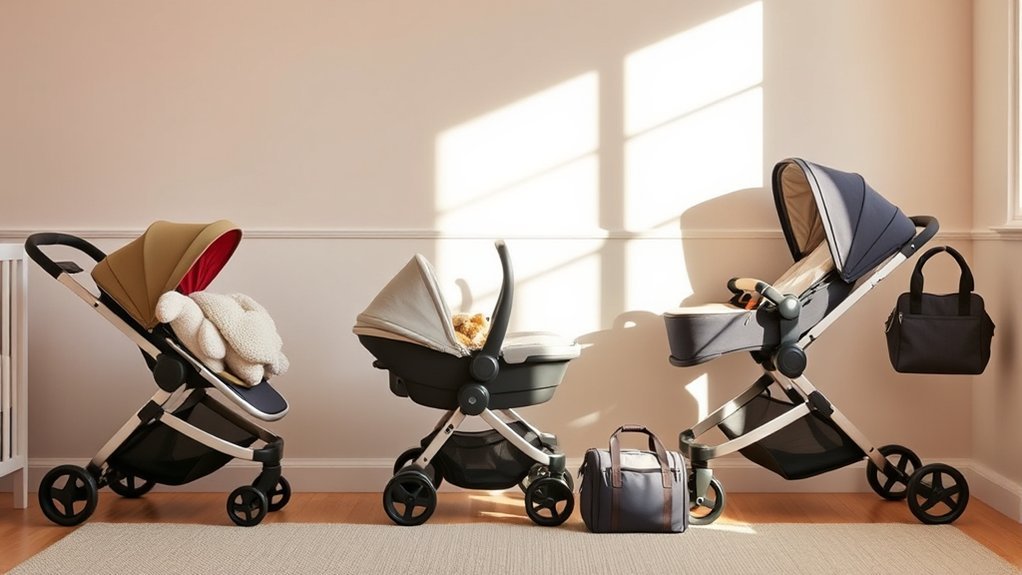
Selecting the right stroller for your child is essential for both safety and comfort. Different stroller types cater to various needs and stages of development. Here’s a quick overview:
| Stroller Type | Ideal Age Range | Key Features |
|---|---|---|
| Bassinet Strollers | Newborn to 6 months | Head and neck support |
| Full-Size Strollers | 6 months to 4 years | Reclining seats, infant inserts |
| Jogging Strollers | 6-8 months and older | Stability, shock absorption |
| Lightweight Strollers | 6 months and older | Portability, easy to maneuver |
When choosing, consider stroller features like weight, portability, and safety mechanisms. Confirm your child can sit independently before shifting to a standard stroller seat for peak safety and comfort.
Safety Features Importance
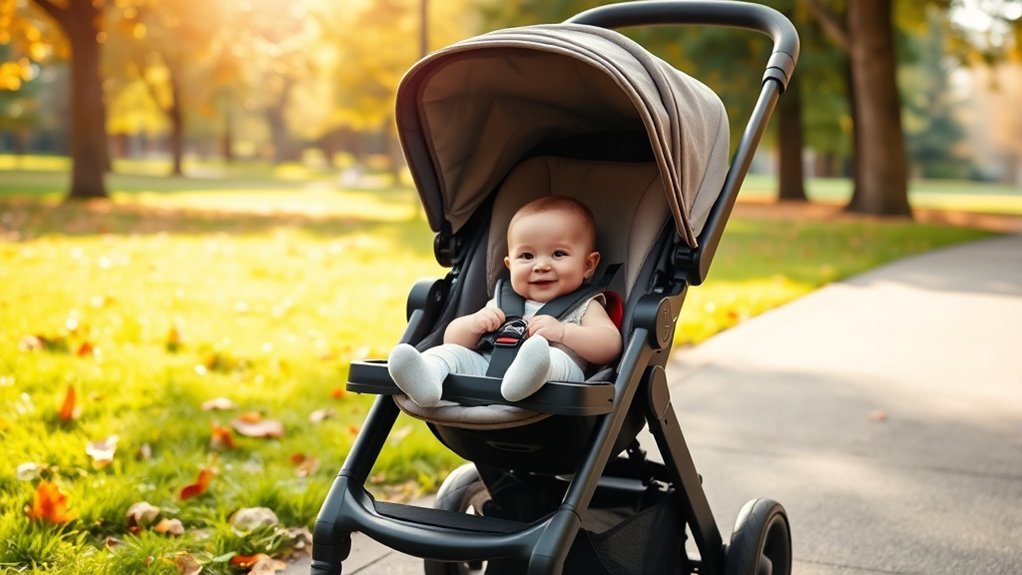
Safety should be your top priority when it comes to picking the right stroller for your child. Focus on stroller safety by choosing models equipped with a five-point harness system. This feature secures your baby at the shoulders, waist, and between the legs, providing maximum protection.
Also, make certain the stroller has effective parking brakes to prevent it from rolling away while stationary. Look for strollers that meet safety standards established post-2014, as these have undergone rigorous testing for durability and reliability.
Avoid strollers with narrow wheelbases or unstable designs, as they can tip over easily, posing risks. By prioritizing these safety features, you’ll create a secure environment for your little one on the go.
Portability and Maneuverability
When you’re on the go with your baby, portability and maneuverability become essential factors in finding the right stroller.
Opt for lightweight designs that are easy to fold and transport, allowing you to navigate life effortlessly. Strollers equipped with swivel wheels enhance your ability to maneuver through crowded areas or tight corners with ease.
Consider the wheel types too; air-filled wheels offer a smooth ride, while foam-filled ones need less maintenance.
Don’t overlook the importance of a reliable brake system—ensuring it effectively secures the stroller when stationary is vital for safety.
Accessories like cup holders and storage baskets can also boost convenience, letting you carry essentials without compromising stroller functionality.
Choose wisely to enjoy your adventures!
Stroller Recommendations for Every Stage

When choosing a stroller, it’s essential to select the right type for your baby’s developmental stage.
For newborns, a bassinet stroller or a car seat combo is vital for proper support, while toddlers benefit from lightweight models that are easy to maneuver.
Always check safety features and weight limits to guarantee your stroller meets your child’s growing needs.
Newborn Stroller Options
Choosing the right stroller for your newborn is crucial, as it guarantees they receive the proper support and comfort during outings.
Look for strollers that feature a bassinet or a fully reclining seat, which provides essential head and neck support. The Mompush Wiz stroller, for instance, offers a 2-in-1 design, perfect for infants.
Confirm the stroller allows for a flat position until your baby can roll over or sit up, typically around 4 to 6 months.
Full-size strollers often come with infant inserts or compatibility with car seats, enhancing stroller safety.
Prioritize options that meet safety guidelines and offer the bassinet benefits your newborn needs for a secure, cozy experience on the go.
Toddler Stroller Choices
As your child grows from a newborn to a toddler, selecting the right stroller becomes increasingly significant for their comfort and safety.
For toddlers, look for lightweight strollers like the Mompush Nova, which offers great maneuverability and ample storage for outings. This model includes essential toddler stroller features that cater to active little ones.
Alternatively, the Mompush Ultimate 2 provides adjustable seating, ensuring ergonomic support as your child grows.
Always prioritize toddler stroller safety by checking for reliable brake systems and secure harnesses. These safety features are vital for keeping your child safe during your adventures together.
Ensuring Comfort and Proper Support in a Baby Stroller
Ensuring your baby’s comfort and proper support in a stroller is essential, especially for newborns who need extra head and neck stability. Look for strollers with comfort features like soft quilted interiors and adjustable harnesses; these provide security and reduce discomfort during outings.
The support importance can’t be overstated—flat, large bassinets are ideal, allowing babies to lie flat until they can roll over or sit up independently. Opt for a stroller with multiple recline options, ensuring your baby can rest comfortably while sleeping.
Additionally, sufficient cushioning and padded seats enhance overall comfort, making outings enjoyable for both you and your little one. Prioritize these aspects to create a safe and pleasant experience for your baby.
Can Babies Sit in Strollers Without Car Seats?
When can you feel confident letting your baby sit in a stroller without a car seat? Generally, babies can start around 4 to 6 months, depending on their neck muscle strength and head control. The American Academy of Pediatrics warns against stroller use without a car seat before 4 months due to safety risks.
| Age Range | Stroller Safety Considerations |
|---|---|
| 0-3 Months | Use car seat for head and neck support |
| 4-5 Months | Monitor head control; consult pediatrician |
| 6+ Months | Can sit upright in non-reclining strollers |
| Always | Follow developmental milestones closely |
The Verdict on Jogging Strollers for Infants
While jogging strollers can be an excellent way to stay active with your baby, it’s crucial to wait until they’re at least 6 to 8 months old before using one. This waiting period allows your baby to develop the necessary head control and infant stability.
Here are some key considerations for jogging stroller safety:
- Confirm the stroller has a five-point harness system for secure rides.
- Use the stroller only on smooth, flat surfaces; avoid rough terrains.
- Always supervise your baby to monitor comfort and readiness.
- Look for features that accommodate your baby’s growth for long-term use.
Prioritizing these factors will help confirm a safe and enjoyable experience for you and your little one while jogging.
Frequently Asked Questions
Can I Use a Stroller for a Newborn?
You can use a stroller for a newborn, but guarantee proper positioning. Look for stroller types with a flat recline or infant car seat compatibility to keep your baby safe and comfortable during outings.
How Do I Know if My Baby Is Ready?
Look for baby readiness signs like head and neck control. If your little one can sit up with support, consider stroller alternatives like baby carriers or wraps until they’re fully ready for the stroller.
Are There Safety Features I Should Look For?
Imagine your baby cruising like a little explorer; prioritize stroller safety. Look for sturdy harness systems that secure them snugly, stable frames to prevent tipping, and brakes that keep everything in place during your adventures.
What Should I Do if My Baby Slouches?
If your baby slouches, adjust the stroller support to improve their posture. Use a supportive insert if needed, ensuring they sit upright and comfortably. Always monitor them to prevent any strain or discomfort during rides.
Is It Safe to Use a Stroller While Traveling?
Yes, stroller travel can be safe if you guarantee your infant’s securely strapped in and the stroller meets safety standards. Always stay alert and avoid crowded areas to keep your baby comfortable and protected.
Conclusion
To sum up, choosing the right stroller for your baby is like picking the perfect seat for a thrilling ride; safety and comfort are key. Always follow age and weight recommendations to make certain your little one is secure and supported. Remember, not every stroller is suitable for every stage, so stay informed. By prioritizing safety and comfort, you’ll create enjoyable outings while keeping your baby safe and happy.