Your baby can start using a jogging stroller at 6 months old when they can sit up without support. It’s essential to guarantee their head and neck control is sufficient for safety. Consult your pediatrician for personalized advice, especially if considering attachments like infant car seats. Remember to prioritize safety features, such as a five-point harness and locking wheels. By following these guidelines, you can enjoy jogging with your little one safely. There’s more to explore on keeping your outings safe and enjoyable.
Understanding Age Guidelines for Jogging Strollers

When considering the use of a jogging stroller, it’s vital to understand the age guidelines that guarantee your baby’s safety.
Most experts recommend waiting until your baby is at least 6 months old, ensuring they’ve sufficient head and neck control, a key developmental milestone. Pediatricians typically advise that your child should sit upright without assistance before jogging activities commence.
Most experts suggest waiting until your baby is at least 6 months old for safe jogging stroller use.
While some manufacturers provide infant car seat attachments for earlier use, always consult your pediatrician first. Remember, individual readiness varies; some babies may not be ready until 8 months.
Adhering to manufacturer age and weight guidelines is important for stroller safety, allowing you to enjoy jogging while keeping your little one secure and comfortable.
Recommended Features of Jogging Strollers
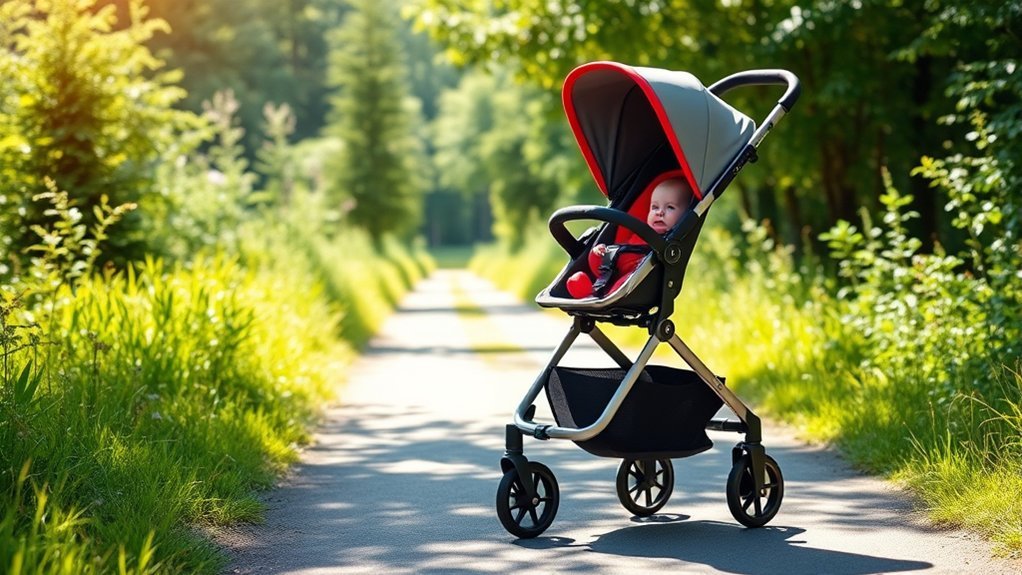
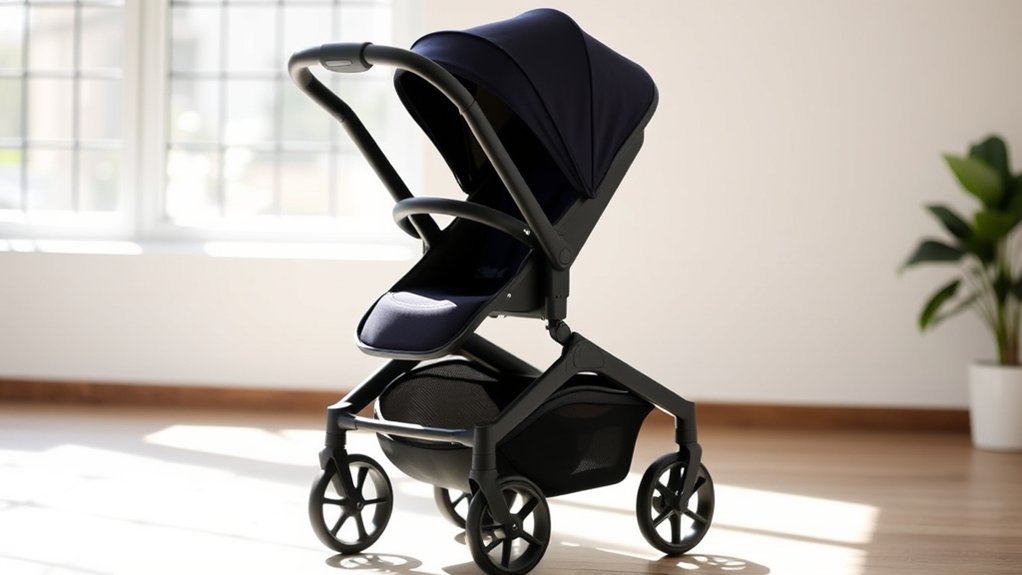
Choosing the right jogging stroller involves understanding which features enhance safety and comfort for both you and your child.
Look for a robust suspension system that absorbs impacts, protecting your child’s spine on bumpy terrain. Treaded, larger tires are essential for durability and provide better impact absorption, delivering a smoother ride.
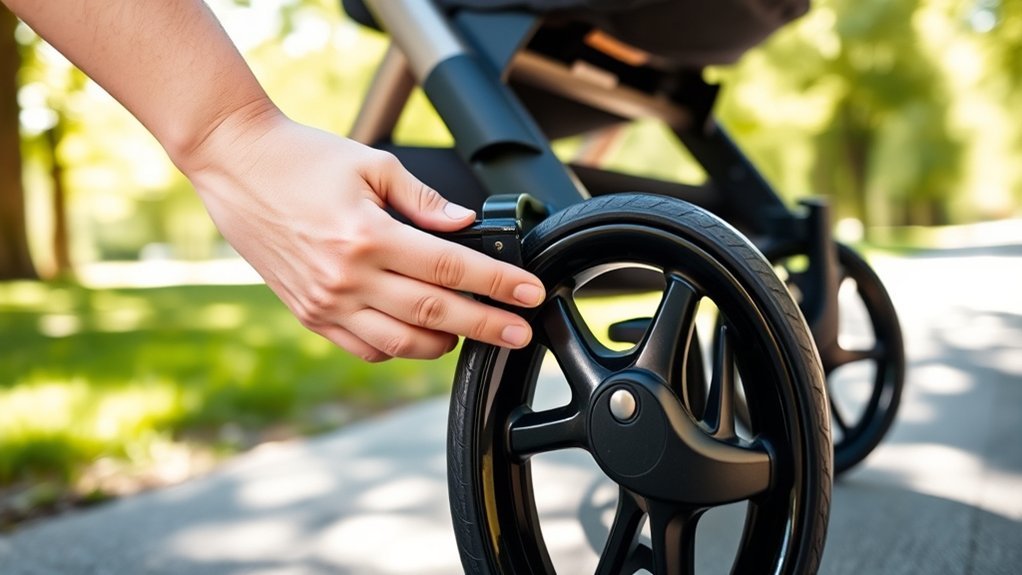
Locking front wheels are vital for preventing wobbling at high speeds, ensuring better control during your runs. Hand brakes or wrist loops add safety, allowing you to make quick stops on downhill paths.
All recommended jogging strollers come with these features, making them ideal for enjoying jogging benefits.
Consider stroller accessories that enhance convenience, ensuring your experience is both safe and liberating for you and your little one.
Preparing Your Baby for Jogging
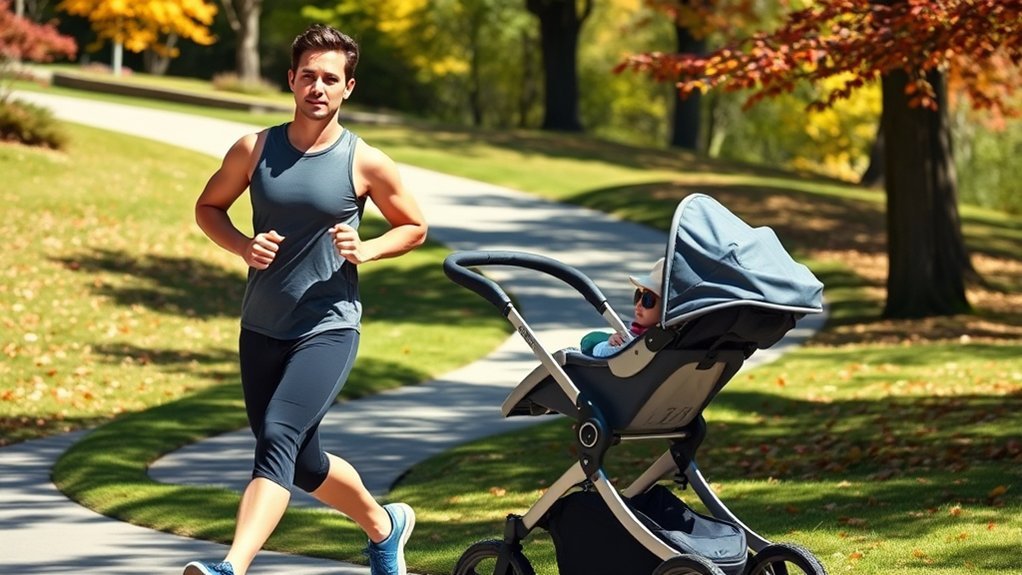
Before you hit the pavement with your baby in a jogging stroller, it’s important to guarantee they’re ready for the ride.
Start by ensuring your baby meets the following criteria for a safe and comfortable experience:
- Be at least 6 months old for proper head and neck control.
- Sit upright without assistance for safety during runs.
- Consult your pediatrician to confirm their readiness.
- Begin stroller acclimation with short walks to help them adjust.
- Use safety features like a five-point harness and shock-absorbing suspension.
Essential Safety Tips for Jogging With a Stroller
Jogging with a stroller can be a great way to stay active while spending time with your baby, but safety must come first. Ascertain your child is at least six months old and can fully control their head and neck before jogging.
Engage the stroller’s parking brake before securing your little one in the five-point harness to prevent any movement. Always use the wrist strap attached to the handlebar for added control.
Ensure the stroller’s parking brake is engaged and always use the wrist strap for added safety while jogging.
Schedule your runs during daylight hours, and wear reflective gear for visibility. Regularly inspect the stroller’s tires, harness, and overall maintenance.
Consider using stroller accessories designed for jogging safety, like sunshades and storage compartments, to enhance both comfort and protection for you and your baby.
Techniques for Running With a Jogging Stroller
Running with a jogging stroller requires a few adjustments to your technique to guarantee safety and efficiency. Follow these tips to enhance your experience:
- Keep one hand lightly on the stroller while swinging the other for balance.
- Switch hands every 30 to 60 seconds to prevent muscle tightening.
- Use both hands when running uphill for better control.
- Shorten your stride if you find yourself kicking the stroller, engaging your core for efficiency.
- Maintain good alignment with a tall spine and engaged core.
These techniques, focusing on arm positioning and stride adjustment, will help you run smoothly while ensuring your baby enjoys the ride.
Embrace the freedom of running with your little one safely by mastering these adjustments.
Choosing the Right Jogging Stroller for Your Needs
When choosing a jogging stroller, it’s essential to prioritize key safety features, like a five-point harness and locking front wheels.
You should also consider terrain compatibility to guarantee a smooth ride on various surfaces.
Finally, think about the stroller’s weight and portability for easier handling during your runs.
Key Safety Features
Choosing the right jogging stroller requires careful consideration of key safety features that assure both you and your baby have a secure experience.
To confirm your choice meets safety standards, look for models with:
- Locking front wheels to prevent wobbling at high speeds
- A suspension system to absorb shocks and protect your baby’s spine
- Larger, treaded tires for durability and smoother rides
- A 5-point harness to securely fasten your child
- Additional safety features like hand brakes or wrist straps for better control
When making stroller comparisons, check for safety certifications that confirm adherence to safety guidelines.
Terrain Compatibility Considerations
Selecting the right jogging stroller also hinges on the type of terrain you’ll encounter during your runs. If you plan to tackle bumpy or uneven paths, look for strollers with larger, treaded tires for enhanced durability and shock absorption.
Models like the BOB Gear Wayfinder excel in rugged environments, while the Thule Urban Glide 2 is better suited for smooth, paved surfaces. An adjustable suspension system is essential for protecting your child’s spine on rough trails.
Additionally, make sure your stroller has a locking front wheel for stability at high speeds. Regular maintenance checks on tire pressure and wheel alignment will promote safety and comfort, allowing you to enjoy your runs with peace of mind and freedom.
Stroller Weight and Portability
Finding the right balance between stroller weight and portability is crucial for your jogging experience. Consider the following when choosing a jogging stroller:
- Weight: Look for lighter models, like the Thule Urban Glide 2, around 25 pounds for easier maneuverability.
- Portability Features: Quick-fold designs help with transport and storage.
- Weight Limit: Choose strollers that accommodate up to 75 pounds for your child’s growth.
- Size and Dimensions: Verify it fits comfortably in your vehicle for hassle-free transport.
- Wheel Size and Tread: Larger, air-filled tires enhance stability on various terrains.
Don’t forget stroller maintenance tips to keep your stroller in top shape.
Conduct a stroller weight comparison to find the best fit for your running adventures.
Navigating Online Discussions and Expert Opinions on Stroller Use
While many parents share their experiences online, steering through the differing opinions about jogging stroller use can be challenging. You’ll find a mix of parental experiences advocating for flexibility beyond the 6-month guideline, alongside expert opinions stressing safety. Pediatricians warn that following age recommendations is vital for your infant’s neck strength and stability.
Here’s a quick overview of the discussions:
| Perspective | Parental Experiences | Expert Opinions |
|---|---|---|
| Flexibility | Advocated by some | Generally discouraged |
| Safety Concerns | Heated debates | Prioritize guidelines |
| Anecdotal Evidence | Varied results | Caution advised |
Navigating these safety debates requires caution, as personal anecdotes might not reflect general safety standards. Prioritize your child’s well-being.
Frequently Asked Questions
Can I Use a Regular Stroller for Jogging?
You shouldn’t use a regular stroller for jogging. It lacks essential stroller features like a fixed front wheel and proper suspension, compromising jogging safety. Invest in a jogging stroller designed for smooth, safe runs with your baby.
What Are the Best Jogging Stroller Brands?
Top jogging stroller brands include BOB, Thule, and Baby Jogger. They offer essential features like sturdy frames and adequate safety standards. Always check for proper harness systems and wheel stability before making your choice.
How Do I Clean a Jogging Stroller?
Cleaning a jogging stroller’s like washing your favorite workout gear. Use mild soap and warm water for the fabric, wipe down the frame, and check wheels. Regular maintenance tips keep it fresh and safe for your adventures.
Can I Jog With Twins in a Stroller?
Yes, you can jog with twins in a stroller, but guarantee your twin jogging stroller meets safety standards. Always buckle them in securely, and consider their age and comfort before hitting the trails.
Are There Jogging Strollers for Bigger Toddlers?
Yes, there are jogging strollers designed for bigger toddlers. Look for strollers with higher weight limits and safety features like five-point harnesses to guarantee your child’s comfort and security while you jog.
Conclusion
To sum up, ensuring your baby’s safety while using a jogging stroller is paramount. Remember to adhere to age guidelines and select a model with the right features. As you prepare for your runs, keep safety tips in mind and master proper techniques. By doing so, you’ll not only foster a healthy lifestyle but also create cherished memories reminiscent of simpler times. Ultimately, your thoughtful approach will make jogging with your little one both enjoyable and secure.