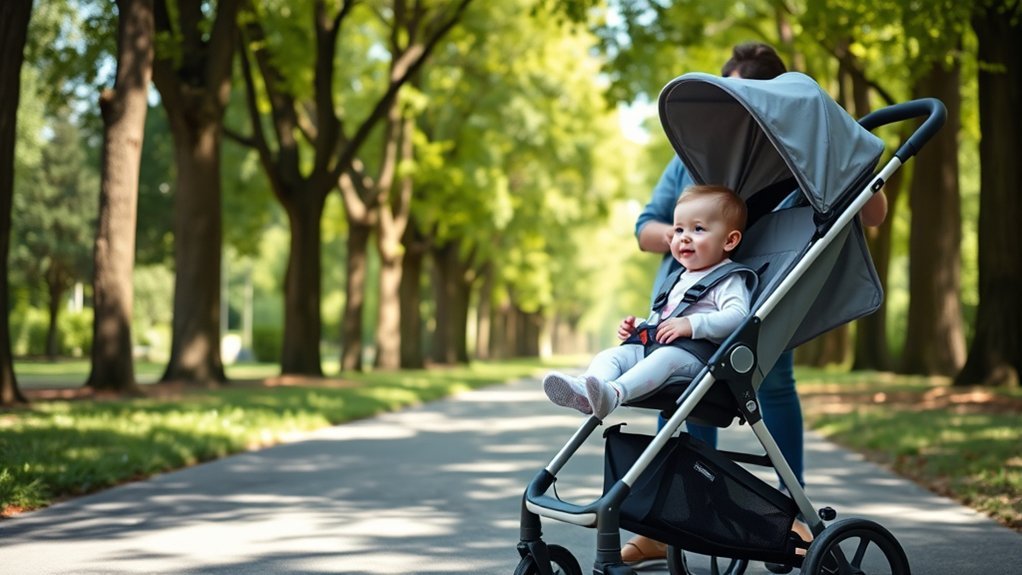
When Can Baby Use a Lightweight Stroller Safely?
Are you tired of carrying a bulky stroller on every quick trip? A lightweight stroller can make errands, travel, and short walks much easier, but your baby needs the right body control before you switch.
This guide explains when your baby can safely use a lightweight stroller, which readiness signs matter most, and what safety features you should check before the first ride.
Quick Answer
Most babies can start using a lightweight stroller around 6 months old, but age alone is not enough. Your baby should sit with steady control, hold their head and neck well, and meet the stroller manual’s age and weight rules. Use a fully reclining stroller or approved infant car seat setup for younger babies.
Key Takeaways
- Wait until your baby can sit with steady support and control their head well.
- Use the stroller manual as the final rule for age, weight, recline, and car seat compatibility.
- Choose a stroller with a stable frame, working brakes, secure locks, and a 5-point harness.
- Never place a newborn in an upright lightweight stroller unless the manual allows full newborn support.
- Read your specific stroller manual before the first ride, especially after folding or travel.
- Stop using the stroller once your child reaches the listed weight or height limit.
Last updated: May 28, 2026
Reviewed by: SellySell Editorial Team
What Is a Lightweight Stroller?
A lightweight stroller is a compact stroller made for easy carrying, quick folding, and simple storage. Parents often use it for errands, travel, daycare drop-offs, public transit, and short walks.
Many lightweight strollers weigh less than full-size strollers. Some use an umbrella-style fold, while newer travel strollers fold into a small rectangular shape. Most models include a fabric seat, canopy, harness, brakes, and a small storage basket.
Lightweight does not mean suitable for every baby. Many models have limited recline, smaller wheels, and less padding than full-size strollers. That design makes them convenient, but it also means your baby needs enough head, neck, and trunk control before riding upright.
| Stroller Type | Best Use | Newborn Friendly? |
|---|---|---|
| Standard lightweight stroller | Errands, travel, smooth sidewalks | Only if the manual allows full newborn support |
| Umbrella stroller | Short trips with older babies and toddlers | Usually no, unless it fully reclines and the manual allows it |
| Travel system stroller | Car-to-stroller transitions | Yes, when used with an approved infant car seat |
When Is Your Baby Ready for a Lightweight Stroller?

Your baby may be ready for a lightweight stroller when they can sit with steady control and hold their head upright without slumping. For many babies, this happens around 6 months, but normal development varies.
The CDC’s 6-month milestones include movement skills that show stronger body control, while the CDC’s 9-month milestones include sitting without support. Use these milestones as a guide, not as a strict deadline.
The safest answer comes from your stroller manual. Some lightweight strollers allow younger babies only with a fully reclined seat, bassinet, or approved infant car seat adapter. Other models require a baby to sit independently before use.
Warning: Never place a newborn directly into a standard upright lightweight or umbrella stroller unless the manual clearly approves newborn use and the seat supports a safe, flat recline.
Why Milestones Matter for Stroller Safety
Milestones matter because an upright stroller seat does not support a young baby’s airway, head, and trunk the same way a flat bassinet or approved infant car seat does. If your baby slumps forward or sideways, they may become uncomfortable and less secure.
Use this milestone table as a practical readiness guide:
| Readiness Sign | Common Age Range | Why It Matters |
|---|---|---|
| Good head control | Often improves around 4 to 6 months | Helps your baby stay positioned safely in a semi-upright seat |
| Sits with steady support | Often appears around 6 months | Shows better trunk control for short upright rides |
| Sits without support | Often develops by about 9 months | Gives more confidence for strollers with limited recline |
How to Tell Your Baby Is Ready
Do not judge readiness by age only. Watch your baby in a supported sitting position while they are awake and calm. Your baby should stay upright without sliding down or folding forward.
Look for these signs before using a lightweight stroller:
- Your baby can hold their head steady without bobbing forward.
- Your baby can sit with steady control for short periods.
- Your baby does not slump sideways in the stroller seat.
- Your baby meets the minimum age, weight, and recline rules in the manual.
- Your baby fits securely in the harness without loose shoulder straps.
- Your pediatrician has no concerns about your baby’s muscle tone or development.
Key takeaway: A baby who is old enough by the calendar may still need more time if they slump, slide, or cannot hold their head steady in the seat.
Why You Must Check the Manual
You should always check the manufacturer guidelines before taking your baby for a walk. The manual gives the exact age range, weight range, recline rules, approved car seat adapters, and warning labels for your model.
Many lightweight strollers carry toddlers up to 40 or 50 pounds, but this varies by model. Some also have height limits, seat depth limits, or harness fit limits. Stop using the stroller when your child reaches any limit listed in the manual.
The American Academy of Pediatrics’ stroller safety guidance also recommends checking brakes, choosing a wide base, using a 5-point harness, and following the stroller instructions for weight and age limits.
Can You Use a Car Seat With a Lightweight Stroller?
You can use some lightweight strollers from birth when you attach an approved infant car seat with the correct adapter. This setup creates a travel system, but the parts must match. Do not force a car seat onto a stroller that the manual does not approve.
Before using a car seat with a lightweight stroller, check these details:
- The stroller brand lists your car seat model as compatible.
- The adapter matches both the stroller and the car seat.
- The car seat clicks securely into place before each ride.
- The stroller remains stable with the car seat attached.
- You can still access and use the stroller brakes easily.
Safety note: An infant car seat can help with short transfers, but it should not replace a safe sleep space. Keep your baby supervised and follow the car seat manual.
Physical Signs of Stroller Readiness
You need to confirm that your baby has enough neck, head, and trunk strength before using a lightweight stroller. Many lightweight models do not lie flat, so your baby must maintain a safe seated position while awake.
Sitting Independently
Independent sitting means your baby can sit without pillows, hands, or an adult holding their body upright. Some babies start sitting with support around 6 months, while others need more time before sitting without support.
If your baby tips forward, folds at the waist, or slides down in the seat, wait before using an upright lightweight stroller. Use a fully reclining stroller, bassinet, or approved car seat setup instead.
Head and Neck Control
Your baby should hold their head up steadily during normal movement. If their head drops forward when they get tired, the stroller seat may not provide enough support yet.
Regular tummy time can help babies build neck, shoulder, and core strength. Ask your pediatrician for guidance if your baby was premature, has low muscle tone, or seems delayed with movement milestones.
What to Look For in a Lightweight Stroller
When you shop for a lightweight stroller, focus first on safety and fit. Convenience matters, but the stroller still needs to hold your child securely, brake reliably, and stay stable during daily use.
- Manual-approved age and weight range: Choose a model that matches your baby’s current stage and your child’s expected growth.
- 5-point harness: Look for shoulder straps, hip straps, and a crotch strap that secure your child from slipping or climbing out.
- Reliable brakes: Pick brakes you can engage quickly every time you stop.
- Stable frame: Choose a stroller with a wide enough base to reduce tipping risk.
- Safe fold lock: Make sure the stroller locks open fully before your baby sits in it.
- Useful recline: Choose a deeper recline if your baby still naps during outings.
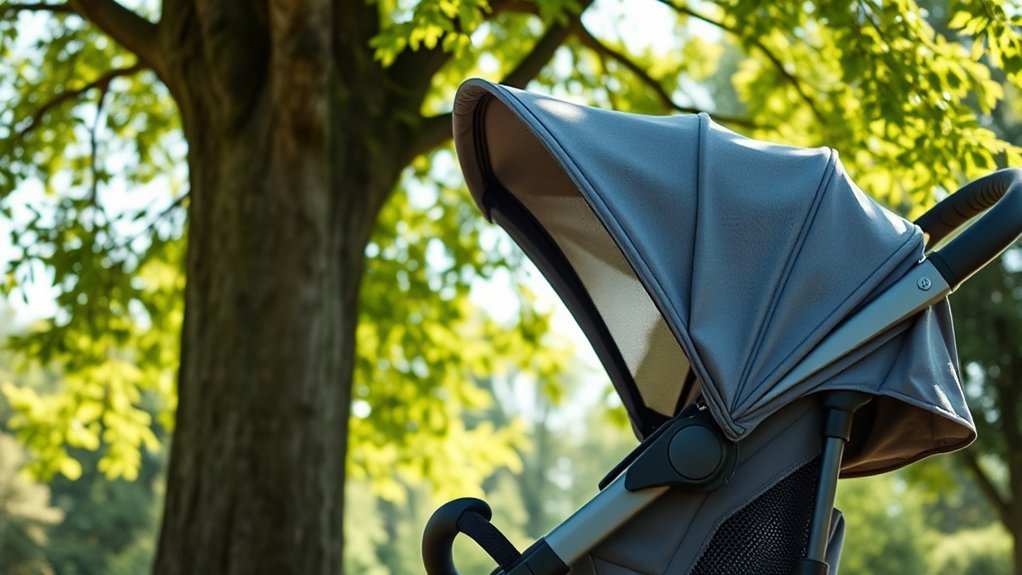
- Sun canopy: Look for enough shade, especially for babies younger than 6 months who should stay out of direct sunlight.
- Storage basket: Use low storage instead of hanging bags from the handles.
- Wheel quality: Pick smoother wheels if you use cracked sidewalks or long airport walks.
When to Stop Using a Lightweight Stroller
You should stop using a lightweight stroller when your child reaches any limit in the manual. Weight matters, but it is not the only cutoff. Height, harness fit, and stroller stability matter too.
Replace or retire the stroller if you notice these signs:
- Your child exceeds the listed weight or height limit.
- The harness no longer fits snugly across the shoulders and hips.
- Your child’s feet drag near the wheels.
- Your child leans hard enough to make the stroller feel unstable.
- The frame, brakes, wheels, or folding lock no longer work correctly.
Many lightweight strollers list limits around 40 to 50 pounds, but you should follow your model’s manual instead of relying on a general range.
How to Keep Your Baby Safe
Safe stroller use depends on small habits you repeat every time. Buckle the harness before the stroller moves, lock the brakes when stopped, and keep heavy bags in the basket instead of on the handlebar.
The U.S. Consumer Product Safety Commission stroller rule addresses hazards such as falls, entrapment, folding problems, and stability. Strollers sold in the United States must meet federal safety requirements based on ASTM F833.
Pro tip: Always lock the rear wheels before you take your hands off the handlebar, even on flat ground.
Use the 5-Point Harness Correctly
Start every ride by buckling the 5-point harness. The shoulder straps should sit flat, the hip straps should stay snug, and the buckle should close securely between your child’s legs.
Check the straps often for fraying, twisting, broken buckles, or loose adjusters. Adjust the strap height as your child grows so the harness continues to hold your child in the right position.
| Safety Check | What to Do | Why It Matters |
|---|---|---|
| Harness fit | Keep straps snug across shoulders and hips | Helps prevent sliding, standing, and falling |
| Brake use | Lock brakes anytime you stop | Prevents rolling during loading, unloading, and pauses |
| Fold lock | Confirm the stroller locks fully open | Reduces collapse and pinch risks |
| Storage | Put bags in the basket, not on handles | Reduces backward tipping risk |
How to Choose the Right Lightweight Stroller for Your Routine
Choose the stroller around your daily routine, not only around the lowest weight. A very small stroller may feel easy to carry, but it may not give enough recline, storage, or wheel comfort for your needs.
If you ride public transit, focus on one-hand folding, shoulder straps, and a compact folded size. If you walk outdoors often, prioritize stronger wheels, a better canopy, and a seat that reclines for naps. If you travel by car, measure your trunk before buying.
Example: A parent who uses buses may care most about a fast fold and low weight. A parent who walks daily on uneven sidewalks may need stronger wheels and better suspension, even if the stroller weighs a little more.
Keep Your Baby Comfortable
Your baby should sit securely without slouching, sliding, or dangling. Look for a supportive seat, soft but firm padding, a useful leg rest, and a canopy that gives shade without blocking airflow.
Comfort also depends on timing. Use shorter rides when your baby is new to the stroller. Bring water, snacks for older babies, diapers, and a light blanket if weather conditions require it. Avoid covering the stroller with thick blankets because trapped heat and poor airflow can become unsafe.
Common Lightweight Stroller Mistakes to Avoid
Many stroller problems come from rushed daily habits. Avoid these mistakes before they become safety risks:
- Using an upright stroller before your baby has enough head and trunk control.
- Skipping the harness for short walks.
- Hanging diaper bags or shopping bags from the handlebar.
- Forgetting to lock the brakes while loading or unloading your child.
- Letting older siblings climb on the stroller frame.
- Using an unapproved car seat adapter.
- Ignoring recalls, broken buckles, loose wheels, or damaged locks.
Frequently Asked Questions
Can I use a lightweight stroller for newborns?
You should not put a newborn directly into a standard lightweight stroller unless the seat reclines fully flat and the manual approves newborn use. Newborns need strong airway support. Use only a stroller, bassinet, or infant car seat setup approved by the manufacturer.
What age can a baby use a lightweight stroller?
Many babies can use a lightweight stroller around 6 months old, but age alone is not enough. Your baby should sit with steady control, hold their head and neck well, and meet the stroller manual’s minimum age and weight requirements.
Can a 4-month-old use a lightweight stroller?
A 4-month-old usually should not ride in an upright lightweight stroller. Some babies have better head control at this age, but most still need more support. Use a fully reclining stroller or an approved infant car seat travel system if the manual allows it.
What are the safety standards for lightweight strollers?
In the United States, strollers must meet federal safety rules based on ASTM F833. Look for a stable frame, reliable brakes, secure locking parts, and a restraint system. JPMA certification can add another layer of confidence.
How do I know if my baby has enough head control for a stroller?
Your baby should hold their head steady without bobbing forward, slumping sideways, or needing pillow support. They should stay upright for short periods while awake. If your baby slouches in the seat, wait longer or ask your pediatrician.
Can I use an infant car seat with a lightweight stroller?
Some lightweight strollers work with infant car seats when you use the correct approved adapter. Check both manuals before use. The car seat must click in securely and must match the stroller brand or approved compatibility list.
How long can a baby stay in a lightweight stroller?
Use a lightweight stroller for normal outings, errands, and travel, but do not use it as a regular sleep space. If your baby falls asleep, keep them supervised and move them to a safe sleep surface when possible.
When should I stop using a lightweight stroller?
Stop using the stroller when your child reaches the manual’s weight or height limit, no longer fits the harness, drags their feet near the wheels, or makes the stroller unstable by leaning or climbing.
Can lightweight strollers handle rough terrain?
Most lightweight strollers work best on smooth sidewalks, airports, malls, and paved paths. Small wheels and limited suspension make them less suitable for gravel, trails, grass, or broken pavement.
How do I clean a lightweight stroller?
Check the manual first. Many strollers need spot cleaning with mild soap and water. Some fabric parts may detach, but not all are machine washable. Wipe the frame, wheels, buckle, and tray after messy outings.
Medical Disclaimer: This article is for informational purposes only and does not constitute professional medical advice. Always consult a qualified pediatrician before making decisions based on this information regarding your child’s physical development.
Conclusion
The right time to use a lightweight stroller depends on your baby’s control, not just their age. Many babies become ready around 6 months, but your baby should hold their head steady, sit with good support, and fit the stroller’s manual rules before you switch.
Before the first ride, read the manual, test the brakes, lock the frame open, and adjust the 5-point harness. If your baby still slumps or needs more support, wait longer or use a fully reclining stroller or approved car seat travel system.
Next step: Check your stroller’s age, weight, recline, and harness instructions today. That one step gives you the clearest answer for your exact model.
References
- American Academy of Pediatrics via HealthyChildren.org — How to Choose a Safe Baby Stroller
- Centers for Disease Control and Prevention — Milestones by 6 Months
- Centers for Disease Control and Prevention — Milestones by 9 Months
- U.S. Consumer Product Safety Commission — Safety Standard for Carriages and Strollers
- Health Canada — Stroller and Carriage Safety
- Raising Children Network — Prams and Strollers Safety Guide