Knowing when to stop using a stroller depends on your child’s readiness, which usually occurs between ages 3 and 4. Look for signs, like a desire for independence, increased walking endurance, and confidence in mobility. Shifting away from the stroller promotes physical activity and independence. However, consider individual challenges and safety in crowded areas. Gradually encourage walking and be patient. Want to explore all the details on this topic? Keep going for more insights.
Key Takeaways
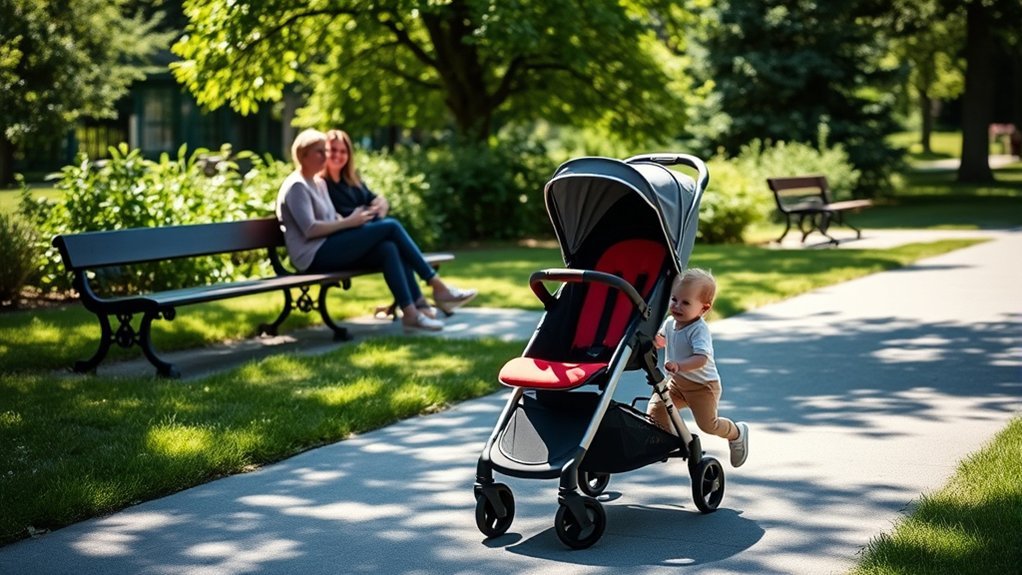
When considering when to stop using a stroller, remember that most children shift away from them between ages 3 and 4, though readiness can vary.
Look for signs indicating your child’s readiness, like their desire to walk or their ability to cover longer distances. Moving away from strollers encourages physical activity, independence, and improved coordination.
Explore stroller alternatives like backpacks or wagons for outings where kids can still engage in mobility games.
While it’s ideal to phase out stroller use after age 3, keep in mind that occasional use remains useful for crowded spaces or long excursions.
Always prioritize safety by adhering to weight limits and using safety straps, ensuring your child’s well-being during this change.
Understanding the Appropriate Time for Your Child to Stop Using Their Stroller
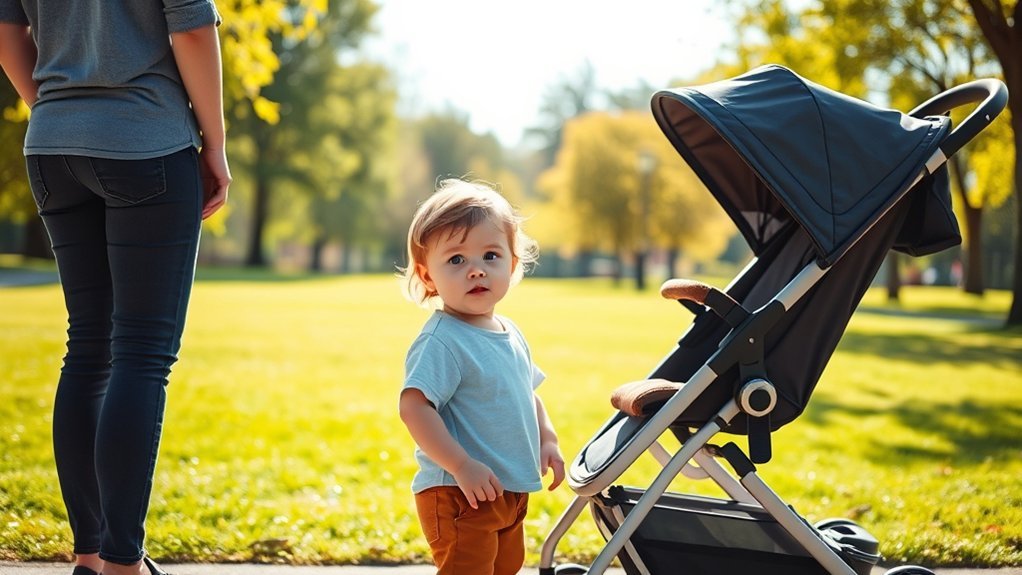
Knowing when to stop using a stroller is essential for your child’s development.
Generally, between ages 3 and 4 is when most kids are ready to make the change, but watch for signs like a desire to walk and increased mobility.
Signs of Readiness
As your child approaches the ages of 3 to 4, you may notice signs that they’re ready to shift away from the stroller. Look for their enthusiasm to walk, demonstrating endurance for longer distances, and a growing interest in exploring their surroundings independently.
Increased confidence in mobility and the ability to follow directions are strong indicators that your child is prepared for this change. Emphasizing walking routines over stroller use fosters independence, enhances motor skills, and promotes physical activity, benefiting their overall health.
While stroller alternatives might still be useful in busy environments or during long outings, prioritizing walking can strengthen social skills and safety awareness, empowering your child to embrace their newfound freedom.
Age Recommendations
Recognizing the right time for your child to stop using a stroller is important for their development. Experts generally recommend phasing out strollers between ages 3 and 4, but readiness can vary.
Look for signs like your child’s desire to walk, endurance for longer distances, and ability to follow directions. While strollers can still be useful in crowded areas or on long outings, encouraging child independence is essential during this phase.
Consider stroller alternatives, like a lightweight wagon or a walking harness, to promote physical activity and enhance motor skills.
Individual Development Variability
While many parents rely on general age recommendations for stroller use, understanding your child’s individual development is essential for determining the right time to make the change. Individual growth varies, and a readiness assessment should focus on your child’s verbal cues, endurance for longer distances, and confidence in walking.
Look for signs that they express a desire to walk, as this indicates they’re ready to shift away from the stroller. Remember, developmental timelines differ, so be attentive to their physical abilities and independence.
Although occasional stroller use can still be helpful in crowded places or during travel, encouraging walking fosters physical activity, independence, and enhances overall motor skills, empowering your child to thrive.
Signs That a Child Is Ready to Stop Using Stroller

When your child starts expressing a desire to walk instead of ride, it’s often a clear sign they’re ready to move away from the stroller. Look for these signs to gauge their readiness:
| Signs of Readiness | Description | Age Range |
|---|---|---|
| Desire for Independence | Shows interest in independent exploration. | 3-4 years |
| Walking Endurance | Can walk longer distances without tiring. | 3-4 years |
| Confidence in Mobility | Navigates various terrains with ease. | 3-4 years |
Additionally, if they can follow directions and stay close to you, they’re likely prepared for this new adventure. Recognizing these signs helps empower your child’s progression toward greater independence.
Benefits of Transitioning Away From Stroller Use
As children move away from stroller use, they open the door to numerous benefits that support their growth and development.
By walking instead of riding, kids gain independence, enabling them to explore their surroundings and build confidence in their mobility. This change promotes physical activity, helping them burn off excess energy and maintain a healthy weight.
Furthermore, it fosters the development of essential motor skills, including coordination and balance, as they learn to navigate different environments. Limiting stroller use also enhances social skills, encouraging interactions with peers and caregivers during walks.
Embracing this shift now lays the groundwork for lifelong healthy habits and active lifestyles, empowering your child to thrive as they grow.
Challenges and Considerations for Transitioning Out of the Stroller
As you consider evolving out of the stroller, safety concerns will likely arise, especially if your child isn’t fully equipped to navigate their surroundings alone.
Your child’s personality plays a significant role in this process; some kids may thrive while others might feel overwhelmed.
Be prepared for challenges like fatigue or reluctance during longer outings, and choose a stroller that meets your child’s evolving needs for smoother changes.
Safety Concerns and Solutions
Shifting out of the stroller can raise safety concerns, particularly since children might not be contained and could wander off in crowded places. To promote child independence while ensuring safety, consider the following solutions:
| Concern | Solution |
|---|---|
| Wandering off | Teach your child to hold your hand and stay close. |
| Fatigue during outings | Plan breaks and have stroller alternatives ready. |
| Active vs. less active | Choose lightweight strollers for occasional use. |
Child’s Personality and Readiness
Moving away from the stroller often hinges on your child’s personality and readiness.
Every child is unique, and their temperament types can influence their changeover. Here are three key considerations for you:
- Curiosity Levels: If your child shows strong curiosity and a desire for child exploration, they may be keen to walk independently.
- Endurance and Focus: Assess whether your child can maintain focus and stay close to you. Those who can are better prepared for this changeover.
- Safety Awareness: Prepare for potential safety challenges, like running off. Understanding your child’s behavior will help you anticipate these issues.
Strategies for a Smooth Transition
While your child may be enthusiastic to explore the world on foot, moving away from stroller use requires careful planning and observation. Start by watching for signs of readiness, like their excitement to walk and ability to cover longer distances confidently.
Use changing techniques by gradually increasing walking time during outings, helping build their endurance. To make this experience positive, encourage exploration and independence, allowing them to engage with their surroundings.
For longer trips or crowded places, consider a lightweight, portable stroller to ease the adjustment. Remember to be patient—each child’s change varies based on personality and development.
With the right support, you’ll nurture their newfound freedom and confidence in walking.
Exceptions to Stroller Age Limit
Although the typical age for shifting away from strollers is around three, there are several exceptions where continued use makes sense.
Here are three key scenarios to contemplate:
- Special Circumstances: If your child has a medical condition or special needs, a stroller can provide essential support.
- Travel Considerations: On vacations or day trips, strollers help navigate crowded areas, making outings safer and more enjoyable.
- Extended Outings: For long walks or events, strollers offer relief for both you and your child, ensuring a more manageable experience.
Safety Considerations for Stroller Use
Securing your child’s safety in a stroller is paramount, so it’s crucial to follow specific guidelines. Always stick to the manufacturer’s weight limits, typically between 40 to 75 pounds. Use safety straps to keep your child secure and never leave them unattended. Avoid hanging items on the back, as this can cause tipping. Additionally, infants under 4 months shouldn’t sleep in strollers due to head and neck support concerns. Regular stroller maintenance and the right stroller accessories can also enhance safety.
| Safety Tip | Description |
|---|---|
| Adhere to weight limits | Check manufacturer guidelines |
| Utilize safety straps | Prevent your child from climbing out |
| Never leave unattended | Avoid accidents or injuries |
| Avoid back hanging | Prevent tipping and maintain stability |
| Infants should not sleep | Risk of head and neck support issues |
Final Thoughts on Stroller Usage
As children grow and develop, it’s essential to recognize when it’s time to shift away from stroller use. Typically, by ages 3 to 4, kids gain the confidence to walk independently.
To help with this change, consider these stroller alternatives and mobility toys:
- Walking Harnesses: These provide support while encouraging independence.
- Scooters: Great for developing balance and coordination.
- Balance Bikes: Encourage movement and confidence in mobility.
Pay attention to your child’s cues—if they express a desire to walk or show endurance, it’s time to reduce stroller use.
While occasional rides remain useful in busy areas, prioritizing active play fosters physical development and self-reliance, empowering your child in their journey of mobility.
Frequently Asked Questions
What Are the Risks of Using a Stroller Beyond the Weight Limit?
Using a stroller beyond weight restrictions can compromise stroller safety, increasing the risk of tipping, causing injury, or damaging the stroller. Stay aware of limits to guarantee your child’s comfort and your peace of mind.
Can My Child Still Use a Stroller for Long Outings?
Think of your child’s stroller as a trusty ship. For long outings, consider stroller alternatives like a carrier or wagon. Plan outing strategies that let them walk and explore, fostering independence while ensuring comfort.
How Can I Determine My Child’s Weight for Stroller Use?
To determine your child’s weight for stroller use, check the stroller’s weight limit in the manual. Confirm your child meets safety standards, keeping them secure and comfortable during outings while maximizing their freedom to explore.
Are There Any Legal Requirements Regarding Stroller Age Limits?
There aren’t universal legal requirements for stroller age limits, but you should check stroller regulations in your area. Always adhere to weight restrictions specified by the manufacturer to guarantee your child’s safety while using a stroller.
What Types of Strollers Can Accommodate Older Children?
Think of a sturdy bridge connecting your child’s journey. Tandem strollers let siblings ride together, while convertible strollers transform from infant carriers to toddler seats, growing with your child’s adventures and fostering independence.
Conclusion
In summary, knowing when to stop using a stroller is essential for your child’s development and safety. As your little one grows, consider their readiness and the benefits of walking independently. After all, every step they take is a step toward confidence and exploration. By embracing this change thoughtfully, you’re not just ditching the stroller; you’re opening the door to new adventures. Remember, it’s all about finding the right balance between freedom and safety for your child.